- Главная
- Разное
- Образование
- Спорт
- Естествознание
- Природоведение
- Религиоведение
- Французский язык
- Черчение
- Английский язык
- Астрономия
- Алгебра
- Биология
- География
- Геометрия
- Детские презентации
- Информатика
- История
- Литература
- Математика
- Музыка
- МХК
- Немецкий язык
- ОБЖ
- Обществознание
- Окружающий мир
- Педагогика
- Русский язык
- Технология
- Физика
- Философия
- Химия
- Шаблоны, фоны, картинки для презентаций
- Экология
- Экономика
Презентация, доклад по английскому языку Кино (11 класс)
Содержание
- 1. Презентация по английскому языку Кино (11 класс)
- 2. Cinema is a branch of human activity,
- 3. The concept of cinema appeared for the
- 4. "Journey to the moon" (1902) — the
- 5. Silent cinema Is a whole epoch in
- 6. Film shows at the beginning of the
- 7. The color in the movie, Although the
- 8. In 1950-ies of the technical progress has
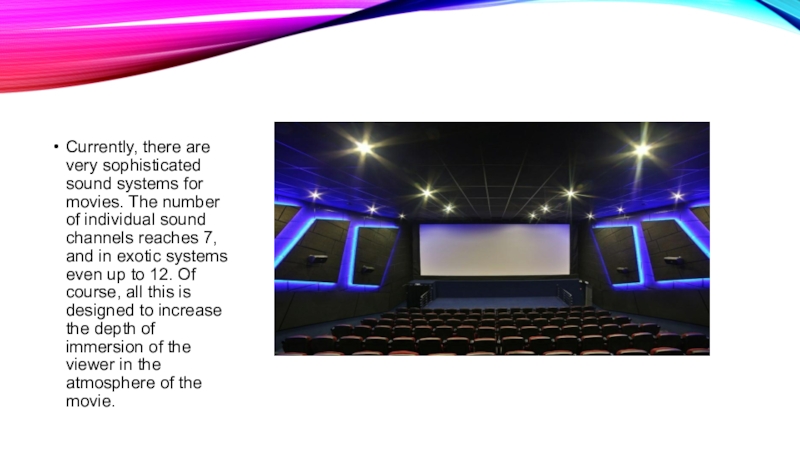
- 9. Currently, there are very sophisticated sound systems
- 10. The effect of the 25th frame in
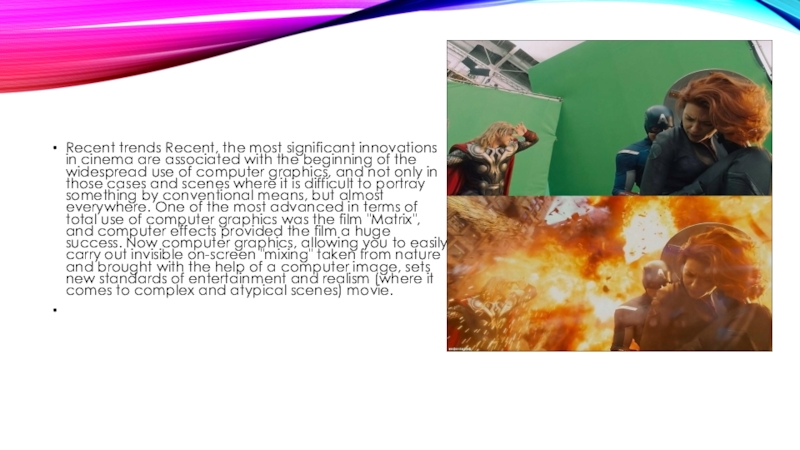
- 11. Recent trends Recent, the most significant innovations
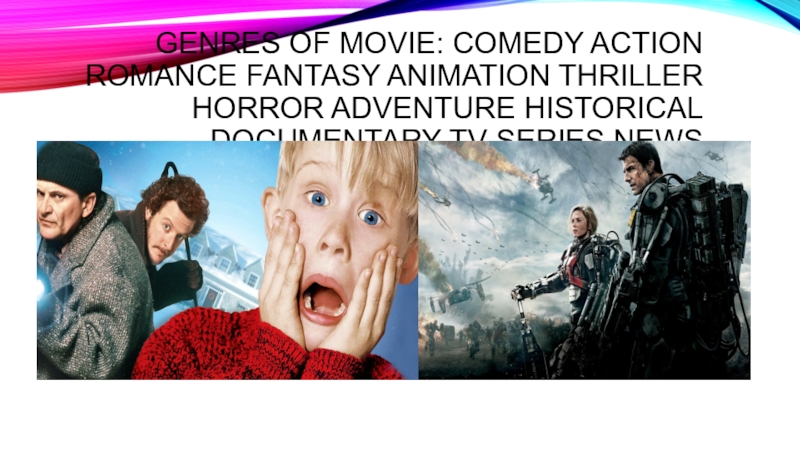
- 12. Genres of movie: Comedy action Romance Fantasy Animation Thriller Horror adventure Historical documentary TV Series news
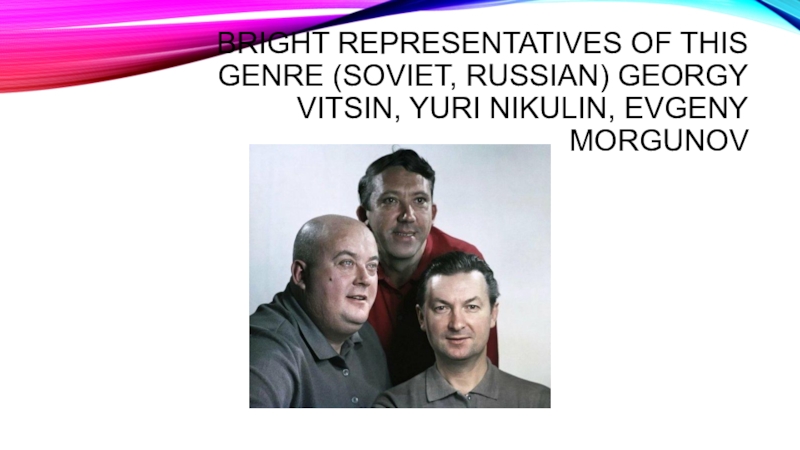
- 13. Bright representatives of this genre (Soviet, Russian) Georgy Vitsin, Yuri Nikulin, Evgeny Morgunov
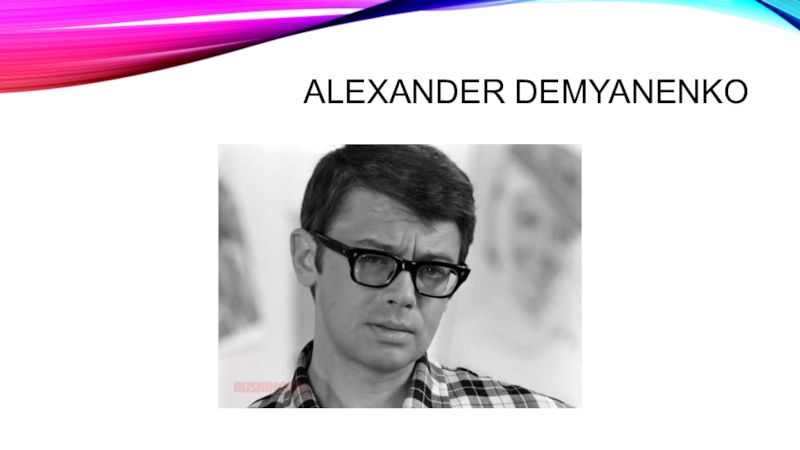
- 14. Alexander Demyanenko
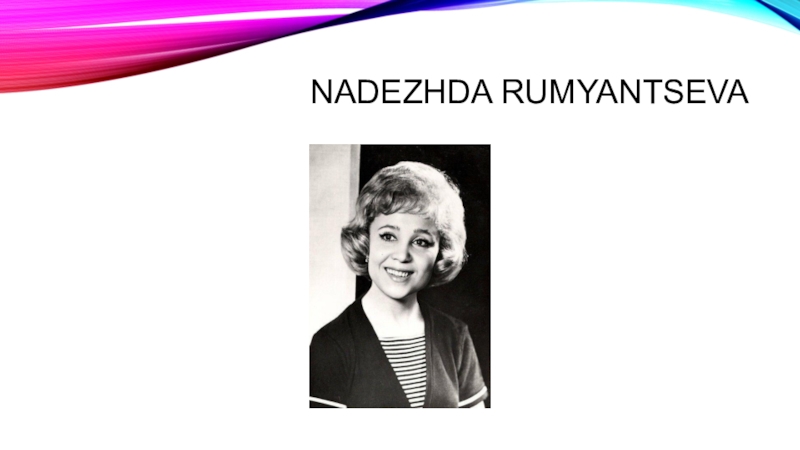
- 15. Nadezhda Rumyantseva
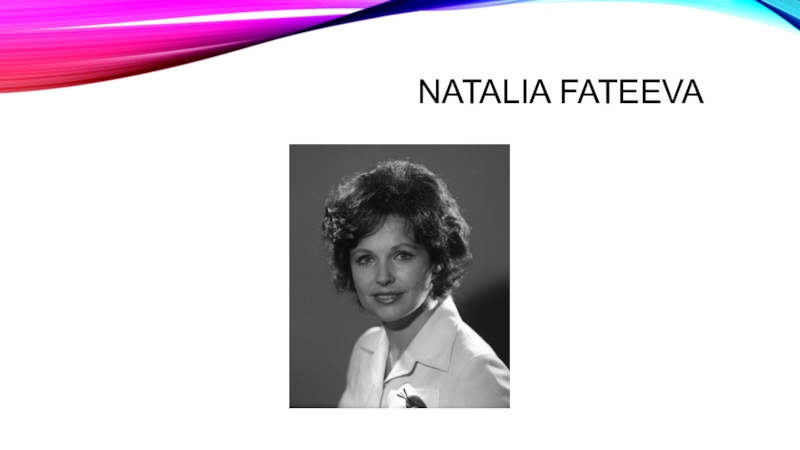
- 16. Natalia Fateeva
- 17. Sergei Bezrukov
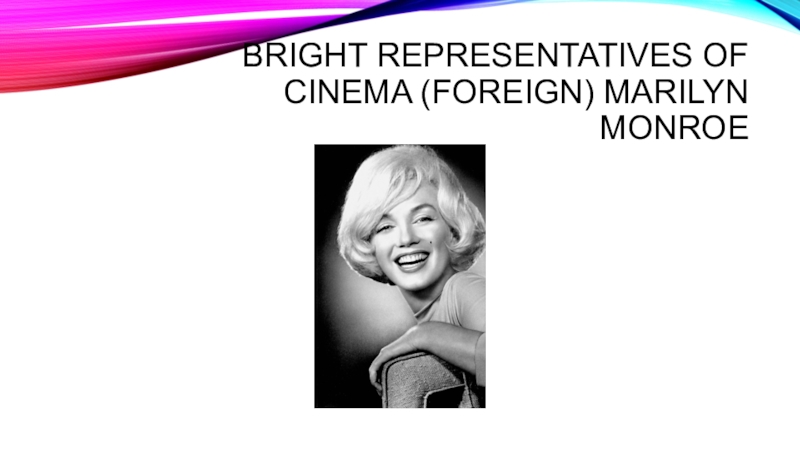
- 18. Bright representatives of cinema (foreign) Marilyn Monroe
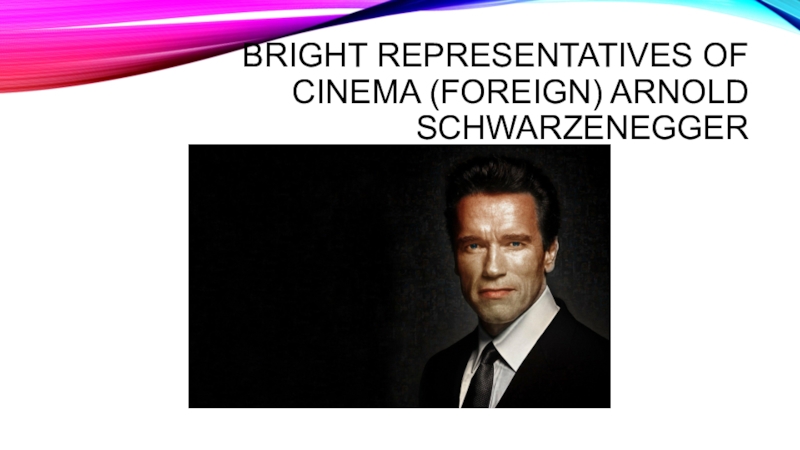
- 19. Bright representatives of cinema (foreign) Arnold Schwarzenegger
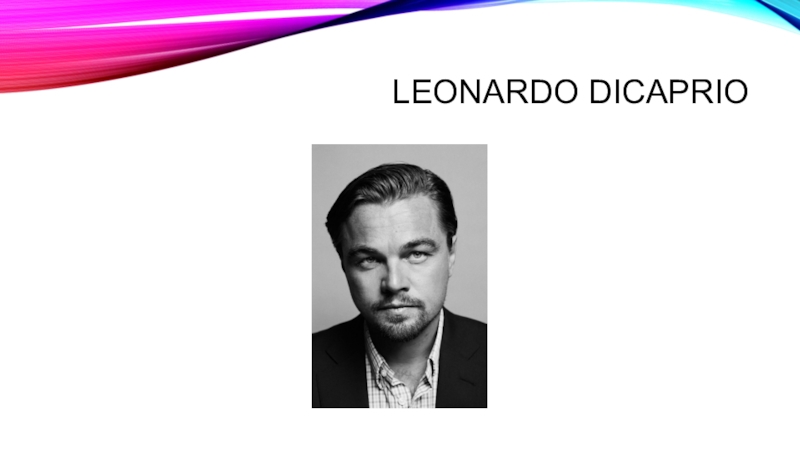
- 20. Leonardo DiCaprio
- 21. Thank you for your attention!
Cinema is a branch of human activity, which consists in the creation of moving images. Sometimes also referred to as cinematography. Also, this term refers to a set of devices and methods necessary for shooting moving
Слайд 1Cinema and cinematography
Подготовил ученик 11 класса Караханов Фахрудин.
Преподаватель Имамова Назима Бинямудиновна.
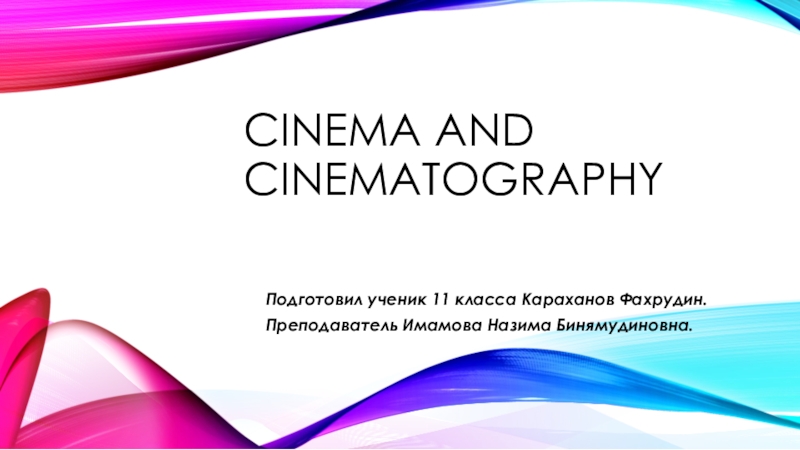
Слайд 2Cinema is a branch of human activity, which consists in the
creation of moving images. Sometimes also referred to as cinematography. Also, this term refers to a set of devices and methods necessary for shooting moving objects on film and for subsequent playback of images, usually by projecting them on the screen.
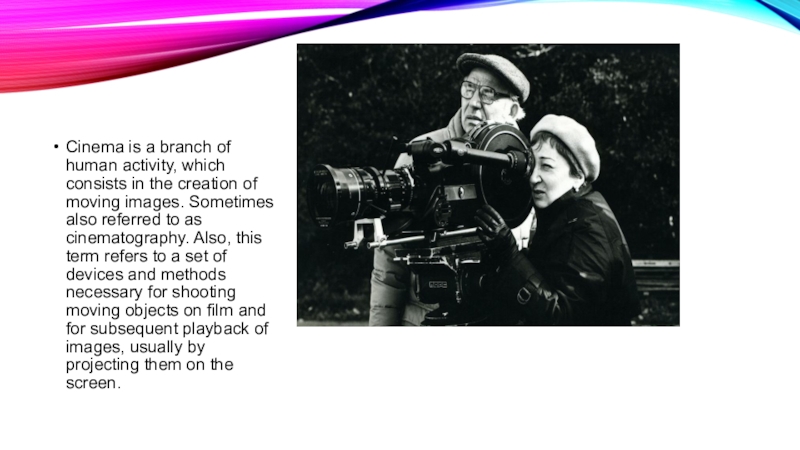
Слайд 3The concept of cinema appeared for the first time in its
French version — "cinema", denoting the system of creation and display of the film, developed by the brothers Louis Jean and Auguste Lumiere. Officially, it is believed that the cinema dates back to December 28, 1895. On this day, the Indian salon "Grand cafe" on the Boulevard Capuchin (Paris, France) held a public screening of "Lumiere brothers cinematograph". In 1896, the brothers made a world tour with his invention, visiting London, new York, Mumbai. Although trial (even public) demonstrations of films began in 1888. And in 1895 was already a sufficient number of sessions of "moving pictures", but their inventors usually did not know about each other, which then caused endless disputes about the pioneers of cinema. Public paid sessions of the Lumiere brothers were simply the most popular and successful from a commercial point of view. Therefore, they are considered to be the parents of cinema.
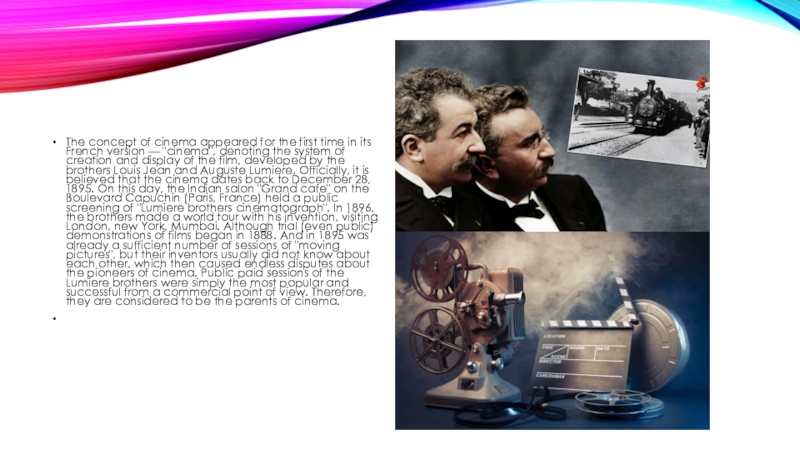
Слайд 4"Journey to the moon" (1902) — the first science fiction film
in the history of cinema. Short of farcical Comedy, parodying the plots of the novels of Jules Verne, "From guns to the moon" and H. G. wells "the First men in the moon". Directed by Georges Méliès in his own script, on the sets he created, in his private Studio and by his acting.
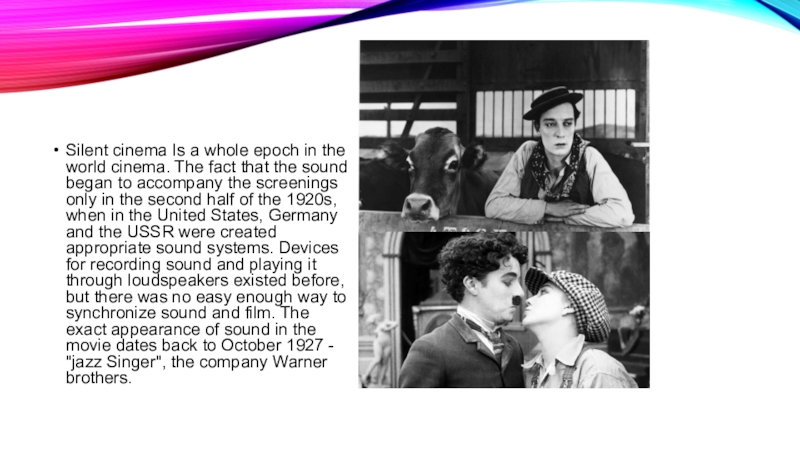
Слайд 5Silent cinema Is a whole epoch in the world cinema. The
fact that the sound began to accompany the screenings only in the second half of the 1920s, when in the United States, Germany and the USSR were created appropriate sound systems. Devices for recording sound and playing it through loudspeakers existed before, but there was no easy enough way to synchronize sound and film. The exact appearance of sound in the movie dates back to October 1927 - "jazz Singer", the company Warner brothers.
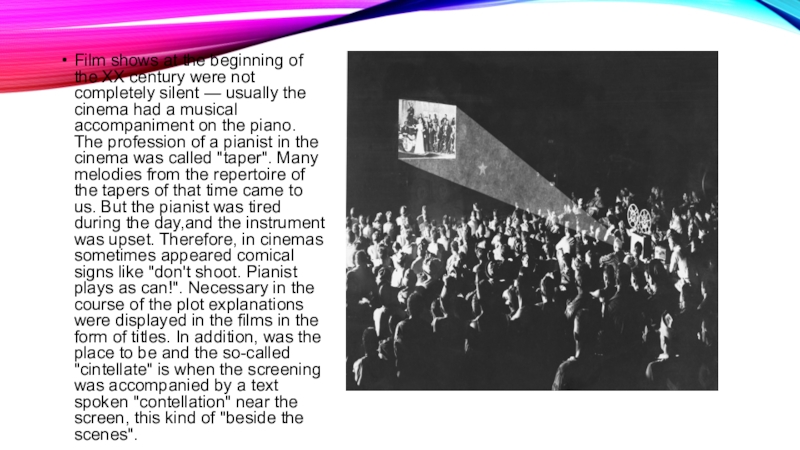
Слайд 6Film shows at the beginning of the XX century were not
completely silent — usually the cinema had a musical accompaniment on the piano. The profession of a pianist in the cinema was called "taper". Many melodies from the repertoire of the tapers of that time came to us. But the pianist was tired during the day,and the instrument was upset. Therefore, in cinemas sometimes appeared comical signs like "don't shoot. Pianist plays as can!". Necessary in the course of the plot explanations were displayed in the films in the form of titles. In addition, was the place to be and the so-called "cintellate" is when the screening was accompanied by a text spoken "contellation" near the screen, this kind of "beside the scenes".
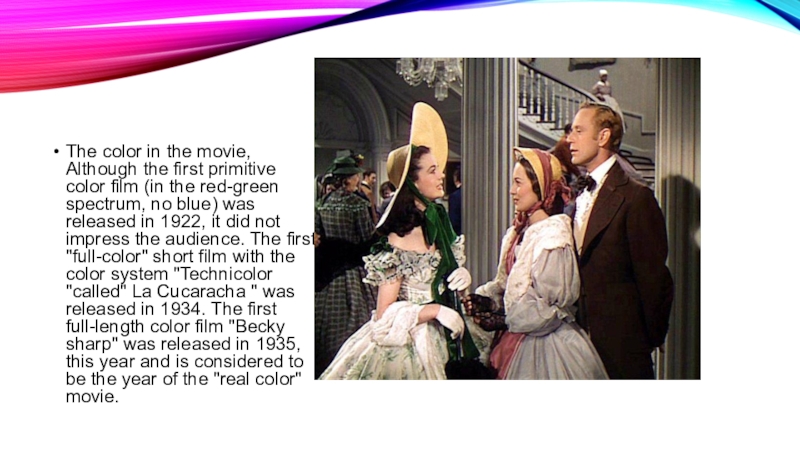
Слайд 7The color in the movie, Although the first primitive color film
(in the red-green spectrum, no blue) was released in 1922, it did not impress the audience. The first "full-color" short film with the color system "Technicolor "called" La Cucaracha " was released in 1934. The first full-length color film "Becky sharp" was released in 1935, this year and is considered to be the year of the "real color" movie.
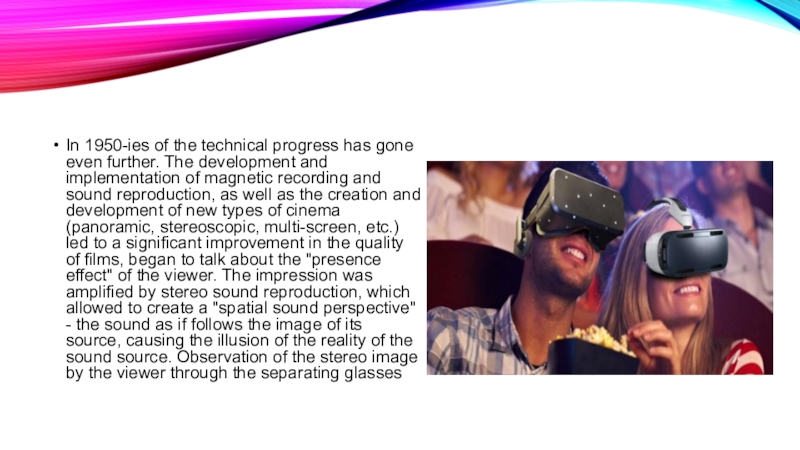
Слайд 8In 1950-ies of the technical progress has gone even further. The
development and implementation of magnetic recording and sound reproduction, as well as the creation and development of new types of cinema (panoramic, stereoscopic, multi-screen, etc.) led to a significant improvement in the quality of films, began to talk about the "presence effect" of the viewer. The impression was amplified by stereo sound reproduction, which allowed to create a "spatial sound perspective" - the sound as if follows the image of its source, causing the illusion of the reality of the sound source. Observation of the stereo image by the viewer through the separating glasses
Слайд 9Currently, there are very sophisticated sound systems for movies. The number
of individual sound channels reaches 7, and in exotic systems even up to 12. Of course, all this is designed to increase the depth of immersion of the viewer in the atmosphere of the movie.
Слайд 10The effect of the 25th frame in the middle of the
XX century was a common myth that the human brain can perceive only 24 frames per second — and the 25th frame will be perceived at a subconscious level. From this misconception, conclusions were made about the effectiveness of the" phenomenon of the 25th frame " in various types of suggestion and subconscious influence (for example, for political propaganda, commercial advertising, teaching foreign languages). But the presence of psychological effect was refuted in 1958 by the American psychological Association.
Слайд 11Recent trends Recent, the most significant innovations in cinema are associated
with the beginning of the widespread use of computer graphics, and not only in those cases and scenes where it is difficult to portray something by conventional means, but almost everywhere. One of the most advanced in terms of total use of computer graphics was the film "Matrix", and computer effects provided the film a huge success. Now computer graphics, allowing you to easily carry out invisible on-screen "mixing" taken from nature and brought with the help of a computer image, sets new standards of entertainment and realism (where it comes to complex and atypical scenes) movie.
Слайд 12Genres of movie: Comedy action Romance Fantasy Animation Thriller Horror adventure
Historical documentary TV Series news
Слайд 13Bright representatives of this genre (Soviet, Russian) Georgy Vitsin, Yuri Nikulin,
Evgeny Morgunov