ПРЕЗЕНТАЦИЯ К УРОКУ ПАМЯТИ НА АНГЛИЙСКОМ ЯЗЫКЕ
ПОГОТОВИЛА: УЧИТЕЛЬ АНГЛИЙСКОГО ЯЗЫКА МБОУ «СОШ № 10 С УИОП» г. КАЛУГИ
ДОЛГОВА О. Н.
- Главная
- Разное
- Образование
- Спорт
- Естествознание
- Природоведение
- Религиоведение
- Французский язык
- Черчение
- Английский язык
- Астрономия
- Алгебра
- Биология
- География
- Геометрия
- Детские презентации
- Информатика
- История
- Литература
- Математика
- Музыка
- МХК
- Немецкий язык
- ОБЖ
- Обществознание
- Окружающий мир
- Педагогика
- Русский язык
- Технология
- Физика
- Философия
- Химия
- Шаблоны, фоны, картинки для презентаций
- Экология
- Экономика
Презентация, доклад по английскому языку К 70 годовщине в Великой Отечественной Войне
Содержание
- 1. Презентация по английскому языку К 70 годовщине в Великой Отечественной Войне
- 2. World War II, or the Second World
- 3. Слайд 3
- 4. World War II is most commonly described
- 5. Слайд 5
- 6. It was the most intensive and extensive
- 7. The term Great Patriotic War is used
- 8. The term Patriotic War refers to the
- 9. Having signed a non-aggression pact with Germany
- 10. Leningrad’s horrific siege was one of the
- 11. Defending the capitalMeanwhile the Germans advanced as
- 12. Слайд 12
- 13. The tide turned in February 1943, when
- 14. In June – August 1943 there was
- 15. The crushing defeat at Stalingrad was unmatched
- 16. Слайд 16
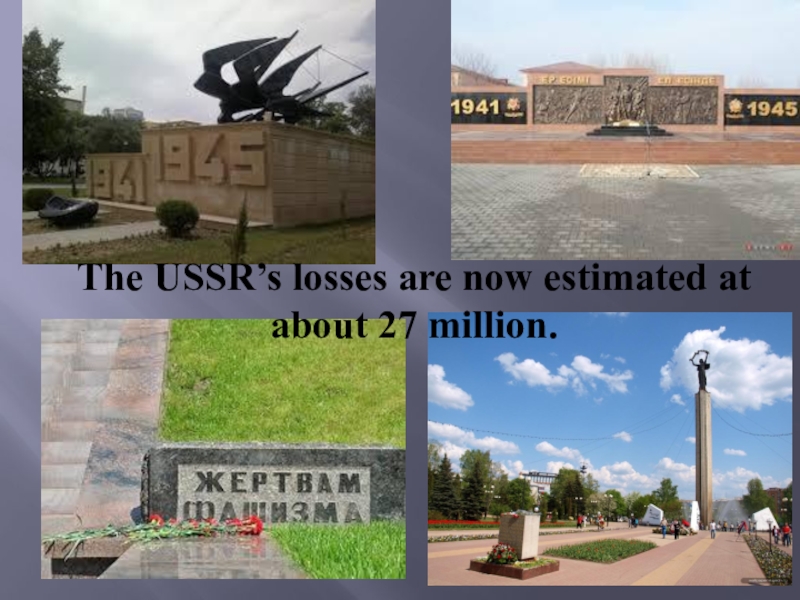
- 17. The USSR’s losses are now estimated at about 27 million.
- 18. In the USSR the end of the
- 19. The war of 1941-1945 was the
- 20. New generations have grown since then. For
World War II, or the Second World War, was a global war fought from 1 September 1939 – 2 September 1945 (6 year, 1 day). It involved 62 out of the 73 existent nations at that
Слайд 170th anniversary of Victory in the Great Patriotic War (1941-1945) II WORLD
WAR AND
THE GREAT PATRIOTIC WAR
Слайд 2World War II, or the Second World War, was a global
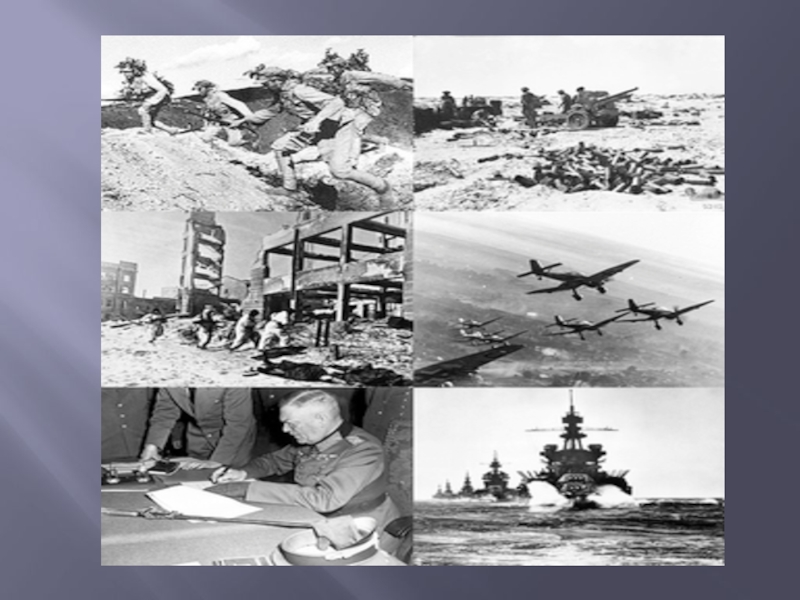
war fought from 1 September 1939 – 2 September 1945 (6 year, 1 day). It involved 62 out of the 73 existent nations at that time, which eventually formed two loose, opposing military alliances: the Allies or Allied powers (China, France, the UK, the USA, the USSR among others) against the Axis powers (chiefly Nazi Germany, Fascist Italy and Imperial Japan).
Слайд 4World War II is most commonly described as having been fought
in two main theaters of war note . The European Theater was the conflict between the Allied Powers against Germany, Italy and their European allies. This conflict was fought not only in Europe, but in the Atlantic Ocean and North Africa. This conflict began with the invasion of Poland in September of 1939 and ended in May 1945 with the fall of Berlin and Prague. The Pacific Theater was the conflict fought between the Allies and Imperial Japan in the Pacific Ocean and Asia, which also included some action in the Indian Ocean. This conflict was born out of the Second Sino-Japanese War which started when the Japanese Empire invaded China in July 1937. This war became part of the 'world war' proper when Japan attacked American and British territories in December 1941.
Слайд 6It was the most intensive and extensive war in history, with
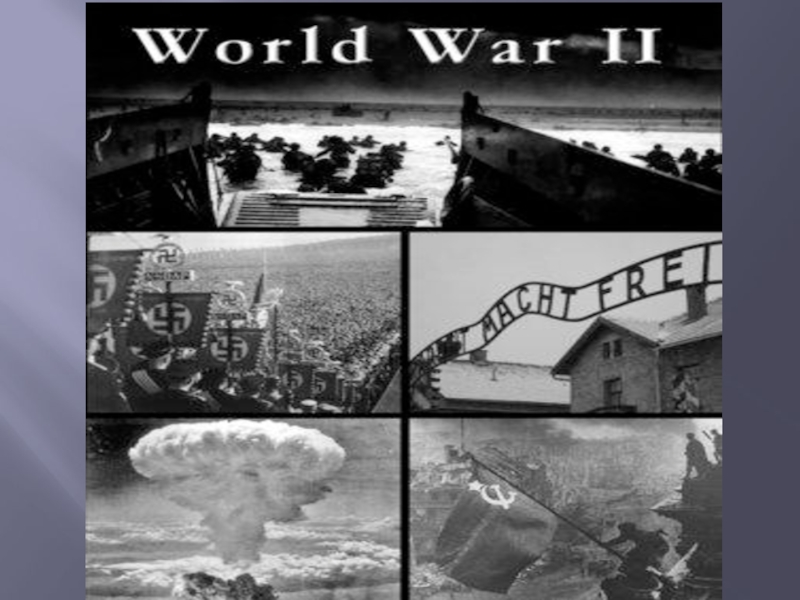
more than 100 million people serving in military units. In a state of "total war", the major participants eventually placed their entire financial, industrial, and scientific capabilities at the service of the war effort, thereby erasing the distinction between civilian and military resources. Marked by significant events involving (organized) massacres and genocides, including The Holocaust, large-scale aerial bombardment of civilian populations and the only use of nuclear weapons in warfare, it resulted in some 50 to 70 million dead - making this war the deadliest and costliest conflict in human history.
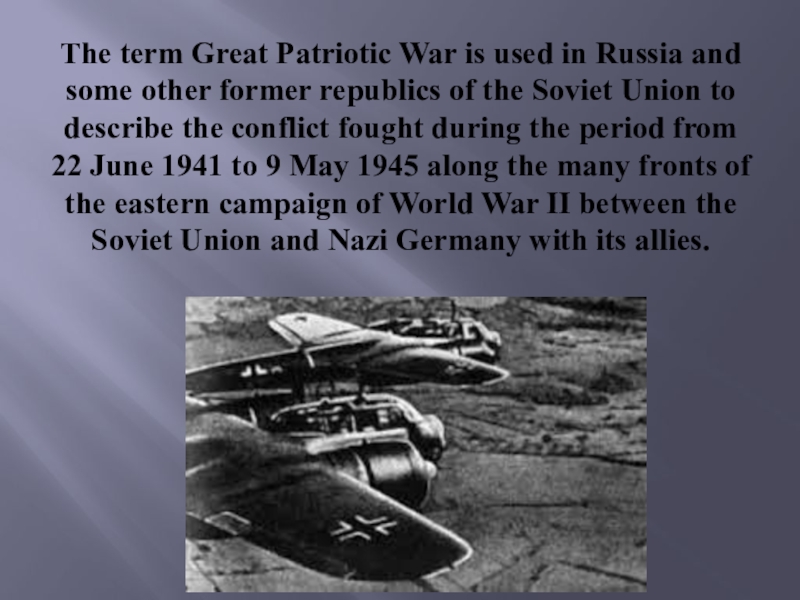
Слайд 7The term Great Patriotic War is used in Russia and some
other former republics of the Soviet Union to describe the conflict fought during the period from 22 June 1941 to 9 May 1945 along the many fronts of the eastern campaign of World War II between the Soviet Union and Nazi Germany with its allies.
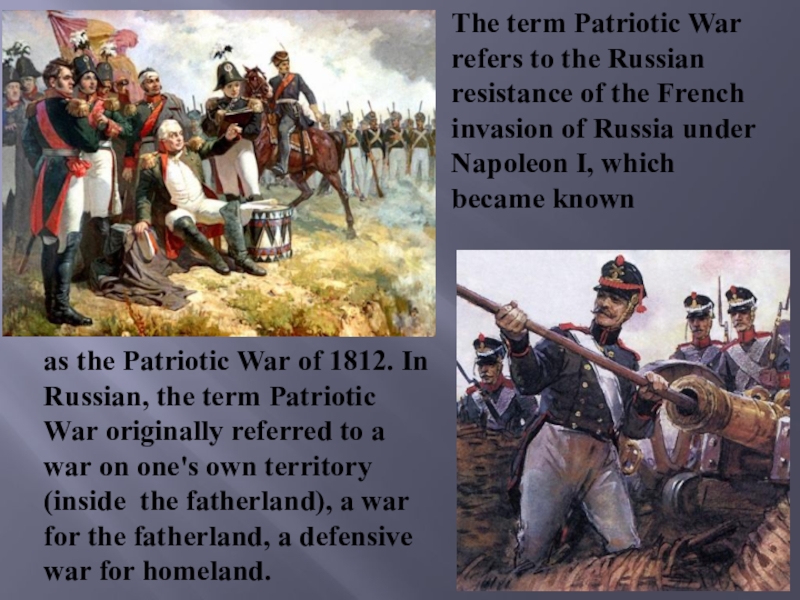
Слайд 8The term Patriotic War refers to the Russian resistance of the
French invasion of Russia under Napoleon I, which became known
as the Patriotic War of 1812. In Russian, the term Patriotic War originally referred to a war on one's own territory (inside the fatherland), a war for the fatherland, a defensive war for homeland.
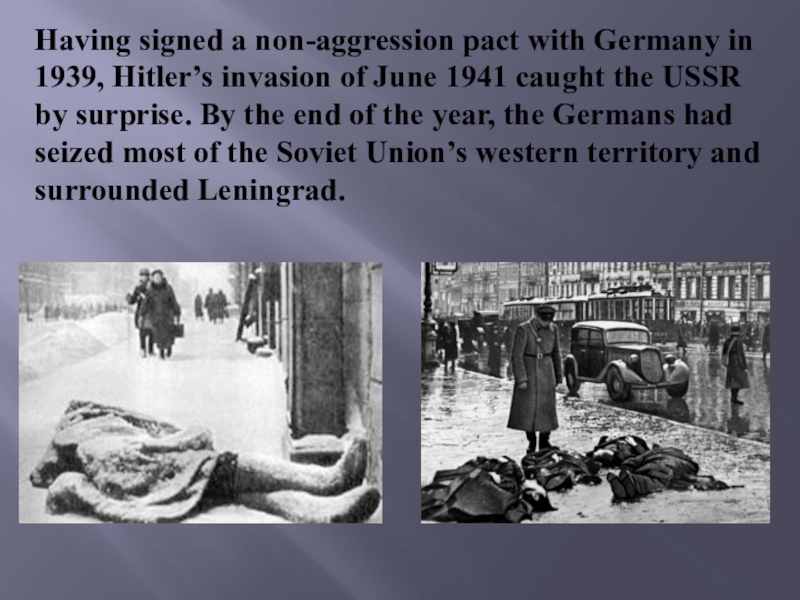
Слайд 9Having signed a non-aggression pact with Germany in 1939, Hitler’s invasion
of June 1941 caught the USSR by surprise. By the end of the year, the Germans had seized most of the Soviet Union’s western territory and surrounded Leningrad.
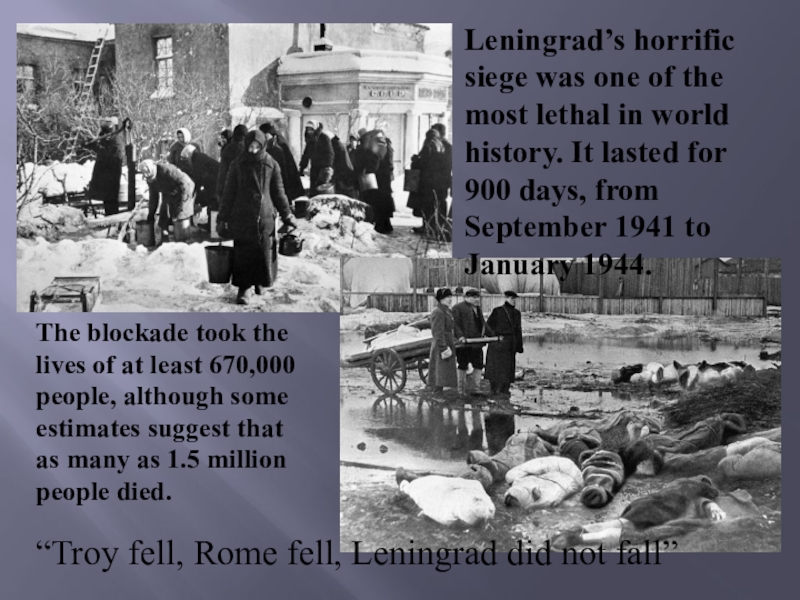
Слайд 10Leningrad’s horrific siege was one of the most lethal in world
history. It lasted for 900 days, from September 1941 to January 1944.
“Troy fell, Rome fell, Leningrad did not fall”
The blockade took the lives of at least 670,000 people, although some estimates suggest that as many as 1.5 million people died.
Слайд 11Defending the capital
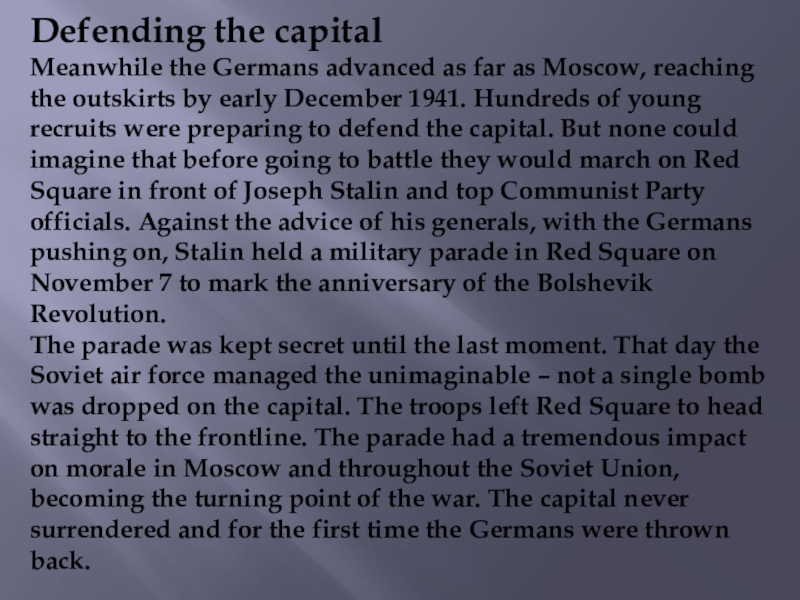
Meanwhile the Germans advanced as far as Moscow, reaching
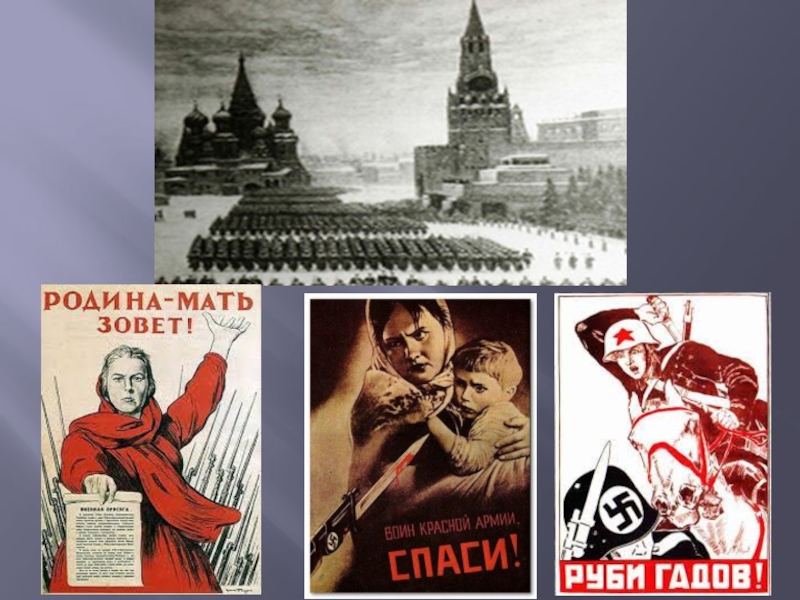
the outskirts by early December 1941. Hundreds of young recruits were preparing to defend the capital. But none could imagine that before going to battle they would march on Red Square in front of Joseph Stalin and top Communist Party officials. Against the advice of his generals, with the Germans pushing on, Stalin held a military parade in Red Square on November 7 to mark the anniversary of the Bolshevik Revolution.
The parade was kept secret until the last moment. That day the Soviet air force managed the unimaginable – not a single bomb was dropped on the capital. The troops left Red Square to head straight to the frontline. The parade had a tremendous impact on morale in Moscow and throughout the Soviet Union, becoming the turning point of the war. The capital never surrendered and for the first time the Germans were thrown back.
The parade was kept secret until the last moment. That day the Soviet air force managed the unimaginable – not a single bomb was dropped on the capital. The troops left Red Square to head straight to the frontline. The parade had a tremendous impact on morale in Moscow and throughout the Soviet Union, becoming the turning point of the war. The capital never surrendered and for the first time the Germans were thrown back.
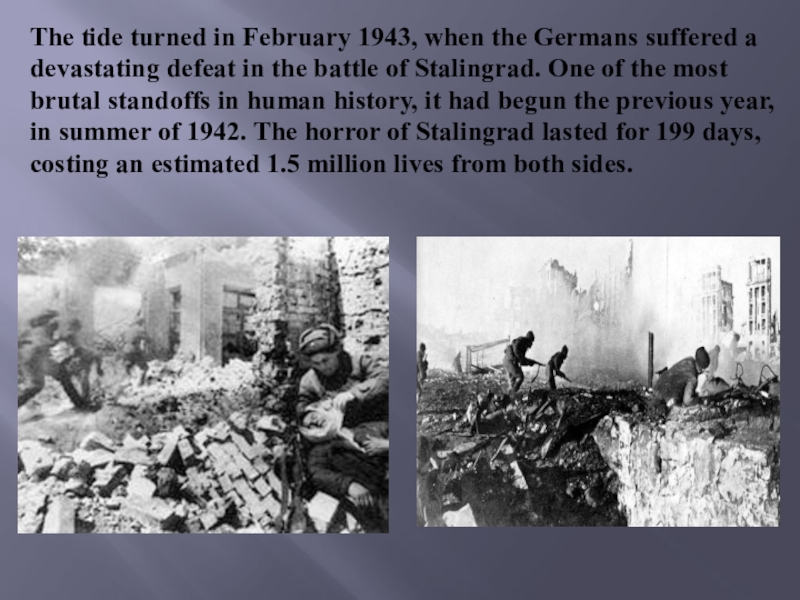
Слайд 13The tide turned in February 1943, when the Germans suffered a
devastating defeat in the battle of Stalingrad. One of the most brutal standoffs in human history, it had begun the previous year, in summer of 1942. The horror of Stalingrad lasted for 199 days, costing an estimated 1.5 million lives from both sides.
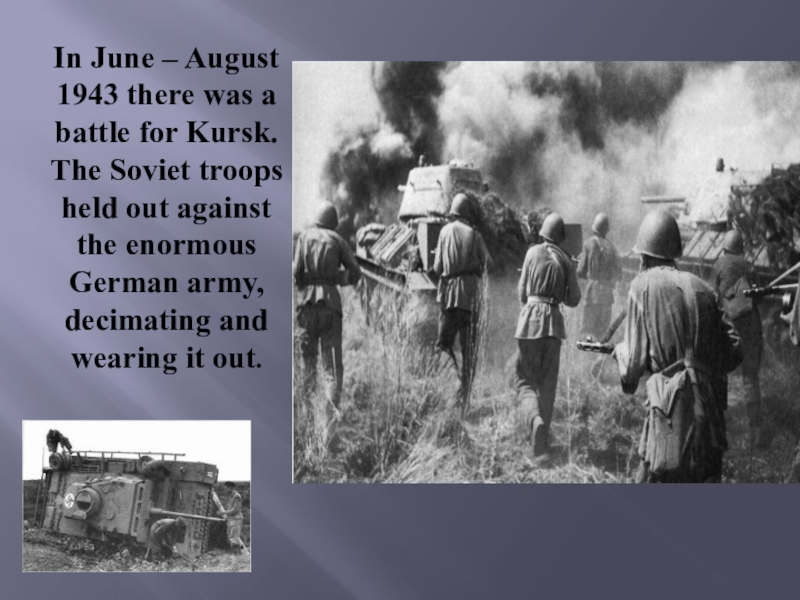
Слайд 14In June – August 1943 there was a battle for Kursk.
The Soviet troops held out against the enormous German army, decimating and wearing it out.
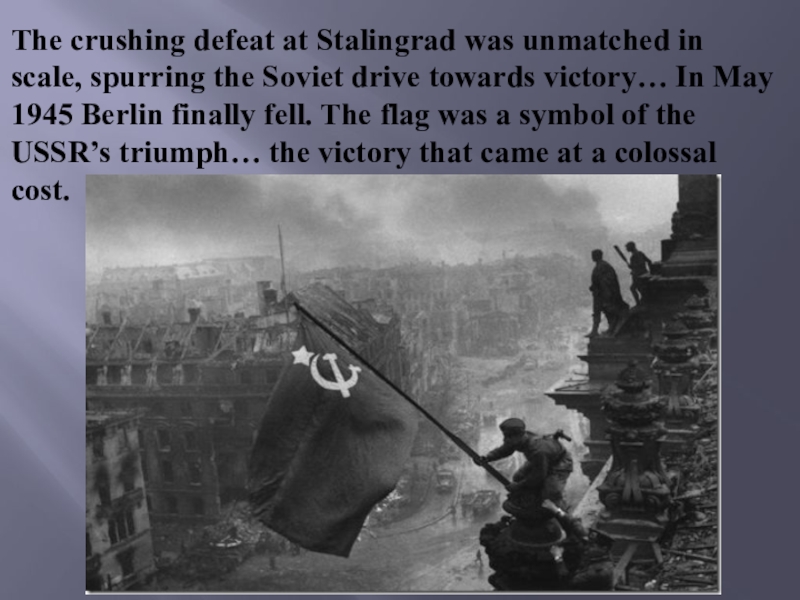
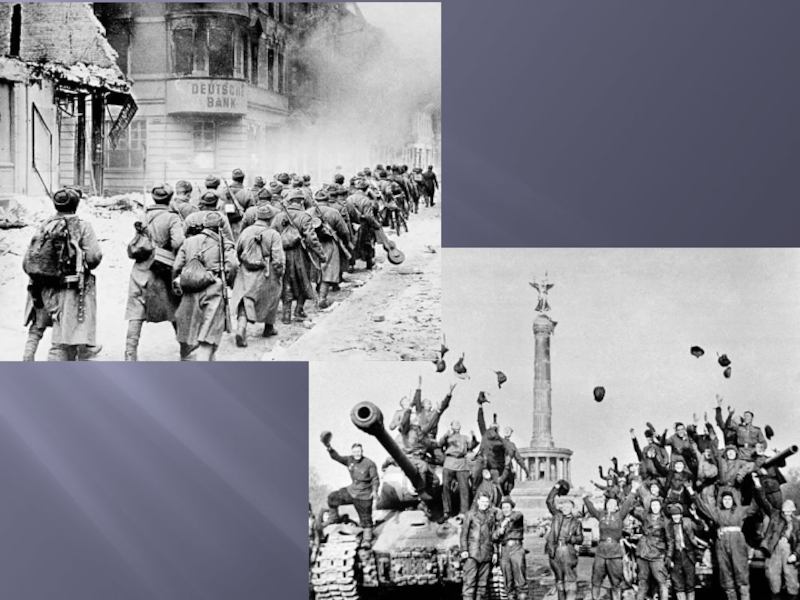
Слайд 15The crushing defeat at Stalingrad was unmatched in scale, spurring the
Soviet drive towards victory… In May 1945 Berlin finally fell. The flag was a symbol of the USSR’s triumph… the victory that came at a colossal cost.
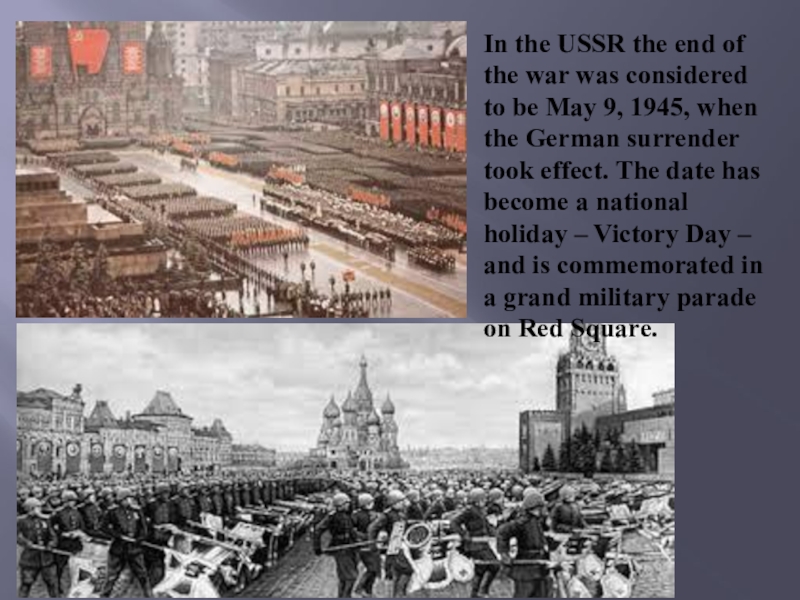
Слайд 18In the USSR the end of the war was considered to
be May 9, 1945, when the German surrender took effect. The date has become a national holiday – Victory Day – and is commemorated in a grand military parade on Red Square.
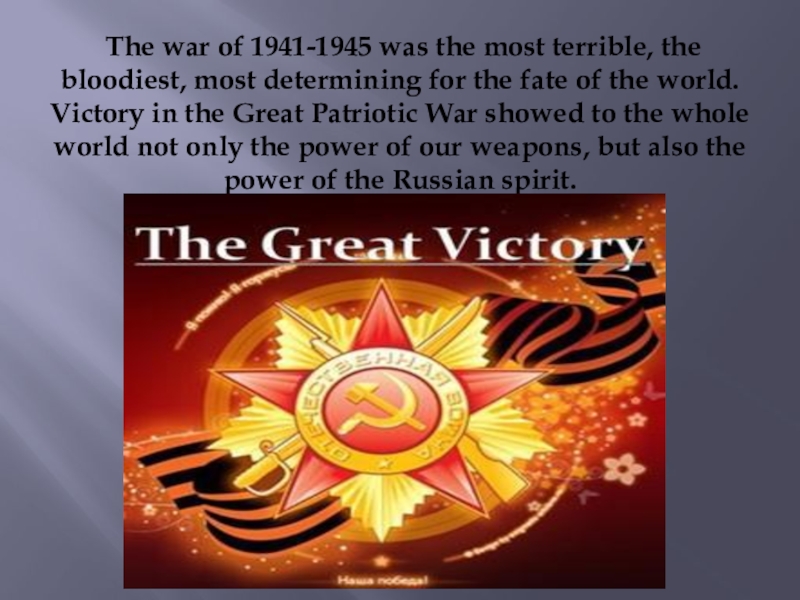
Слайд 19 The war of 1941-1945 was the most terrible, the bloodiest,
most determining for the fate of the world. Victory in the Great Patriotic War showed to the whole world not only the power of our weapons, but also the power of the Russian spirit.
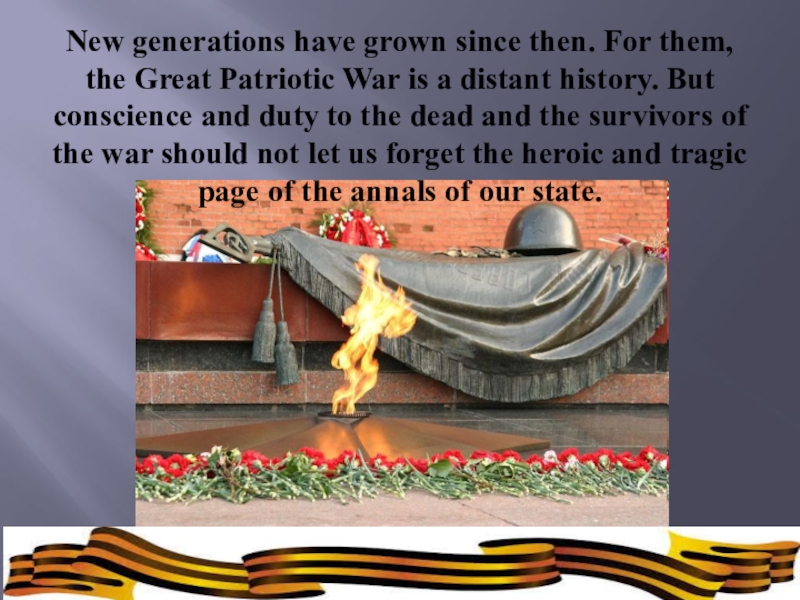
Слайд 20New generations have grown since then. For them, the Great Patriotic
War is a distant history. But conscience and duty to the dead and the survivors of the war should not let us forget the heroic and tragic page of the annals of our state.