- Главная
- Разное
- Образование
- Спорт
- Естествознание
- Природоведение
- Религиоведение
- Французский язык
- Черчение
- Английский язык
- Астрономия
- Алгебра
- Биология
- География
- Геометрия
- Детские презентации
- Информатика
- История
- Литература
- Математика
- Музыка
- МХК
- Немецкий язык
- ОБЖ
- Обществознание
- Окружающий мир
- Педагогика
- Русский язык
- Технология
- Физика
- Философия
- Химия
- Шаблоны, фоны, картинки для презентаций
- Экология
- Экономика
Презентация, доклад по английскому языку История причесок
Содержание
- 1. Презентация по английскому языку История причесок
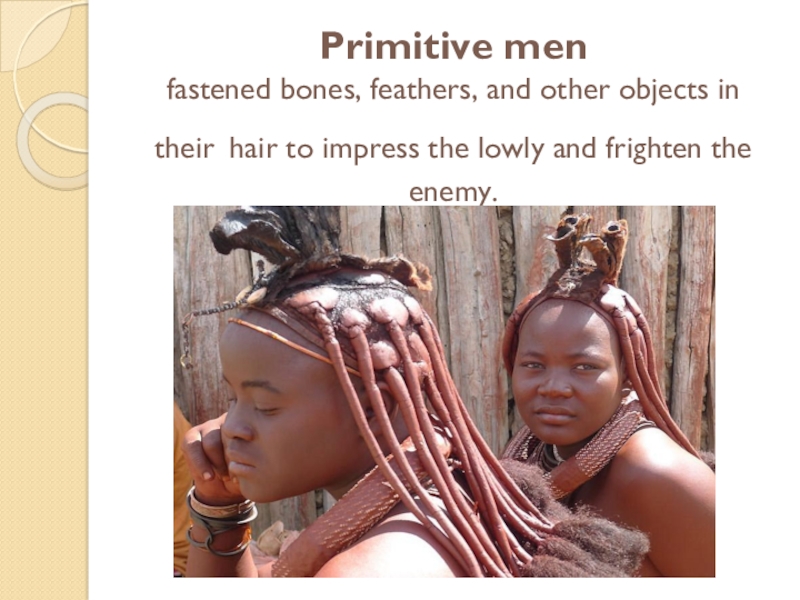
- 2. Primitive men fastened bones, feathers, and
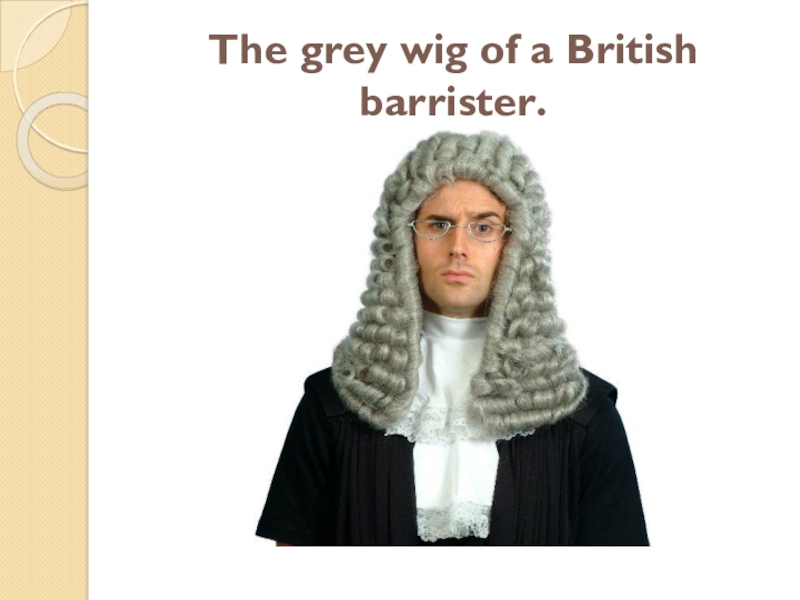
- 3. The grey wig of a British barrister.
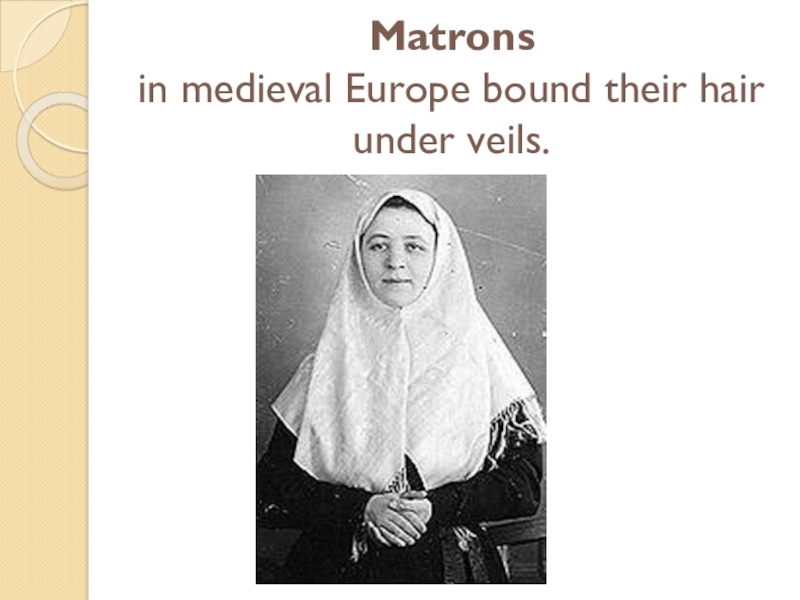
- 4. Matrons in medieval Europe bound their hair under veils.
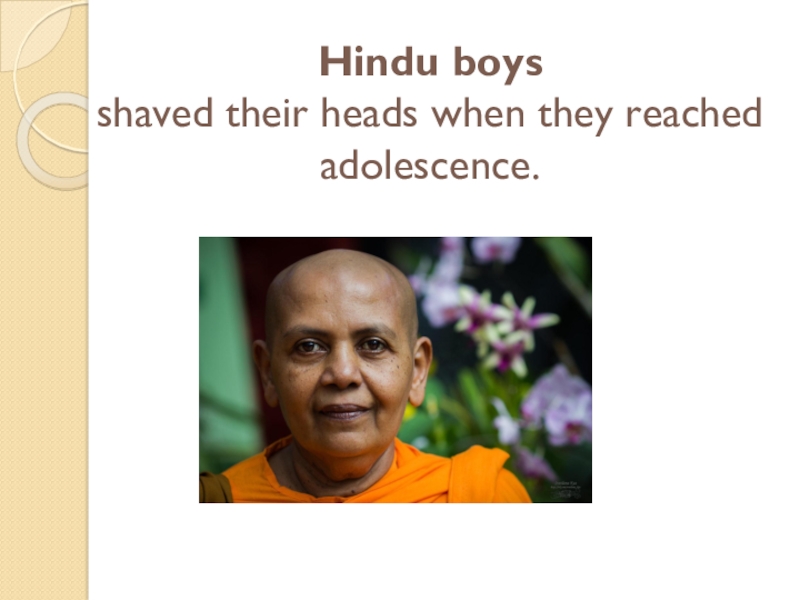
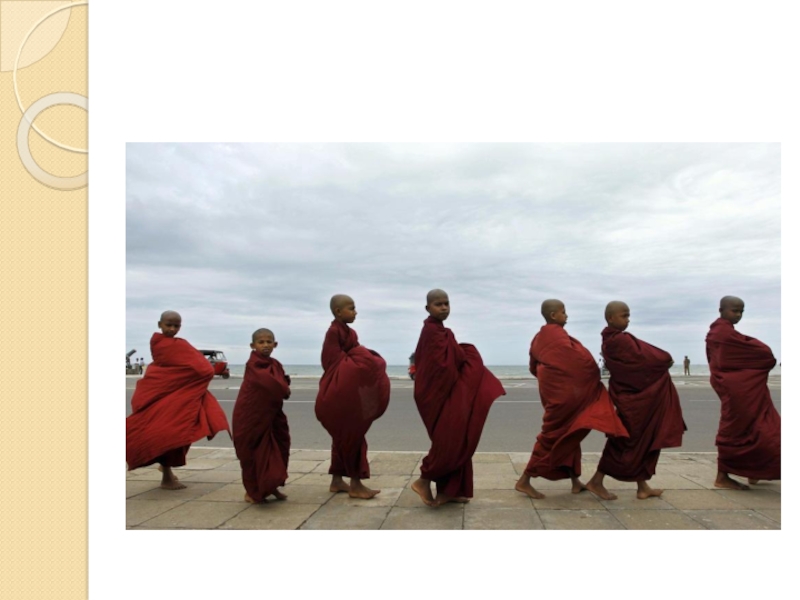
- 5. Hindu boys shaved their heads when they reached adolescence.
- 6. Слайд 6
- 7. Egypt A shaven head was worn by
- 8. GreeceTo contrast from the Egyptians, classical Greece
- 9. China Chinese hairstyles vary depending on the
- 10. Japan In Japan women’s hairstyles where
- 11. Africa In Africa there where many
- 12. America Native Indians to America
- 13. Hopi maidens wore big hairstyles
- 14. The Western World A woman’s hairstyle in
- 15. Слайд 15
- 16. Использованные источники1.http://www.ukhairdressers.com/history%20of%20hair.asp
Primitive men fastened bones, feathers, and other objects in their hair to impress the lowly and frighten the enemy.
Слайд 2 Primitive men fastened bones, feathers, and other objects in their hair to
impress the lowly and frighten the enemy.
Слайд 7Egypt
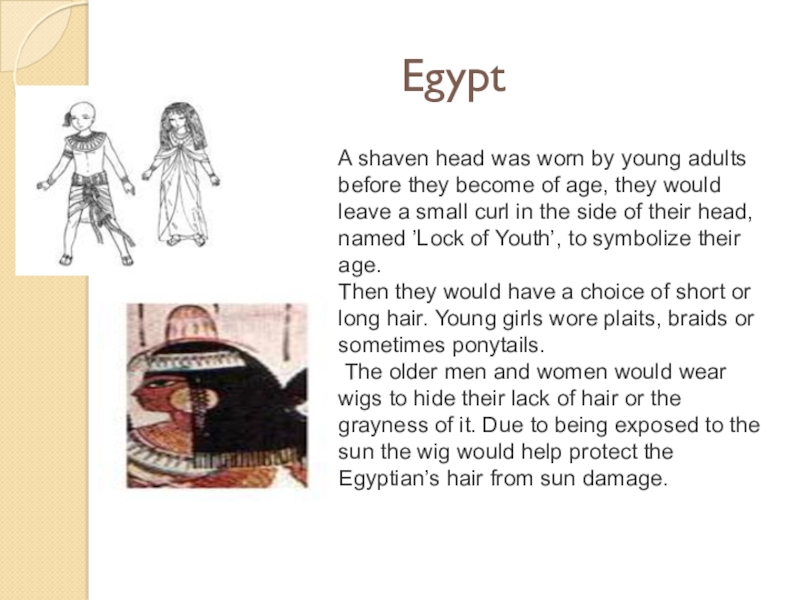
A shaven head was worn by young adults before they
become of age, they would leave a small curl in the side of their head, named ’Lock of Youth’, to symbolize their age.
Then they would have a choice of short or long hair. Young girls wore plaits, braids or sometimes ponytails.
The older men and women would wear wigs to hide their lack of hair or the grayness of it. Due to being exposed to the sun the wig would help protect the Egyptian’s hair from sun damage.
Then they would have a choice of short or long hair. Young girls wore plaits, braids or sometimes ponytails.
The older men and women would wear wigs to hide their lack of hair or the grayness of it. Due to being exposed to the sun the wig would help protect the Egyptian’s hair from sun damage.
Слайд 8Greece
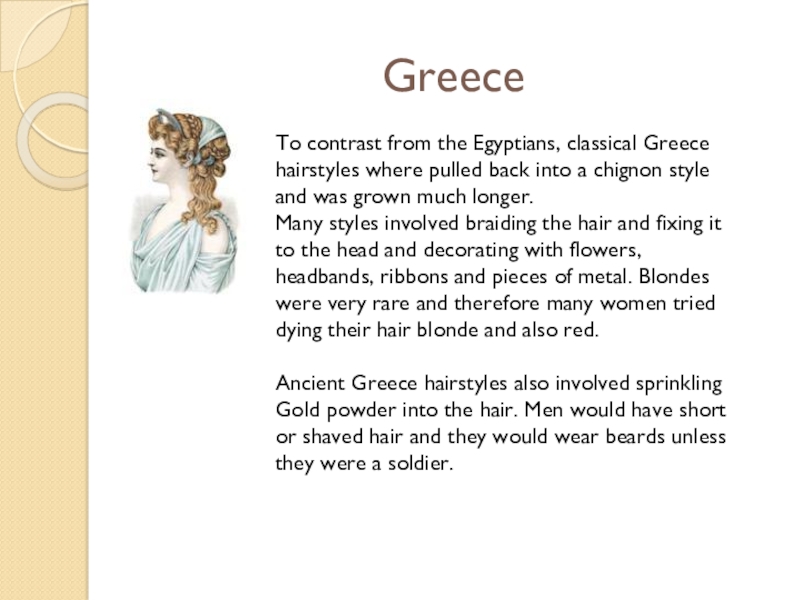
To contrast from the Egyptians, classical Greece hairstyles where pulled back
into a chignon style and was grown much longer.
Many styles involved braiding the hair and fixing it to the head and decorating with flowers, headbands, ribbons and pieces of metal. Blondes were very rare and therefore many women tried dying their hair blonde and also red.
Ancient Greece hairstyles also involved sprinkling Gold powder into the hair. Men would have short or shaved hair and they would wear beards unless they were a soldier.
Слайд 9China
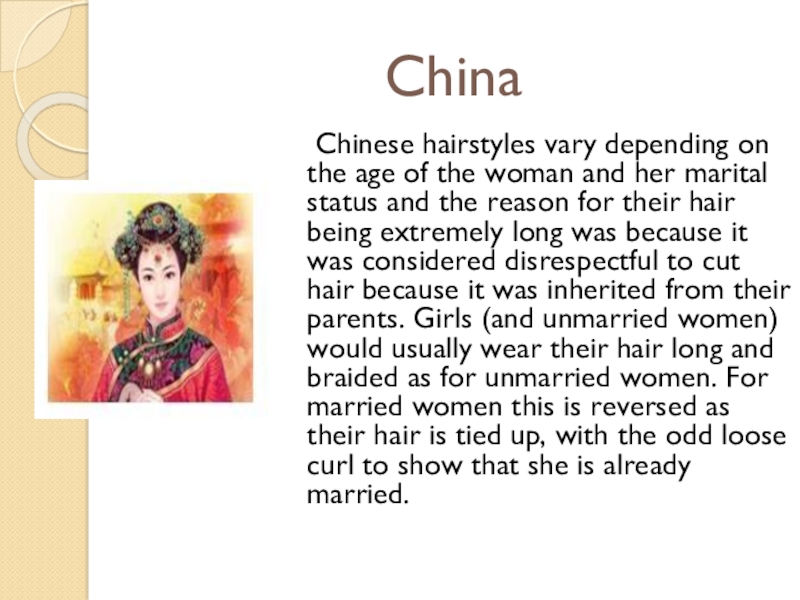
Chinese hairstyles vary depending on the age of the woman
and her marital status and the reason for their hair being extremely long was because it was considered disrespectful to cut hair because it was inherited from their parents. Girls (and unmarried women) would usually wear their hair long and braided as for unmarried women. For married women this is reversed as their hair is tied up, with the odd loose curl to show that she is already married.
Слайд 10Japan
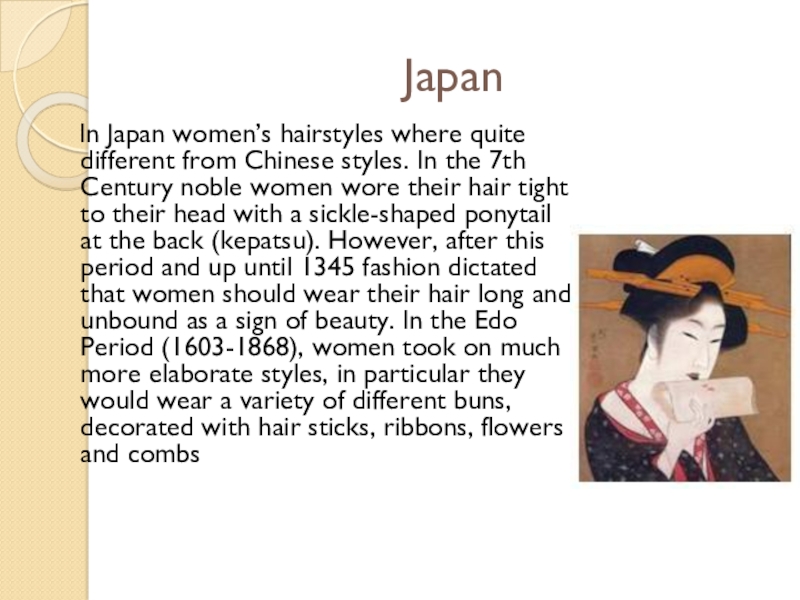
In Japan women’s hairstyles where quite different from
Chinese styles. In the 7th Century noble women wore their hair tight to their head with a sickle-shaped ponytail at the back (kepatsu). However, after this period and up until 1345 fashion dictated that women should wear their hair long and unbound as a sign of beauty. In the Edo Period (1603-1868), women took on much more elaborate styles, in particular they would wear a variety of different buns, decorated with hair sticks, ribbons, flowers and combs
Слайд 11Africa
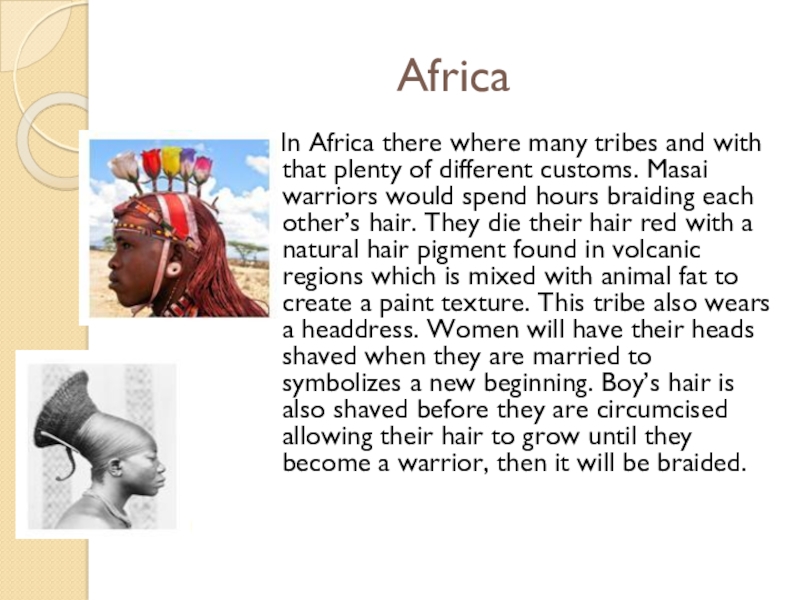
In Africa there where many tribes and with that
plenty of different customs. Masai warriors would spend hours braiding each other’s hair. They die their hair red with a natural hair pigment found in volcanic regions which is mixed with animal fat to create a paint texture. This tribe also wears a headdress. Women will have their heads shaved when they are married to symbolizes a new beginning. Boy’s hair is also shaved before they are circumcised allowing their hair to grow until they become a warrior, then it will be braided.
Слайд 12America
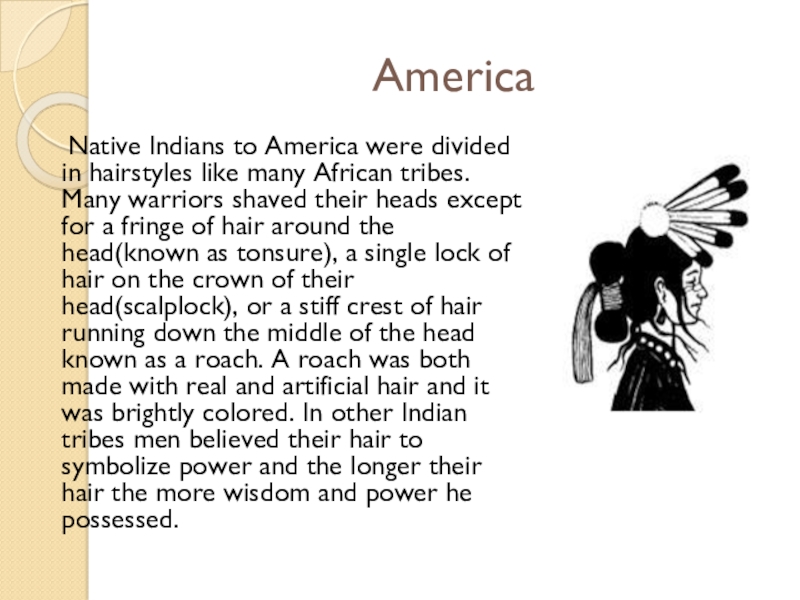
Native Indians to America were divided in hairstyles
like many African tribes. Many warriors shaved their heads except for a fringe of hair around the head(known as tonsure), a single lock of hair on the crown of their head(scalplock), or a stiff crest of hair running down the middle of the head known as a roach. A roach was both made with real and artificial hair and it was brightly colored. In other Indian tribes men believed their hair to symbolize power and the longer their hair the more wisdom and power he possessed.
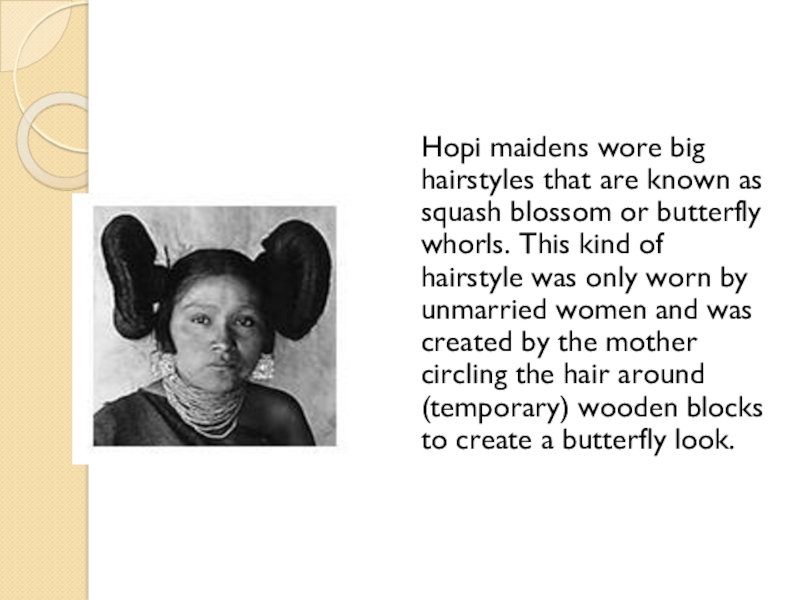
Слайд 13 Hopi maidens wore big hairstyles that are known as
squash blossom or butterfly whorls. This kind of hairstyle was only worn by unmarried women and was created by the mother circling the hair around (temporary) wooden blocks to create a butterfly look.
Слайд 14The Western World
A woman’s hairstyle in this period was very
simple as she would wear her hair long, usually to her knees or longer, with two plaits running down both sides. She would also wear her hair in a chignon, for those hotter days! The Catholic church wanted all women to wear veils as female hair was considered erotic and owned by their husbands. In the 13th - 14th century it was popular to create three braids that were tied at the back of the head and decorated with nets and ornaments as was the forehead.
Married women would have covered their hair with Barbettes, veils, hairnets and hats to avoid showing her hair.
Most men in this period wore their hair down with a part in the middle and great, bushy beards! Men who were of a lower status than the King would wear shorter hair.
Most men in this period wore their hair down with a part in the middle and great, bushy beards! Men who were of a lower status than the King would wear shorter hair.