- Главная
- Разное
- Образование
- Спорт
- Естествознание
- Природоведение
- Религиоведение
- Французский язык
- Черчение
- Английский язык
- Астрономия
- Алгебра
- Биология
- География
- Геометрия
- Детские презентации
- Информатика
- История
- Литература
- Математика
- Музыка
- МХК
- Немецкий язык
- ОБЖ
- Обществознание
- Окружающий мир
- Педагогика
- Русский язык
- Технология
- Физика
- Философия
- Химия
- Шаблоны, фоны, картинки для презентаций
- Экология
- Экономика
Презентация, доклад по английскому языку Famous Streets (6 класс)
Содержание
- 1. Презентация по английскому языку Famous Streets (6 класс)
- 2. Oxford Street, London , England
- 3. Oxford Street is the busiest shopping street
- 4. Слайд 4
- 5. Oxford Street has all the major networked
- 6. Слайд 6
- 7. Слайд 7
- 8. There are more serious and more expensive
- 9. Topshop is aimed at young people and
- 10. Hollywood Boulevard , Los Angeles, USA
- 11. At the beginning of the 20th century,
- 12. Immediately after the accession, one of the
- 13. Today, Hollywood Boulevard remains one of the
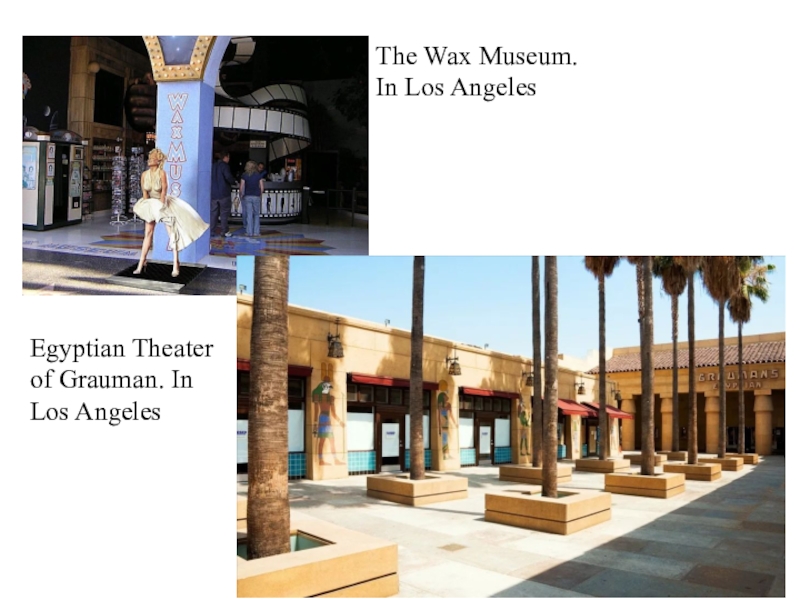
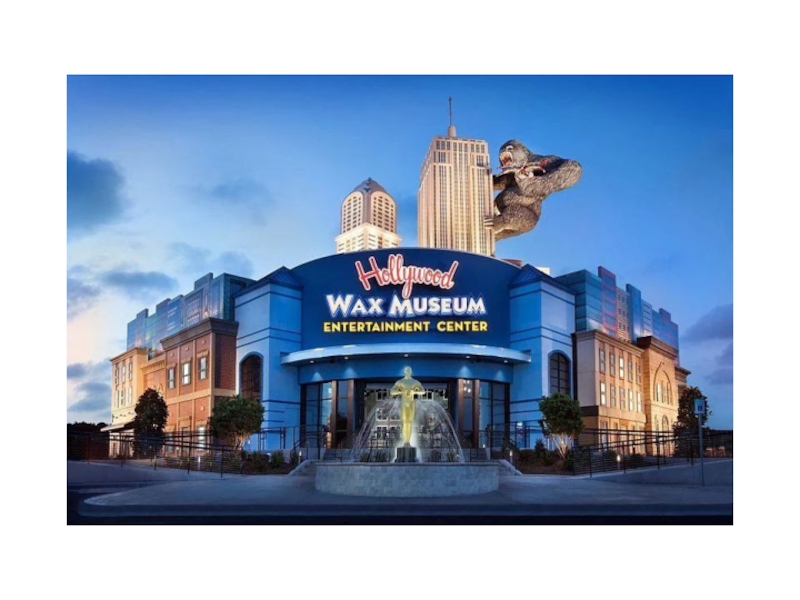
- 14. Egyptian Theater of Grauman. In Los AngelesThe Wax Museum. In Los Angeles
- 15. Слайд 15
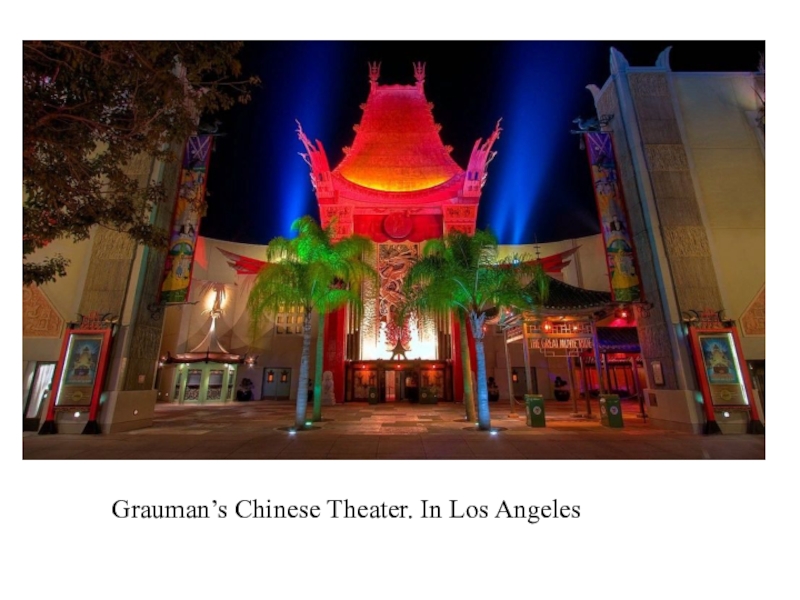
- 16. Grauman’s Chinese Theater. In Los Angeles
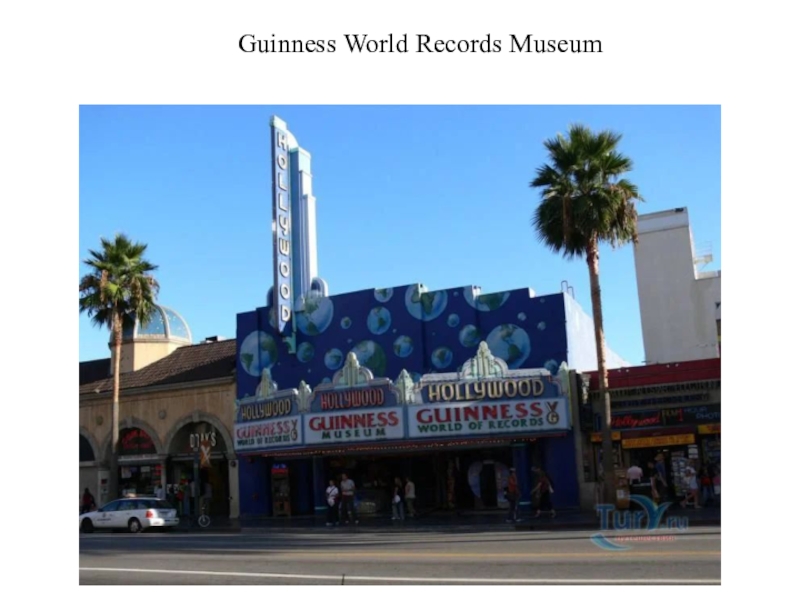
- 17. Guinness World Records Museum
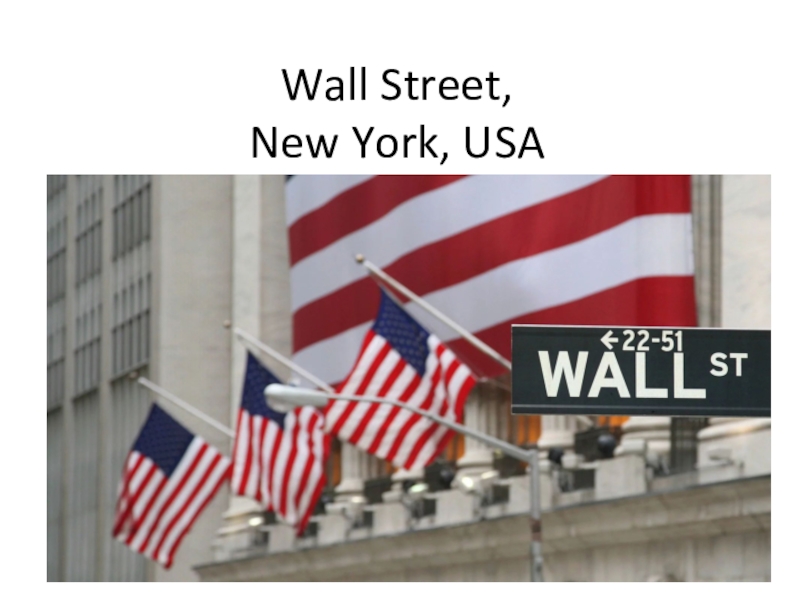
- 18. Wall Street, New York, USA
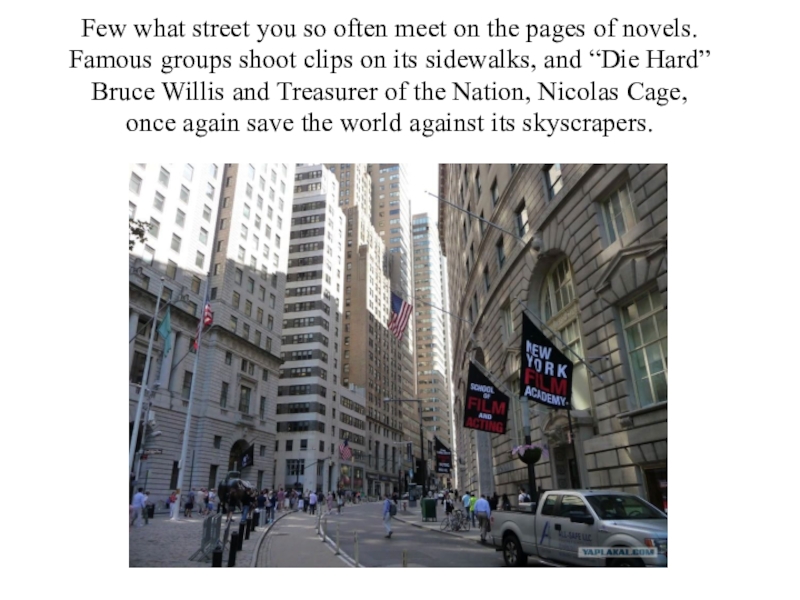
- 19. Few what street you so often meet
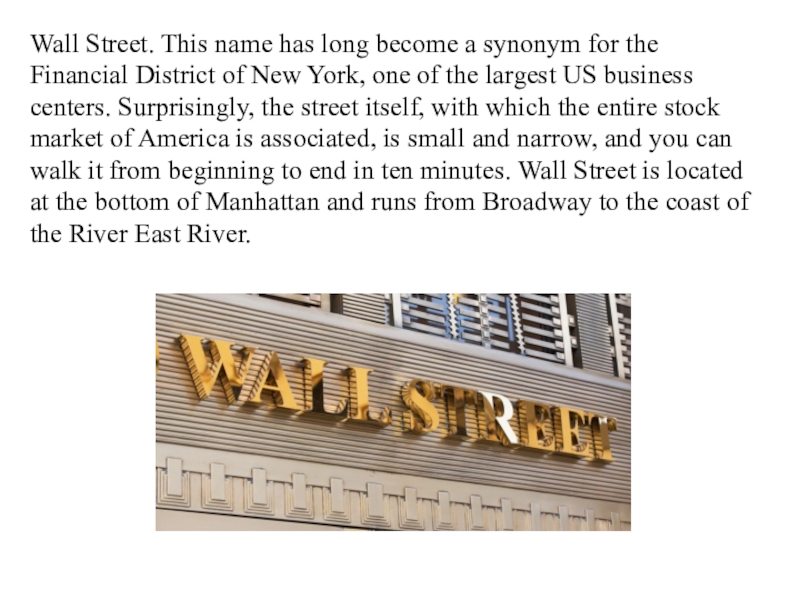
- 20. Wall Street. This name has long become
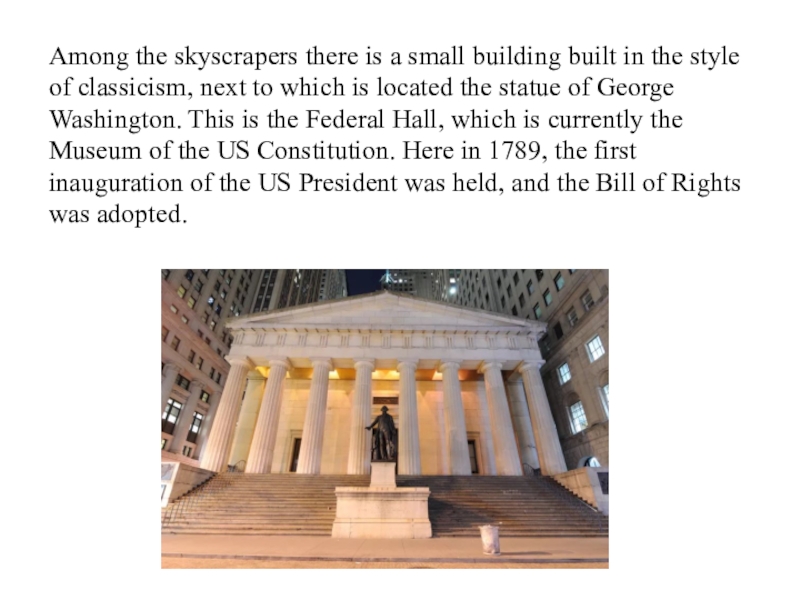
- 21. Among the skyscrapers there is a small
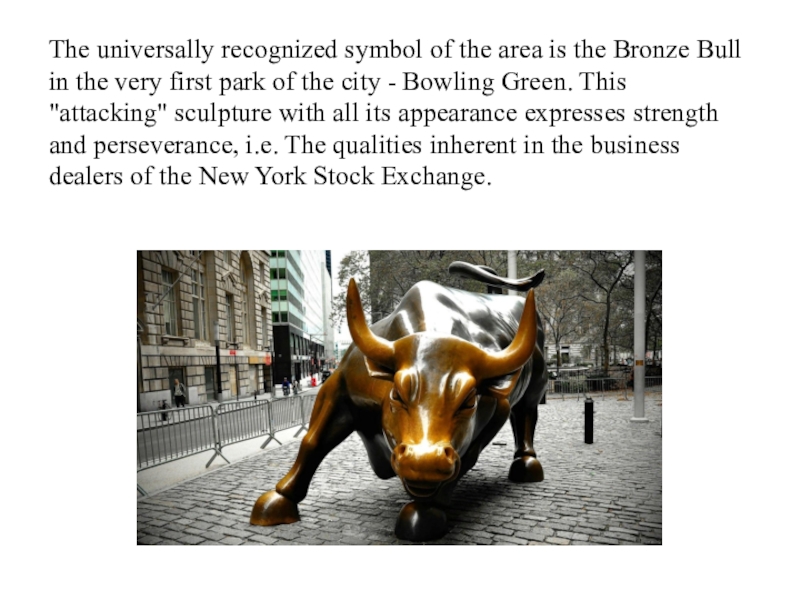
- 22. The universally recognized symbol of the area
- 23. One of the most beautiful buildings in
- 24. Thank you for attention
Oxford Street, London , England
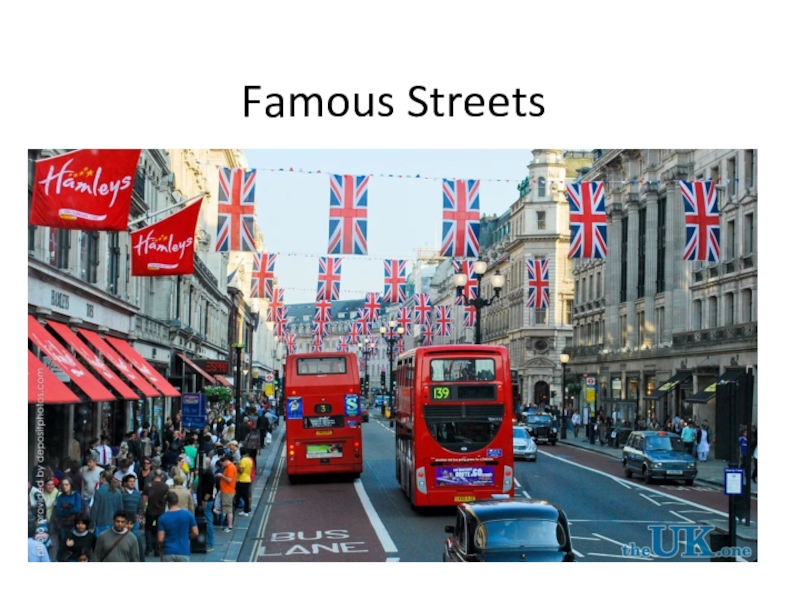
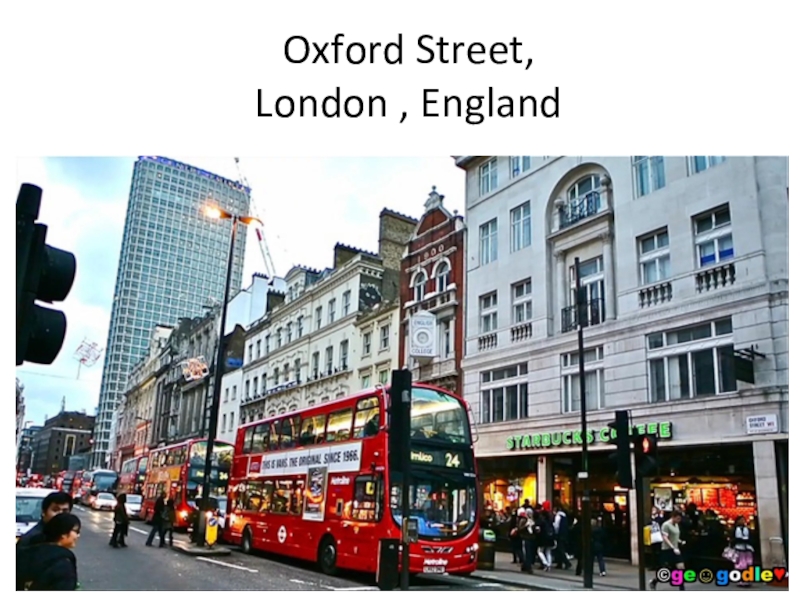
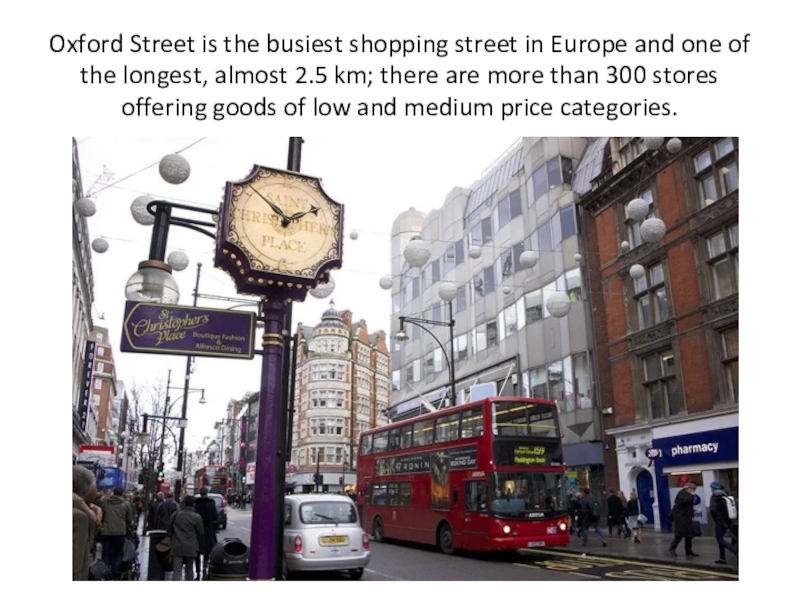
Слайд 3Oxford Street is the busiest shopping street in Europe and one
of the longest, almost 2.5 km; there are more than 300 stores offering goods of low and medium price categories.
Слайд 4 Once there were fields here. The Roman road connected this region
with Colchester. The royal court was moved from the Tower to Westminster in the 16th century. And the fields began to be built up with cheap houses, in which a poor population settled. On this street for many centuries there were places of public executions, so there were few people who wanted to live here, and the buildings began to be used as shops. The street quickly became a merchant. When the public executions stopped, Queen Victoria demanded the destruction of the slums in the city.
At the request of the queen, the old buildings were demolished, at the expense of the state, new modern buildings were built, and then one at a time cheaply sold them to various merchants who wanted to start trading. The price was low, so the buildings quickly sold out, despite the region’s slum past. Over the next couple of decades, Oxford Street has become a busy shopping street and remains to this day.
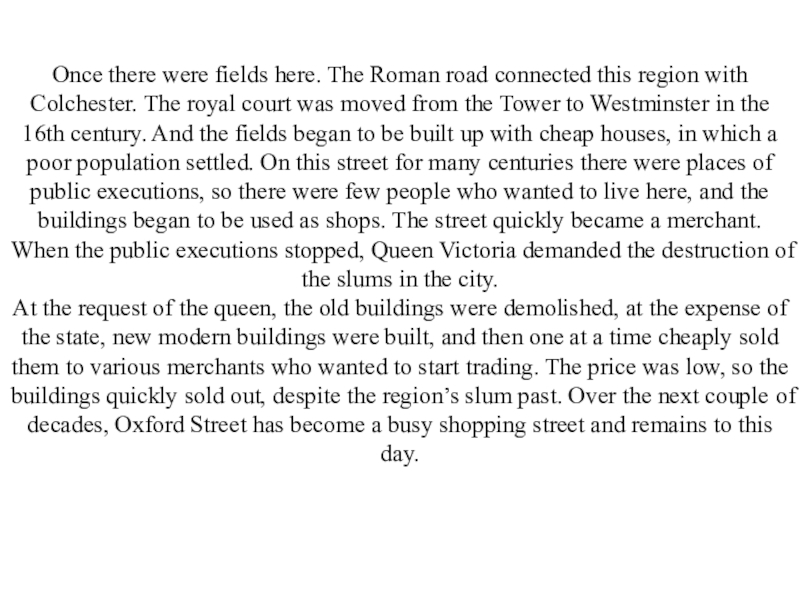
Слайд 5Oxford Street has all the major networked department stores: French Connection,
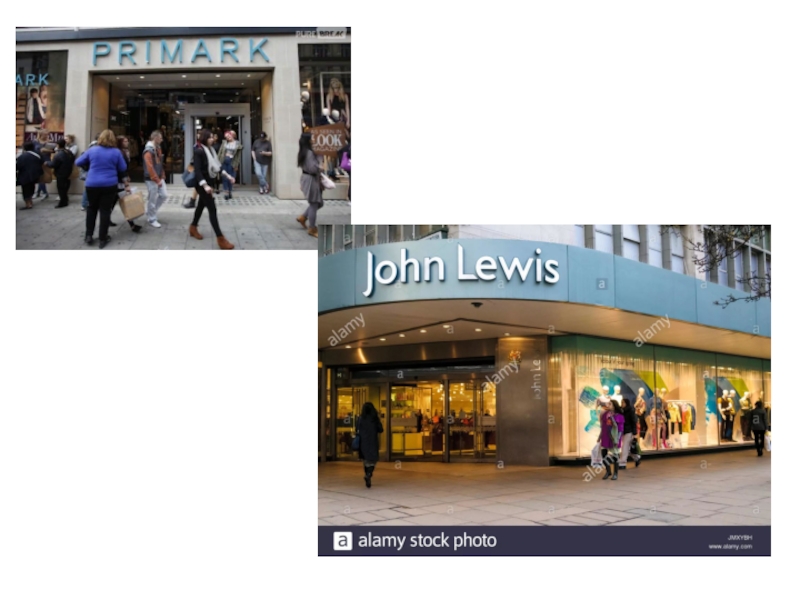
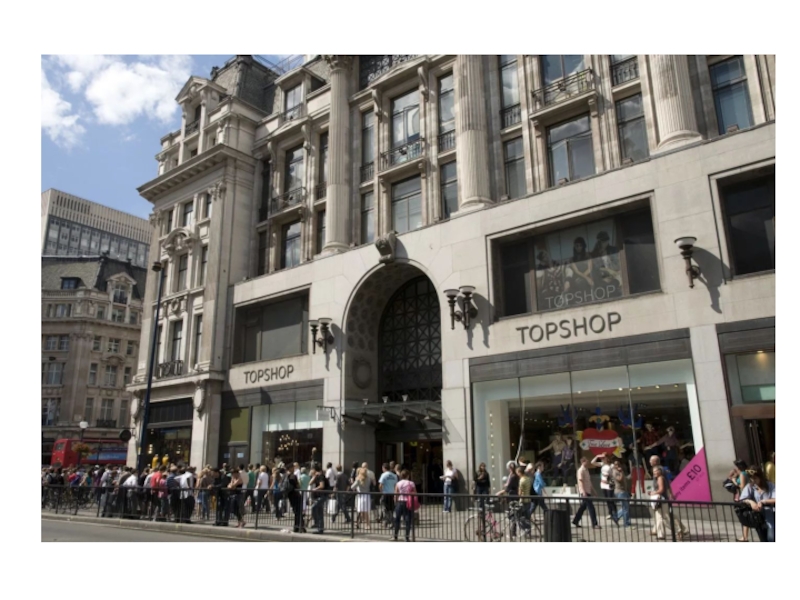
H & M, Marks & Spencer, Monsoon, Next, Primark and Topshop. All of their stores are huge, each almost always has at least some sale.
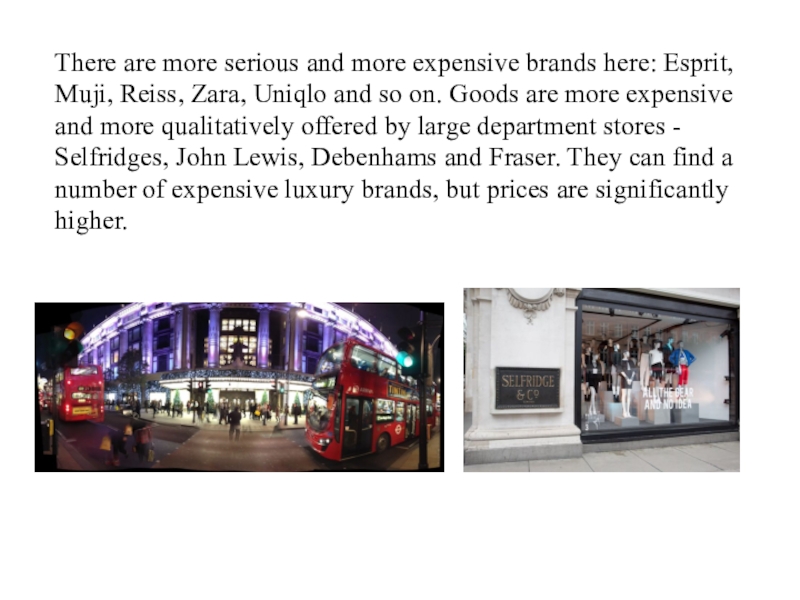
Слайд 8There are more serious and more expensive brands here: Esprit, Muji,
Reiss, Zara, Uniqlo and so on. Goods are more expensive and more qualitatively offered by large department stores - Selfridges, John Lewis, Debenhams and Fraser. They can find a number of expensive luxury brands, but prices are significantly higher.
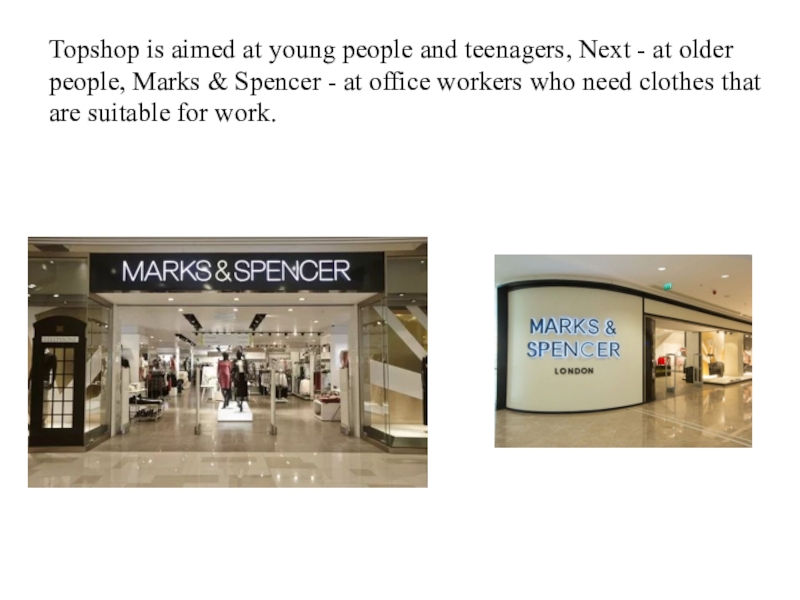
Слайд 9Topshop is aimed at young people and teenagers, Next - at
older people, Marks & Spencer - at office workers who need clothes that are suitable for work.
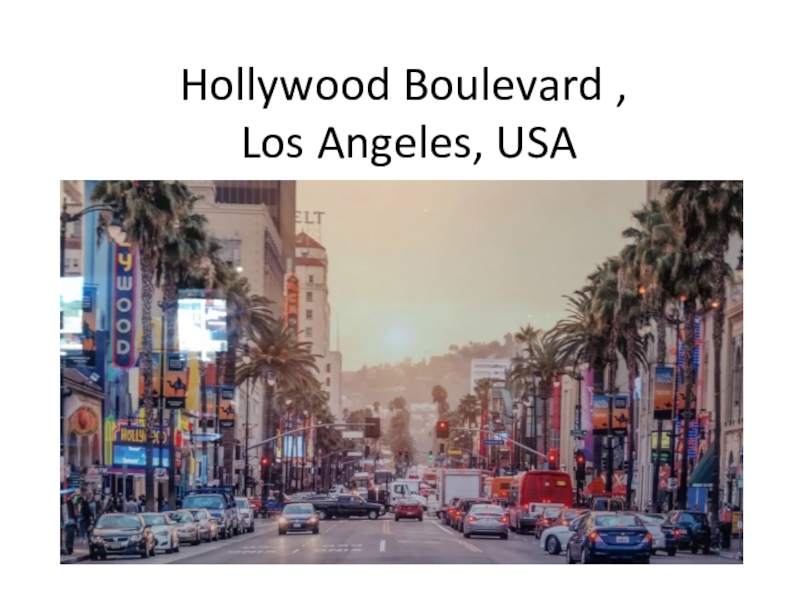
Слайд 11At the beginning of the 20th century, Hollywood was a small
and quiet town, located 15 km north-west of Los Angeles. Two cities separated from each other vineyards, citrus groves and barley fields. By that time, just over 100 thousand people lived in Los Angeles and it did not in the least resemble the metropolis that it is now. The following decades were marked by the rapid growth of Los Angeles. First of all, this happened due to the annexation of nearby territories. Hollywood, which became part of Los Angeles in 1910, did not avoid this fate. Curiously, one of the reasons why the city authorities agreed to become part of a large neighbor was the water supply problems in Hollywood, which could be resolved by growing Los Angeles.
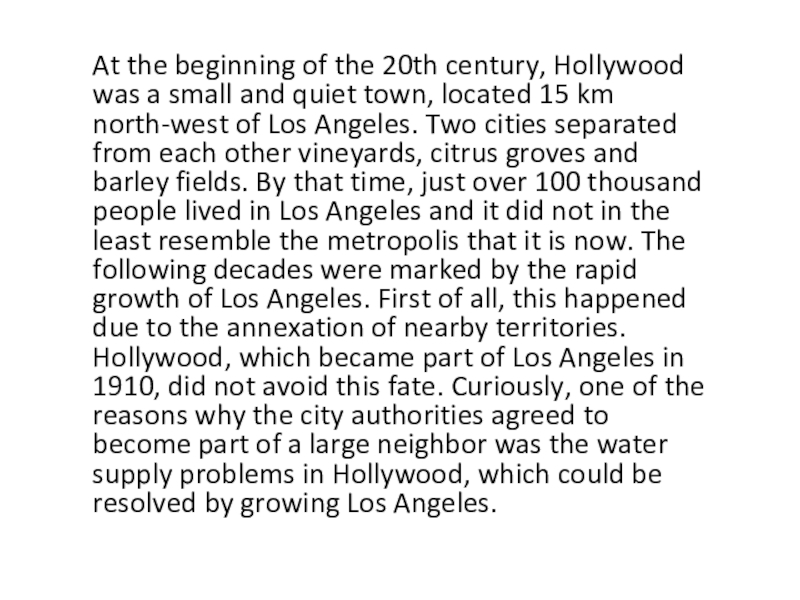
Слайд 12Immediately after the accession, one of the main streets of Hollywood,
called Prospect Avenue, was renamed and got its modern name “Hollywood Boulevard”
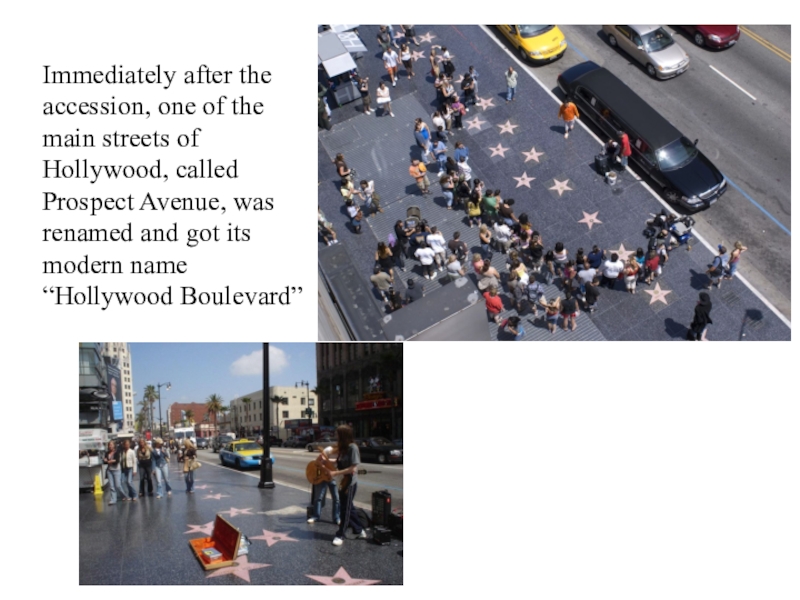
Слайд 13Today, Hollywood Boulevard remains one of the main tourist attractions in
Los Angeles. On the boulevard you can spend most of the day and have a good time.
Слайд 19Few what street you so often meet on the pages of
novels. Famous groups shoot clips on its sidewalks, and “Die Hard” Bruce Willis and Treasurer of the Nation, Nicolas Cage, once again save the world against its skyscrapers.
Слайд 20Wall Street. This name has long become a synonym for the
Financial District of New York, one of the largest US business centers. Surprisingly, the street itself, with which the entire stock market of America is associated, is small and narrow, and you can walk it from beginning to end in ten minutes. Wall Street is located at the bottom of Manhattan and runs from Broadway to the coast of the River East River.
Слайд 21Among the skyscrapers there is a small building built in the
style of classicism, next to which is located the statue of George Washington. This is the Federal Hall, which is currently the Museum of the US Constitution. Here in 1789, the first inauguration of the US President was held, and the Bill of Rights was adopted.
Слайд 22The universally recognized symbol of the area is the Bronze Bull
in the very first park of the city - Bowling Green. This "attacking" sculpture with all its appearance expresses strength and perseverance, i.e. The qualities inherent in the business dealers of the New York Stock Exchange.
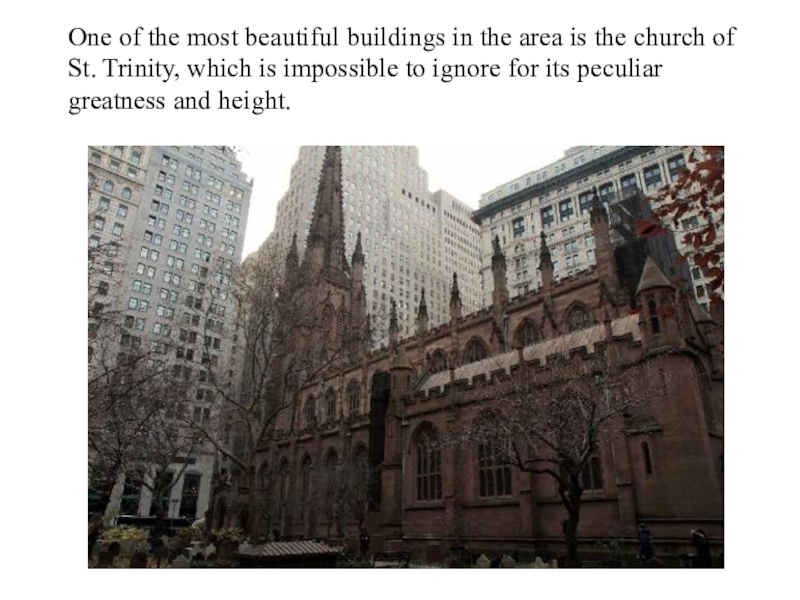
Слайд 23One of the most beautiful buildings in the area is the
church of St. Trinity, which is impossible to ignore for its peculiar greatness and height.