- Главная
- Разное
- Образование
- Спорт
- Естествознание
- Природоведение
- Религиоведение
- Французский язык
- Черчение
- Английский язык
- Астрономия
- Алгебра
- Биология
- География
- Геометрия
- Детские презентации
- Информатика
- История
- Литература
- Математика
- Музыка
- МХК
- Немецкий язык
- ОБЖ
- Обществознание
- Окружающий мир
- Педагогика
- Русский язык
- Технология
- Физика
- Философия
- Химия
- Шаблоны, фоны, картинки для презентаций
- Экология
- Экономика
Презентация, доклад по английскому языку Букингемский дворец
Содержание
- 1. Презентация по английскому языку Букингемский дворец
- 2. Buckingham Palace Building informationTown LondonCountry United
- 3. Слайд 3
- 4. Buckingham Palace is the
- 5. Слайд 5
- 6. First houses on the site Possibly
- 7. A garden party at Buckingham Palace in
- 8. Home
- 9. Слайд 9
- 10. Слайд 10
- 11. Слайд 11
- 12. Exhibition in the Buckingham palace On
- 13. Слайд 13
Buckingham Palace Building informationTown LondonCountry United KingdomArchitect William Winde, John Nash, Edward Blore, Aston WebbClient John Sheffield, 1st Duke of Buckingham and Normanby, The Crown in Right of the United Kingdom (Victoria, Edward VII, George V)Construction
Слайд 2Buckingham Palace
Building information
Town London
Country United Kingdom
Architect William Winde, John Nash,
Edward Blore, Aston Webb
Client John Sheffield, 1st Duke of Buckingham and Normanby, The Crown in Right of the United Kingdom (Victoria, Edward VII, George V)
Construction start date 1703
Owner The Queen in Right of the United Kingdom (Elizabeth II)
Style Georgian, Regency, Victorian, Neo-Renaissance
Size 77,000 m² (828,818 ft²)
Client John Sheffield, 1st Duke of Buckingham and Normanby, The Crown in Right of the United Kingdom (Victoria, Edward VII, George V)
Construction start date 1703
Owner The Queen in Right of the United Kingdom (Elizabeth II)
Style Georgian, Regency, Victorian, Neo-Renaissance
Size 77,000 m² (828,818 ft²)
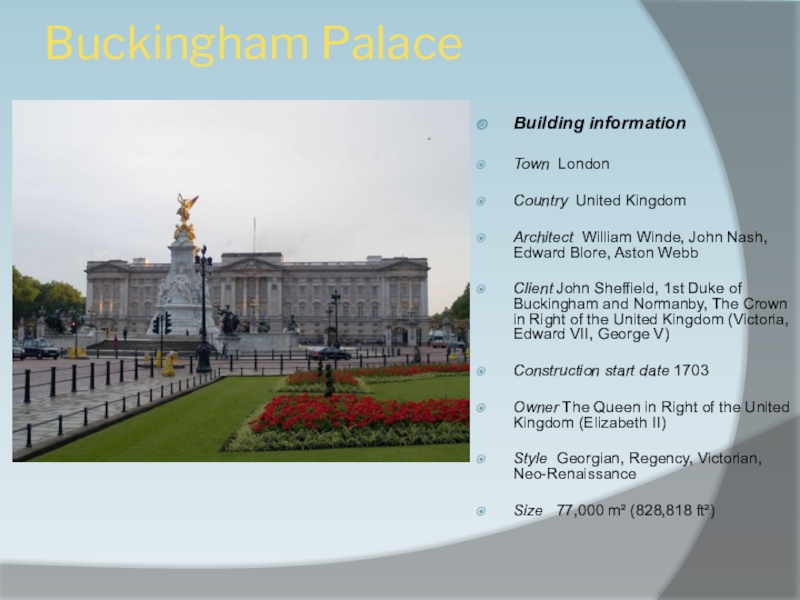
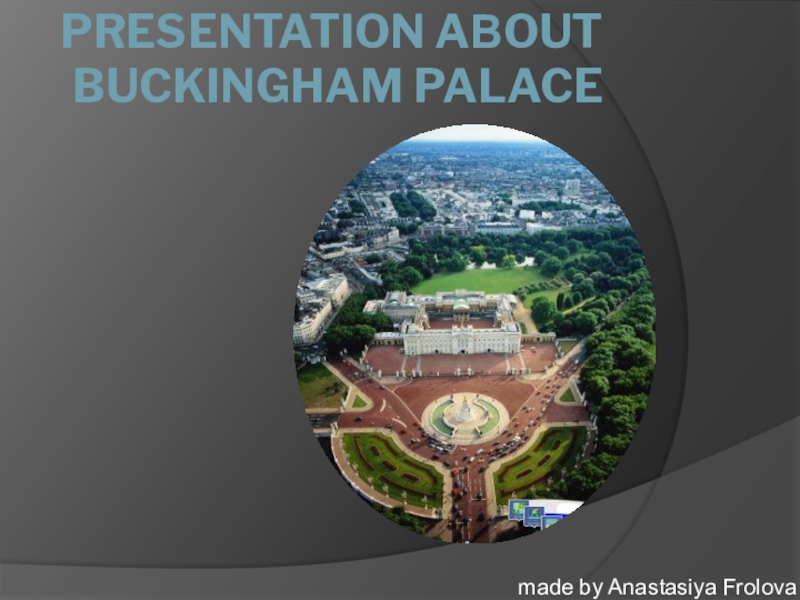
Слайд 4 Buckingham Palace is the official London residence of the British monarch.
The palace is a setting for state occasions and royal entertaining, and a major tourist attraction.
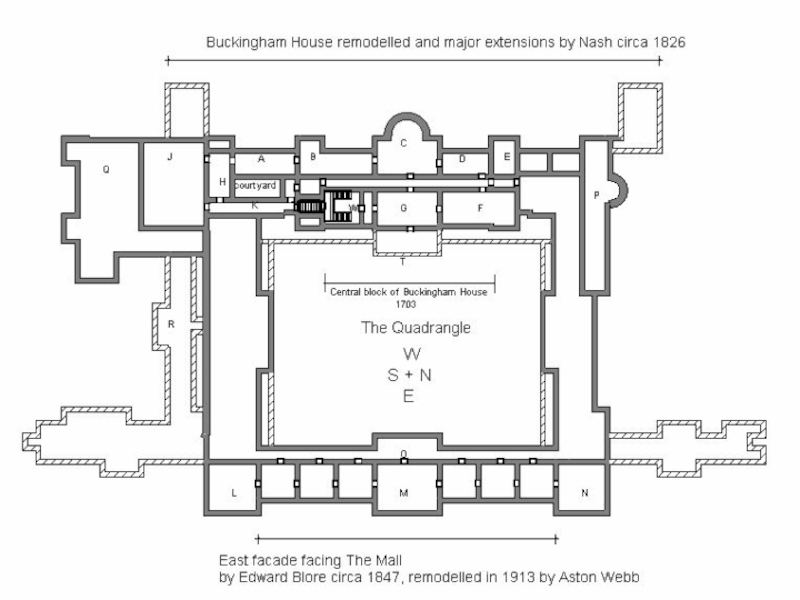
Originally known as Buckingham House, the building forming the core of today's palace was a large townhouse built for the Duke of Buckingham in 1703 and acquired by George III in 1761 as a private residence, known as "The Queen's House". It was enlarged over the next 75 years, principally by architects John Nash and Edward Blore, forming three wings around a central courtyard. Buckingham Palace finally became the official royal palace of the British monarch on the accession of Queen Victoria in 1837. The last major structural additions were made in the late 19th and early 20th century, including the present-day public face of Buckingham Palace. The building is occasionally still referred to as "Buck House".
The Buckingham Palace Garden is the largest private garden in London, originally landscaped by Capability Brown, but redesigned by William Townsend Aiton of Kew Gardens and John Nash. The artificial lake was completed in 1828 and is supplied with water from the Serpentine, a lake in Hyde Park.
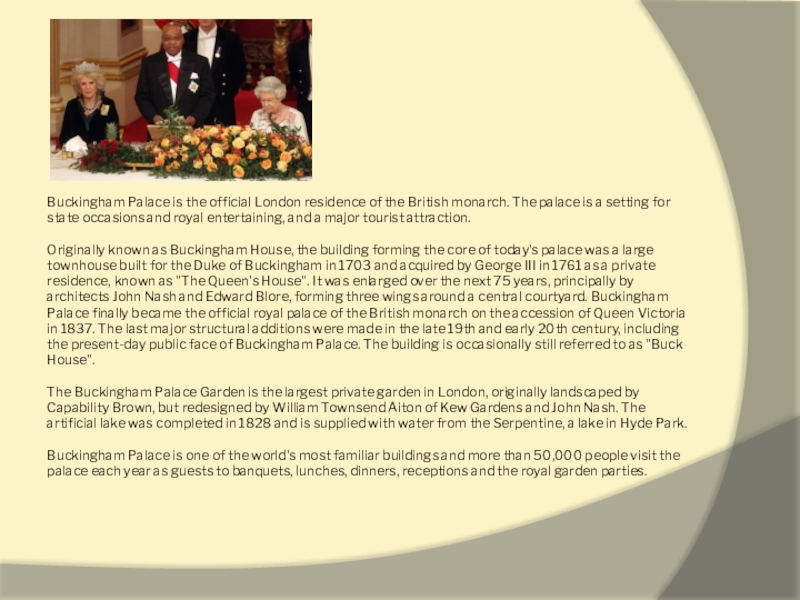
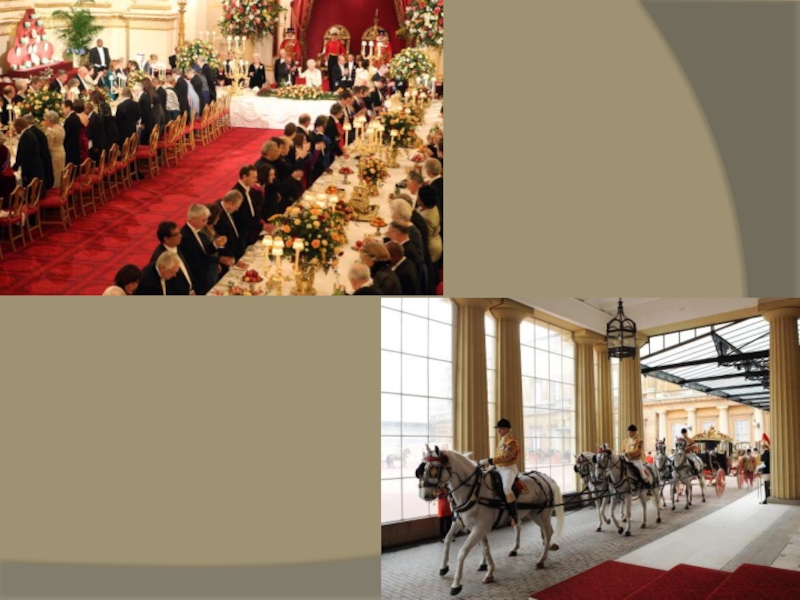
Buckingham Palace is one of the world's most familiar buildings and more than 50,000 people visit the palace each year as guests to banquets, lunches, dinners, receptions and the royal garden parties.
Слайд 6First houses on the site Possibly the first house erected within the
site was that of a Sir William Blake, around 1624. The next owner was Lord Goring, who from 1633 extended Blake's house and developed much of today's garden, then known as Goring Great Garden.Unbeknown to Goring, in 1640 the document "failed to pass the Great Seal before King Charles I fled London, which it needed to do for legal execution". (It was this critical omission that helped the British royal family regain the freehold under King George III.)
The improvident Goring defaulted on his rents; Henry Bennet, 1st Earl of Arlington obtained the mansion and was occupying it, now known as Goring House, when it burned down in 1674. Arlington House rose on the site — the southern wing of today's palace — the next year, and its freehold was bought in 1702.
The house which forms the architectural core of the present palace was built for the first Duke of Buckingham and Normanby in 1703 to the design of William Winde. The style chosen was of a large, three-floored central block with two smaller flanking service wings.
Buckingham House was eventually sold by Buckingham's descendant, Sir Charles Sheffield, in 1761 to George III for £21,000.The house was originally intended as a private retreat for the royal family, and in particular for Queen Charlotte, and was known as The Queen's House. St. James's Palace remained the official and ceremonial royal residence; indeed, the tradition continues to the present time of foreign ambassadors being formally accredited to "the Court of St. James's", even though it is at Buckingham Palace that they present their credentials and staff to the Queen upon their appointment.
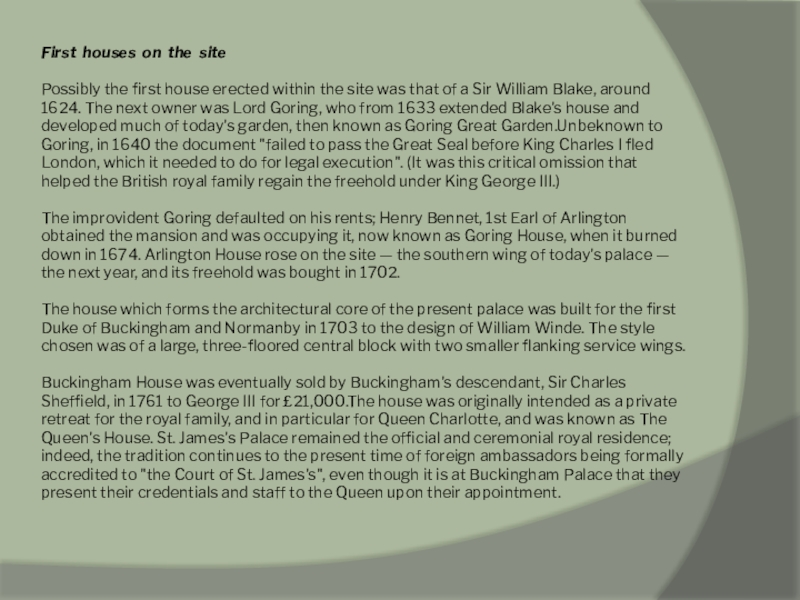
Слайд 7A garden party at Buckingham Palace in 1868.
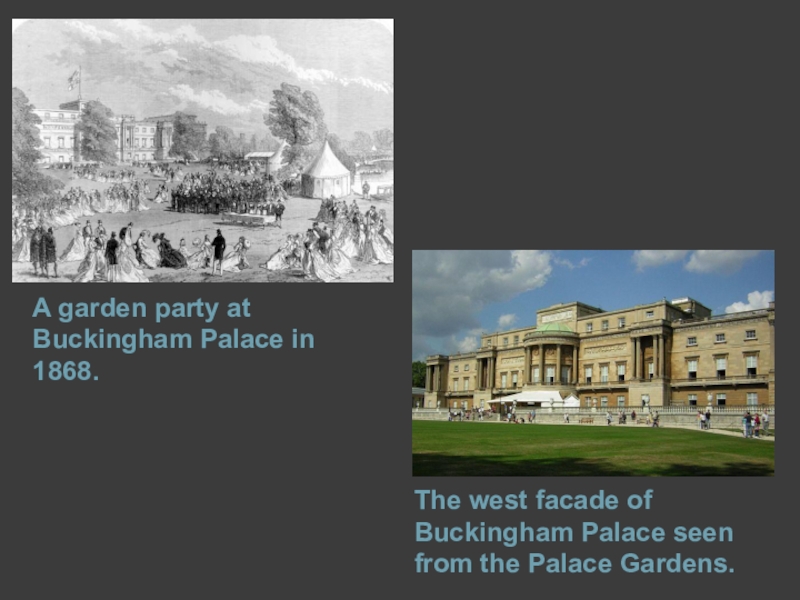
The west facade of
Buckingham Palace seen from the Palace Gardens.
Слайд 8 Home of the monarch Buckingham Palace finally became the principal Royal residence
in 1837 on the accession of Queen Victoria. While the state rooms were a riot of gilt and colour, the necessities of the new palace were somewhat less luxurious. For one thing, it was reported the chimneys smoked so much that the fires had to be allowed to die down, and consequently the court shivered in icy magnificence. Ventilation was so bad that the interior smelled, and when a decision was taken to install gas lamps there was a serious worry about the build-up of gas on the lower floors. It was also said that the staff were lax and lazy and the palace was dirty. Following the Queen's marriage in 1840, her husband, Prince Albert, concerned himself with a reorganization of the household offices and staff, and with the design faults of the palace. The problems were all rectified by the close of 1840.
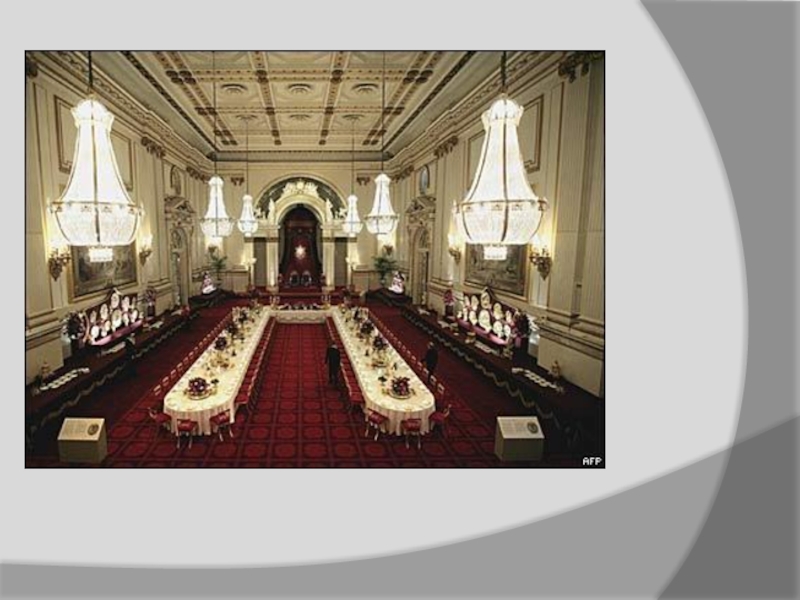
By 1847, the couple had found the palace too small for Court life and their growing family and consequently the new wing, designed by Edward Blore, was built by Thomas Cubitt, enclosing the central quadrangle. The large East Front facing The Mall is today the 'public face' of Buckingham Palace and contains the balcony from which the Royal Family acknowledge the crowds on momentous occasions and annually following Trooping the Colour. The ballroom wing and a further suite of state rooms were also built in this period, designed by Nash's student Sir James Pennethorne.
Before Prince Albert's demise, Queen Victoria was known to openly love music and dancing and the greatest contemporary musicians entertained at Buckingham Palace. Felix Mendelssohn is known to have played there on three occasions. Johann Strauss II and his orchestra played there when in England. Strauss's 'Alice Polka' was first performed at the palace in 1849 in honour of the Queen's daughter, Princess Alice. Under Victoria, Buckingham Palace was frequently the scene of lavish costume balls, in addition to the routine royal ceremonies, investitures and presentations.
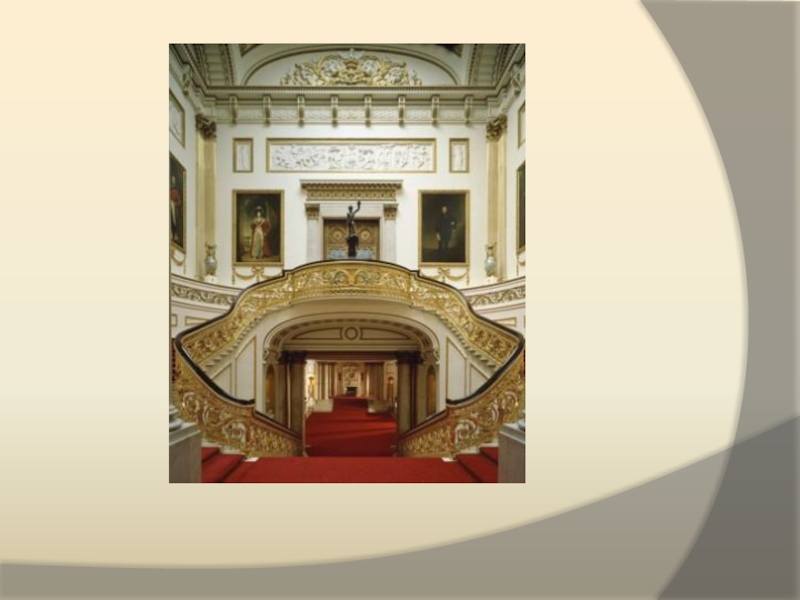
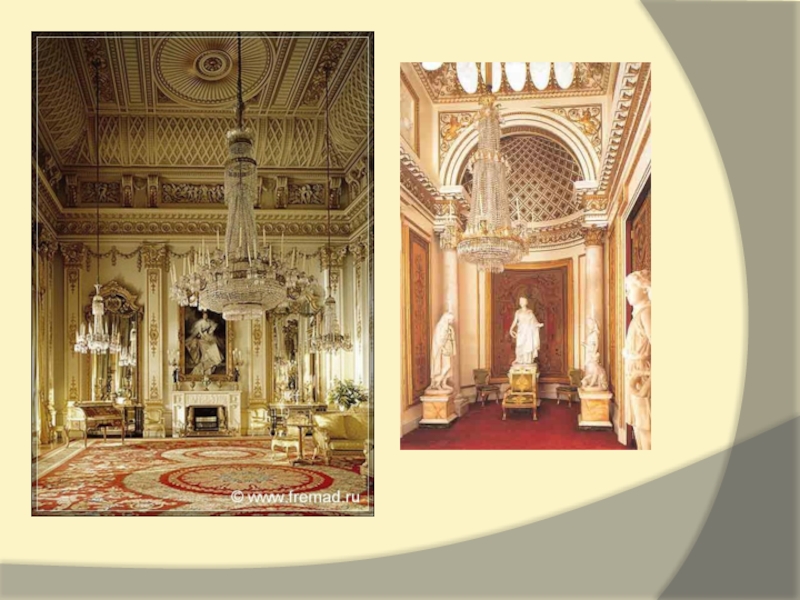
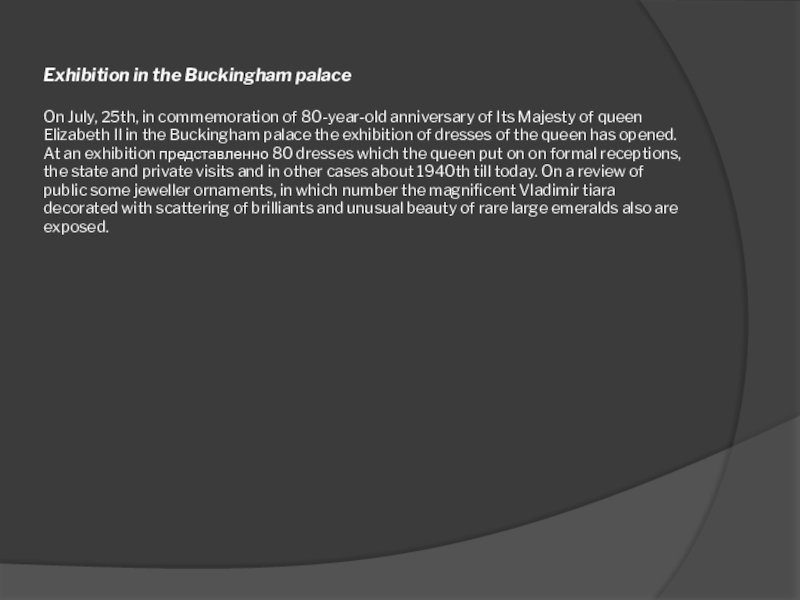
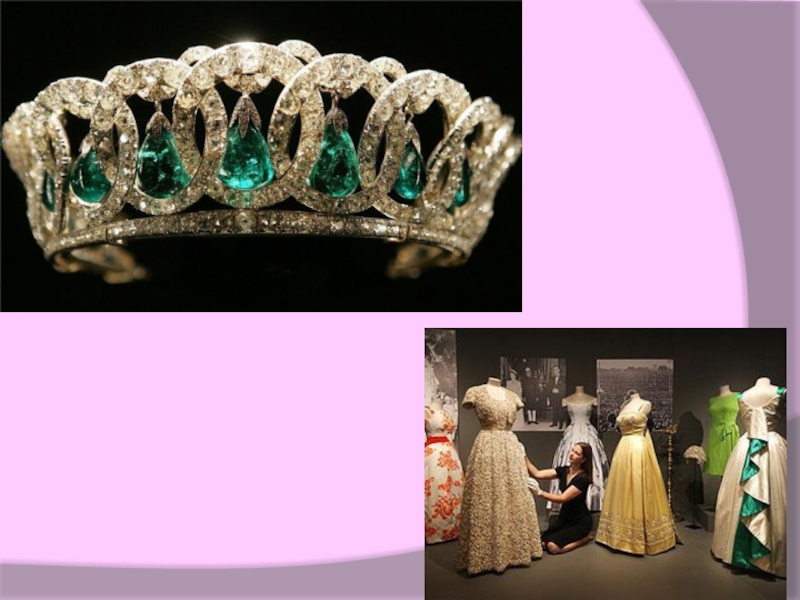
Слайд 12Exhibition in the Buckingham palace On July, 25th, in commemoration of 80-year-old
anniversary of Its Majesty of queen Elizabeth II in the Buckingham palace the exhibition of dresses of the queen has opened. At an exhibition представленно 80 dresses which the queen put on on formal receptions, the state and private visits and in other cases about 1940th till today. On a review of public some jeweller ornaments, in which number the magnificent Vladimir tiara decorated with scattering of brilliants and unusual beauty of rare large emeralds also are exposed.