- Главная
- Разное
- Образование
- Спорт
- Естествознание
- Природоведение
- Религиоведение
- Французский язык
- Черчение
- Английский язык
- Астрономия
- Алгебра
- Биология
- География
- Геометрия
- Детские презентации
- Информатика
- История
- Литература
- Математика
- Музыка
- МХК
- Немецкий язык
- ОБЖ
- Обществознание
- Окружающий мир
- Педагогика
- Русский язык
- Технология
- Физика
- Философия
- Химия
- Шаблоны, фоны, картинки для презентаций
- Экология
- Экономика
Презентация, доклад по английскому языку
Содержание
- 1. Презентация по английскому языку
- 2. Слайд 2
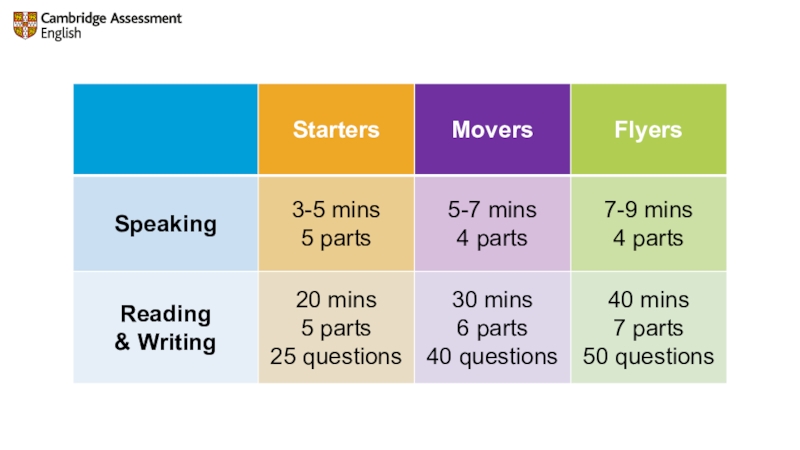
- 3. Aims of this webinar1An overview of the required productive skills2Strategies 3Preparation tips and activities
- 4. Слайд 4
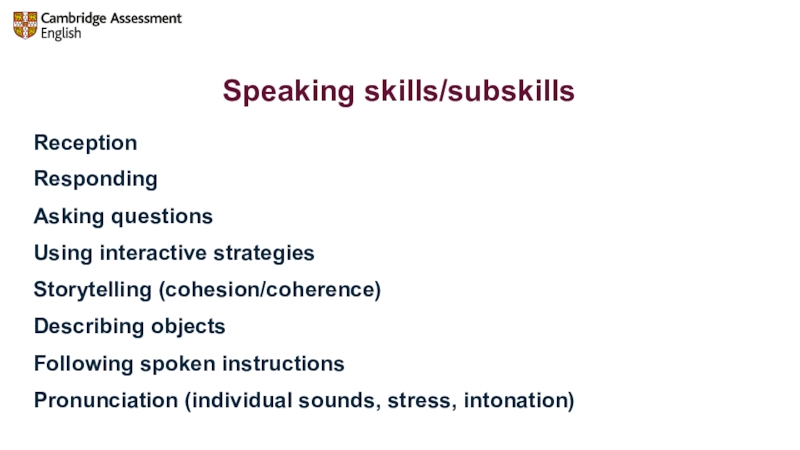
- 5. Speaking skills/subskillsReception Responding Asking questionsUsing interactive strategiesStorytelling (cohesion/coherence)Describing objectsFollowing spoken instructionsPronunciation (individual sounds, stress, intonation)
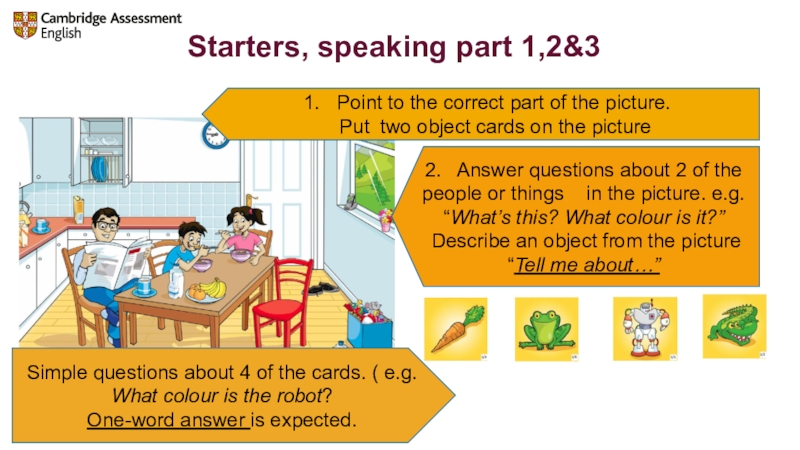
- 6. Starters, speaking part 1,2&31. Point to
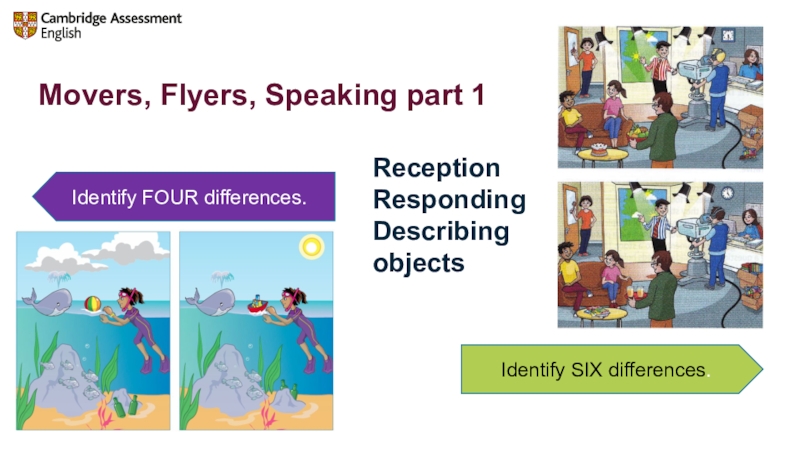
- 7. Identify FOUR differences.Identify SIX differences.Reception RespondingDescribing objects Movers, Flyers, Speaking part 1
- 8. Flyers, Speaking part 2 Ask questions about
- 9. Movers, Speaking part 3 Odd one outGive
- 10. Speaking. Movers part 2, Flyers part 3
- 11. The language used in the classroom when
- 12. How often do you ask students questions
- 13. What do young learners like?Meaningful Content
- 14. What do young learners like?Meaningful ContentSongsPoemsChantsStoriesGamesRelevant real-life context
- 15. What do young learners need? R_ _
- 16. What do young learners need? RoutinesClear instructionsScaffoldingPraiseMovement RulesOutcomes are valuedVocabularyPromptsSafe environmentStimulusFunSilent periodModelsAuthentic learning situations for speaking
- 17. Some steps to successful speakingIntroduce routines (closing/opening/checking
- 18. Start of the lesson routineWrite questions relevant
- 19. Using mini books for vocabulary and storytelling
- 20. Why storytelling?Stories support natural acquisition of language.
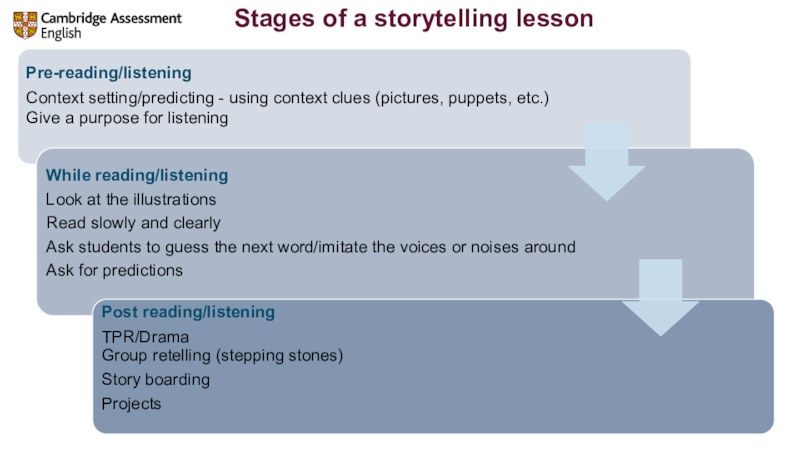
- 21. Stages of a storytelling lesson
- 22. Writing skills and subskillsSpelling CoherenceCohesionProofreadingEditing
- 23. Movers, Reading & Writing part 6 Complete
- 24. Write 20 or more words (but not
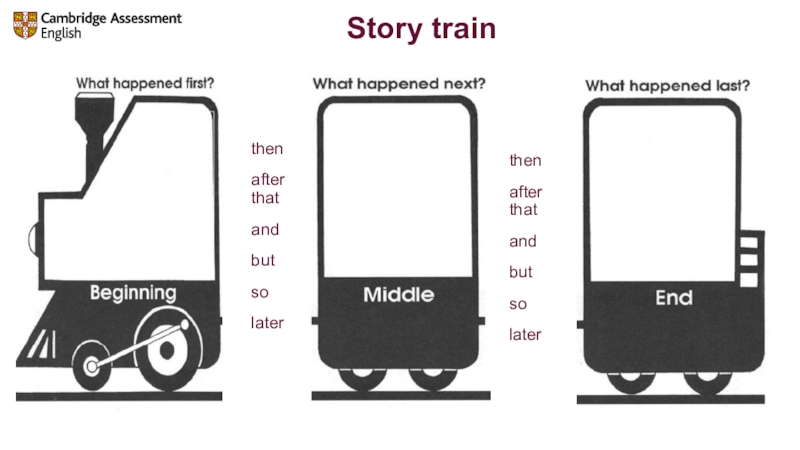
- 25. thenafter thatandbutsolaterthenafter thatandbutsolaterStory train
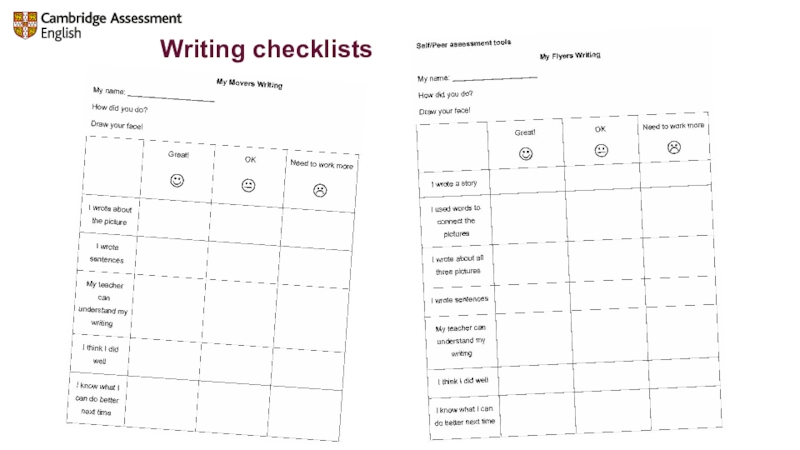
- 26. Writing checklists
- 27. Make sure your studentsKnow the names of
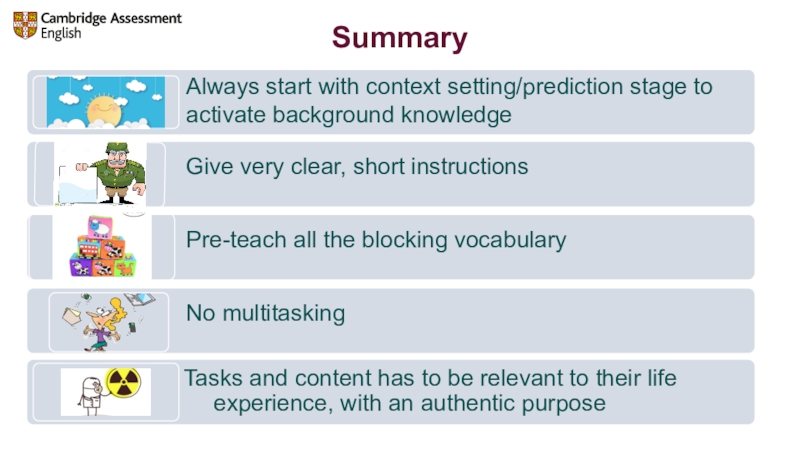
- 28. Summary
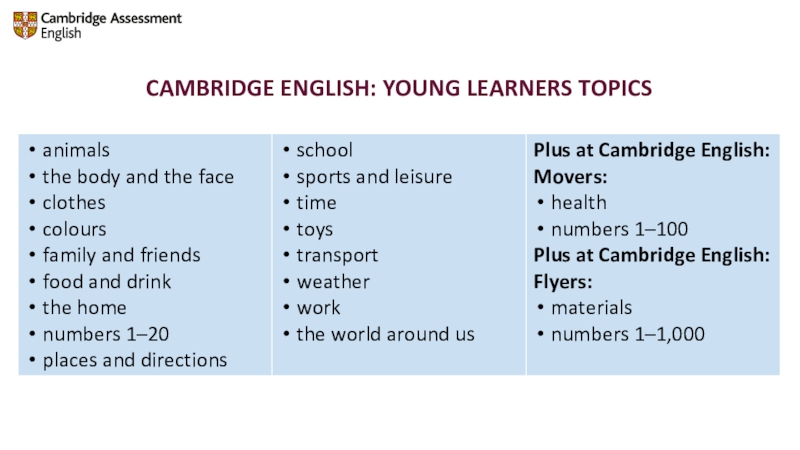
- 29. CAMBRIDGE ENGLISH: YOUNG LEARNERS TOPICS
- 30. For more information (handbooks, wordlists, etc.) go tohttps://www.cambridgeenglish.org/
- 31. Any questions?
- 32. Thank you!Presented by Kiseleva Evgeniia [email protected](CELTA, IH CAM, IH CYLT, DELTA)FB https://www.facebook.com/jane.kiseleva.31
Слайд 3Aims of this webinar
1
An overview of the required productive skills
2
Strategies
3
Preparation
Слайд 5Speaking skills/subskills
Reception
Responding
Asking questions
Using interactive strategies
Storytelling (cohesion/coherence)
Describing objects
Following spoken instructions
Pronunciation
Слайд 6Starters, speaking part 1,2&3
1. Point to the correct part of
Put two object cards on the picture
2. Answer questions about 2 of the people or things in the picture. e.g. “What’s this? What colour is it?”
Describe an object from the picture “Tell me about…”
Simple questions about 4 of the cards. ( e.g. What colour is the robot?
One-word answer is expected.
Слайд 7Identify FOUR differences.
Identify SIX differences.
Reception
Responding
Describing objects
Movers, Flyers, Speaking part
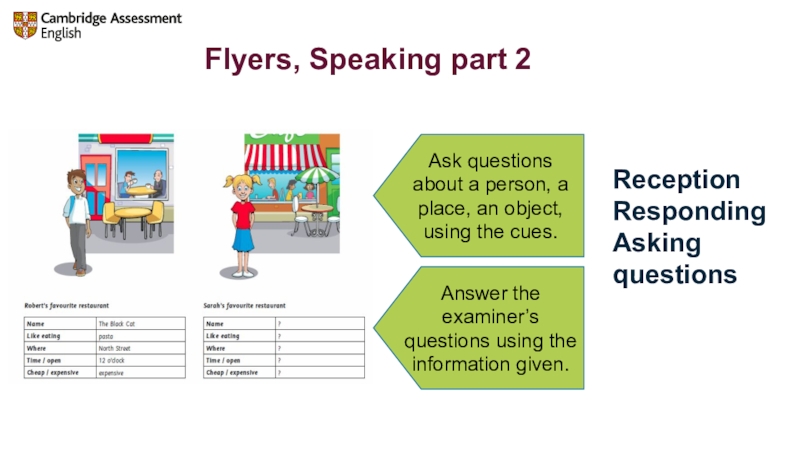
Слайд 8Flyers, Speaking part 2
Ask questions about a person, a place, an
Answer the examiner’s questions using the information given.
Reception
Responding
Asking questions
Слайд 9Movers, Speaking part 3
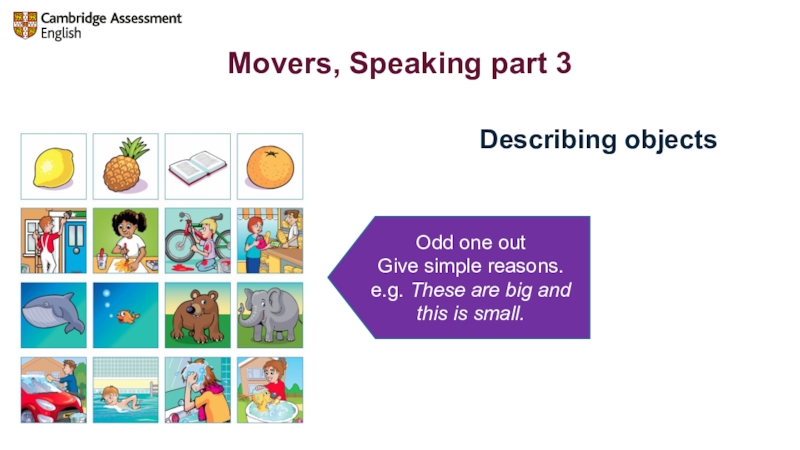
Odd one out
Give simple reasons.
e.g. These are big
Describing objects
Слайд 10Speaking. Movers part 2, Flyers part 3
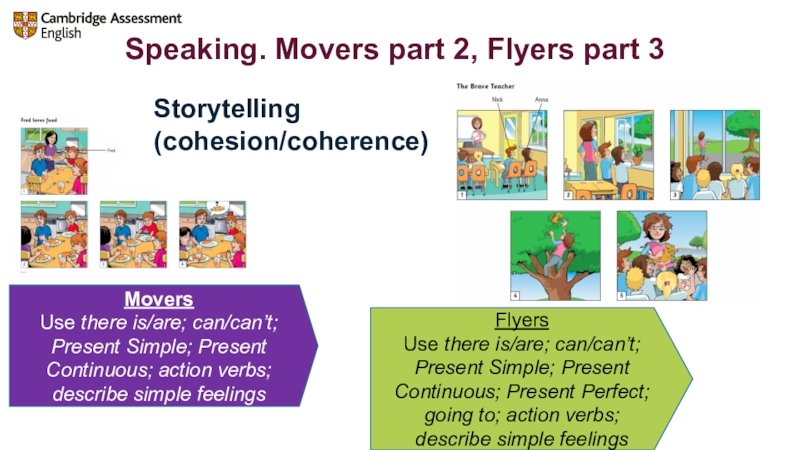
Storytelling
(cohesion/coherence)
Movers
Use there is/are;
describe simple feelings
Flyers
Use there is/are; can/can’t; Present Simple; Present Continuous; Present Perfect; going to; action verbs;
describe simple feelings
Слайд 11The language used in the classroom when giving instructions is very
(J.Willis, 1980)
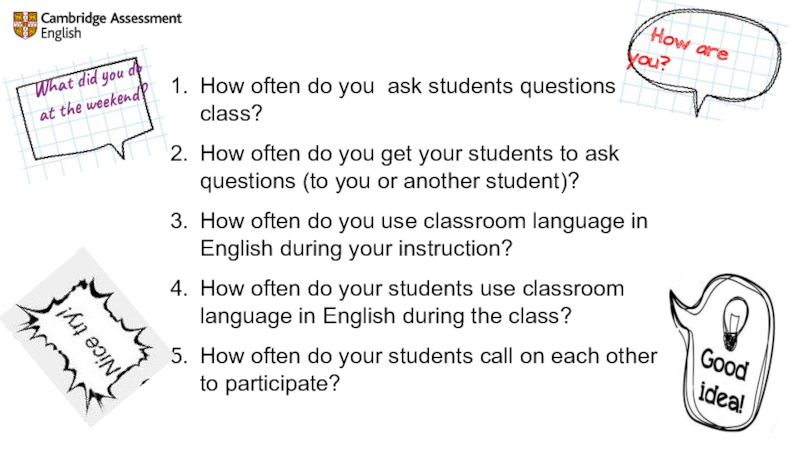
Слайд 12How often do you ask students questions in class?
How often do
How often do you use classroom language in English during your instruction?
How often do your students use classroom language in English during the class?
How often do your students call on each other to participate?
How are you?
What did you do at the weekend?
Слайд 14What do young learners like?
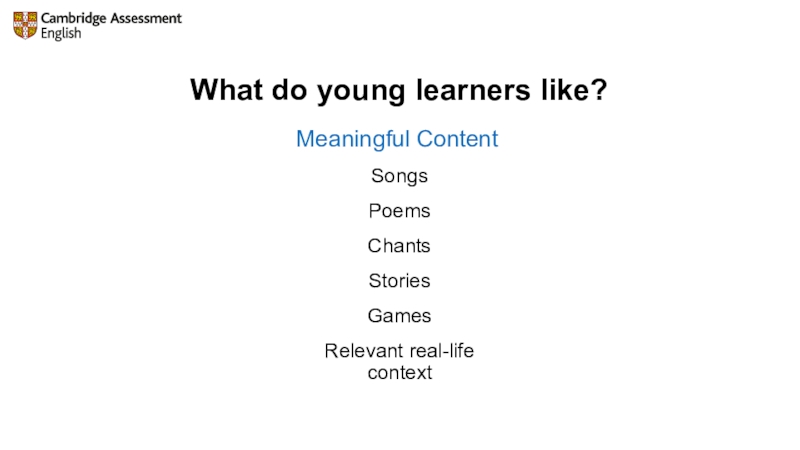
Meaningful Content
Songs
Poems
Chants
Stories
Games
Relevant real-life context
Слайд 15What do young learners need?
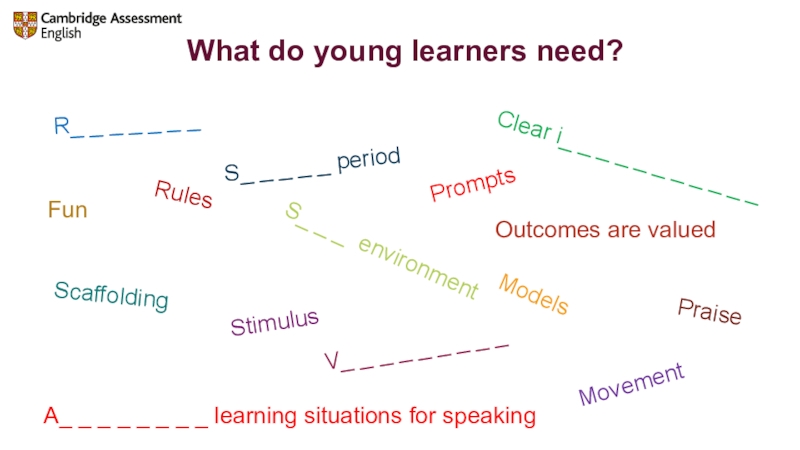
R_ _ _ _ _ _
Clear i_ _ _ _ _ _ _ _ _ _ _
Scaffolding
Praise
Movement
Rules
Outcomes are valued
V_ _ _ _ _ _ _ _ _
Prompts
S_ _ _ environment
Stimulus
Fun
S_ _ _ _ _ period
Models
A_ _ _ _ _ _ _ _ learning situations for speaking
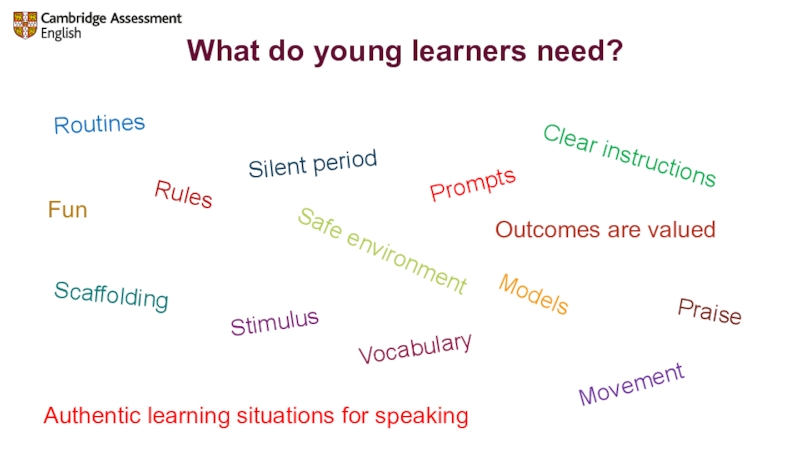
Слайд 16What do young learners need?
Routines
Clear instructions
Scaffolding
Praise
Movement
Rules
Outcomes are valued
Vocabulary
Prompts
Safe environment
Stimulus
Fun
Silent
Models
Authentic learning situations for speaking
Слайд 17Some steps to successful speaking
Introduce routines (closing/opening/checking homework, etc.)
• Start every
Use plenty of TPR activities
Train your students how to interact (handouts with the classroom language)
• Provide plenty of language models (from the very first lesson!)
• Put models you need on posters and put them on your walls
• Always give feedback on the language and content
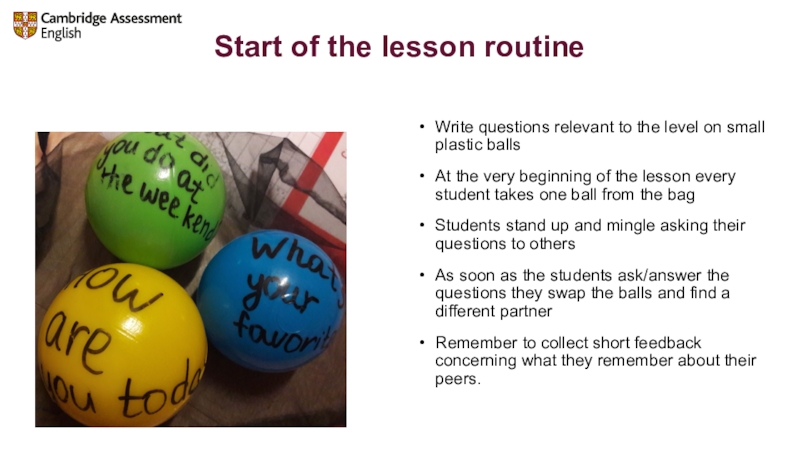
Слайд 18Start of the lesson routine
Write questions relevant to the level on
At the very beginning of the lesson every student takes one ball from the bag
Students stand up and mingle asking their questions to others
As soon as the students ask/answer the questions they swap the balls and find a different partner
Remember to collect short feedback concerning what they remember about their peers.
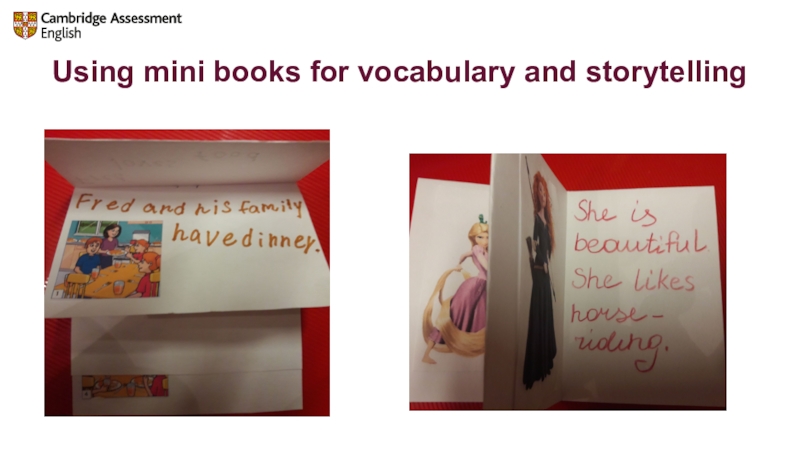
Слайд 20Why storytelling?
Stories support natural acquisition of language.
Stories offer children a
The purpose of telling a story is genuinely communicative.
Storytelling is linguistically honest. (It is oral language, meant to be heard.)
Storytelling is real.
Storytelling provides listening experiences with reduced anxiety.
Children love stories!
Слайд 23Movers, Reading & Writing part 6
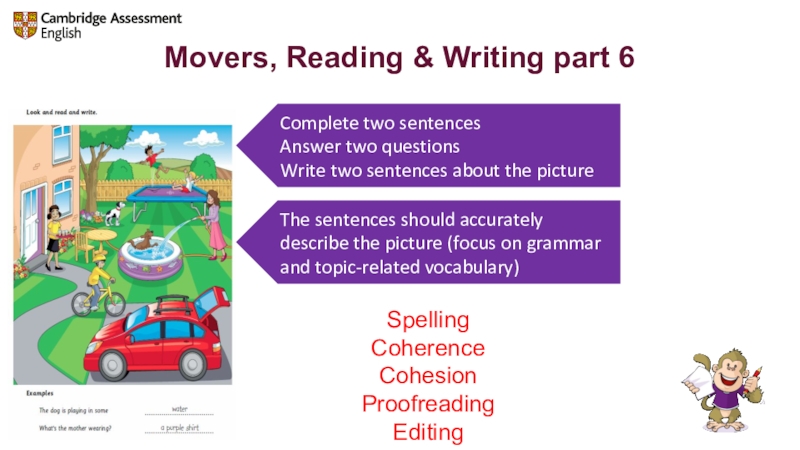
Complete two sentences
Answer two questions
Write two
The sentences should accurately describe the picture (focus on grammar and topic-related vocabulary)
Spelling
Coherence
Cohesion
Proofreading
Editing
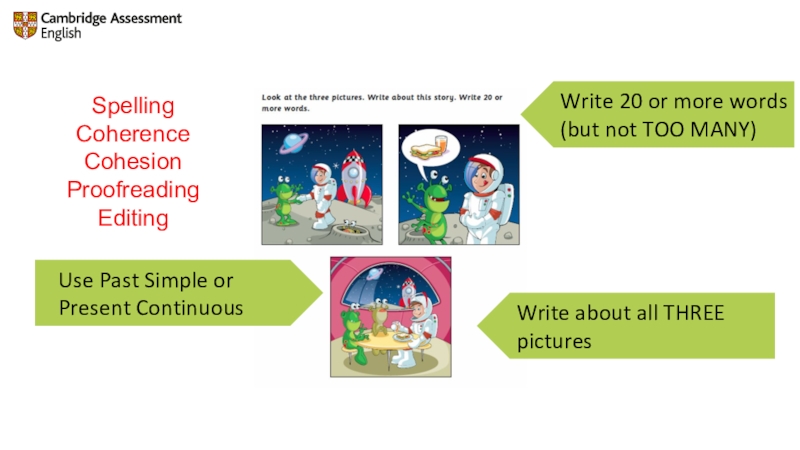
Слайд 24Write 20 or more words (but not TOO MANY)
Use Past Simple
Write about all THREE pictures
Spelling
Coherence
Cohesion
Proofreading
Editing
Слайд 27Make sure your students
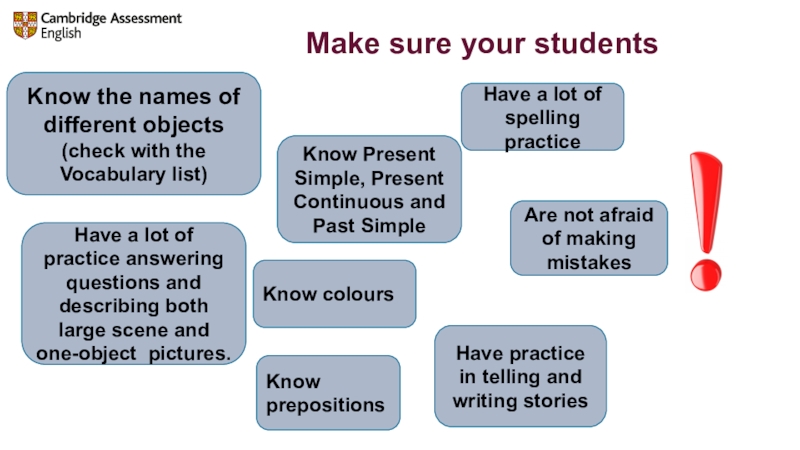
Know the names of different objects
Have a lot of practice answering questions and describing both large scene and one-object pictures.
Know colours
Have practice in telling and writing stories
Know prepositions
Know Present Simple, Present Continuous and Past Simple
Are not afraid of making mistakes
Have a lot of spelling practice
Слайд 32Thank you!
Presented by
Kiseleva Evgeniia [email protected]
(CELTA, IH CAM, IH CYLT, DELTA)
FB