- Главная
- Разное
- Образование
- Спорт
- Естествознание
- Природоведение
- Религиоведение
- Французский язык
- Черчение
- Английский язык
- Астрономия
- Алгебра
- Биология
- География
- Геометрия
- Детские презентации
- Информатика
- История
- Литература
- Математика
- Музыка
- МХК
- Немецкий язык
- ОБЖ
- Обществознание
- Окружающий мир
- Педагогика
- Русский язык
- Технология
- Физика
- Философия
- Химия
- Шаблоны, фоны, картинки для презентаций
- Экология
- Экономика
Презентация, доклад на английском языке Уэльс
Содержание
- 1. Презентация на английском языке Уэльс
- 2. ContentsHistory of WalesNational symbols of WalesMedieval WalesThe
- 3. History of wales
- 4. WALESWales is a country that is part
- 5. Location of Wales
- 6. Flag
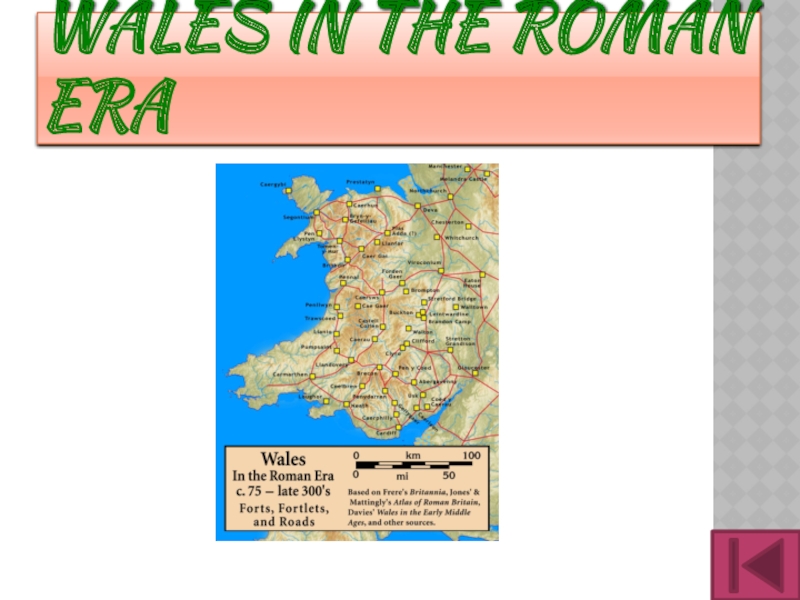
- 7. WALES IN THE ROmAN ERA
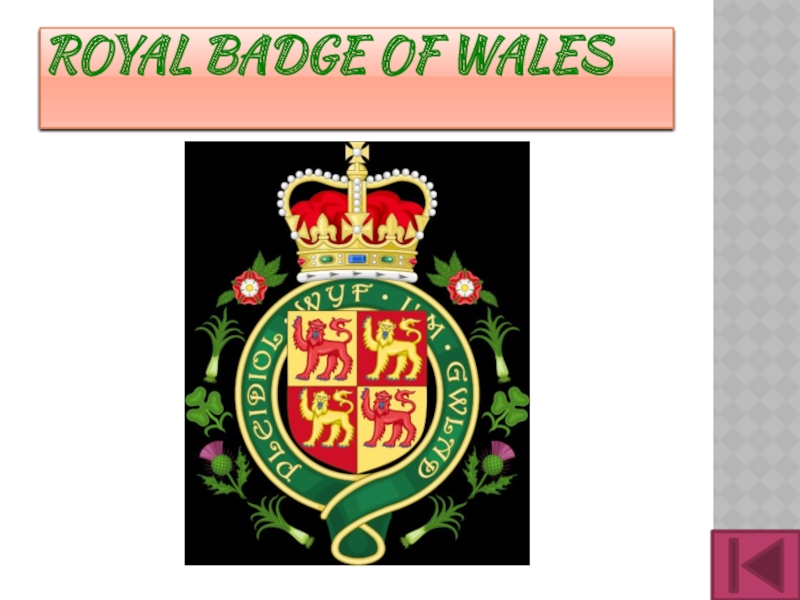
- 8. Royal Badge of Wales
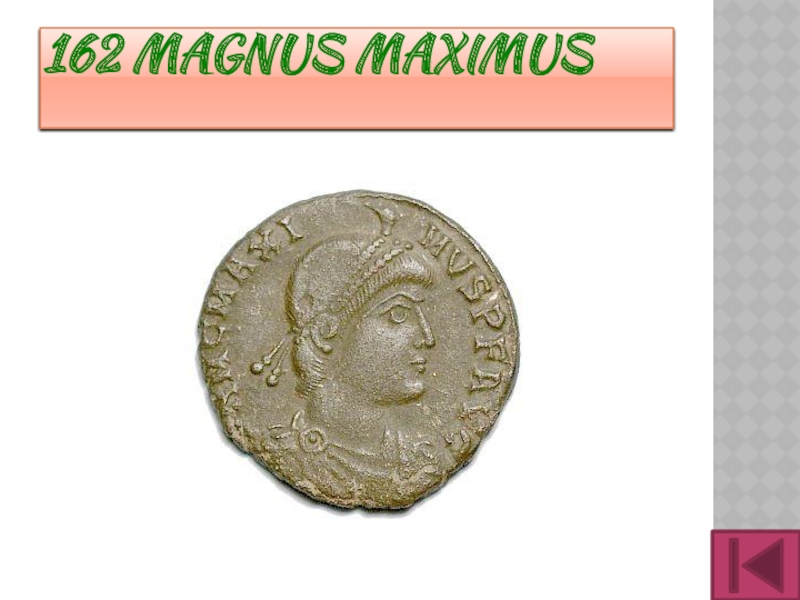
- 9. 162 Magnus Maximus
- 10. National symbols of Wales
- 11. The daffodil is the national flower
- 12. The leek is also a national emblem
- 13. National symbols of Wales The red kite
- 14. The Sessile Oak, also called the Welsh
- 15. Dame Wales, as a National personification, as
- 16. Welsh National dress is relatively young and
- 17. Still they do have a National costume,
- 18. Welsh National DressFor the ladies the
- 19. Proper Welsh ladies always wore black woolen
- 20. Medieval wales
- 21. Medieval Wales The southern and eastern parts
- 22. The Castles and places In The Wales
- 23. The Castles In The WalesCandleston's elevated position
- 24. Dolwyddelan Castle
- 25. Caernarfon Castle
- 26. Beaumaris aerial
- 27. BrynCelliDdu
- 28. Industrial Wales
- 29. Industrial Wales Prior to the British Industrial
- 30. Слайд 30
- 31. Modern Wales
- 32. Modern Wales Historian Kenneth Morgan described Wales
- 33. Welsh Language
- 34. Welsh Language GuideThe language of Wales, more
- 35. THE WELSH ALPHABET (28 letters): A, B
- 36. Geography and natural history
- 37. Geography and natural history Wales is a
- 38. Geology
- 39. GeologyThe earliest geological period of
- 40. Music of Wales
- 41. Music of Wales Wales has a
- 42. Music of WalesMusic in Wales is
- 43. Welsh Culture & Traditions
- 44. Welsh Culture & Traditions Y Nadolig (Christmas)
- 45. GWYL SAN STEFFAN (St. Stephens Day; Boxing
- 46. Christmas holly seller
- 47. NOS GALAN (New Years Eve) In Wales
- 48. Twelfth Night (the evening of Jan. 5th)Twelfth
- 49. The Wassailo wassail means to be "whole,
- 50. Hunting the WrenAnother Welsh custom associated with
- 51. Shrove Tuesday (Pancake Day)It was the
- 52. Y Crochon Crewys (The Lenten Crock)Food always
- 53. Birth CustomsExpectant mothers in many parts of
- 54. Thanks for attention
- 55. teacher: shoeva svetlana konstantinovna; author: Ekaterina kostina; Helpers: Liliya ilchevskaya, Anastasiya rodionova.
ContentsHistory of WalesNational symbols of WalesMedieval WalesThe Castles and places In The Wales Industrial WalesModern WalesWelsh LanguageGeography and natural historyGeologyMusic of WalesWelsh Culture & Traditions
Слайд 2Contents
History of Wales
National symbols of Wales
Medieval Wales
The Castles and places In
The Wales
Industrial Wales
Modern Wales
Welsh Language
Geography and natural history
Geology
Music of Wales
Welsh Culture & Traditions
Industrial Wales
Modern Wales
Welsh Language
Geography and natural history
Geology
Music of Wales
Welsh Culture & Traditions
Слайд 4WALES
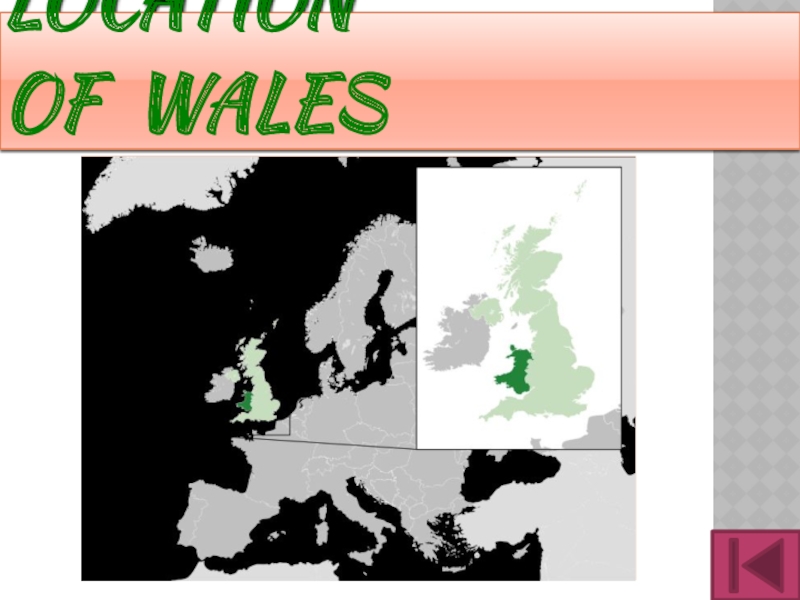
Wales is a country that is part of the United Kingdom
and the island of Great Britain, bordered by England to its east and the Atlantic Ocean and Irish Sea to its west. It has a population of three million, and a total area of 20,779 km2 (8,023 sq mi). Wales has over 1,200 km (750 mi) of coastline, including its offshore islands; the largest, Anglesey, is also the largest island in the Irish Sea. Wales is largely mountainous, with its highest peaks in the north and central areas, especially in Snowdonia, which contains Snowdon, its highest summit.
Слайд 11
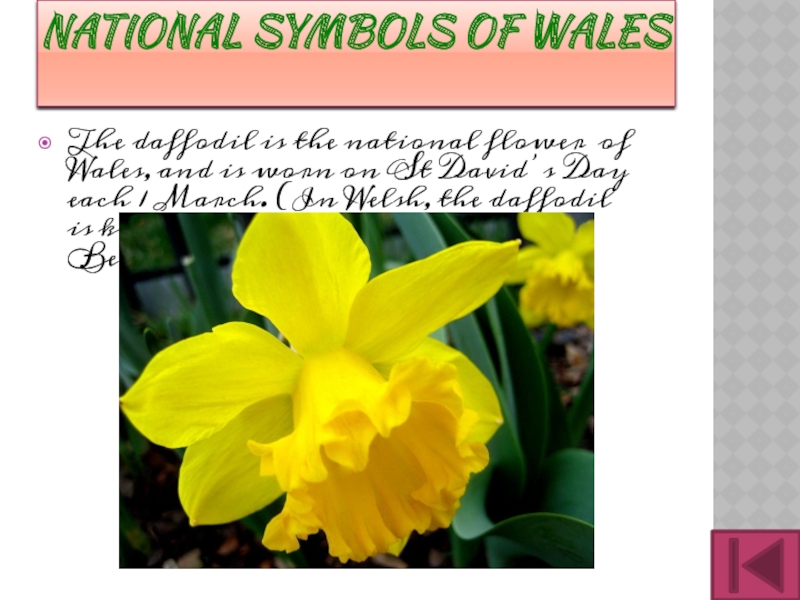
The daffodil is the national flower of Wales, and is worn
on St David’s Day each 1 March. (In Welsh, the daffodil is known as "Peter's Leek", cenhinen Bedr/Cenin pedr.)
National symbols of Wales
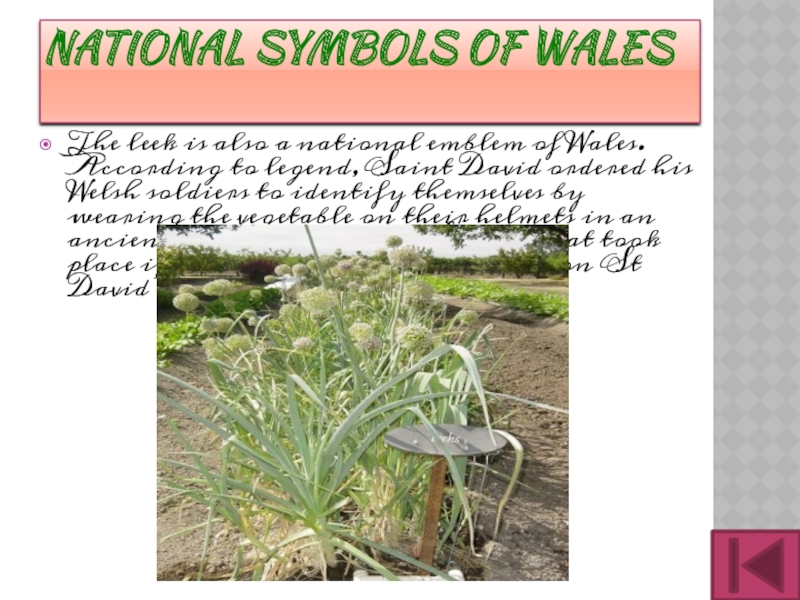
Слайд 12The leek is also a national emblem of Wales. According to
legend, Saint David ordered his Welsh soldiers to identify themselves by wearing the vegetable on their helmets in an ancient battle against the Saxons that took place in a leek field. It is still worn on St David’s Day each 1 March
National symbols of Wales
Слайд 13National symbols of Wales
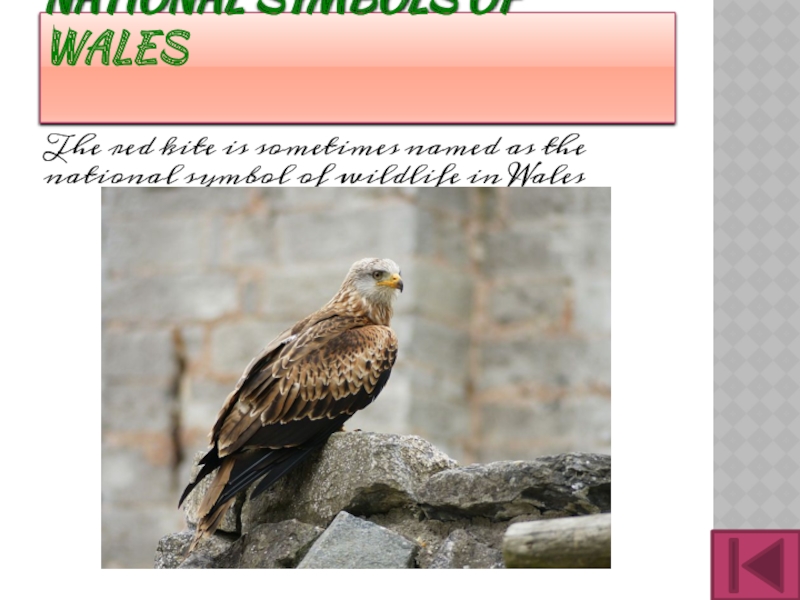
The red kite is sometimes named as the
national symbol of wildlife in Wales
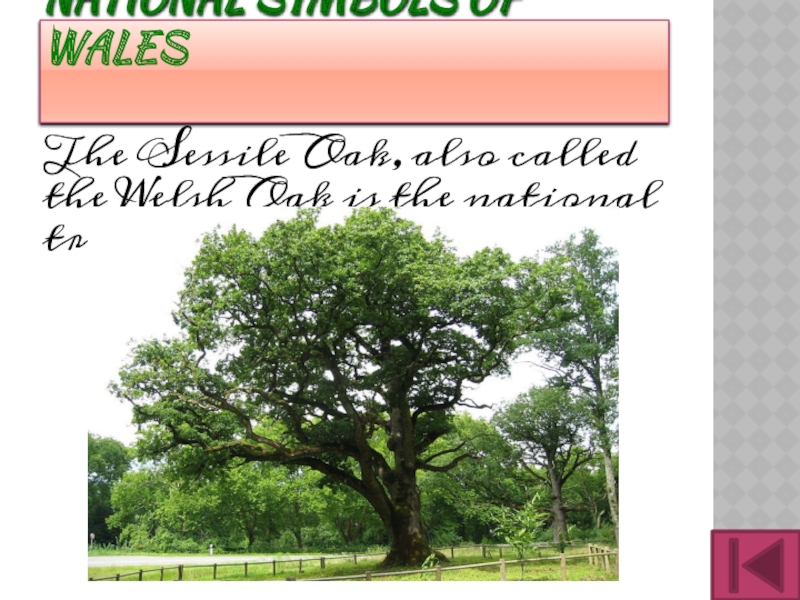
Слайд 14The Sessile Oak, also called the Welsh Oak is the national
tree of Wales.
National symbols of Wales
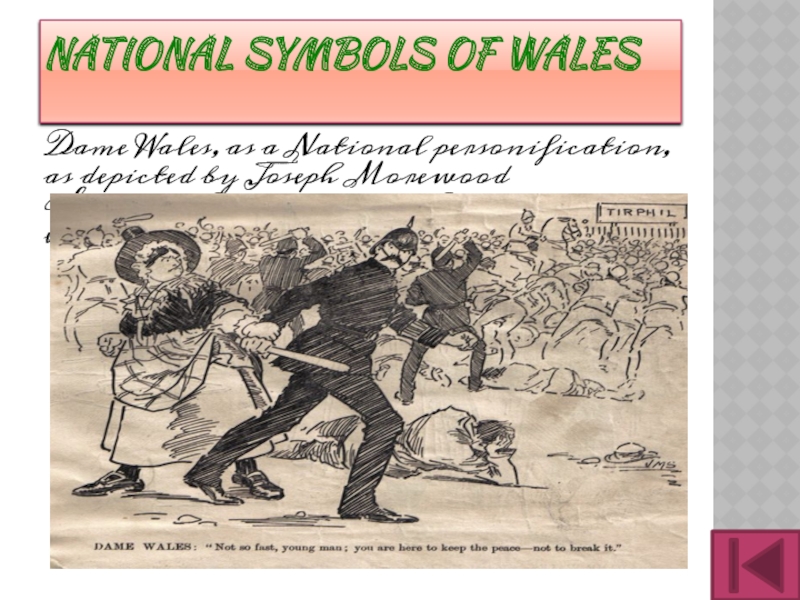
Слайд 15Dame Wales, as a National personification, as depicted by Joseph Morewood
Staniforth symbolising the maternal voice of the Welsh’mam’
National symbols of Wales
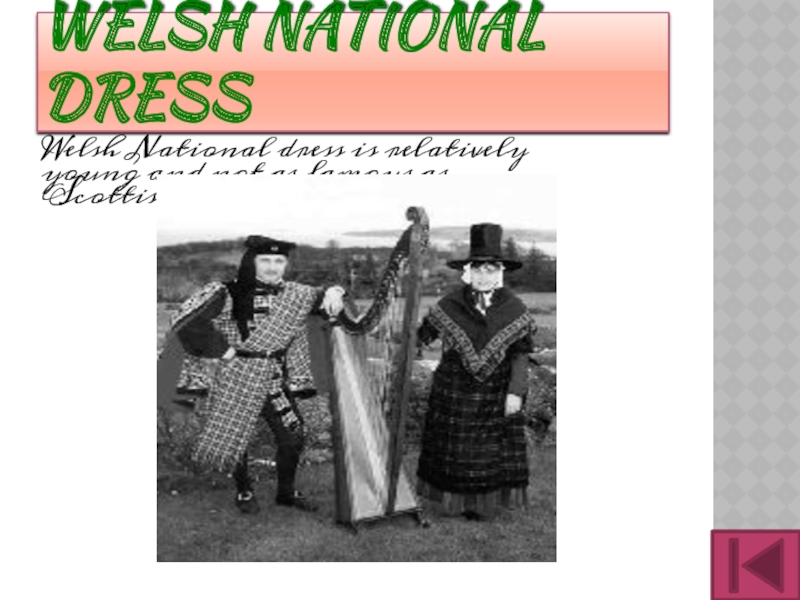
Слайд 16Welsh National dress is relatively young and not as famous as
Scottish National dress.
Welsh National Dress
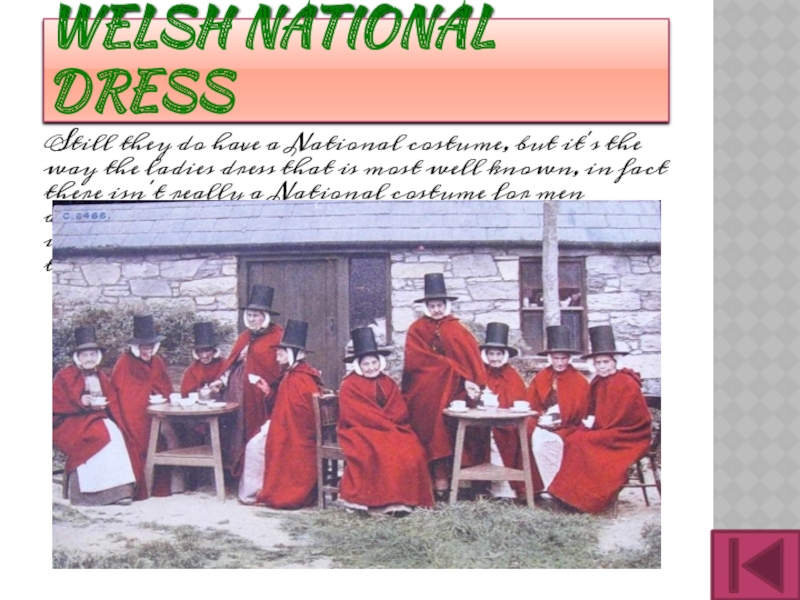
Слайд 17Still they do have a National costume, but it's the way
the ladies dress that is most well known, in fact there isn't really a National costume for men although recently through the rise of nationalism in Wales a tartan has been created and tartan trousers or kilts are often worn.
Welsh National Dress
Слайд 18
Welsh National Dress
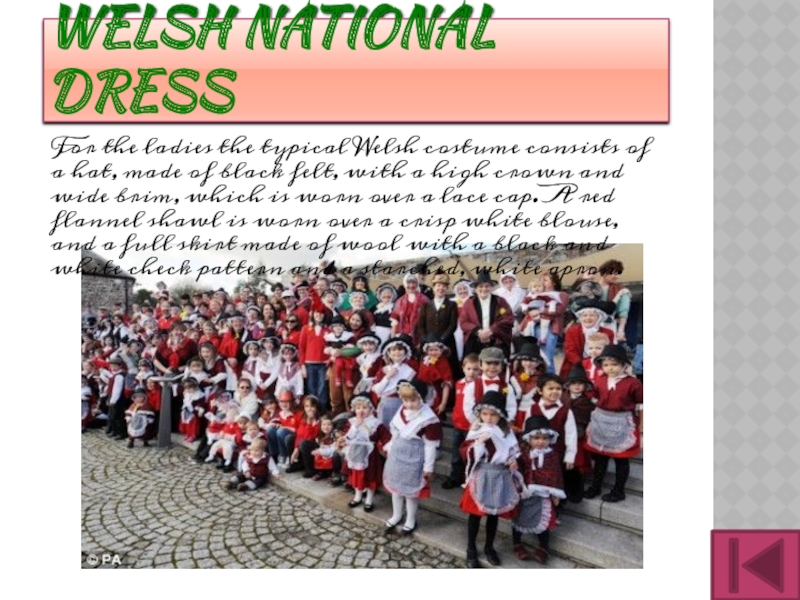
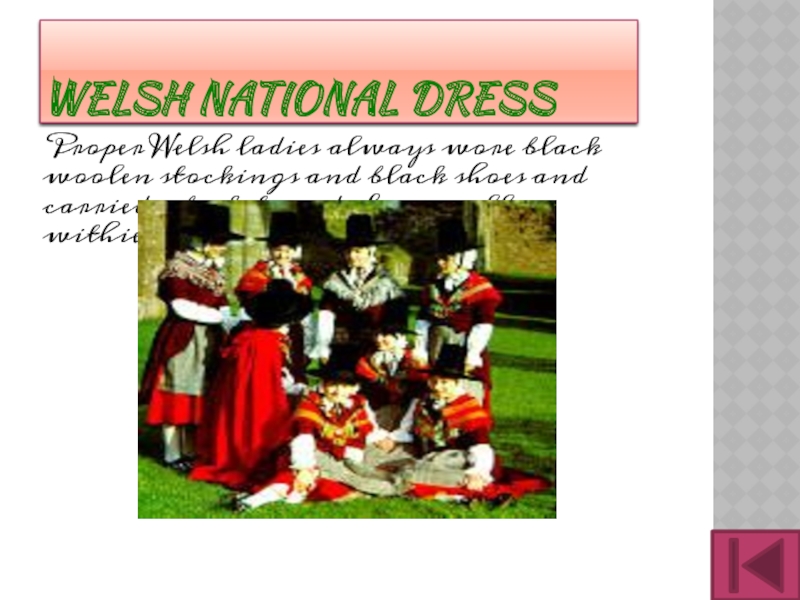
For the ladies the typical Welsh costume consists of
a hat, made of black felt, with a high crown and wide brim, which is worn over a lace cap. A red flannel shawl is worn over a crisp white blouse, and a full skirt made of wool with a black and white check pattern and a starched, white apron.
Слайд 19Proper Welsh ladies always wore black woolen stockings and black shoes
and carried a basket, made from willow withies.
Welsh National Dress

Слайд 21Medieval Wales
The southern and eastern parts of Great Britain lost to
English settlement became known in Welsh as Lloegyr (Modern Welsh Lloegr), which may have referred to the kingdom of Mercia originally, and which came to refer to England as a whole. The Germanic tribes who now dominated these lands were invariably called Saeson, meaning "Saxons". The Anglo-Saxons called the Romano-British 'Walha', meaning 'Romanised foreigner' or 'stranger'. The Welsh continued to call themselves Brythoniaid (Brythons or Britons) well into the Middle Ages, though the first written evidence of the use of Cymru and y Cymry is found in a praise poem to Cadwallo ap Cadfan (Moliant Cadwallon, by Afan Ferddig) c. 633. In Armes Prydain believed to be written around 930–942, the words Cymry and Cymro are used as often as 15 times.However, from the Anglo-Saxon settlement onwards, the people gradually begin to adopt the name Cymry over Brythoniad..
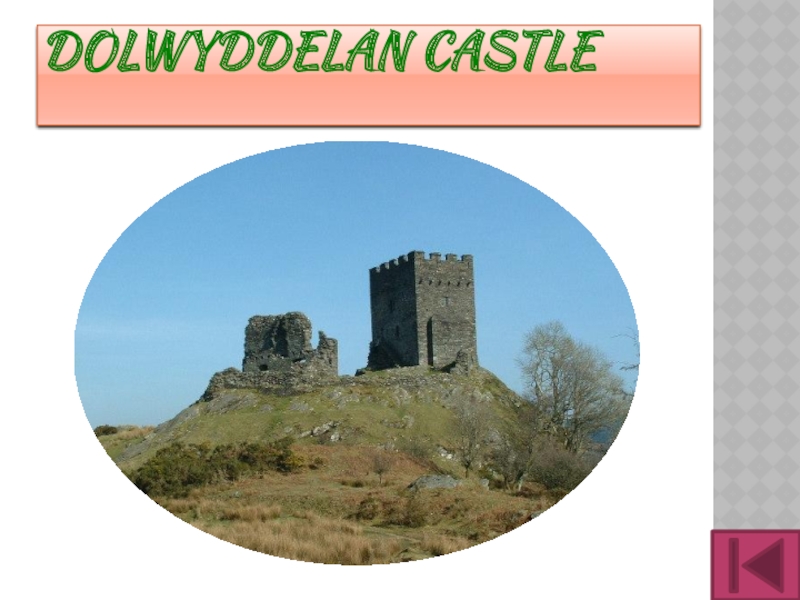
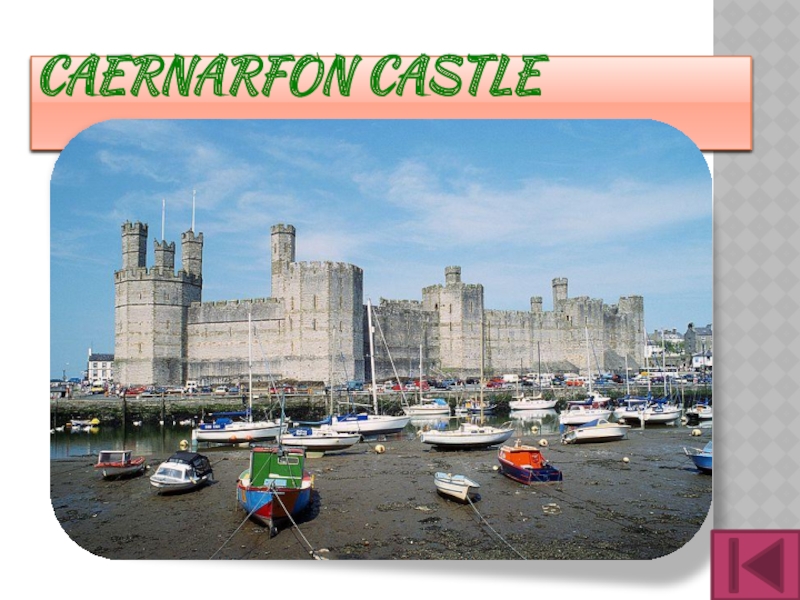
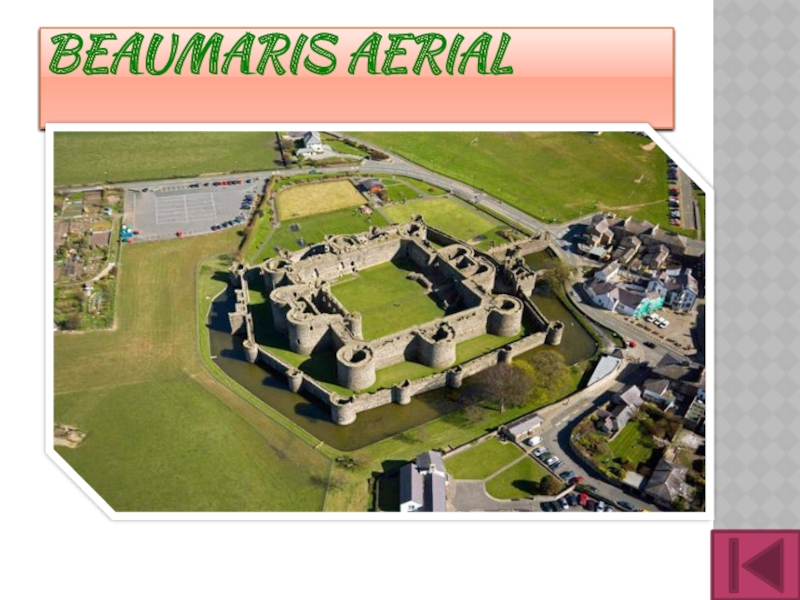
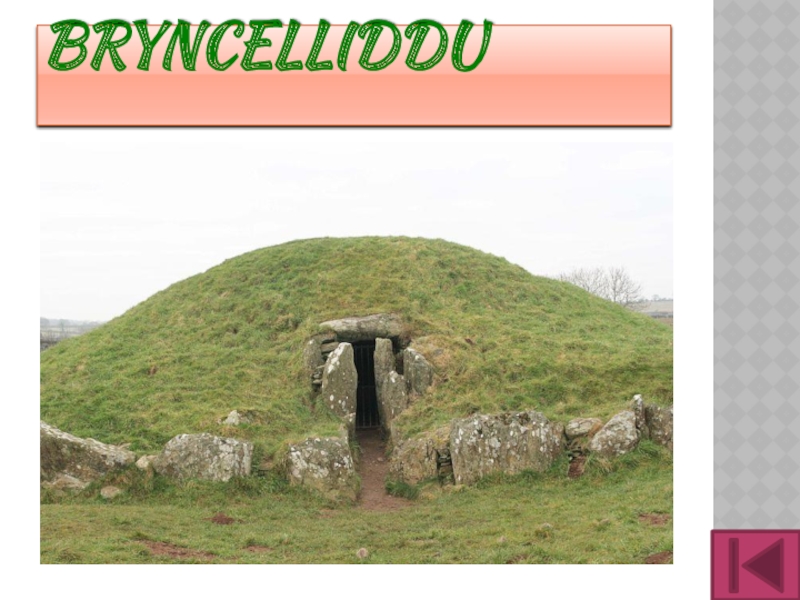
Слайд 23The Castles In The Wales
Candleston's elevated position was just sufficient to
save it from burial under the coastal sands which started to encroach over the site and its lands shortly after its original establishment. The nearby castle and settlement of Kenfig suffered this fate, having been abandoned around 1470, and is now completely submerged by sand. John Leland wrote in about 1539 : "There is a little village on the est side of Kenfik, and a castel, booth in ruine and almost shokid (choked) and devourid with the sandes that the Severn Se ther castiith up". Historical evidence indicates that the process of be-sandment was very active in the later mediaeval period, from deterioration of climate, storms, higher rainfall and abnormal tides. The promontory on which Candleston stands forms a relatively stable margin against the sands, occupying the eastern edge of what is now Europe's largest sand dune system. The site thus commands spectacular vistas over an extensive tract of lofty dunes, some up to 200 ft (61 m). high, to the N.S.& W. To the S. the sands cover the eroded former wooded manorial terrain of Merthyr Mawr Warren,covering some 900 acres (3.6 km2), and to the W. cover what is believed to be a former related ancient settlement, known in Welsh as Tregantlow. In 1823 the shifting sands exposed 300 yards to the W. substantial remains of the manorial windmill, the foundations of further buildings reportedly having been seen nearby. Clearly, the chronically encroaching sands caused the decline of the manor and ultimate abandonment of the Castle.

Слайд 29Industrial Wales
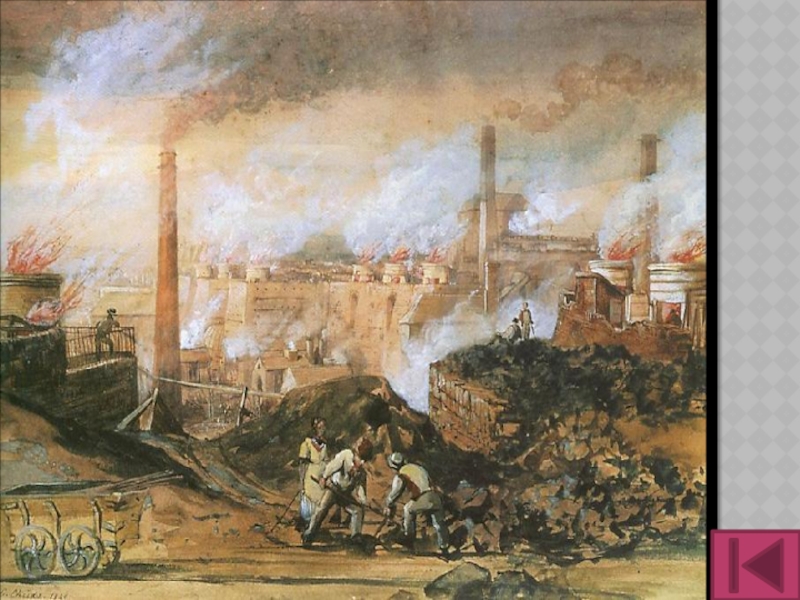
Prior to the British Industrial Revolution, which saw a rapid
economic expansion between 1750 and 1850, there were signs of small-scale industries scattered throughout Wales. These ranged from industries connected to agriculture, such as milling and the manufacture of woollen textiles, through to mining and quarrying. Until the Industrial Revolution, Wales had always been reliant on its agricultural output for its wealth and employment and the earliest industrial businesses were small scale and localised in manner. The emerging industrial period commenced around the development of copper smelting in the Swansea area. With access to local coal deposits and a harbour that could take advantage of Cornwall's copper mines and the copper deposits being extracted from the then largest copper mine in the world at Parys Mountain on Anglesey, Swansea developed into the world's major centre for non-ferrous metal smelting in the 19th century. The second metal industry to expand in Wales was iron smelting, and iron manufacturing became prevalent in both the north and the south of the country. In the north of Wales, John Wilkinson's Ironworks at Bersham was a significant industry, while in the south, a second world centre of metallurgy was founded in Merthyr Tydfil, where the four ironworks of Dowlais, Cyfarthfa, Plymouth and Penydarren became the most significant hub of iron manufacture in Wales. In the 1820s, south Wales alone accounted for 40% of all pig iron manufactured in Britain.

Слайд 32Modern Wales
Historian Kenneth Morgan described Wales on the eve of the
First World War as a "relatively placid, self-confident, and successful nation". Output from the coalfields continued to increase, with the Rhondda Valley recording a peak of 9.6 million tons of coal extracted in 1913. The outbreak of the First World War (1914–1918) saw Wales, as part of the United Kingdom, enter hostilities with Germany. A total of 272,924 Welshmen served in the war, representing 21.5% of the male population. Of these, roughly 35,000 were killed. The two most notable battles of the War to include Welsh forces were those at Mametz Wood on the Somme and Third Ypres.

Слайд 34Welsh Language Guide
The language of Wales, more properly called Cymraeg in
preference to Welsh (A Germanic word denoting "foreigner"), belongs to a branch of Celtic, an Indo-European language. The Welsh themselves are descendants of the Galatians, to whom Paul wrote his famous letter. Their language is a distant cousin to Irish and Scots Gaelic and a close brother to Breton. Welsh is still used by about half a million people within Wales and possibly another few hundred thousand in England and other areas overseas.
Слайд 35THE WELSH ALPHABET
(28 letters): A, B ,C ,Ch, D, Dd,
E, F, Ff, G, Ng, H, I, L
Ll, M, N, O, P, Ph, R, Rh, S, T, Th, U, W, Y
Слайд 37Geography and natural history
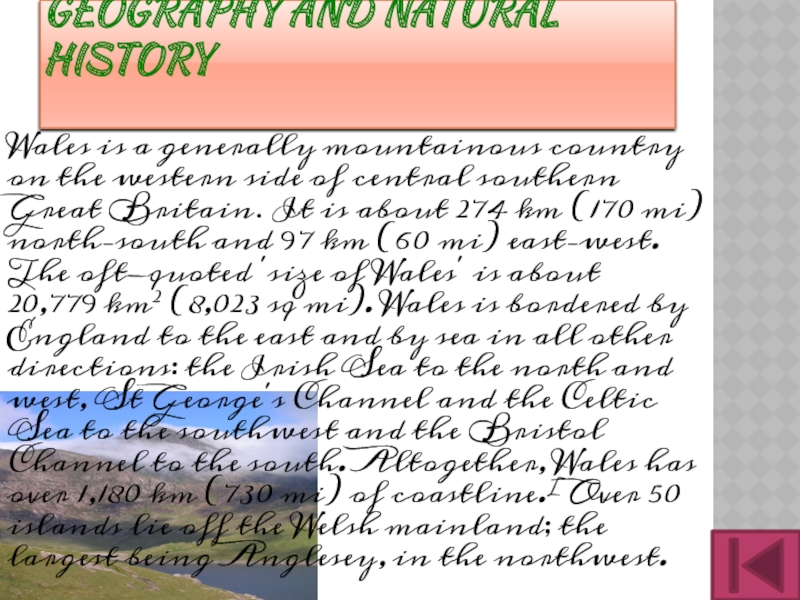
Wales is a generally mountainous country on the
western side of central southern Great Britain. It is about 274 km (170 mi) north–south and 97 km (60 mi) east–west. The oft-quoted 'size of Wales' is about 20,779 km2 (8,023 sq mi). Wales is bordered by England to the east and by sea in all other directions: the Irish Sea to the north and west, St George's Channel and the Celtic Sea to the southwest and the Bristol Channel to the south. Altogether, Wales has over 1,180 km (730 mi) of coastline.[Over 50 islands lie off the Welsh mainland; the largest being Anglesey, in the northwest.

Слайд 39
Geology
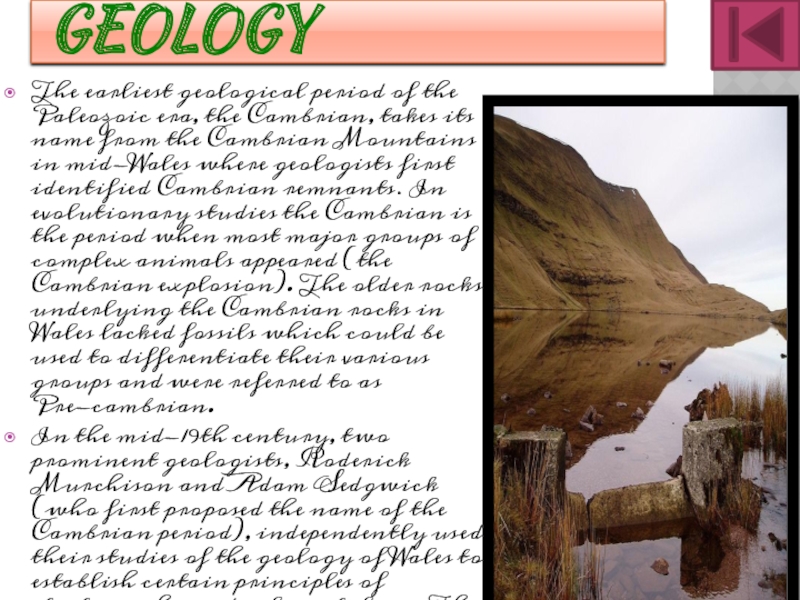
The earliest geological period of the Paleozoic era, the Cambrian,
takes its name from the Cambrian Mountains in mid-Wales where geologists first identified Cambrian remnants. In evolutionary studies the Cambrian is the period when most major groups of complex animals appeared (the Cambrian explosion). The older rocks underlying the Cambrian rocks in Wales lacked fossils which could be used to differentiate their various groups and were referred to as Pre-cambrian.
In the mid-19th century, two prominent geologists, Roderick Murchison and Adam Sedgwick (who first proposed the name of the Cambrian period), independently used their studies of the geology of Wales to establish certain principles of stratigraphy and palaeontology. The next two periods of the Paleozoic era, the Ordovician and Silurian, were named after ancient Celtic tribes from this area based on Murchison's and Sedgwick's work.
In the mid-19th century, two prominent geologists, Roderick Murchison and Adam Sedgwick (who first proposed the name of the Cambrian period), independently used their studies of the geology of Wales to establish certain principles of stratigraphy and palaeontology. The next two periods of the Paleozoic era, the Ordovician and Silurian, were named after ancient Celtic tribes from this area based on Murchison's and Sedgwick's work.
Слайд 41 Music of Wales
Wales has a strong and distinctive link with
music. The country is traditionally referred to as "the land of song". This is a modern stereotype based on 19th century conceptions of Nonconformist choral music and 20th century male voice choirs, Eisteddfodau and arena singing, such as sporting events, but Wales has a history of music that has been used as a primary form of communication.
Wales has a history of folk music related to the Celtic music of countries such as Ireland and Scotland. It has distinctive instrumentation and song types, and is often heard at a twmpath (folk dance session), gŵyl werin (folk festival) or noson lawen (a traditional party similar to the Gaelic "Céilidh"). Modern Welsh folk musicians have sometimes reconstructed traditions which had been suppressed or forgotten, and have competed with imported and indigenous rock and pop trends.
Wales has a history of folk music related to the Celtic music of countries such as Ireland and Scotland. It has distinctive instrumentation and song types, and is often heard at a twmpath (folk dance session), gŵyl werin (folk festival) or noson lawen (a traditional party similar to the Gaelic "Céilidh"). Modern Welsh folk musicians have sometimes reconstructed traditions which had been suppressed or forgotten, and have competed with imported and indigenous rock and pop trends.
Слайд 42 Music of Wales
Music in Wales is often connected with Male
Voice Choirs, such as the Morriston Orpheus Choir and Treorchy Male Voice Choir, both enjoying a world wide reputation. This tradition of choral singing has been expressed through sporting events, especially in the country's national sport of rugby, which in 1905 saw the first singing of a national anthem, Wales' Hen Wlad Fy Nhadau, at the start of an international sporting encounter.
A tradition of brass bands dating from the Victorian era continues, particularly in the South Wales Valleys, with Welsh bands such as the Cory Band being one of the most successful in the world.
The 20th century saw many solo singers from Wales become not only national but international stars. Ivor Novello, who was a singer-songwriter during the First World War. Also, opera-singers such as Geraint Evans and later Delme Bryn-Jones found fame post World War II. The 1960s saw the rise of two distinctive Welsh acts, Tom Jones and Shirley Bassey, both of whom defined Welsh vocal styles for several generations.
A tradition of brass bands dating from the Victorian era continues, particularly in the South Wales Valleys, with Welsh bands such as the Cory Band being one of the most successful in the world.
The 20th century saw many solo singers from Wales become not only national but international stars. Ivor Novello, who was a singer-songwriter during the First World War. Also, opera-singers such as Geraint Evans and later Delme Bryn-Jones found fame post World War II. The 1960s saw the rise of two distinctive Welsh acts, Tom Jones and Shirley Bassey, both of whom defined Welsh vocal styles for several generations.
Слайд 44Welsh Culture & Traditions
Y Nadolig (Christmas)
In many parts of Wales
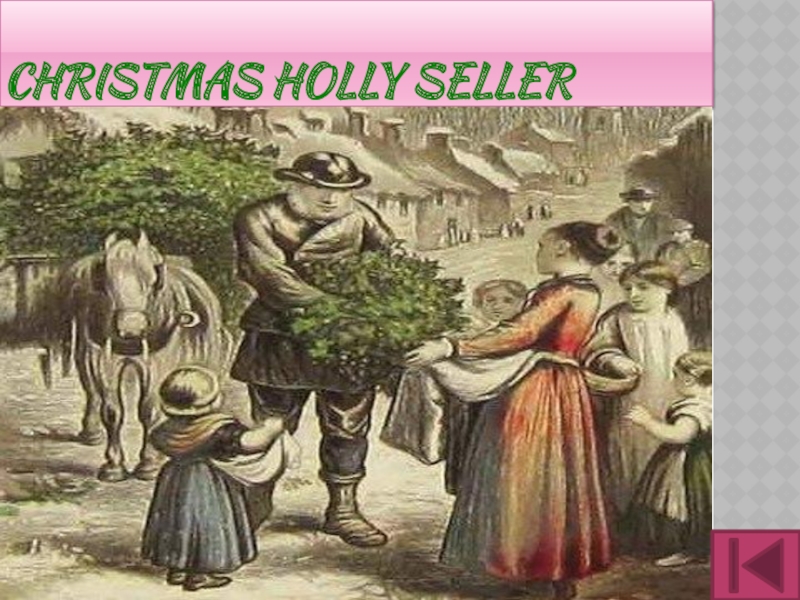
up until quite recently, it was the custom to get up very early on Christmas morning to attend the Church service known as Plygain (Daybreak) held between 3 and 6 a.m. To pass the time during the long overnight wait on Christmas Eve, young people would make treacle toffee and decorate their houses with freshly gathered mistletoe and holly. It is known that for many centuries before the celebration of Christ's birth, country people brought green plants indoors in the depths of winter, especially evergreens, which are seen as symbols of the return of spring. The mistletoe was considered both as a magical plant and a powerful protector of the home from evil. The holly, a symbol of eternal life, was also prominently displayed, along with the ivy, rosemary and bay leaves. All too, had pleasant scents to disguise the many foul odors that had built up during the long months when doors and windows were shut tight against the winter cold. Dancing and singing to the harp under their festoons of greenery, many people spent an enjoyable Christmas Eve with their neighbors until the more serious time arrived to go to church.
Слайд 45GWYL SAN STEFFAN (St. Stephens Day; Boxing Day - December 26th):
The
day after Christmas Day was celebrated in a way unique to Wales and included the tradition of "holly-beating" or "holming." Young men and boys would beat the unprotected arms of young females with holly branches until they bled. In some areas it was the legs that were beaten. In others, it was the custom for the last person to get out of bed in the morning to be beaten with sprigs of holly. These customs died out before the end of the 19th century (luckily for young girls and those who like a lie-in!)
Слайд 47NOS GALAN (New Years Eve)
In Wales the custom of letting in
the New Year was slightly different in that if the first visitor in the New Year was a woman and the male householder opened the door, that was considered bad luck. If the first man to cross the threshold in the New Year was a red haired man, that was also bad luck.
Some other Welsh customs associated with the New Year were: "all existing debts were to be paid"; never lend anything to anyone on New Years Day else you would have bad luck; and the behaviour of an individual on this day was an indication of how they would behave all year!
Some other Welsh customs associated with the New Year were: "all existing debts were to be paid"; never lend anything to anyone on New Years Day else you would have bad luck; and the behaviour of an individual on this day was an indication of how they would behave all year!
Слайд 48Twelfth Night (the evening of Jan. 5th)
Twelfth Night was celebrated as
the end of Christmastide. The decorations, including holly and mistletoe, were taken down, the burned out Yule Log was removed from the fireplace, and its ashes stored temporarily. These were then buried along with the seeds planted in the ensuing spring to ensure a good harvest.
Each of the twelve days after Christmas was considered, in the countryside at least, to represent the corresponding months of the year, and the weather on these days was carefully observed and noted as a guide as to what could be expected for the rest of the year.
Слайд 49The Wassail
o wassail means to be "whole, healthy", and both Christmas
and New Year were marked by wassailing, which included both drinking and singing. The custom seems to have begun as a way of wishing the farmer successful harvests from his fields and the increase of his livestock during the coming year. The wassail bowl itself, which had twelve handles, was filled with cakes, baked apples and sugar into which was poured warm beer and spices. The bowl was then passed around hand to hand in the circle of friends and neighbors gathered round the blazing fire until the beer was consumed. The remaining food was then shared out and eaten. On Twelfth Night, the wassail bowl was taken to the house of newlyweds or to a family which had recently come to live in the district, songs were sung outside the house door. Those inside the house would recited or sing special verses, to be answered by the revelers outside.
Слайд 50Hunting the Wren
Another Welsh custom associated with Twelfth Night. A group
of young men would go out into the countryside to capture a wren (the smallest bird in the British Isles). The bird would then be placed in a small, decorated cage or bier and carried around from house to house and shown in exchange for money or gifts of food and drink (if a wren could not be found then a poor unfortunate sparrow would have to undergo the ritual).
Слайд 51
Shrove Tuesday (Pancake Day)
It was the last day upon which feasting,
drinking and merriment could take place before the solemnities and fasting of Lent began. On this day, the last supplies of butter and fat were made into pancakes (crempog). Naturally, plenty of eggs were used as well, and woe betide the unfortunate hen that failed to lay before noon. It was a custom in the country districts to "thrash the hen," the poor creature being taken out to the village green or large pasture and buried in a hole in the ground with only her head sticking out. Blindfolded youths would then try to hit the hen with a stick. If anyone succeeded, the hen would become his property, to be killed on the following day and cooked and eaten with the proper ceremony.
Слайд 52Y Crochon Crewys (The Lenten Crock)
Food always played a big part
in country traditions. In Carmarthenshire, a crochon crewys was "secretly" placed on the window sill of a farm house or village house under cover of darkness, and a verse was recited. The crochon was usually a scooped-out turnip of other large vegetable. It was filled with crusts of bread, with salt, leeks and other vegetables added as available. The verse, translated from the Welsh, went as follows, but varied in different localities.
Слайд 53Birth Customs
Expectant mothers in many parts of Wales had to be
very careful what they did before the baby was born. For example, if she stepped over a grave, it was believed that the baby would die soon after birth or would be still-born. If she dipped her hands into dirty water, the child would grow up having coarse hands. If the child was born under a new moon, it would grow up to be eloquent in speech. If born at night, it would be able to see visions, ghosts and phantom funerals. During the christening ceremony, if the baby held up its head, it would live to be very old. If, however, it allowed its head to fall back or to rest on the arm of the person holding it, the child would die an early death. At some christening ceremonies, specially designed drinking glasses were used to consume prodigious amounts of liquor in toasts to the newly baptized infant. (to be fair, it has to be remembered that it is only in this century that most of the water supplies in Wales have become fit to drink, and beer was always not only considered a safe drink, but was also thought to confer strength).
Слайд 55
teacher: shoeva svetlana konstantinovna;
author: Ekaterina kostina;
Helpers: Liliya ilchevskaya,
Anastasiya rodionova.