- Главная
- Разное
- Образование
- Спорт
- Естествознание
- Природоведение
- Религиоведение
- Французский язык
- Черчение
- Английский язык
- Астрономия
- Алгебра
- Биология
- География
- Геометрия
- Детские презентации
- Информатика
- История
- Литература
- Математика
- Музыка
- МХК
- Немецкий язык
- ОБЖ
- Обществознание
- Окружающий мир
- Педагогика
- Русский язык
- Технология
- Физика
- Философия
- Химия
- Шаблоны, фоны, картинки для презентаций
- Экология
- Экономика
Презентация, доклад на английском языке на тему Подготовка к ЕГЭ по обществознанию - Социальная сфера
Содержание
- 1. Презентация на английском языке на тему Подготовка к ЕГЭ по обществознанию - Социальная сфера
- 2. Social structure of societyComplete set of the
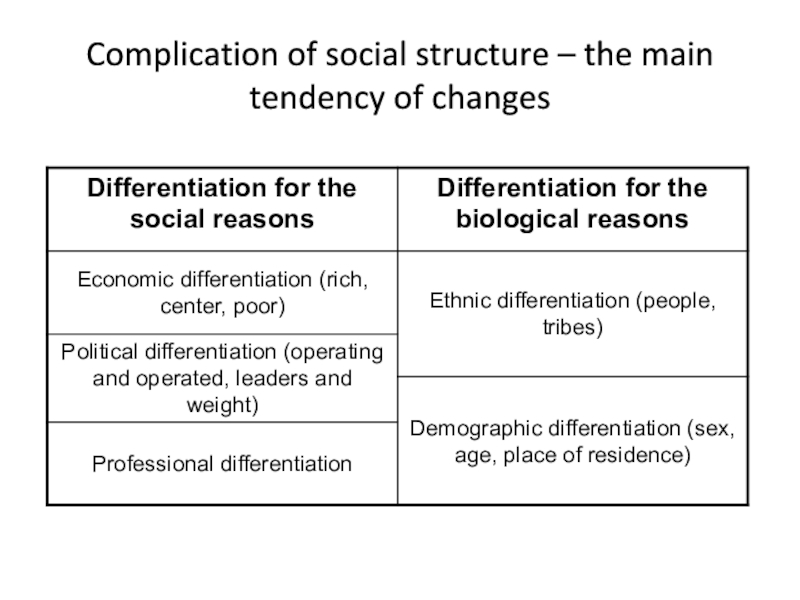
- 3. Complication of social structure – the main tendency of changes
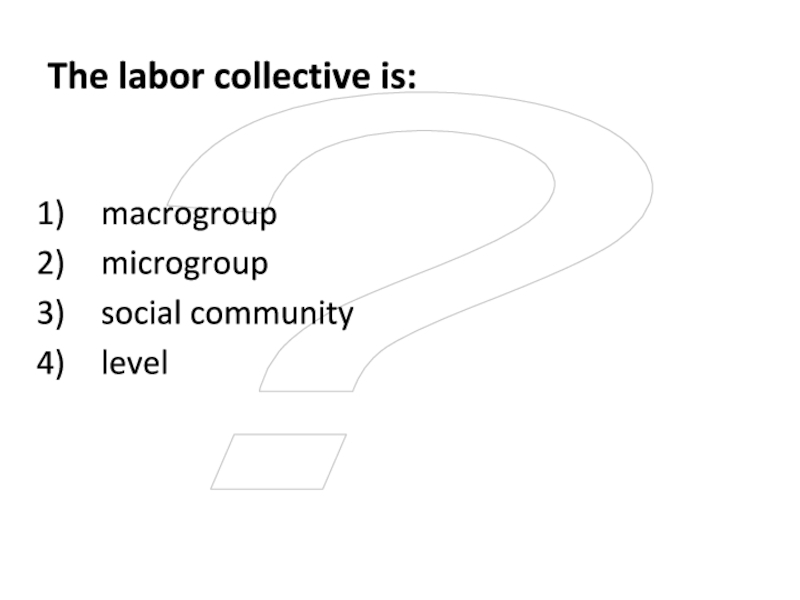
- 4. ?The labor collective is:macrogroupmicrogroupsocial communitylevel
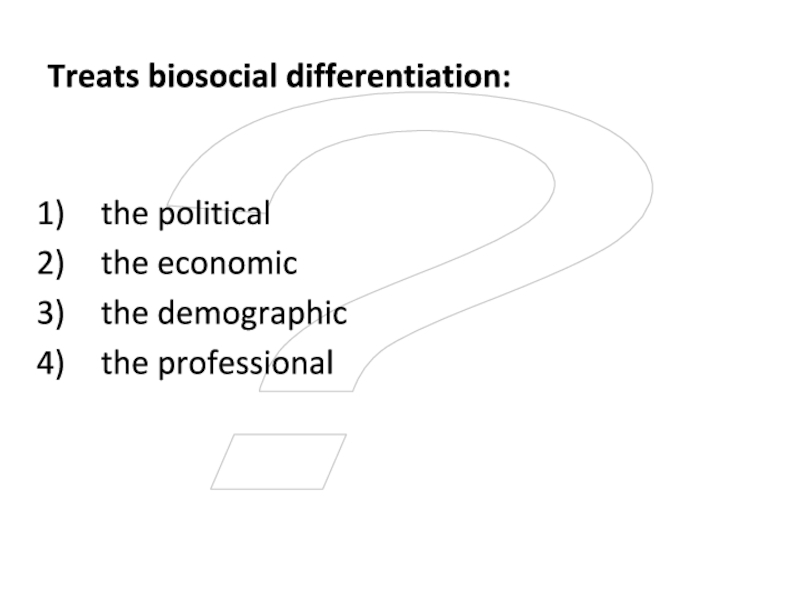
- 5. ?Treats biosocial differentiation:the politicalthe economicthe demographicthe professional
- 6. EthnosSet of the people possessing a community
- 7. Sort and tribeSort – group of the
- 8. Nationalityevolved from territorial, neighbour's communicationshistorically developed community
- 9. Nationsarose on the basis of formation of
- 10. The national relations in the modern worldIn
- 11. Solutions of an ethnic questiondemocratization of all
- 12. ?The defining condition of formation of the nation is:common languagegeneral territorycommunity of economic lifeculture community
- 13. ?The nations arose:in primitive societyin slaveholding societyin feudal societyin bourgeois society
- 14. ?Cosmopolitism is:A. Refusal of local limitation.B. Refusal
- 15. FamilyFunctions of a family:the reproductivethe educationalreproduction of
- 16. Stages of development of the family and
- 17. Tendencies in development of a modern familyWomen
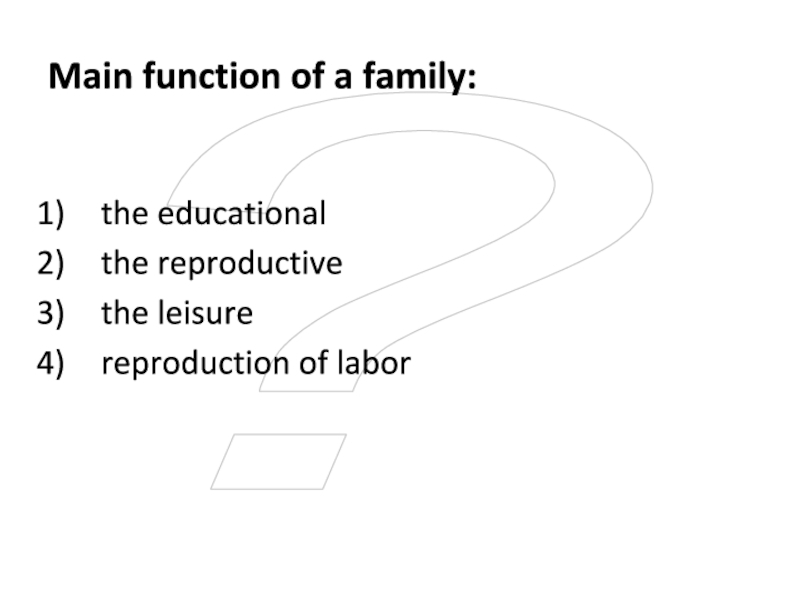
- 18. ?Main function of a family:the educationalthe reproductivethe leisurereproduction of labor
- 19. Social structure of traditional societyEstates – social
- 20. ClassK. Marx and V. Leninclass place in
- 21. Middle classThe citizens possessingthe economic independenceOwners of
- 22. StriationsStratification – process as a result of
- 23. Layers in modern Russian societyElite (oligarchs, the
- 24. Tendencies in development of social structure of
- 25. Youth as social groupthe potential force (ability
- 26. ?The main sign of classes is:place in
- 27. Social mobilityTypes of mobility:Voluntary (in connection with
- 28. Factors of social mobilitysystem of a social
- 29. Types of the statusesplace of the person
- 30. ?Acts as manifestation of vertical social mobility:moving from one area to anotherretirementincrease in a positionchild's birth
- 31. Social rolethe expected behavior of the person
- 32. Social controlSystem of the means and receptions
- 33. NormsCustoms and traditionsPrecepts of lawPolitical normsMoral standardsReligious
- 34. Sanctionsthe formal positivethe informal positivethe formal negativethe
- 35. ?Whether Verna the following judgments about social
- 36. ConflictG. Spencer (1820-1903): the conflict – manifestation
- 37. Subjects of the conflictWitnesses – those who
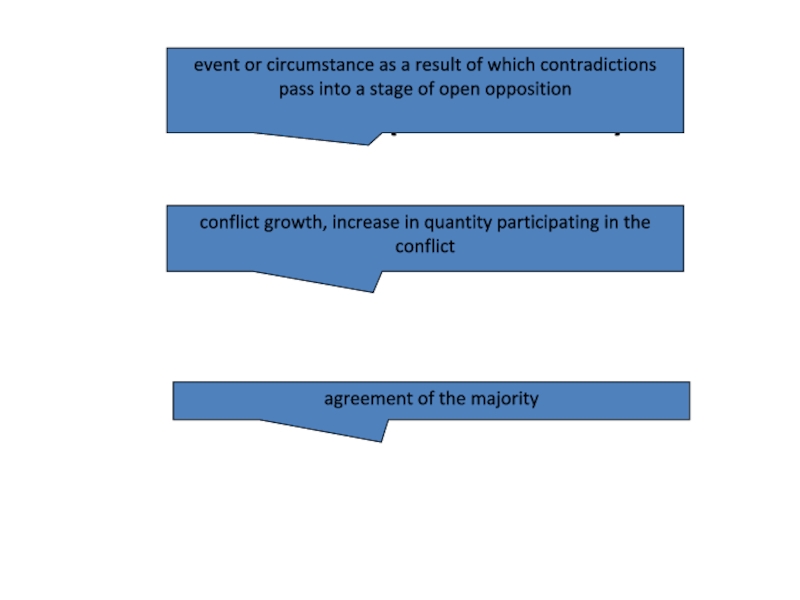
- 38. incident (occasion) conflict escalation consensusevent or circumstance
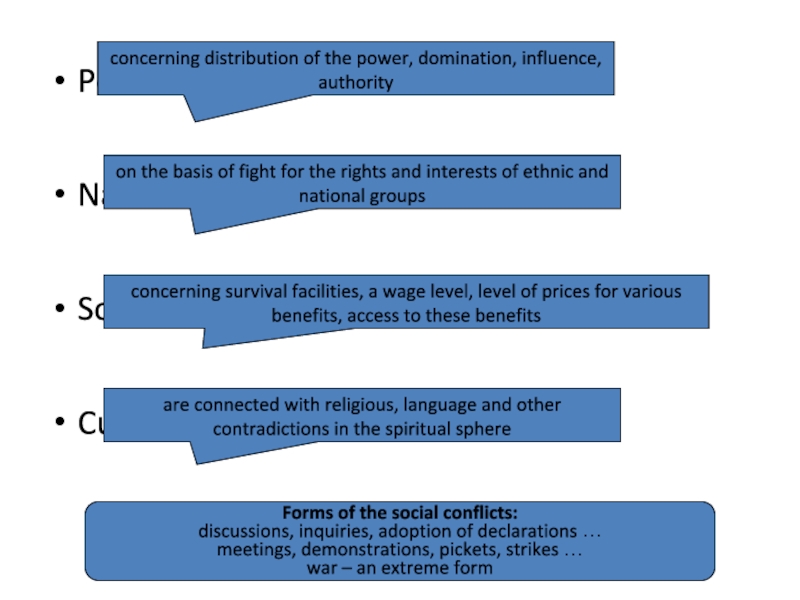
- 39. Types of the conflictsdepending on conflicting parties
- 40. Political conflictNational and ethnic conflictSocial and economic
- 41. Conditions and ways of a resolution of
- 42. Social stateMain lines of the social state:the
- 43. ?Whether Verna the following judgments about the
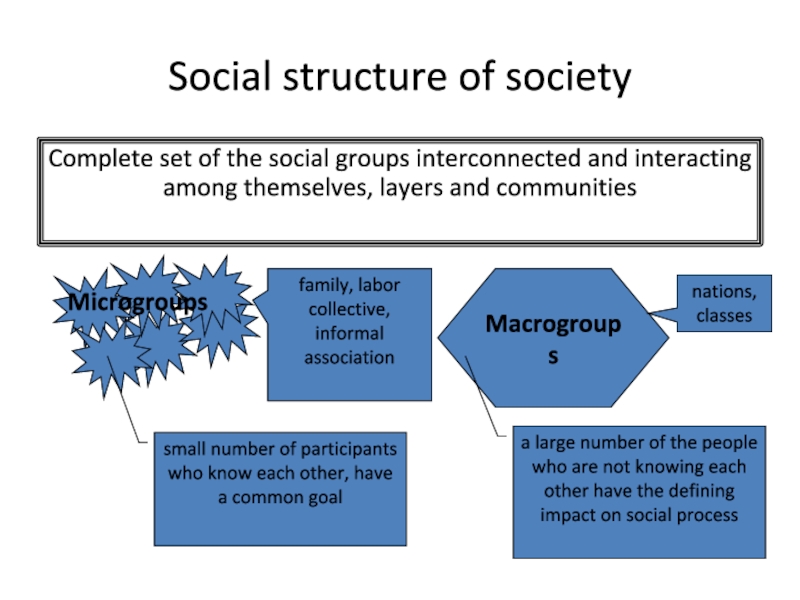
Слайд 2Social structure of society
Complete set of the social groups interconnected and
Microgroups
Macrogroups
family, labor collective, informal association
nations,
classes
small number of participants who know each other, have a common goal
a large number of the people who are not knowing each other have the defining impact on social process
Слайд 6Ethnos
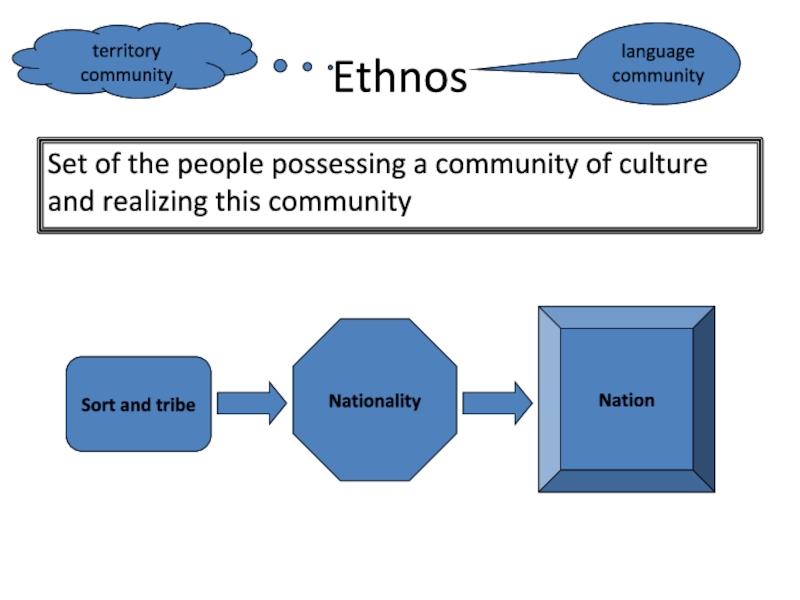
Set of the people possessing a community of culture and realizing
territory community
language community
Sort and tribe
Nationality
Nation
Слайд 7Sort and tribe
Sort – group of the blood relatives conducting the
Tribe – association of several childbirth on the basis of kinship communications.
is:
communal property,
primitive collectivism
is not present:
private property,
classes, monogamous family

Слайд 8Nationality
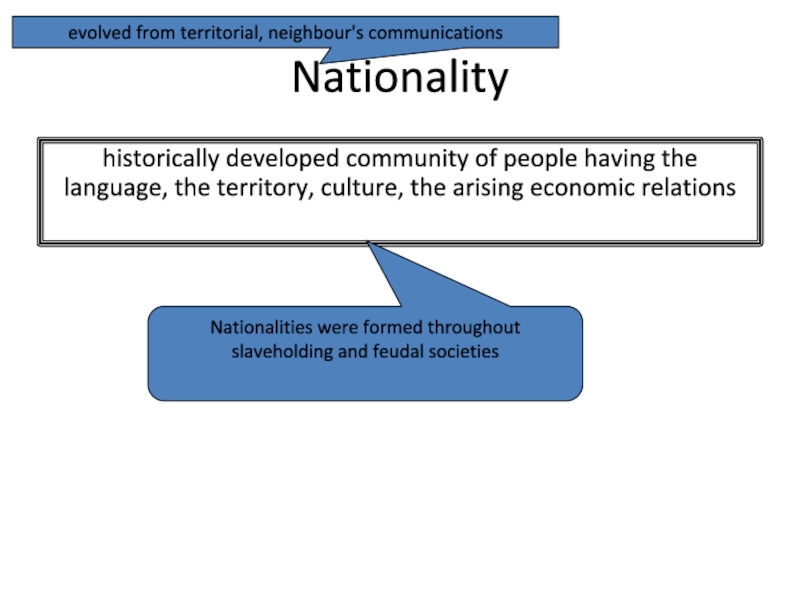
evolved from territorial, neighbour's communications
historically developed community of people having the
Nationalities were formed throughout slaveholding and feudal societies
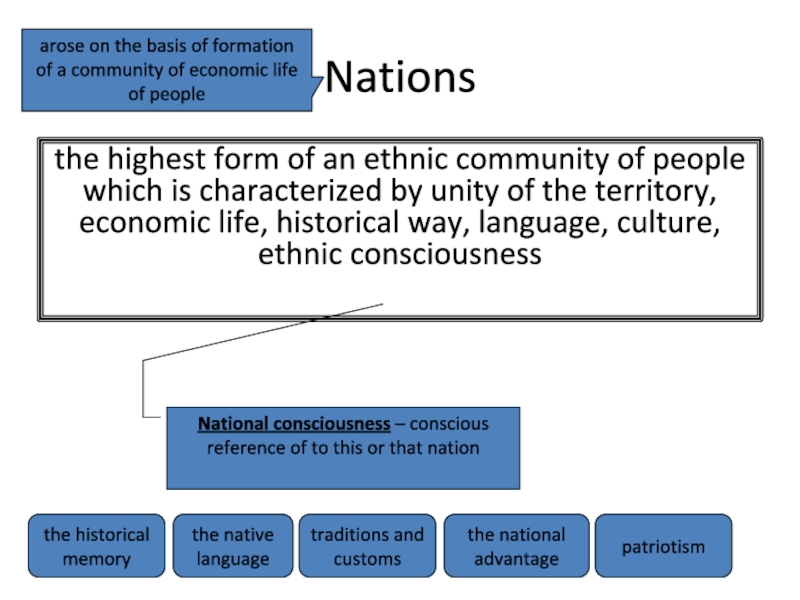
Слайд 9Nations
arose on the basis of formation of a community of economic
the highest form of an ethnic community of people which is characterized by unity of the territory, economic life, historical way, language, culture, ethnic consciousness
National consciousness – conscious reference of to this or that nation
the historical
memory
the native
language
traditions and
customs
the national
advantage
patriotism
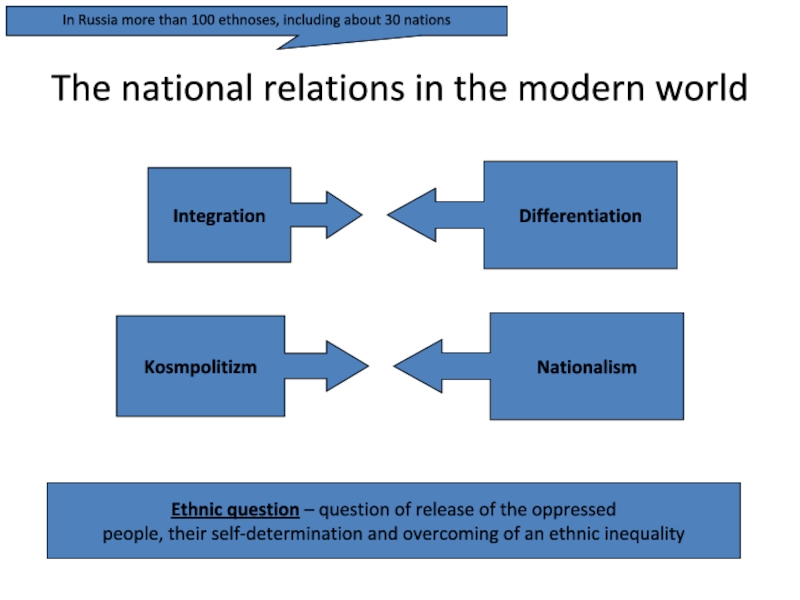
Слайд 10The national relations in the modern world
In Russia more than 100
Integration
Differentiation
Kosmpolitizm
Nationalism
Ethnic question – question of release of the oppressed
people, their self-determination and overcoming of an ethnic inequality
Слайд 11Solutions of an ethnic question
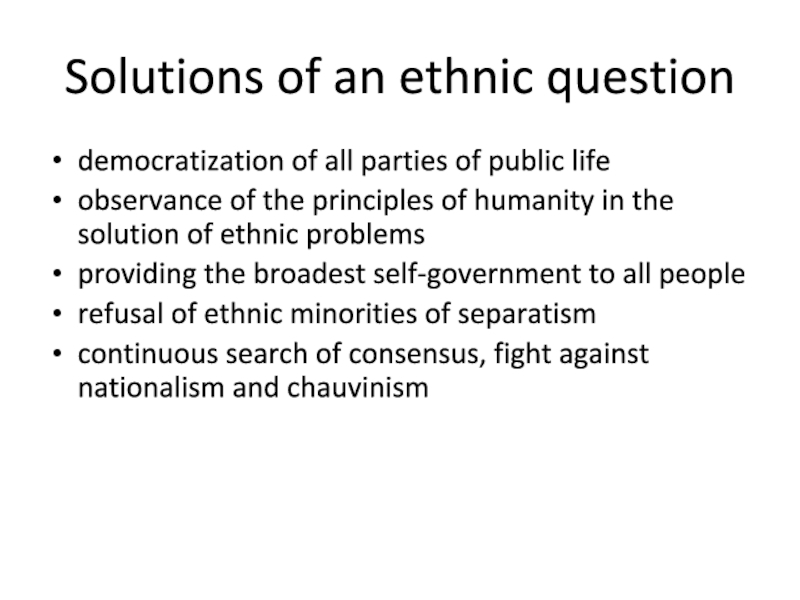
democratization of all parties of public life
observance
providing the broadest self-government to all people
refusal of ethnic minorities of separatism
continuous search of consensus, fight against nationalism and chauvinism
Слайд 12?
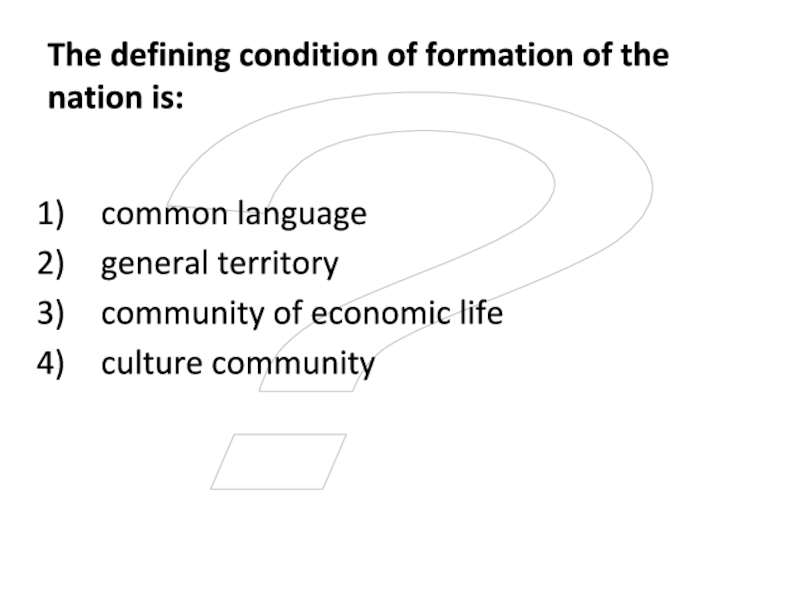
The defining condition of formation of the nation is:
common language
general territory
community
culture community
Слайд 13?
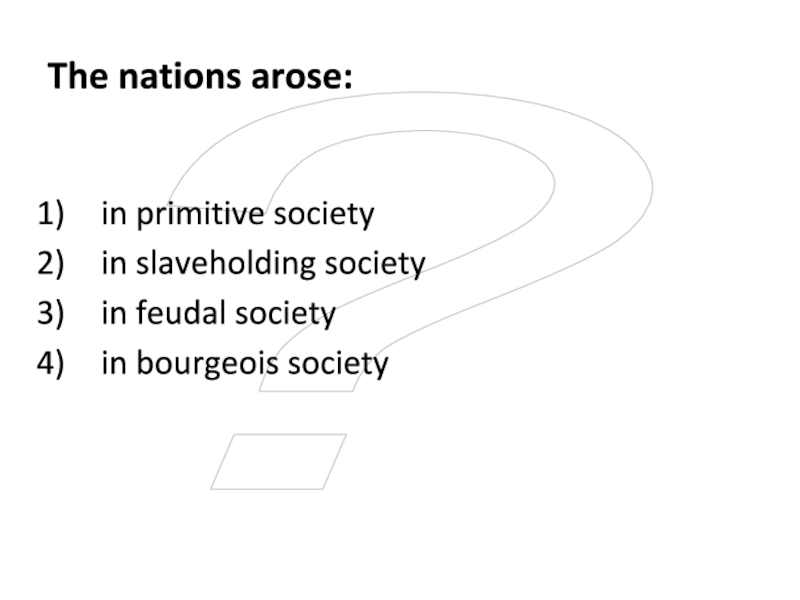
The nations arose:
in primitive society
in slaveholding society
in feudal society
in bourgeois society
Слайд 14?
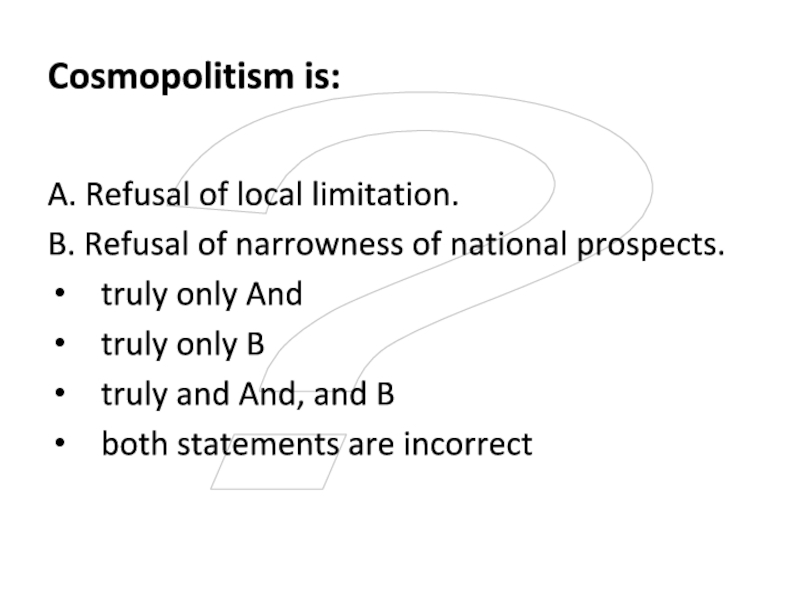
Cosmopolitism is:
A. Refusal of local limitation.
B. Refusal of narrowness of national
truly only And
truly only B
truly and And, and B
both statements are incorrect
Слайд 15Family
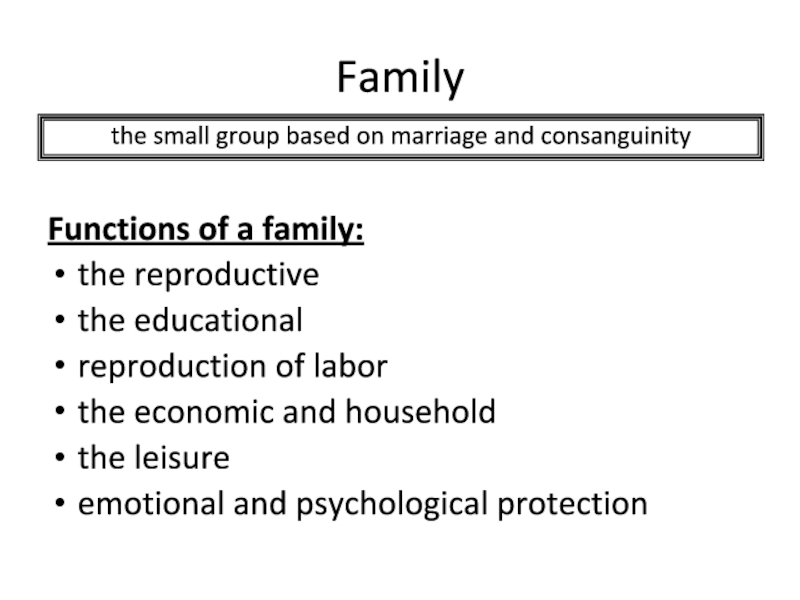
Functions of a family:
the reproductive
the educational
reproduction of labor
the economic and household
the
emotional and psychological protection
the small group based on marriage and consanguinity
Слайд 16Stages of development of the family and marriage relations
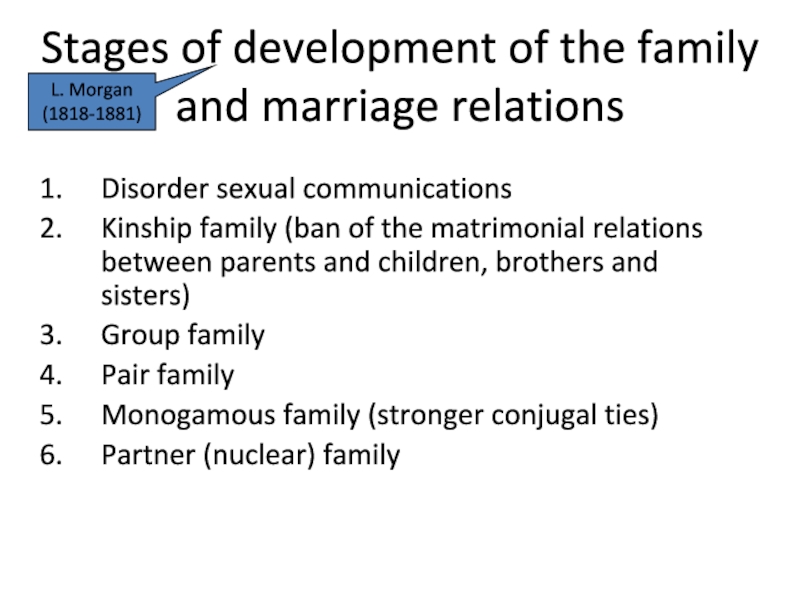
Disorder sexual communications
Kinship
Group family
Pair family
Monogamous family (stronger conjugal ties)
Partner (nuclear) family
L. Morgan
(1818-1881)
Слайд 17Tendencies in development of a modern family
Women gained big economic independence,
The number of stains increases
Birth rate is reduced
The number of civil marriages grows

Слайд 19Social structure of traditional society
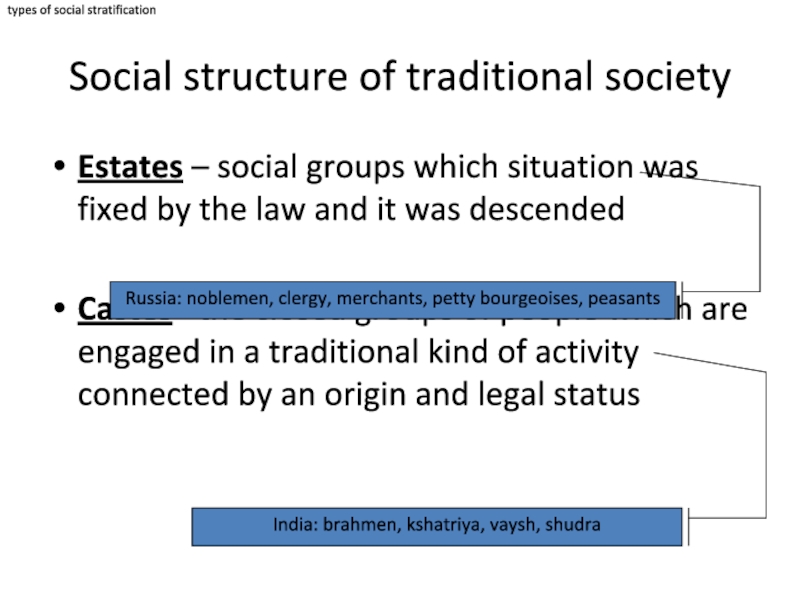
Estates – social groups which situation was
Castes– the closed groups of people which are engaged in a traditional kind of activity connected by an origin and legal status
Russia: noblemen, clergy, merchants, petty bourgeoises, peasants
India: brahmen, kshatriya, vaysh, shudra
types of social stratification
Слайд 20Class
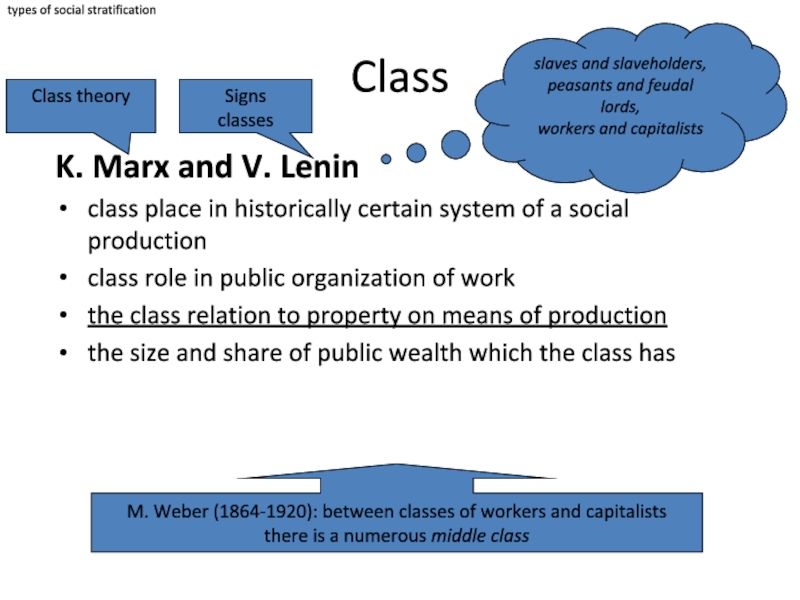
K. Marx and V. Lenin
class place in historically certain system of
class role in public organization of work
the class relation to property on means of production
the size and share of public wealth which the class has
Class theory
Signs
classes
slaves and slaveholders, peasants and feudal lords,
workers and capitalists
M. Weber (1864-1920): between classes of workers and capitalists
there is a numerous middle class
types of social stratification
Слайд 21Middle class
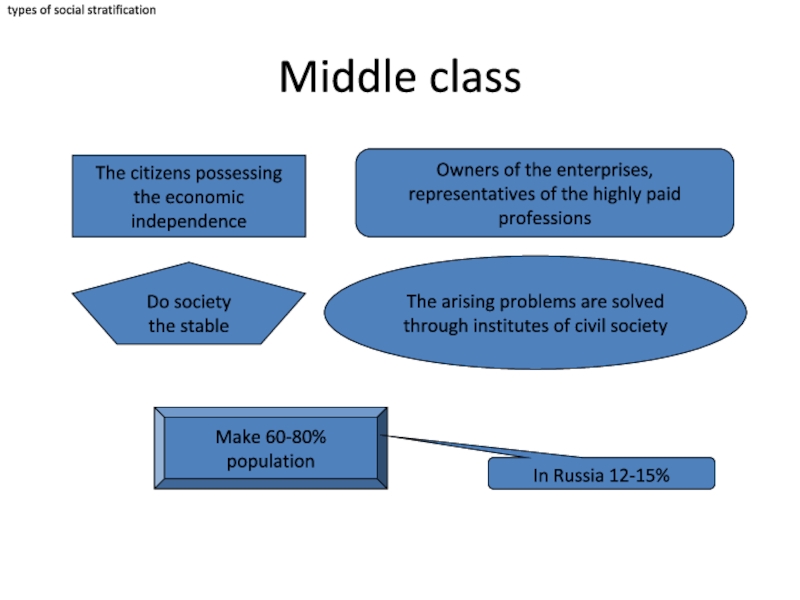
The citizens possessing
the economic
independence
Owners of the enterprises,
representatives of the
professions
Do society
the stable
The arising problems are solved
through institutes of civil society
Make 60-80%
population
In Russia 12-15%
types of social stratification
Слайд 22Striations
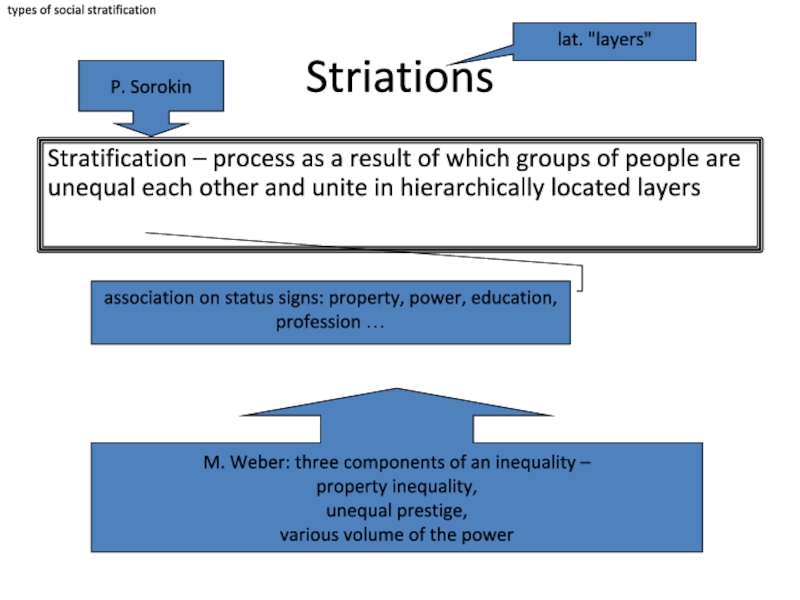
Stratification – process as a result of which groups of people
lat. "layers"
P. Sorokin
association on status signs: property, power, education, profession …
M. Weber: three components of an inequality –
property inequality,
unequal prestige,
various volume of the power
types of social stratification
Слайд 23Layers in modern Russian society
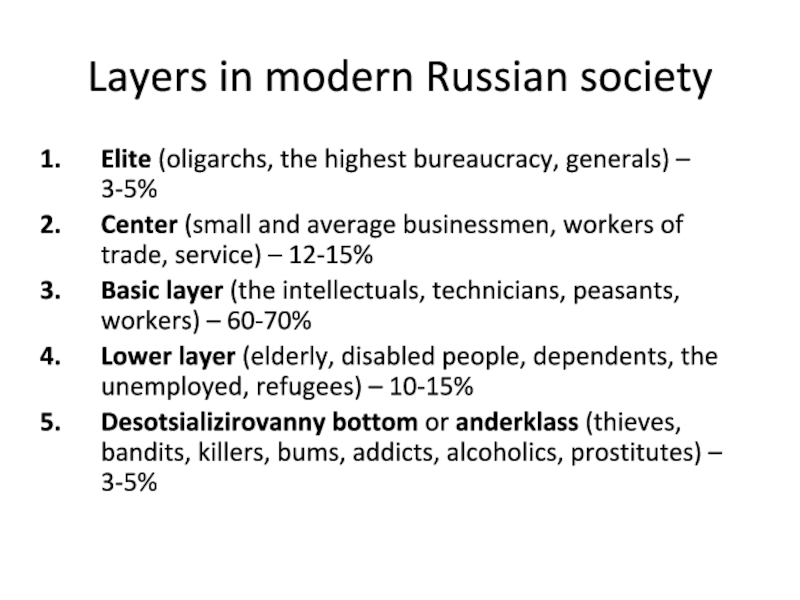
Elite (oligarchs, the highest bureaucracy, generals) –
Center (small and average businessmen, workers of trade, service) – 12-15%
Basic layer (the intellectuals, technicians, peasants, workers) – 60-70%
Lower layer (elderly, disabled people, dependents, the unemployed, refugees) – 10-15%
Desotsializirovanny bottom or anderklass (thieves, bandits, killers, bums, addicts, alcoholics, prostitutes) – 3-5%
Слайд 24Tendencies in development of social structure of the Russian society
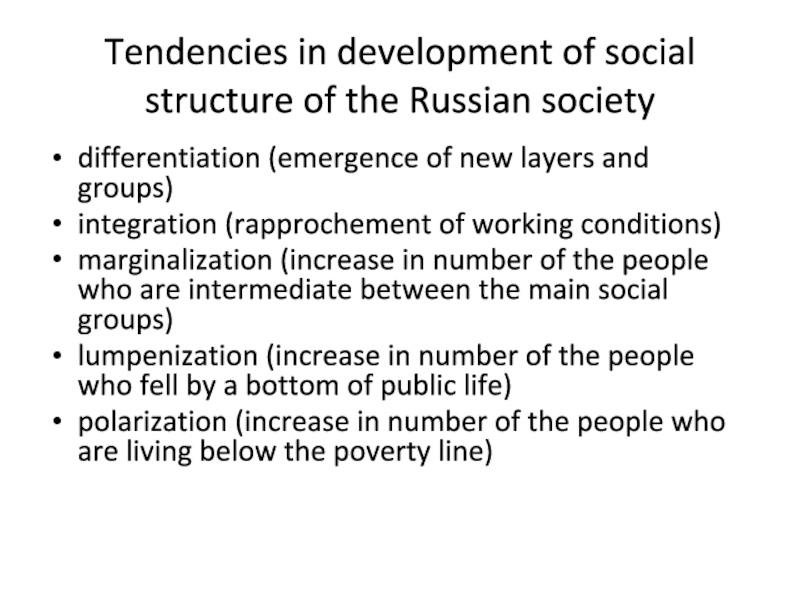
differentiation (emergence
integration (rapprochement of working conditions)
marginalization (increase in number of the people who are intermediate between the main social groups)
lumpenization (increase in number of the people who fell by a bottom of public life)
polarization (increase in number of the people who are living below the poverty line)
Слайд 25Youth as social group
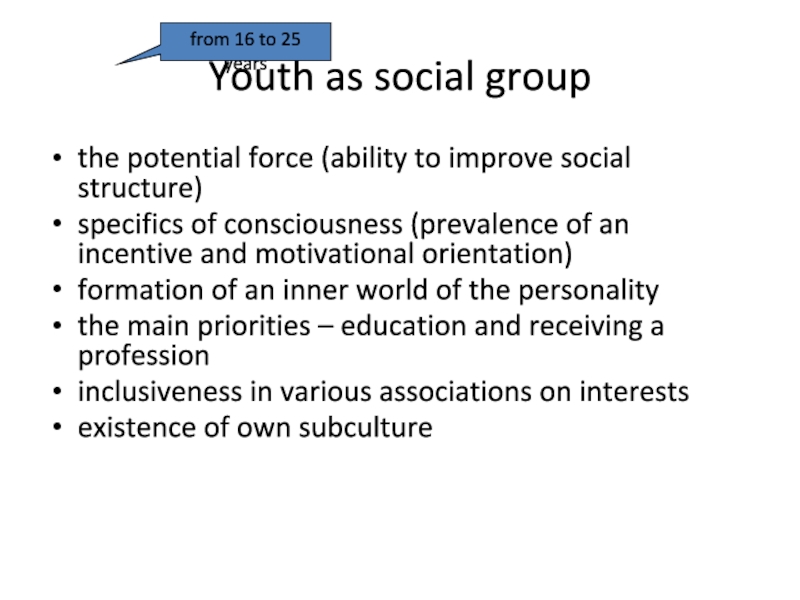
the potential force (ability to improve social structure)
specifics
formation of an inner world of the personality
the main priorities – education and receiving a profession
inclusiveness in various associations on interests
existence of own subculture
from 16 to 25 years
Слайд 26?
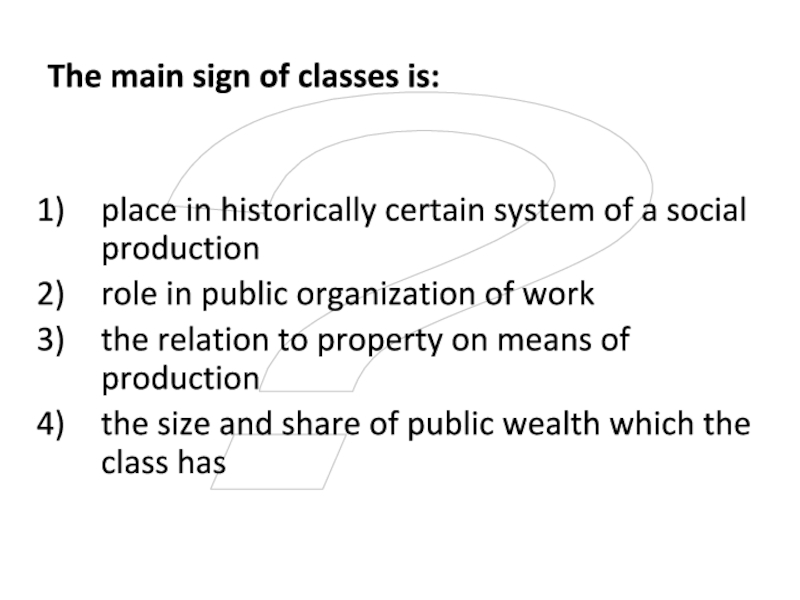
The main sign of classes is:
place in historically certain system of
role in public organization of work
the relation to property on means of production
the size and share of public wealth which the class has
Слайд 27Social mobility
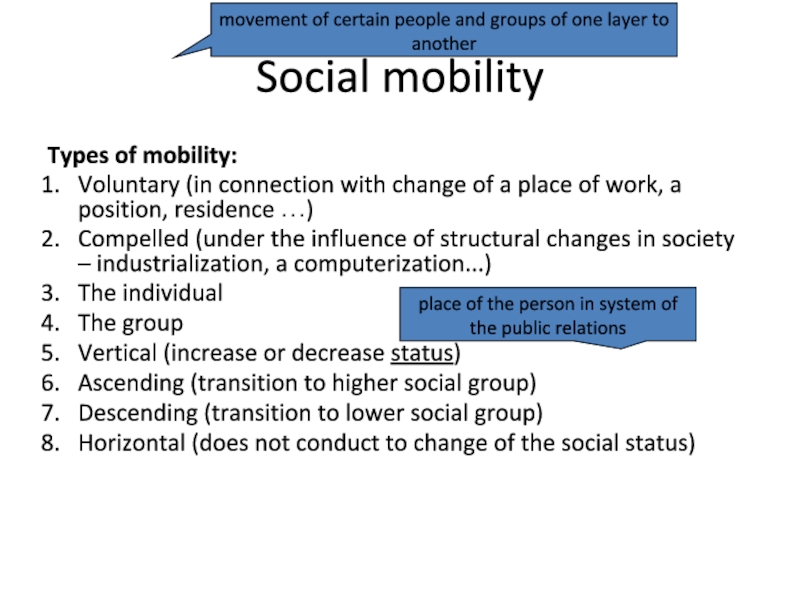
Types of mobility:
Voluntary (in connection with change of a place
Compelled (under the influence of structural changes in society – industrialization, a computerization...)
The individual
The group
Vertical (increase or decrease status)
Ascending (transition to higher social group)
Descending (transition to lower social group)
Horizontal (does not conduct to change of the social status)
movement of certain people and groups of one layer to another
place of the person in system of the public relations
Слайд 28Factors of social mobility
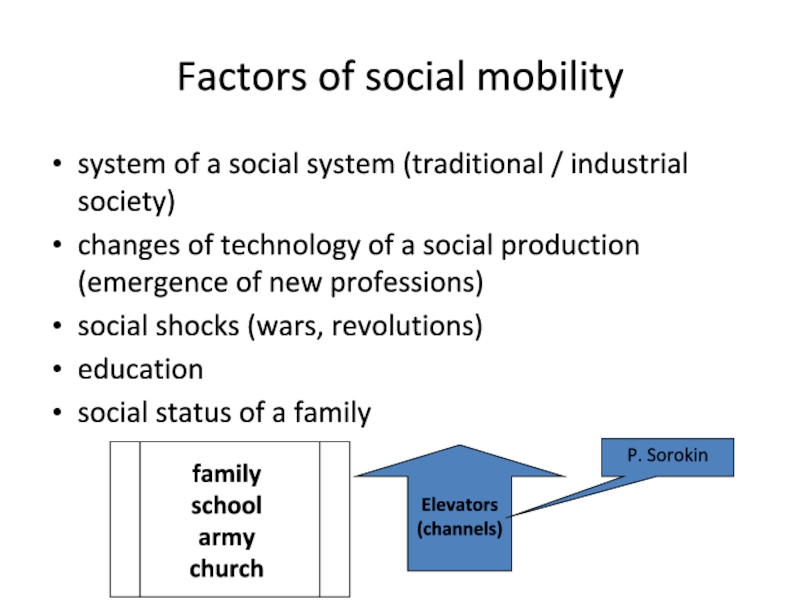
system of a social system (traditional / industrial
changes of technology of a social production (emergence of new professions)
social shocks (wars, revolutions)
education
social status of a family
family
school
army
church
Elevators
(channels)
P. Sorokin
Слайд 29Types of the statuses
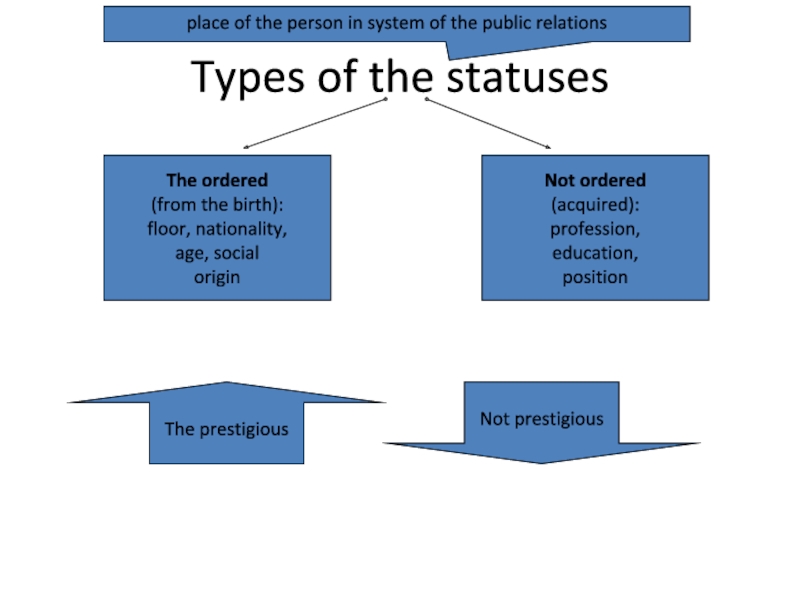
place of the person in system of the
The ordered
(from the birth):
floor, nationality,
age, social
origin
Not ordered
(acquired):
profession,
education,
position
The prestigious
Not prestigious
Слайд 30?
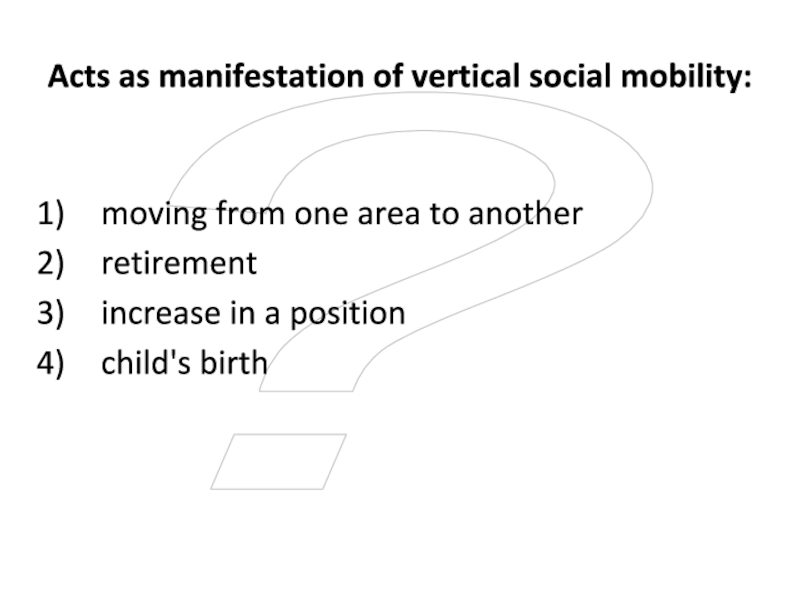
Acts as manifestation of vertical social mobility:
moving from one area to
retirement
increase in a position
child's birth
Слайд 31Social role
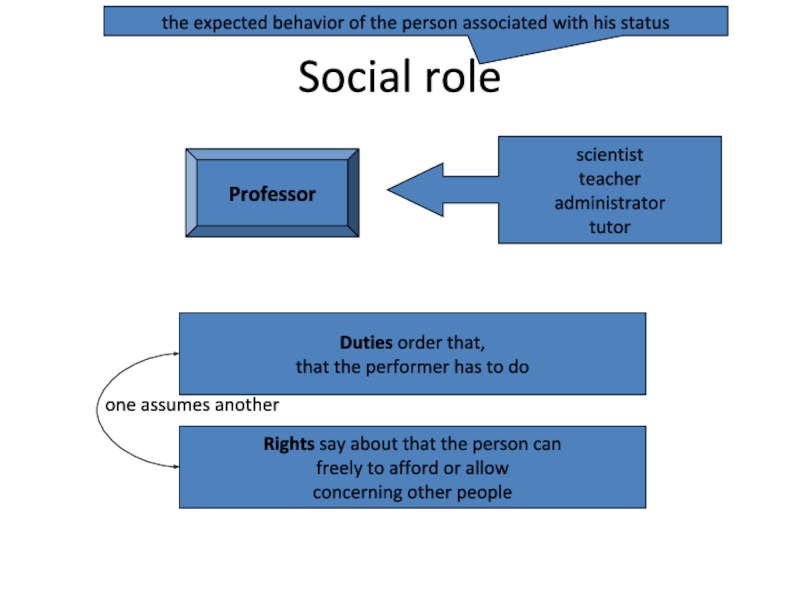
the expected behavior of the person associated with his status
Professor
scientist
teacher
administrator
tutor
Duties
that the performer has to do
Rights say about that the person can
freely to afford or allow
concerning other people
one assumes another
Слайд 32Social control
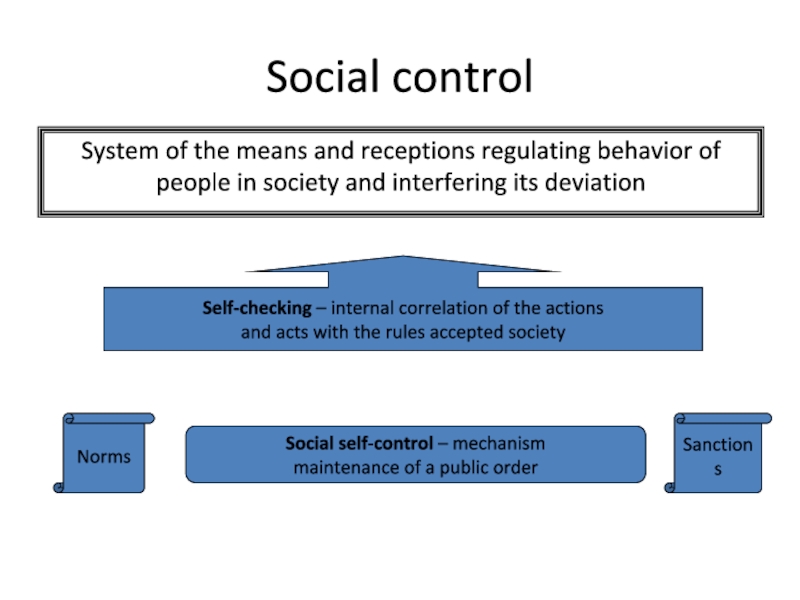
System of the means and receptions regulating behavior of people
Self-checking – internal correlation of the actions
and acts with the rules accepted society
Social self-control – mechanism
maintenance of a public order
Norms
Sanctions
Слайд 33Norms
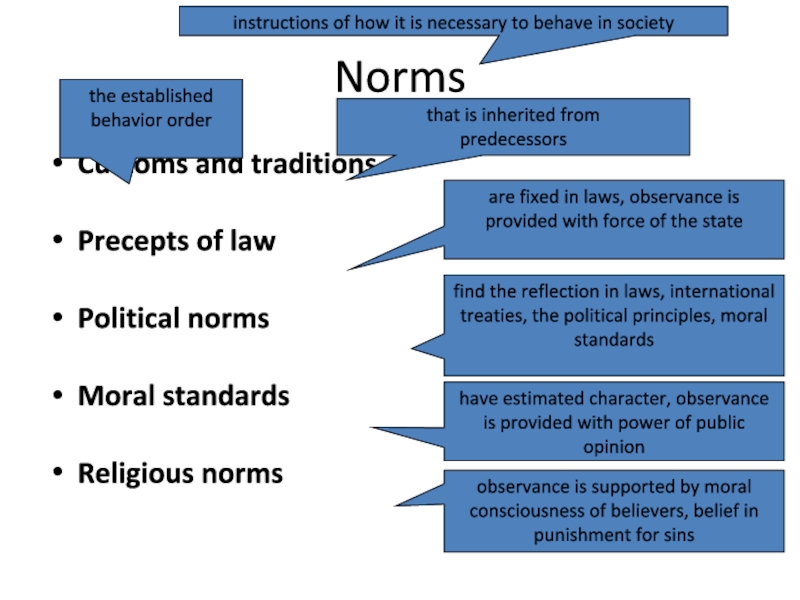
Customs and traditions
Precepts of law
Political norms
Moral standards
Religious norms
instructions of how it
the established behavior order
that is inherited from
predecessors
are fixed in laws, observance is provided with force of the state
find the reflection in laws, international treaties, the political principles, moral standards
have estimated character, observance is provided with power of public opinion
observance is supported by moral consciousness of believers, belief in punishment for sins
Слайд 34Sanctions
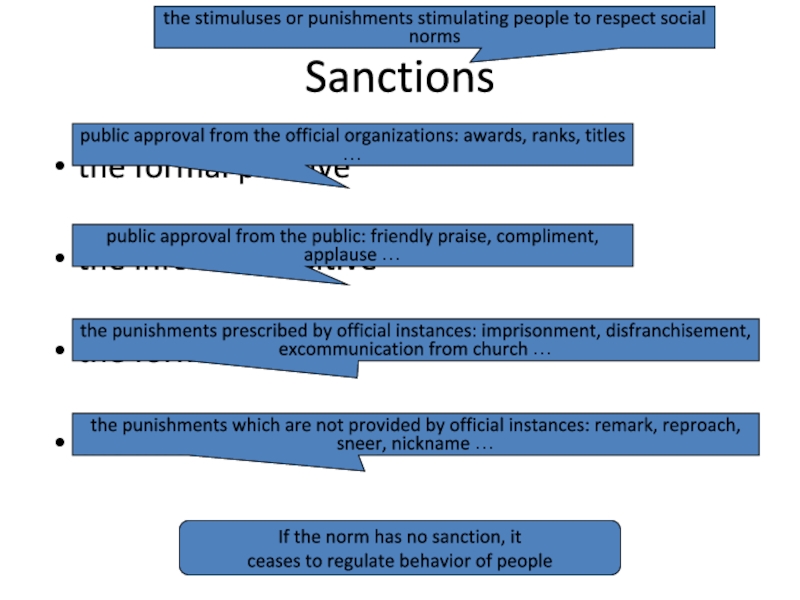
the formal positive
the informal positive
the formal negative
the informal negative
the stimuluses or
public approval from the official organizations: awards, ranks, titles …
public approval from the public: friendly praise, compliment, applause …
the punishments prescribed by official instances: imprisonment, disfranchisement, excommunication from church …
the punishments which are not provided by official instances: remark, reproach, sneer, nickname …
If the norm has no sanction, it
ceases to regulate behavior of people
Слайд 35?
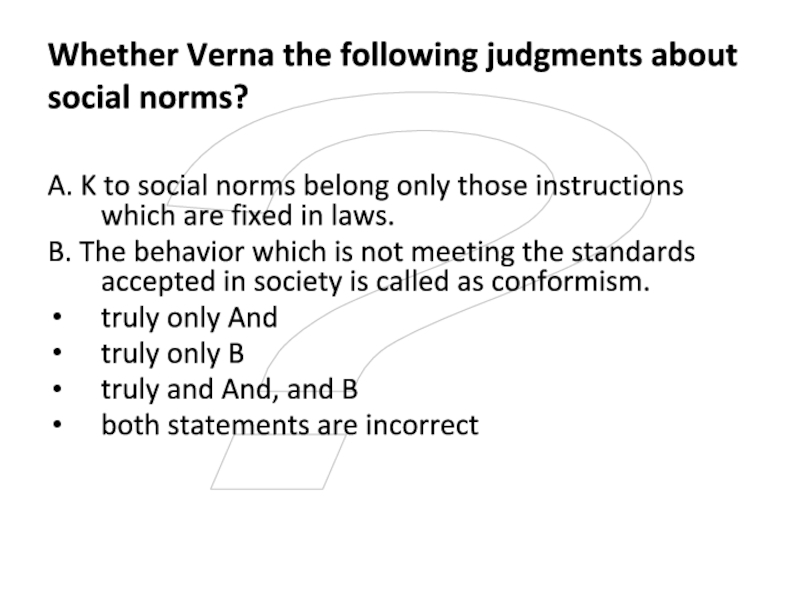
Whether Verna the following judgments about social norms?
A. K to social
B. The behavior which is not meeting the standards accepted in society is called as conformism.
truly only And
truly only B
truly and And, and B
both statements are incorrect
Слайд 36Conflict
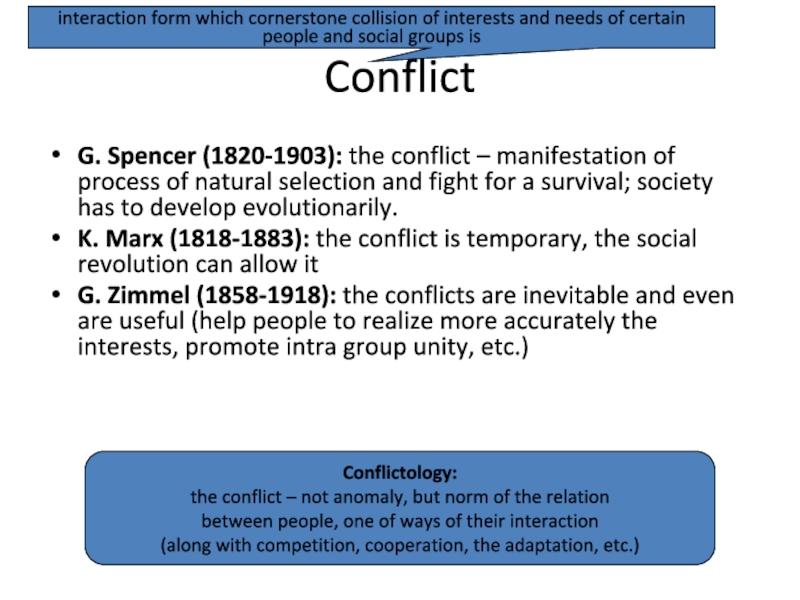
G. Spencer (1820-1903): the conflict – manifestation of process of natural
K. Marx (1818-1883): the conflict is temporary, the social revolution can allow it
G. Zimmel (1858-1918): the conflicts are inevitable and even are useful (help people to realize more accurately the interests, promote intra group unity, etc.)
interaction form which cornerstone collision of interests and needs of certain people and social groups is
Conflictology:
the conflict – not anomaly, but norm of the relation
between people, one of ways of their interaction
(along with competition, cooperation, the adaptation, etc.)
Слайд 37Subjects of the conflict
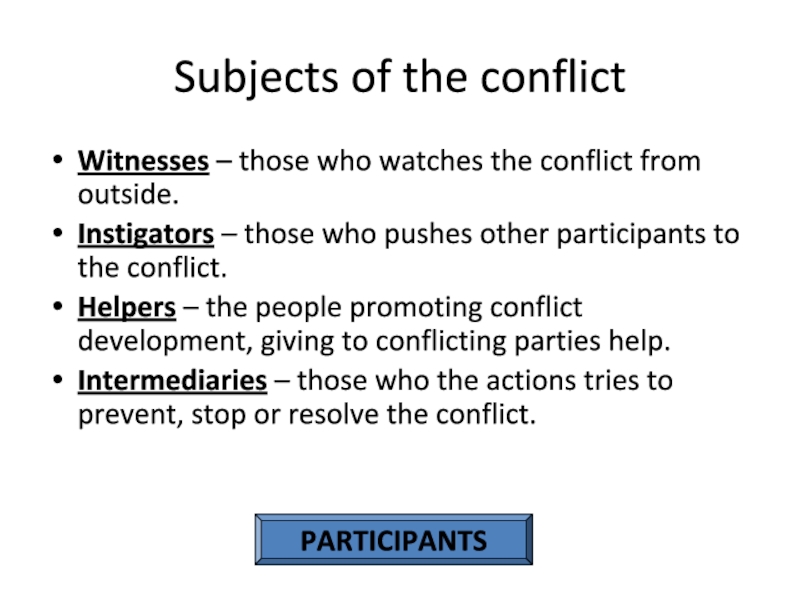
Witnesses – those who watches the conflict from
Instigators – those who pushes other participants to the conflict.
Helpers – the people promoting conflict development, giving to conflicting parties help.
Intermediaries – those who the actions tries to prevent, stop or resolve the conflict.
PARTICIPANTS
Слайд 38incident (occasion)
conflict escalation consensus
event or circumstance as a result of which
conflict growth, increase in quantity participating in the conflict
agreement of the majority
Слайд 39Types of the conflicts
depending on conflicting parties (intra personal, interpersonal, intergroup
on duration and to character courses (long-term, short-term, single, long …)
on to form (internal, external)
on to scale distribution (local, regional, global)
on the used to means (nonviolent, violent)
on to spheres, in which they occur ↓

Слайд 40Political conflict
National and ethnic conflict
Social and economic conflict
Cultural conflict
concerning distribution of
on the basis of fight for the rights and interests of ethnic and national groups
concerning survival facilities, a wage level, level of prices for various benefits, access to these benefits
are connected with religious, language and other contradictions in the spiritual sphere
Forms of the social conflicts:
discussions, inquiries, adoption of declarations …
meetings, demonstrations, pickets, strikes …
war – an extreme form
Слайд 41Conditions and ways of a resolution of conflict
Conditions:
identification of the existing
mutual interest in overcoming of contradictions
joint search of ways of overcoming of the conflict
Ways:
direct dialogue of the parties, negotiations
development and improvement of the social sphere of life of society (expansion of an education system, health care, social security, housing construction, i.e. creation of the developed social infrastructure)
Слайд 42Social state
Main lines of the social state:
the developed market relations, variety
the mechanism of the prices and the competition without intervention of the state
freedom of choice for hired workers
reasonable ratio between the market principles and redistribution of the benefits through the state system of the social help
high standard of living of the population
the developed social legislation
effective policy on ensuring social, economic, cultural human rights
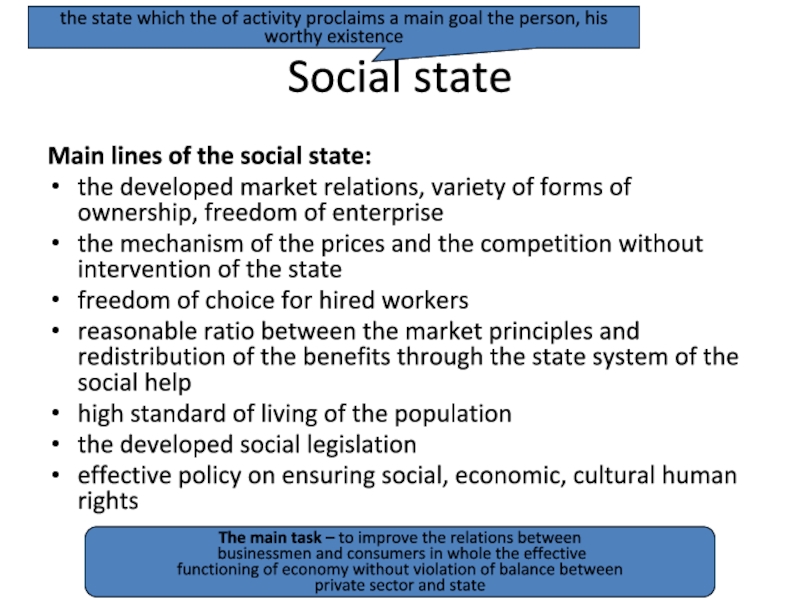
the state which the of activity proclaims a main goal the person, his worthy existence
The main task – to improve the relations between
businessmen and consumers in whole the effective
functioning of economy without violation of balance between
private sector and state
Слайд 43?
Whether Verna the following judgments about the social conflicts?
A. Conflict interaction
B. The social conflicts always conduct to negative consequences.
truly only And
truly only B
truly and And, and B
both statements are incorrect