- Главная
- Разное
- Образование
- Спорт
- Естествознание
- Природоведение
- Религиоведение
- Французский язык
- Черчение
- Английский язык
- Астрономия
- Алгебра
- Биология
- География
- Геометрия
- Детские презентации
- Информатика
- История
- Литература
- Математика
- Музыка
- МХК
- Немецкий язык
- ОБЖ
- Обществознание
- Окружающий мир
- Педагогика
- Русский язык
- Технология
- Физика
- Философия
- Химия
- Шаблоны, фоны, картинки для презентаций
- Экология
- Экономика
Презентация, доклад на английском языке на тему Подготовка к ЕГЭ по обществознанию
Содержание
- 1. Презентация на английском языке на тему Подготовка к ЕГЭ по обществознанию
- 2. MythsFunctions:formation of collective representationsfixing of a certain
- 3. Ancient India: VEDAWORLDSacrifice BEGINNING OF THE
- 4. Ancient China: ConfucianismNOBLE HUSBANDdevotion to the state,
- 5. In old Eastern philosophy of people acts as part of the surrounding nature
- 6. ?What functions execute myths in society?From what
- 7. Ancient GreecePlaton (427-347 BC)The state exists owing
- 8. Ancient GreeceAristotle (384-322 BC)The person – a
- 9. Middle Ages: teotsentrizmAvrelian Augustine (354-430)Providentsializm: the history
- 10. Revival: utopias Thomas Mor (1478-1535) There is
- 11. ?What forms of government Platon considered bad?What
- 12. Natural stateCivil statusModern timesTheory of the public
- 13. Modern timesAdam Smith (1723-1790): political economyWealth source
- 14. Modern timesG. W. F. Hegel (1770-1831)Criterion of
- 15. Modern timesMaterialistic understanding of society:K. Marx (1818-1883)
- 16. ?In what the entity of the theory
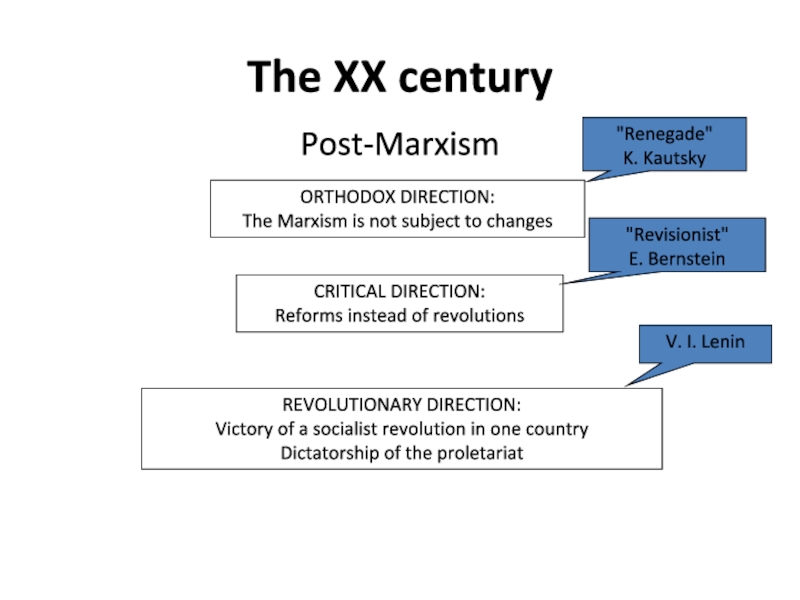
- 17. The XX centuryPost-MarxismORTHODOX DIRECTION:The Marxism is not
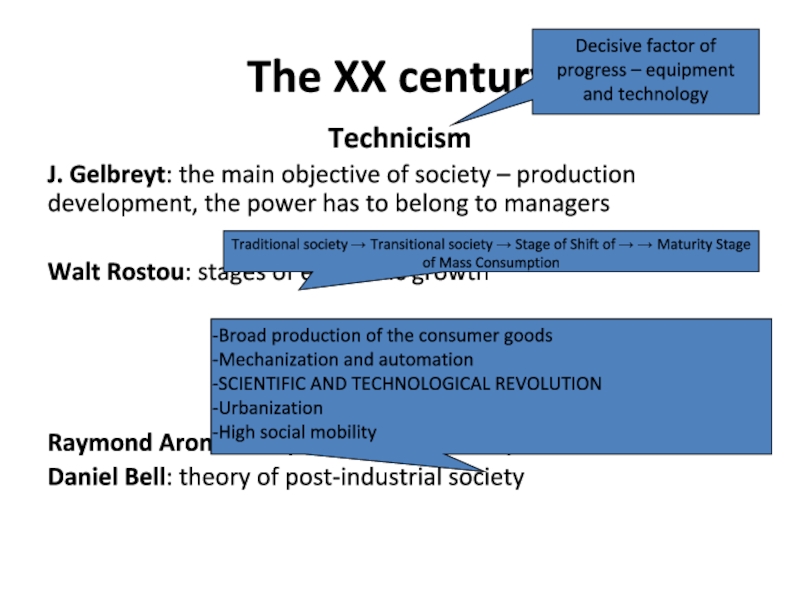
- 18. The XX centuryTechnicismJ. Gelbreyt: the main objective
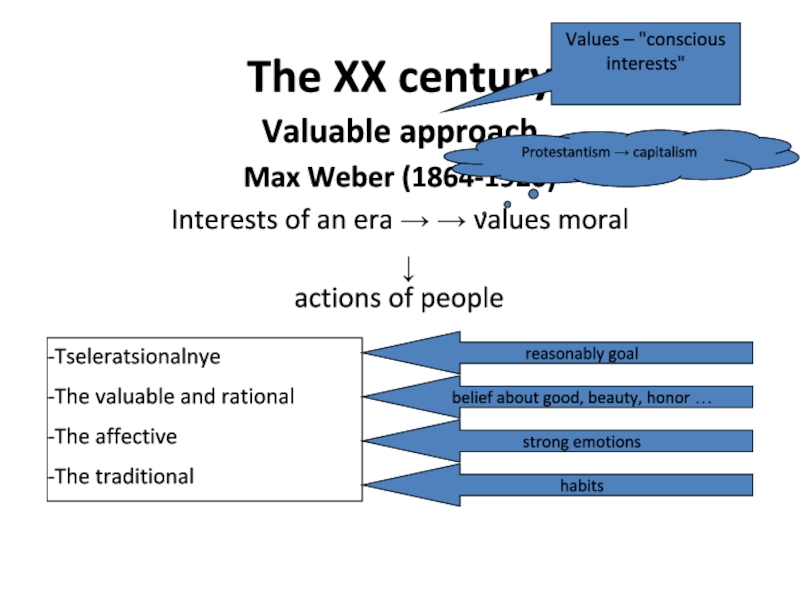
- 19. The XX centuryValuable approachMax Weber (1864-1920)Interests of
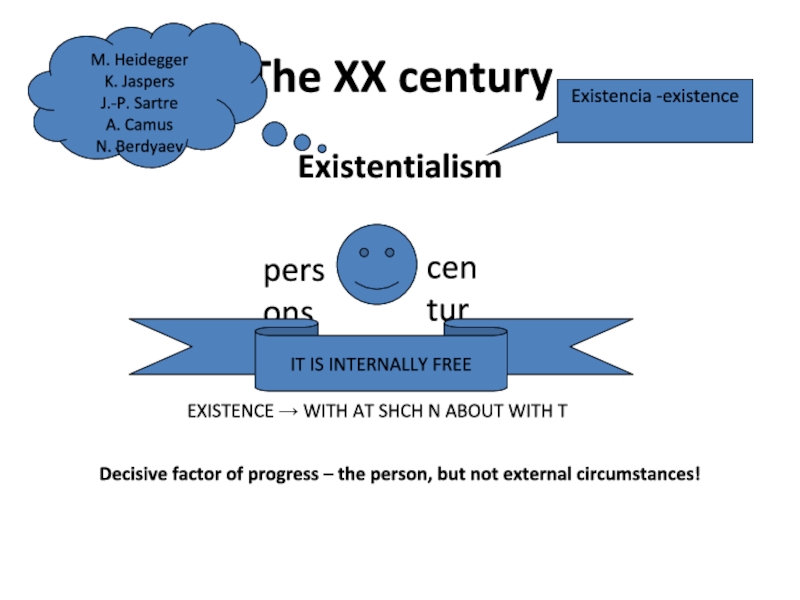
- 20. The XX centuryExistentialismpersonscenturyEXISTENCE WITH AT SHCH
- 21. ?What representatives of the direction of Marxism
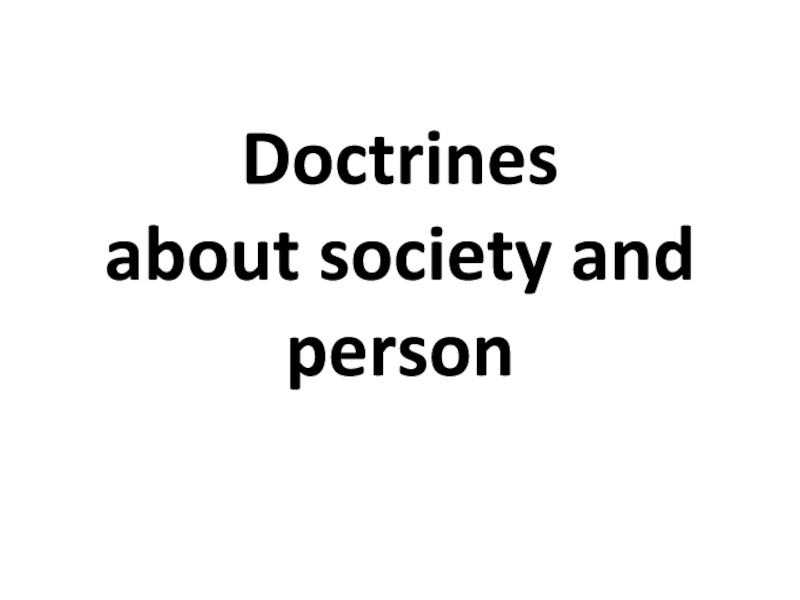
Слайд 2Myths
Functions:
formation of collective representations
fixing of a certain system of values
connection between
establishment of the harmonious relations with the nature
PHILOSOPHY
Everything occurs because of intervention of gods
There are no proofs
Emotional, art understanding of the world
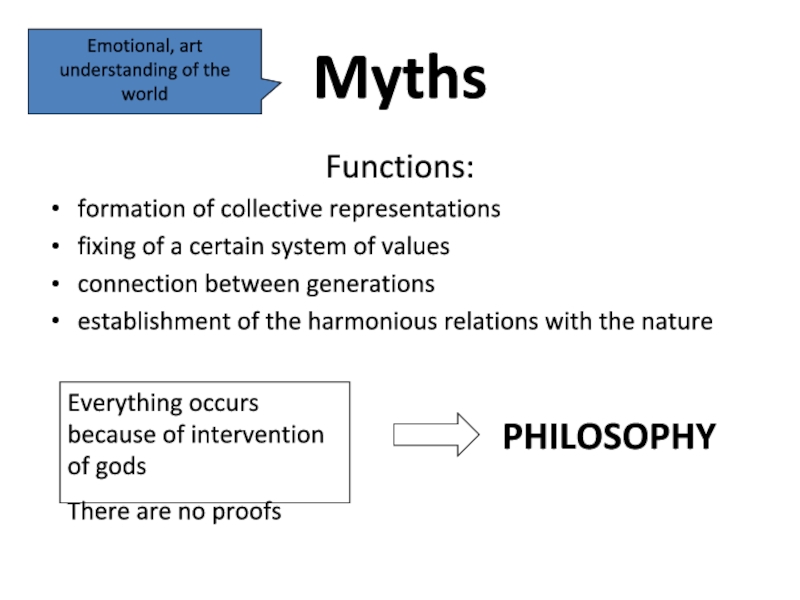
Слайд 3Ancient India: VEDA
WORLD
Sacrifice BEGINNING OF THE UNIVERSE
Karma – the set
Karma
Varna
Rigveda, Atkharvaveda, Samaveda, Yadzhurveda
+
brahmen
aranyak
upanishada
smrit
sutra
shastra
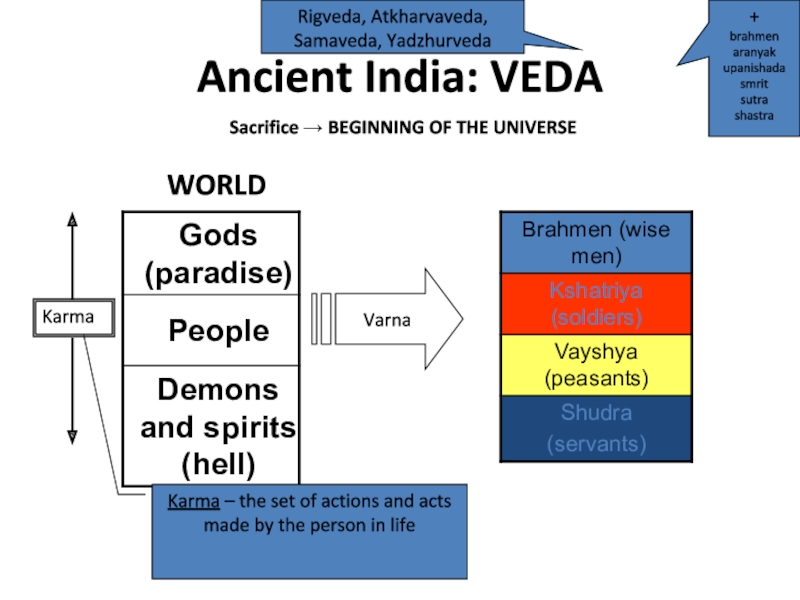
Слайд 4Ancient China: Confucianism
NOBLE HUSBAND
devotion to the state, fidelity to duty, filial
IDEAL STATE
It is a big family the relations in which are governed by moral standards
The people living on precepts of ancestors and possessing properties of philosophers, writers, scientists and officials have to operate
Confucius (551-479 BC)
“zhen" - philanthrophy
Слайд 6?
What functions execute myths in society?
From what social groups, according to
What, according to Confucius, has to be the ideal state?
Слайд 7Ancient Greece
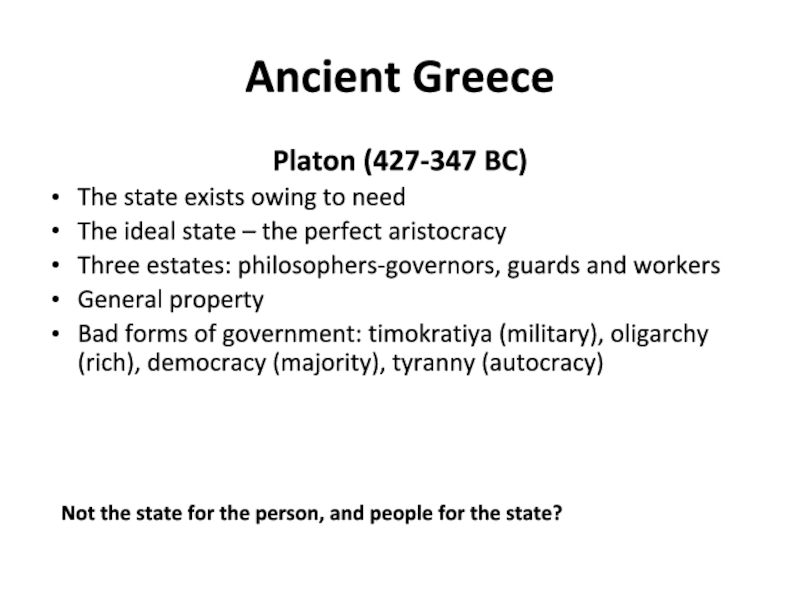
Platon (427-347 BC)
The state exists owing to need
The ideal state
Three estates: philosophers-governors, guards and workers
General property
Bad forms of government: timokratiya (military), oligarchy (rich), democracy (majority), tyranny (autocracy)
Not the state for the person, and people for the state?
Слайд 8Ancient Greece
Aristotle (384-322 BC)
The person – a public animal
Problem of the
The state has to keep slaves in obedience and interfere with concentration of the power in hands of the few
Private property
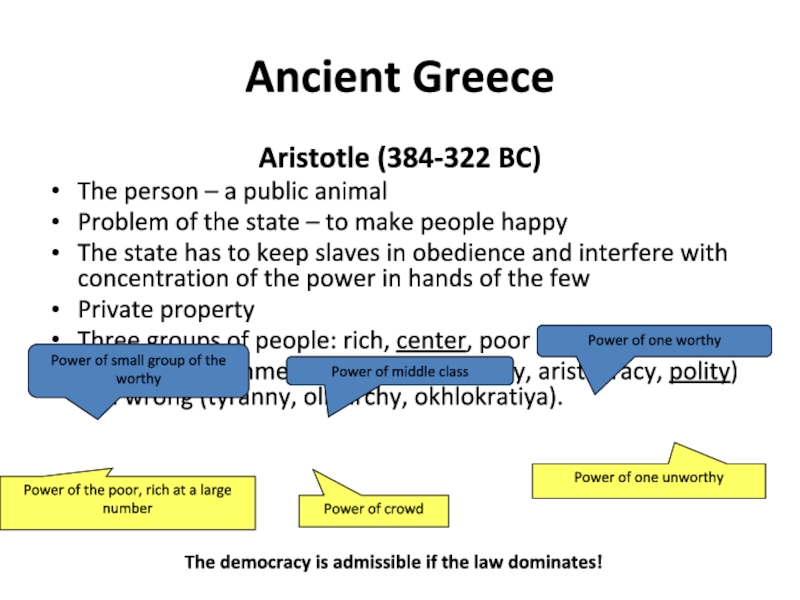
Three groups of people: rich, center, poor
Forms of government: correct (monarchy, aristocracy, polity) and wrong (tyranny, oligarchy, okhlokratiya).
Power of one worthy
Power of small group of the worthy
Power of middle class
Power of one unworthy
Power of the poor, rich at a large number
Power of crowd
The democracy is admissible if the law dominates!
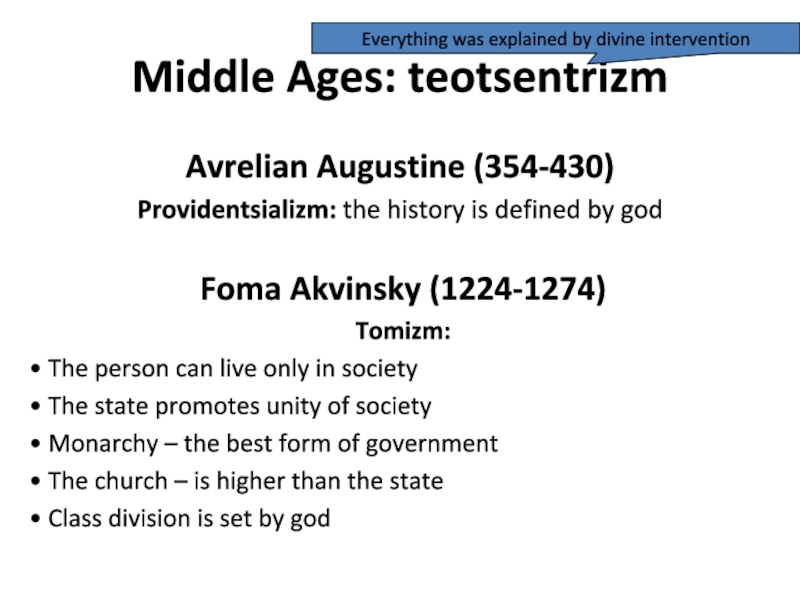
Слайд 9Middle Ages: teotsentrizm
Avrelian Augustine (354-430)
Providentsializm: the history is defined by god
Foma
Tomizm:
The person can live only in society
The state promotes unity of society
Monarchy – the best form of government
The church – is higher than the state
Class division is set by god
Everything was explained by divine intervention
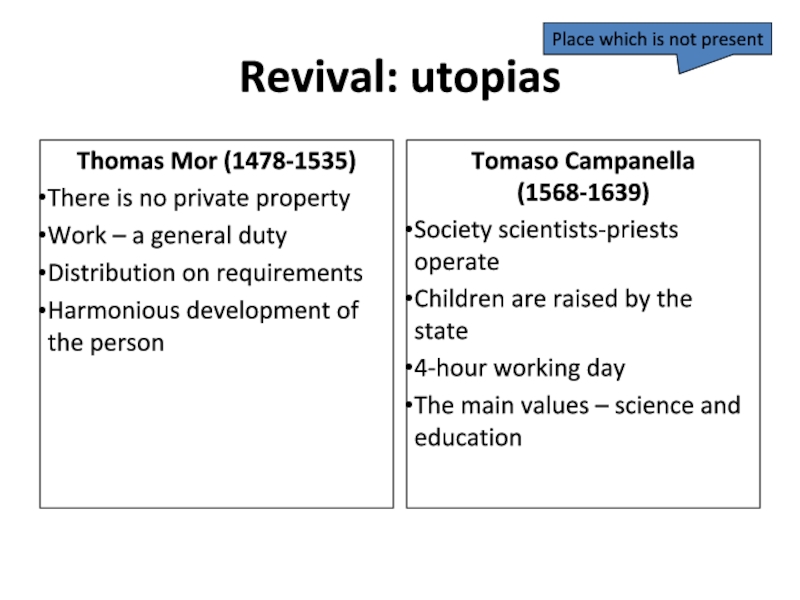
Слайд 10Revival: utopias
Thomas Mor (1478-1535)
There is no private property
Work –
Distribution on requirements
Harmonious development of the person
Tomaso Campanella (1568-1639)
Society scientists-priests operate
Children are raised by the state
4-hour working day
The main values – science and education
Place which is not present
Слайд 11?
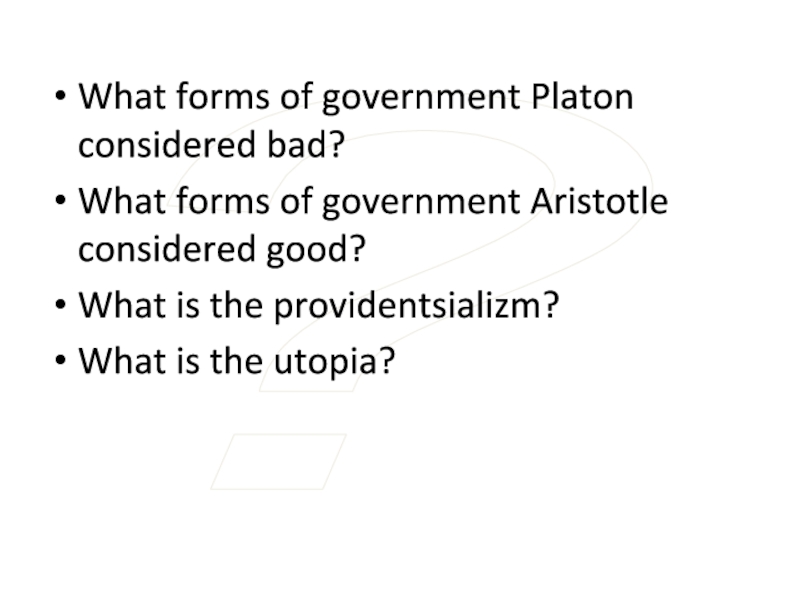
What forms of government Platon considered bad?
What forms of government Aristotle
What is the providentsializm?
What is the utopia?
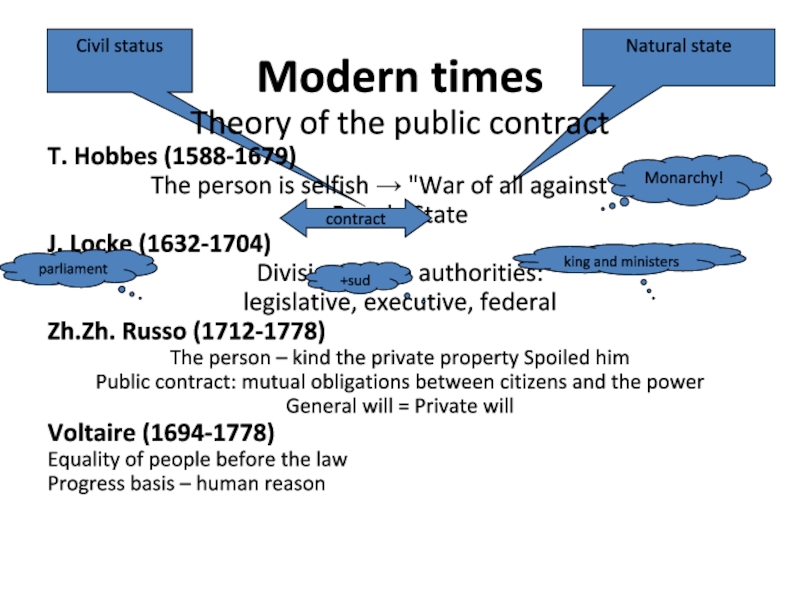
Слайд 12Natural state
Civil status
Modern times
Theory of the public contract
T. Hobbes (1588-1679)
The person
People State
J. Locke (1632-1704)
Division of the authorities:
legislative, executive, federal
Zh.Zh. Russo (1712-1778)
The person – kind the private property Spoiled him
Public contract: mutual obligations between citizens and the power
General will = Private will
Voltaire (1694-1778)
Equality of people before the law
Progress basis – human reason
contract
Monarchy!
parliament
+sud
king and ministers
Слайд 13Modern times
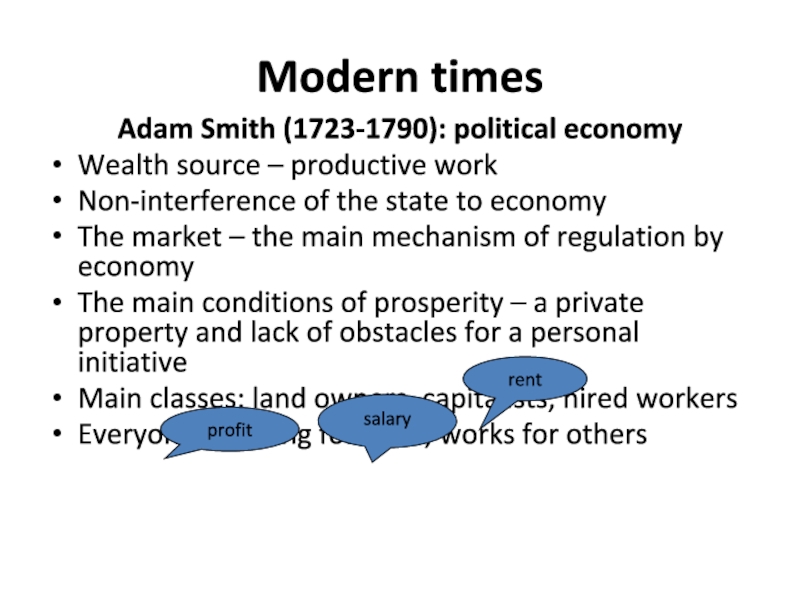
Adam Smith (1723-1790): political economy
Wealth source – productive work
Non-interference of
The market – the main mechanism of regulation by economy
The main conditions of prosperity – a private property and lack of obstacles for a personal initiative
Main classes: land owners, capitalists, hired workers
Everyone, working for itself, works for others
rent
profit
salary
Слайд 14Modern times
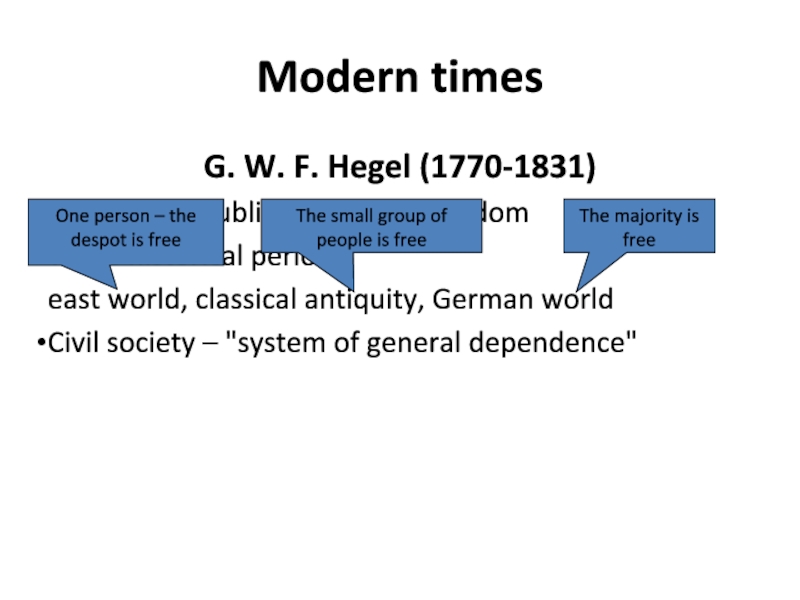
G. W. F. Hegel (1770-1831)
Criterion of public progress – freedom
Three
east world, classical antiquity, German world
Civil society – "system of general dependence"
One person – the despot is free
The small group of people is free
The majority is free
Слайд 15Modern times
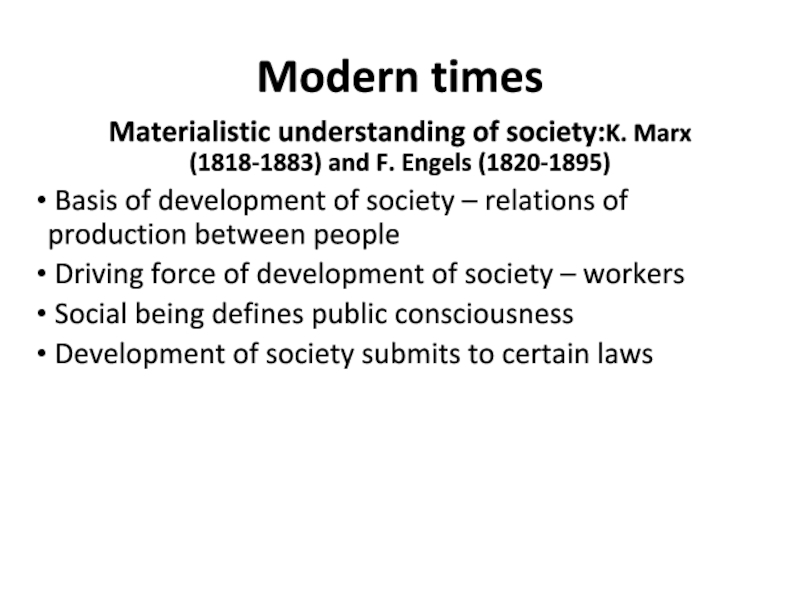
Materialistic understanding of society:K. Marx (1818-1883) and F. Engels (1820-1895)
Driving force of development of society – workers
Social being defines public consciousness
Development of society submits to certain laws
Слайд 16?
In what the entity of the theory of the public contract
Who developed the concept of division of the authorities?
Who is the founder of new science – political economy?
Who for the first time formulated concept of civil society?
What, according to materialistic understanding of society, is a basis of social development?
Слайд 17The XX century
Post-Marxism
ORTHODOX DIRECTION:
The Marxism is not subject to changes
CRITICAL DIRECTION:
Reforms
REVOLUTIONARY DIRECTION:
Victory of a socialist revolution in one country
Dictatorship of the proletariat
"Renegade"
K. Kautsky
"Revisionist"
E. Bernstein
V. I. Lenin
Слайд 18The XX century
Technicism
J. Gelbreyt: the main objective of society – production
Walt Rostou: stages of economic growth
Raymond Aron: theory of industrial society
Daniel Bell: theory of post-industrial society
Decisive factor of progress – equipment and technology
Traditional society Transitional society Stage of Shift of Maturity Stage of Mass Consumption
Broad production of the consumer goods
Mechanization and automation
SCIENTIFIC AND TECHNOLOGICAL REVOLUTION
Urbanization
High social mobility
Слайд 19The XX century
Valuable approach
Max Weber (1864-1920)
Interests of an era
actions of people
Tseleratsionalnye
The valuable and rational
The affective
The traditional
reasonably goal
belief about good, beauty, honor …
strong emotions
habits
Values – "conscious interests"
Protestantism capitalism
Слайд 20The XX century
Existentialism
persons
century
EXISTENCE WITH AT SHCH N ABOUT WITH T
IT
Decisive factor of progress – the person, but not external circumstances!
Existencia -existence
M. Heidegger
K. Jaspers
J.-P. Sartre
A. Camus
N. Berdyaev
Слайд 21?
What representatives of the direction of Marxism considered, what in process
What lines of industrial society were selected by R. Aron?
How M. Weber called the actions made under the influence of strong emotions?
What, according to existentialists, precedes entity of the person?