- Главная
- Разное
- Образование
- Спорт
- Естествознание
- Природоведение
- Религиоведение
- Французский язык
- Черчение
- Английский язык
- Астрономия
- Алгебра
- Биология
- География
- Геометрия
- Детские презентации
- Информатика
- История
- Литература
- Математика
- Музыка
- МХК
- Немецкий язык
- ОБЖ
- Обществознание
- Окружающий мир
- Педагогика
- Русский язык
- Технология
- Физика
- Философия
- Химия
- Шаблоны, фоны, картинки для презентаций
- Экология
- Экономика
Презентация, доклад на английском языке Канада
Содержание
- 1. Презентация на английском языке Канада
- 2. History of Canada Location of Canada Administrative
- 3. Canada is country in North America, the
- 4. History of Canada
- 5. Founded by the French explorer, born in
- 6. The name Canada comes from the word
- 7. Location of Canada
- 8. Canada occupies most of the northern North
- 9. Administrative divisions of Canada
- 10. Symbols of Canada
- 11. Flag of Canada, colloquially Odnolistnik.
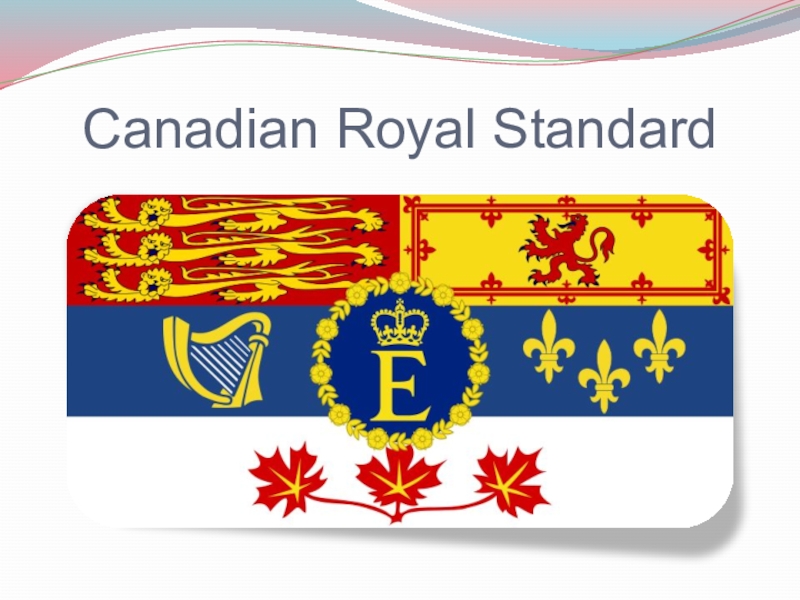
- 12. Canadian Royal Standard
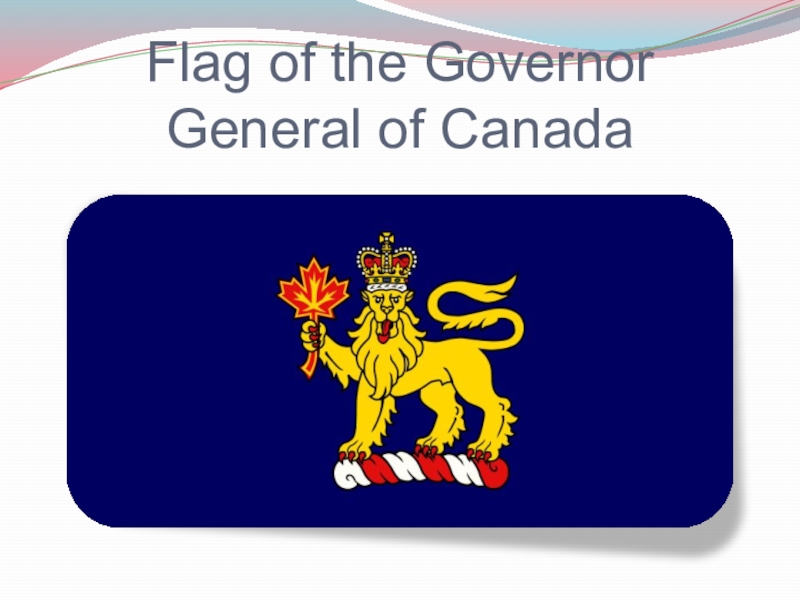
- 13. Flag of the Governor General of Canada
- 14. Insignia Air Command Canadian Forces
- 15. Flag of Canada
- 16. The law on the state flag passed
- 17. coat of Arms of Canada
- 18. Royal Arms of Canada (English Royal Coat
- 19. Cities in Canada
- 20. Vancouver city on the west coast of
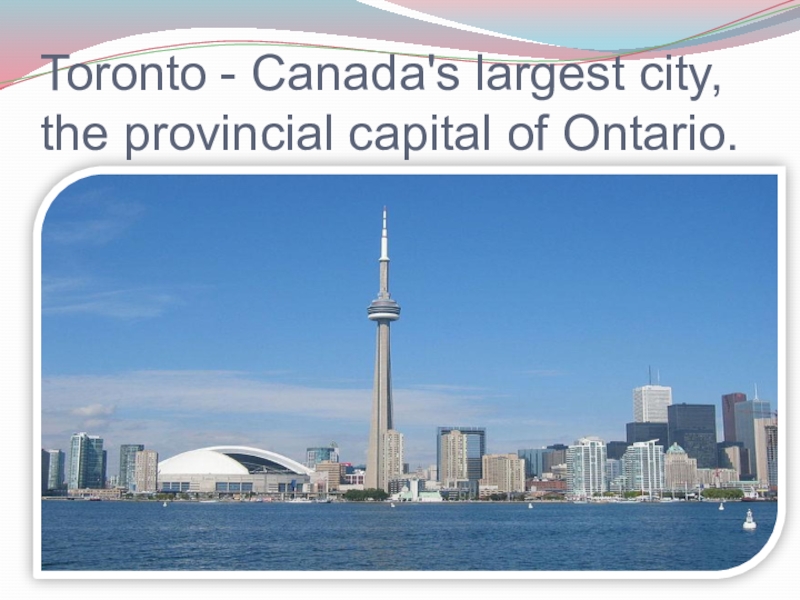
- 21. Toronto - Canada's largest city, the provincial capital of Ontario.
- 22. Montreal - the largest city in the
- 23. Ottawa - the capital of Canada. Located
- 24. attractions
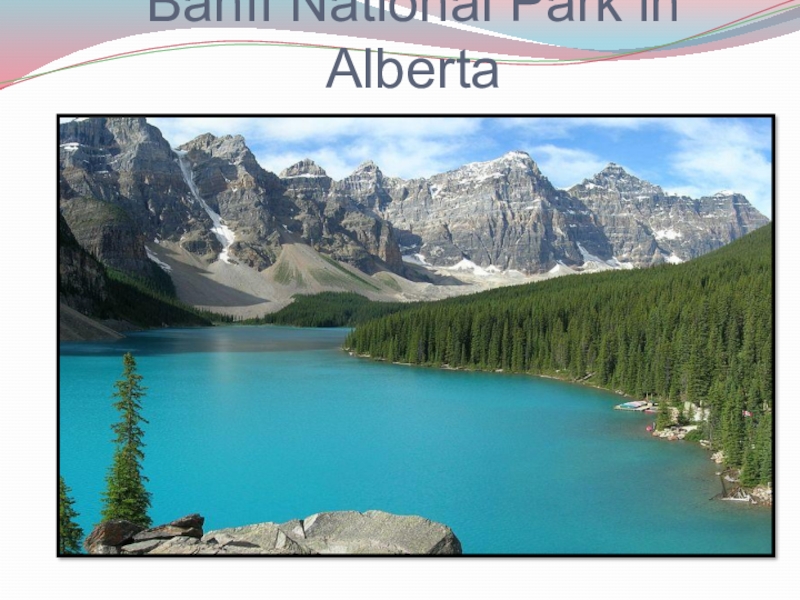
- 25. Banff National Park in Alberta
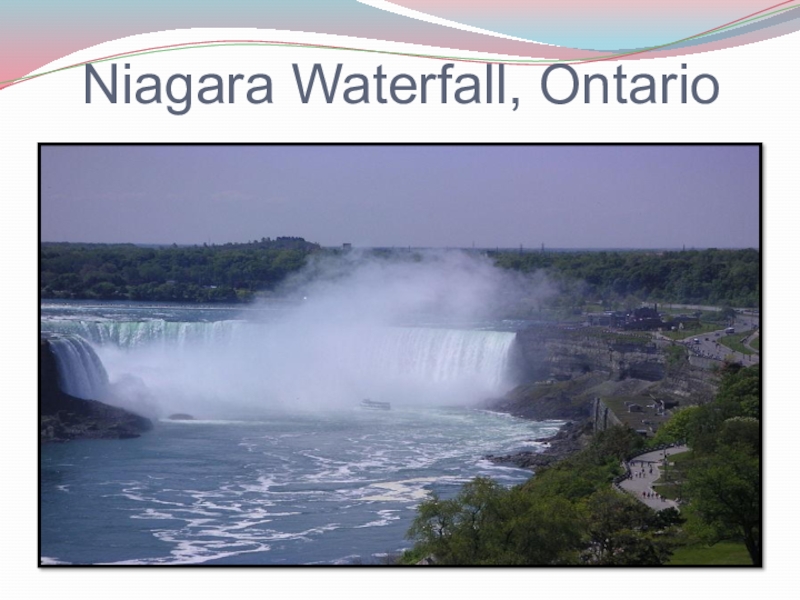
- 26. Niagara Waterfall, Ontario
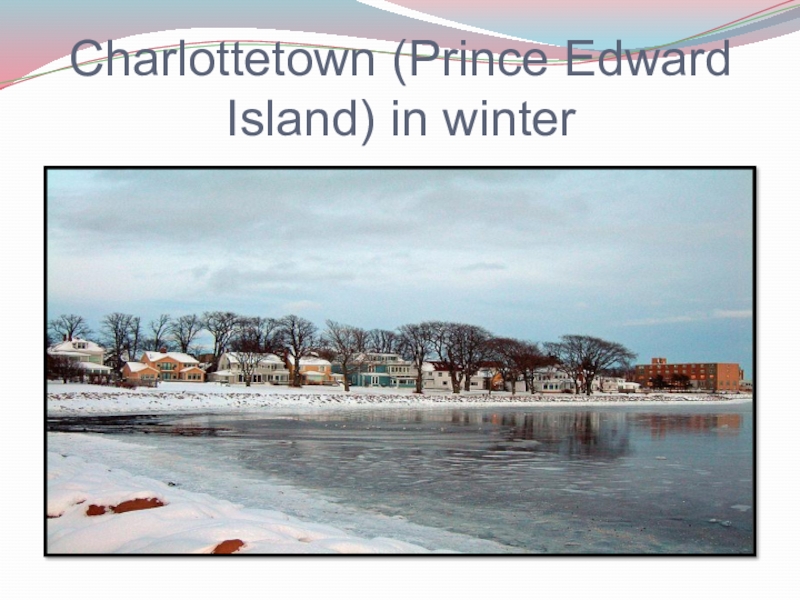
- 27. Charlottetown (Prince Edward Island) in winter
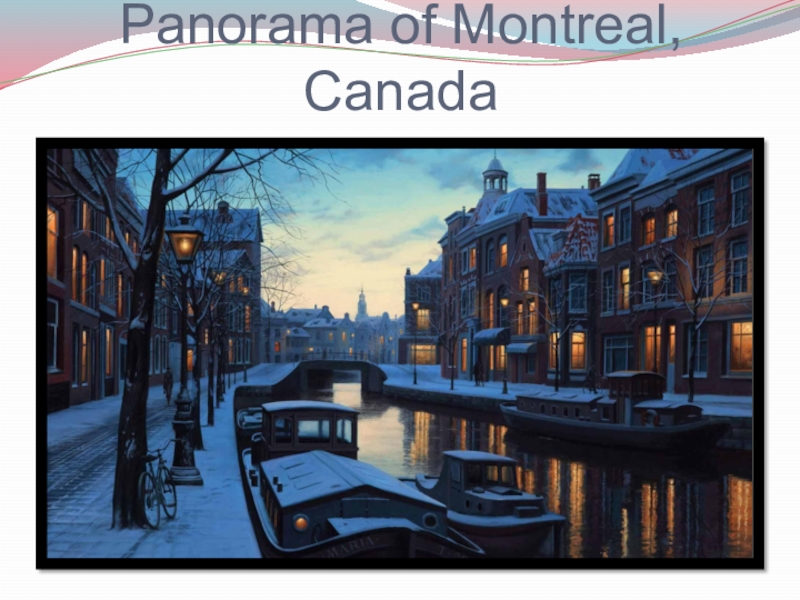
- 28. Panorama of Montreal, Canada
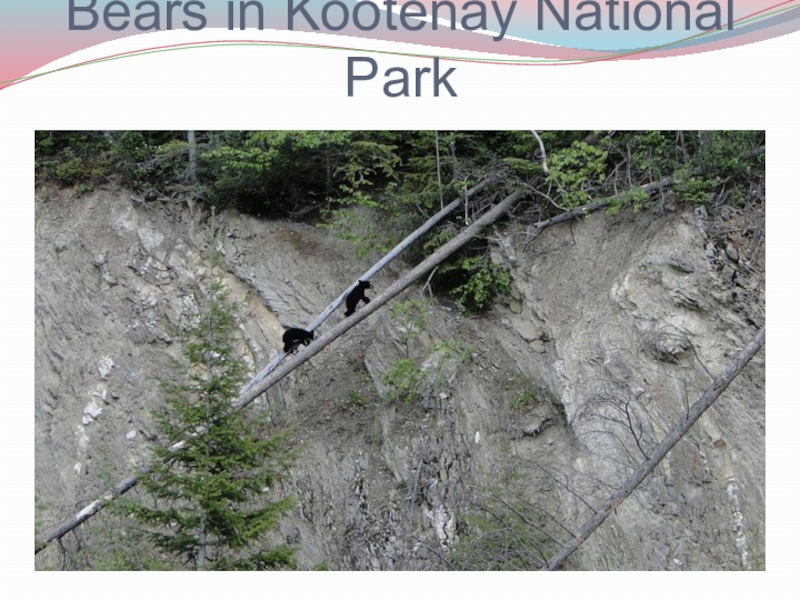
- 29. Bears in Kootenay National Park
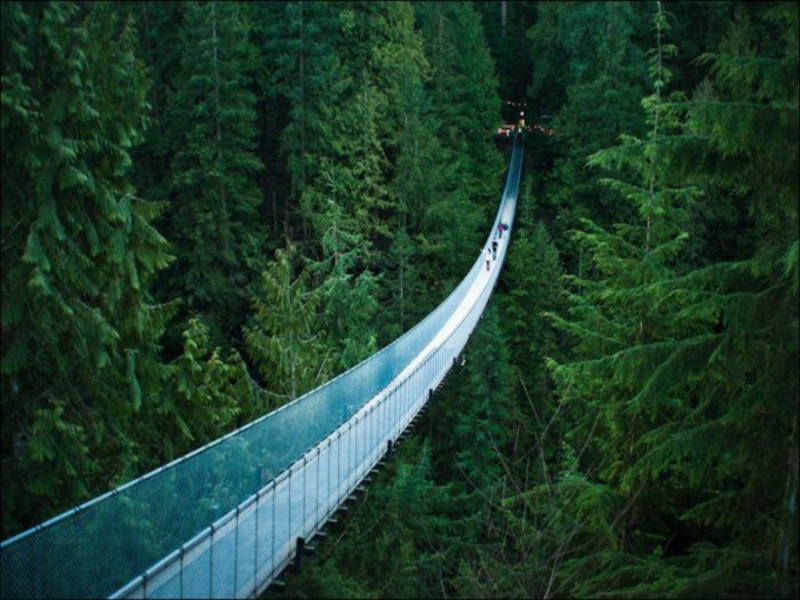
- 30. Canadian forests
- 31. Слайд 31
- 32. Слайд 32
- 33. Слайд 33
- 34. Слайд 34
- 35. climate of Canada
- 36. Average temperatures in January and July, and
- 37. Sport
- 38. Important place in the lives of Canadians
- 39. The indigenous peoples Archaeological and genetic studies
- 40. Слайд 40
- 41. Languages of Canada - the federal policy
- 42. Canadian money, which show (top to bottom)
- 43. O Canada! Our home and native land!True
- 44. Authors: Katia Kostina & Lilya Ilchevskaya Teacher: Shoeva Svetlana Kostantinovna Helper: Nikita Sorokin
- 45. Thanks for attantion!
History of Canada Location of Canada Administrative divisions of Canada Symbols of Canada Flag of Canada coat of Arms of Canada Cities in Canada attractions Canadian forests climate of Canada Sport The indigenous peoples Canadian money

Слайд 2History of Canada Location of Canada Administrative divisions of Canada Symbols of Canada Flag of
Canada
coat of Arms of Canada
Cities in Canada
attractions
Canadian forests
climate of Canada
Sport
The indigenous peoples
Canadian money
Слайд 3Canada is country in North America, the second largest in terms
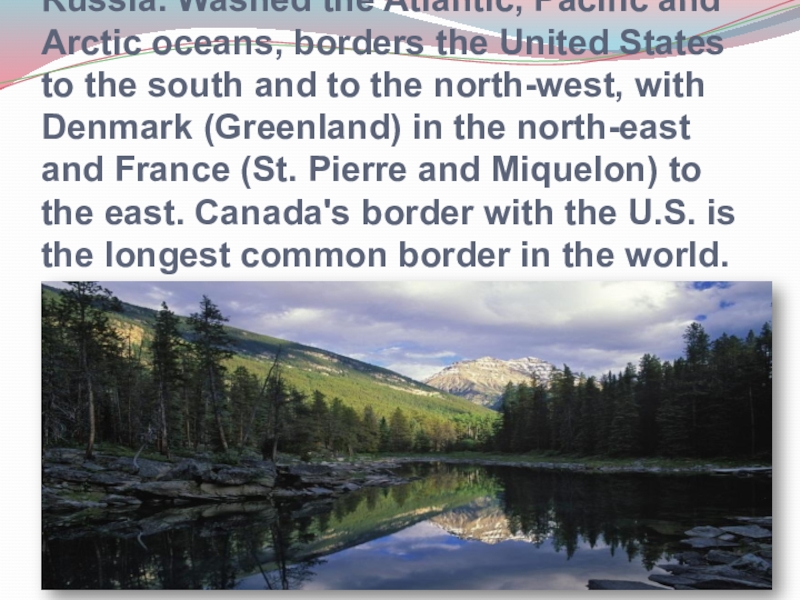
of area after Russia. Washed the Atlantic, Pacific and Arctic oceans, borders the United States to the south and to the north-west, with Denmark (Greenland) in the north-east and France (St. Pierre and Miquelon) to the east. Canada's border with the U.S. is the longest common border in the world.
Слайд 5Founded by the French explorer, born in Saint-Malo (where he was
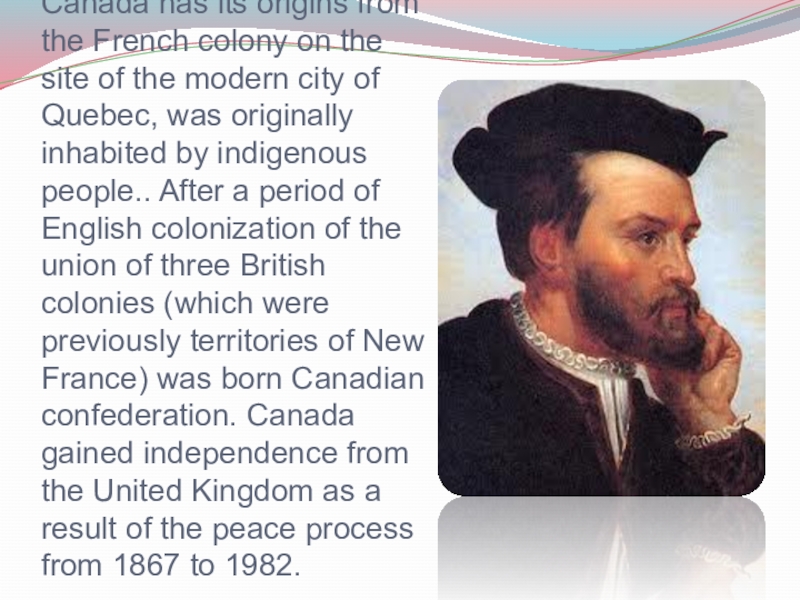
buried) by Jacques Cartier in 1534, Canada has its origins from the French colony on the site of the modern city of Quebec, was originally inhabited by indigenous people.. After a period of English colonization of the union of three British colonies (which were previously territories of New France) was born Canadian confederation. Canada gained independence from the United Kingdom as a result of the peace process from 1867 to 1982.
Слайд 6The name Canada comes from the word kanata, meaning "village" or
"settlement" in terms Laurentians Iroquois, who spent the winter in the village Stadakona (near modern Quebec) - first Indians, who met on the Jacques Cartier Gaspé summer of 1534 in their summer camp. In 1535, residents of the area where the city is now Quebec, used the word to direct explorer Jacques Cartier to the village Stadakona. Shortly after the expedition Cartier Laurentian tribe disappeared without trace - as shown by modern excavations are likely to war with the Hurons and the Iroquois south.
Cartier later used the word "Canada" to refer not only to the village, but the entire area was under the control of a local leader Donnakona.. Since 1545 European books and maps represent the region and all the river St. Lawrence word "Canada." Later the name was transferred to the majority and neighboring areas in North America, managing the British Empire.
Cartier later used the word "Canada" to refer not only to the village, but the entire area was under the control of a local leader Donnakona.. Since 1545 European books and maps represent the region and all the river St. Lawrence word "Canada." Later the name was transferred to the majority and neighboring areas in North America, managing the British Empire.
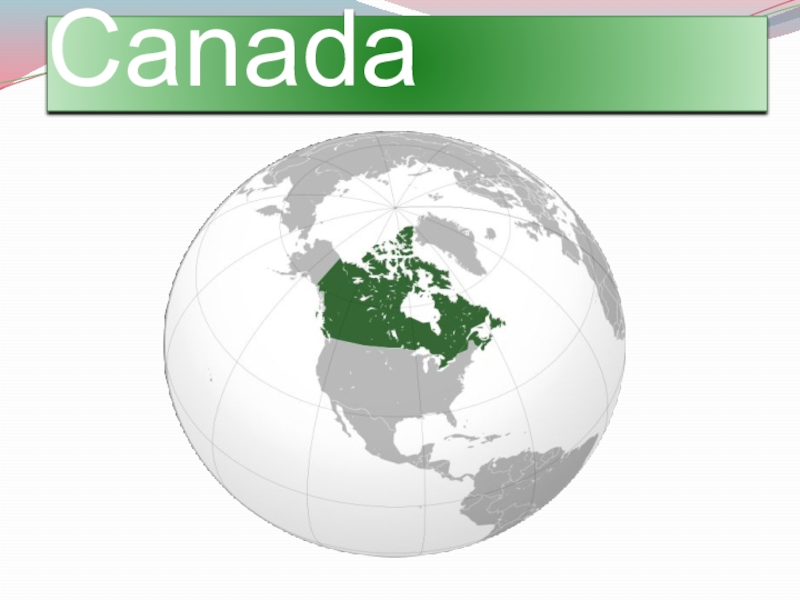
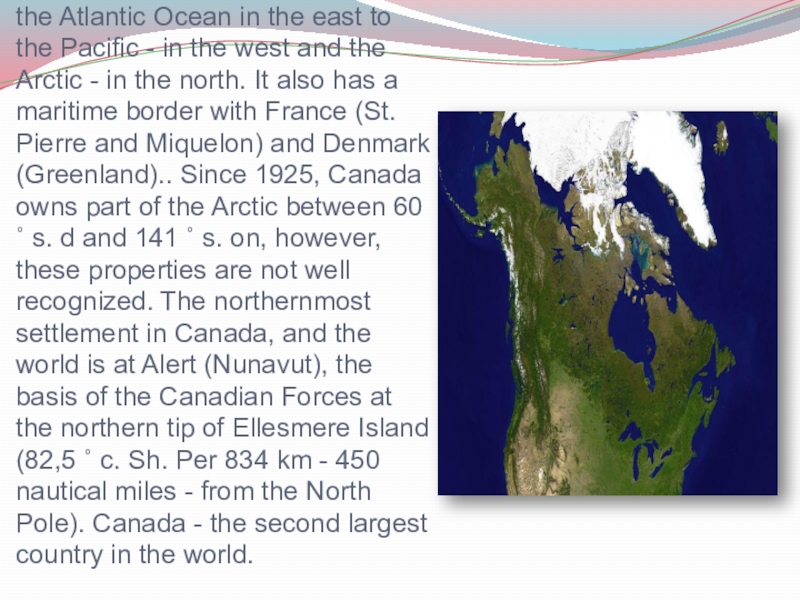
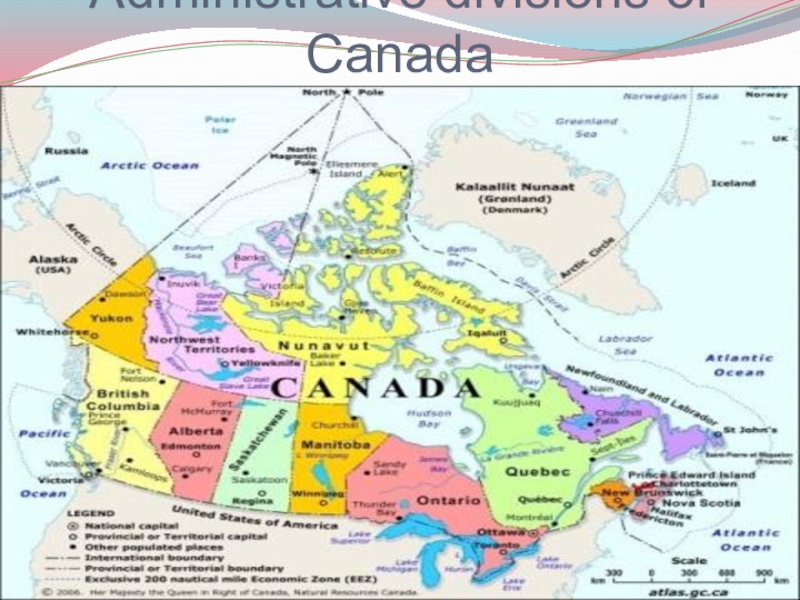
Слайд 8Canada occupies most of the northern North America. 75% of the
territory - the zone of the north. Canada shares a land border with the United States to the south and to the north-west (between Alaska and the Yukon) and stretched from the Atlantic Ocean in the east to the Pacific - in the west and the Arctic - in the north. It also has a maritime border with France (St. Pierre and Miquelon) and Denmark (Greenland).. Since 1925, Canada owns part of the Arctic between 60 ˚ s. d and 141 ˚ s. on, however, these properties are not well recognized. The northernmost settlement in Canada, and the world is at Alert (Nunavut), the basis of the Canadian Forces at the northern tip of Ellesmere Island (82,5 ˚ c. Sh. Per 834 km - 450 nautical miles - from the North Pole). Canada - the second largest country in the world.

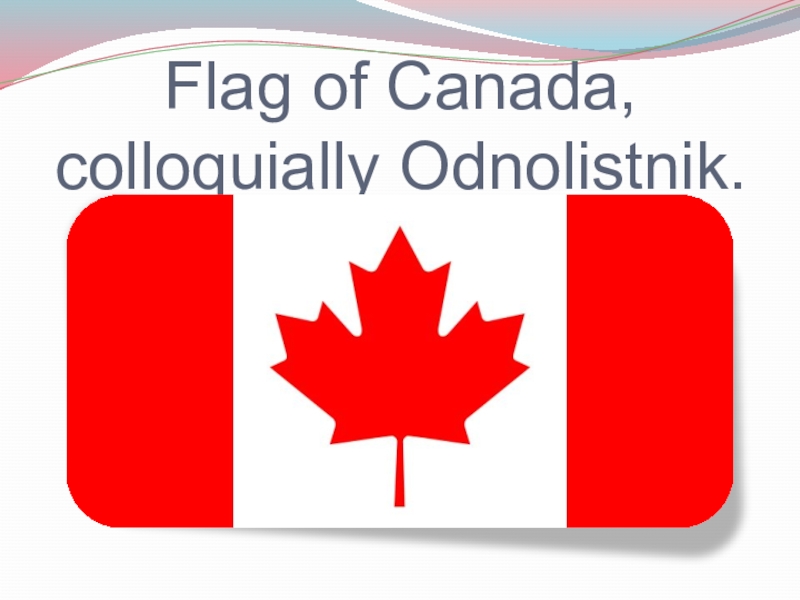

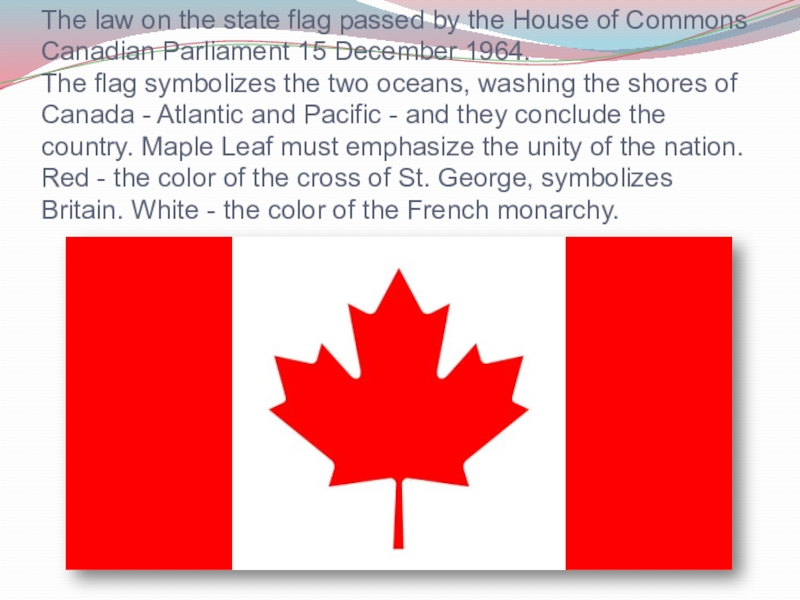
Слайд 16The law on the state flag passed by the House of
Commons Canadian Parliament 15 December 1964.
The flag symbolizes the two oceans, washing the shores of Canada - Atlantic and Pacific - and they conclude the country. Maple Leaf must emphasize the unity of the nation. Red - the color of the cross of St. George, symbolizes Britain. White - the color of the French monarchy.
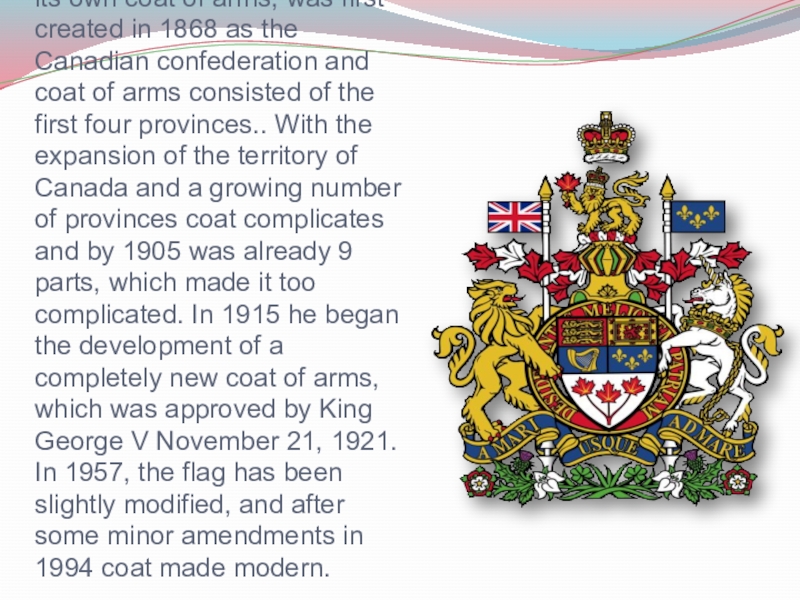
Слайд 18Royal Arms of Canada (English Royal Coat of Arms of Canada,
fr. Armoiries du Canada) - one of the official state symbols of Canada. Initially, Canada does not have its own coat of arms, was first created in 1868 as the Canadian confederation and coat of arms consisted of the first four provinces.. With the expansion of the territory of Canada and a growing number of provinces coat complicates and by 1905 was already 9 parts, which made it too complicated. In 1915 he began the development of a completely new coat of arms, which was approved by King George V November 21, 1921. In 1957, the flag has been slightly modified, and after some minor amendments in 1994 coat made modern.

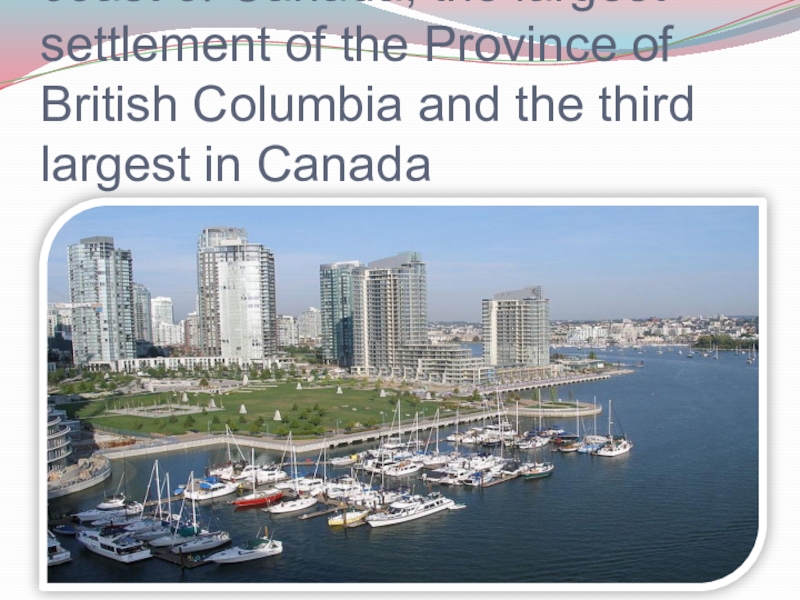
Слайд 20Vancouver city on the west coast of Canada, the largest settlement
of the Province of British Columbia and the third largest in Canada
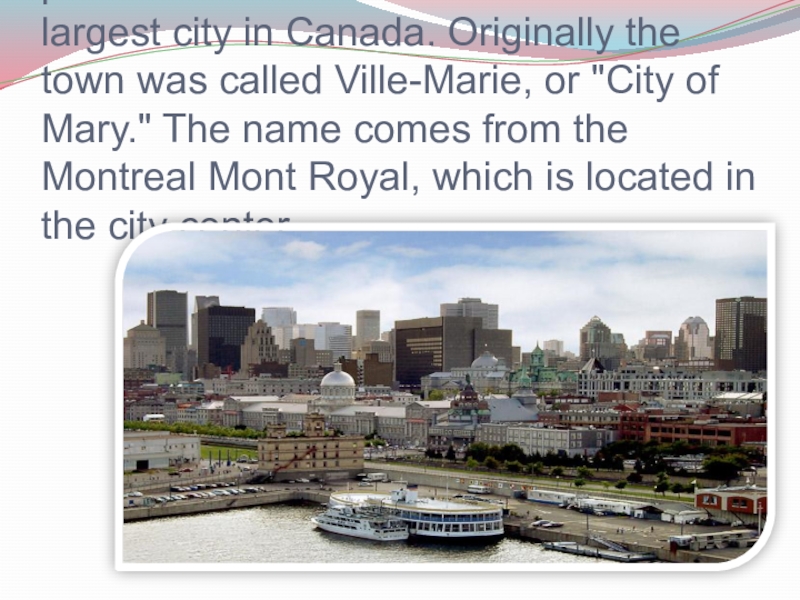
Слайд 22Montreal - the largest city in the province of Quebec and
the second largest city in Canada. Originally the town was called Ville-Marie, or "City of Mary." The name comes from the Montreal Mont Royal, which is located in the city center.
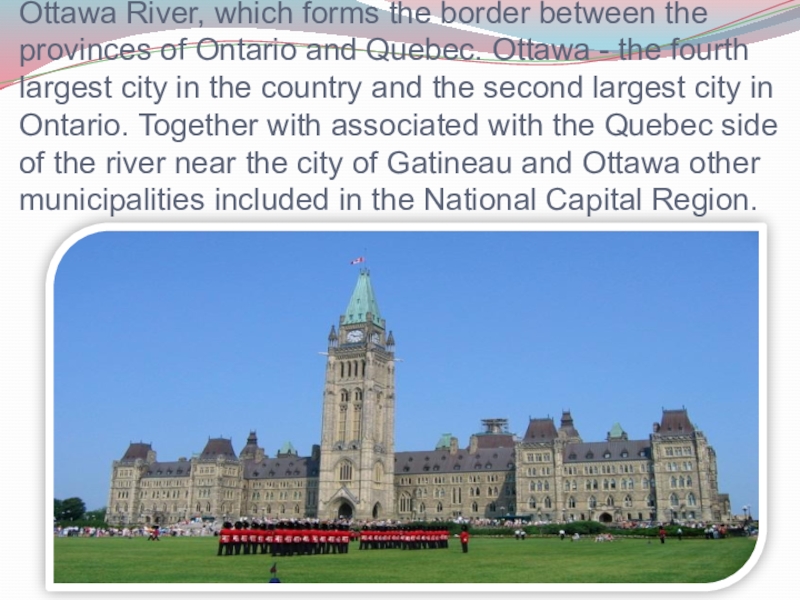
Слайд 23Ottawa - the capital of Canada. Located in the eastern part
of the province of Ontario on the shores of the Ottawa River, which forms the border between the provinces of Ontario and Quebec. Ottawa - the fourth largest city in the country and the second largest city in Ontario. Together with associated with the Quebec side of the river near the city of Gatineau and Ottawa other municipalities included in the National Capital Region.



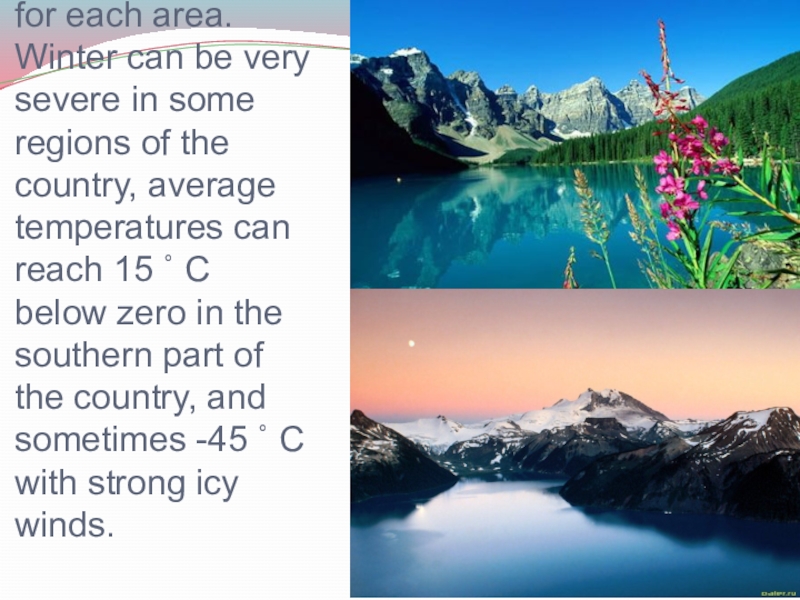
Слайд 36Average temperatures in January and July, and are different for each
area. Winter can be very severe in some regions of the country, average temperatures can reach 15 ˚ C below zero in the southern part of the country, and sometimes -45 ˚ C with strong icy winds.

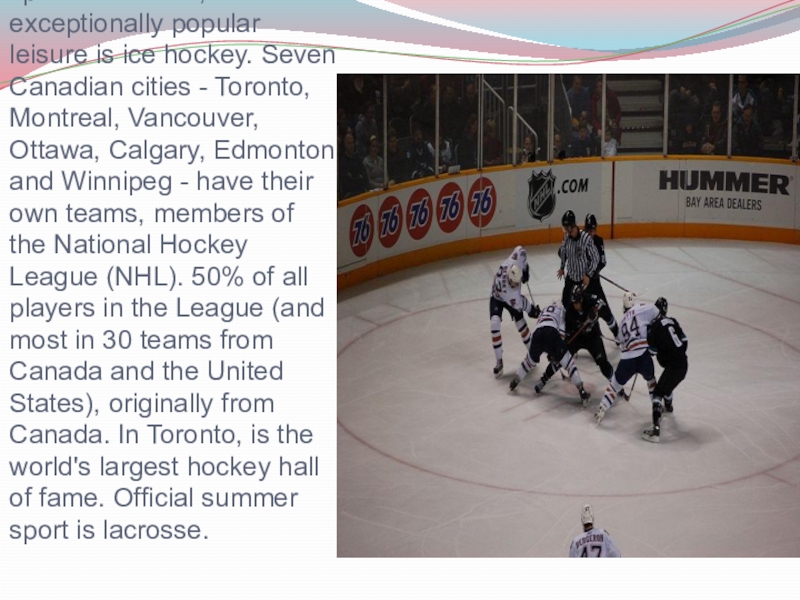
Слайд 38Important place in the lives of Canadians involved in sports. The
official winter sport of Canada, and exceptionally popular leisure is ice hockey. Seven Canadian cities - Toronto, Montreal, Vancouver, Ottawa, Calgary, Edmonton and Winnipeg - have their own teams, members of the National Hockey League (NHL). 50% of all players in the League (and most in 30 teams from Canada and the United States), originally from Canada. In Toronto, is the world's largest hockey hall of fame. Official summer sport is lacrosse.
Слайд 39The indigenous peoples Archaeological and genetic studies have confirmed the presence of
indigenous people in the north of the Yukon with a period of about 26,500 years ago, and in southern Ontario from 9,500 years ago. The indigenous population was estimated to be between 200 and 1000 to 2 million people at the end of 1400.
Слайд 41Languages of Canada - the federal policy of bilingualism
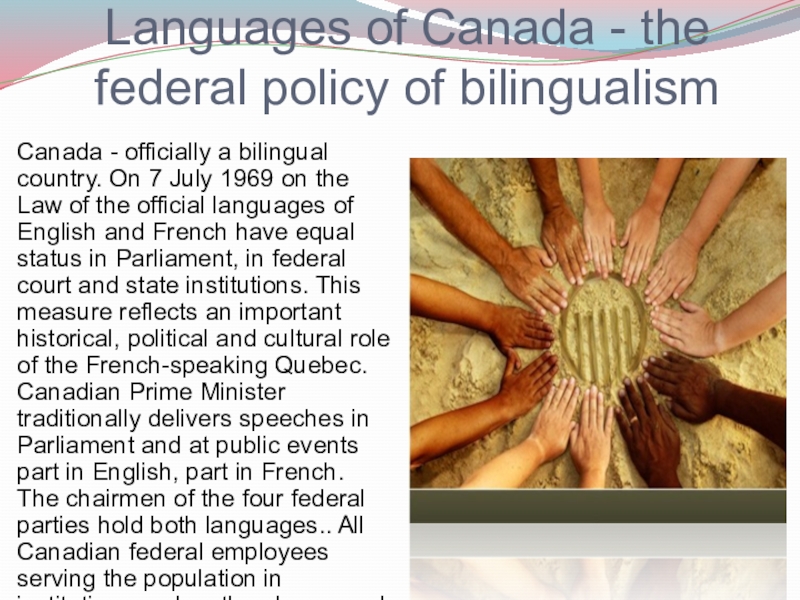
Canada - officially
a bilingual country. On 7 July 1969 on the Law of the official languages of English and French have equal status in Parliament, in federal court and state institutions. This measure reflects an important historical, political and cultural role of the French-speaking Quebec. Canadian Prime Minister traditionally delivers speeches in Parliament and at public events part in English, part in French. The chairmen of the four federal parties hold both languages.. All Canadian federal employees serving the population in institutions and on the phone, and must be able to explain in English and in French. All federal literature, from tax returns to brochures and reports published in both languages.
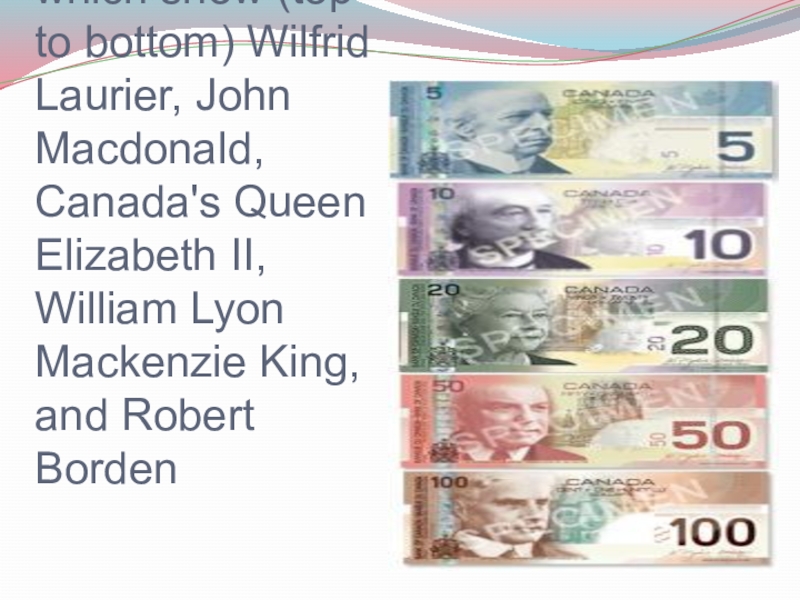
Слайд 42Canadian money, which show (top to bottom) Wilfrid Laurier, John Macdonald,
Canada's Queen Elizabeth II, William Lyon Mackenzie King, and Robert Borden
Слайд 43O Canada! Our home and native land!
True patriot love in all
thy sons command.
With glowing hearts we see thee rise,
The True North strong and free!
From far and wide, O Canada,
We stand on guard for thee.
God keep our land glorious and free!
O Canada, we stand on guard for thee.
O Canada, we stand on guard for thee.
With glowing hearts we see thee rise,
The True North strong and free!
From far and wide, O Canada,
We stand on guard for thee.
God keep our land glorious and free!
O Canada, we stand on guard for thee.
O Canada, we stand on guard for thee.
Слайд 44Authors:
Katia Kostina & Lilya Ilchevskaya
Teacher:
Shoeva Svetlana Kostantinovna
Helper:
Nikita Sorokin