- Главная
- Разное
- Образование
- Спорт
- Естествознание
- Природоведение
- Религиоведение
- Французский язык
- Черчение
- Английский язык
- Астрономия
- Алгебра
- Биология
- География
- Геометрия
- Детские презентации
- Информатика
- История
- Литература
- Математика
- Музыка
- МХК
- Немецкий язык
- ОБЖ
- Обществознание
- Окружающий мир
- Педагогика
- Русский язык
- Технология
- Физика
- Философия
- Химия
- Шаблоны, фоны, картинки для презентаций
- Экология
- Экономика
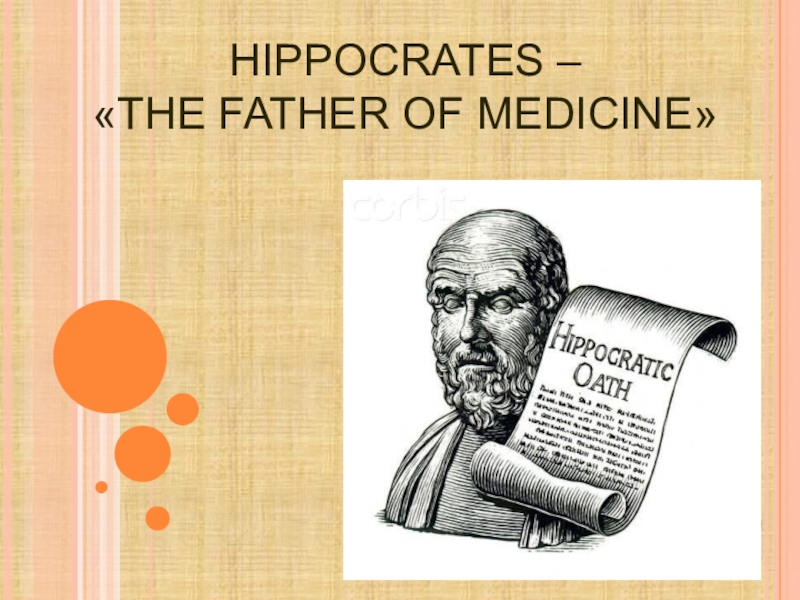
Презентация, доклад на английском языке Гиппократ-отец медицины для студентов медицинских специальностей.
Содержание
- 1. Презентация на английском языке Гиппократ-отец медицины для студентов медицинских специальностей.
- 2. Hippocrates was born in 460 B.C. on
- 3. Hippocrates studied medicine and then he went
- 4. Hippocrates was known as an excellent doctor
- 5. Hippocrates taught his pupils to examine the
- 6. Hippocrates treated diseases by exercise, massage, salt
- 7. Hippocrates made medicine an art, a science
- 8. Doctors in many countries take the Hippocratic
- 9. Слайд 9
- 10. Ответьте на вопросы к тексту:When was Hippocrates
- 11. Hippocrates was born in 460 B.C. on
- 12. Hippocrates was born in 460 B.C. on
- 13. Hippocrates was born in 460 B.C. on
- 14. Hippocrates was known as an excellent doctor
- 15. Hippocrates taught his pupils to examine
- 16. Hippocrates treated diseases by exercise, massage, salt
- 17. Hippocrates treated diseases by exercise, massage,
- 18. Hippocrates made medicine an art, a science
- 19. Hippocrates made medicine an art, a science
- 20. Doctors in many countries take the Hippocratic
- 21. Some interesting facts about HippocratesПлатан ГиппократаУ входа
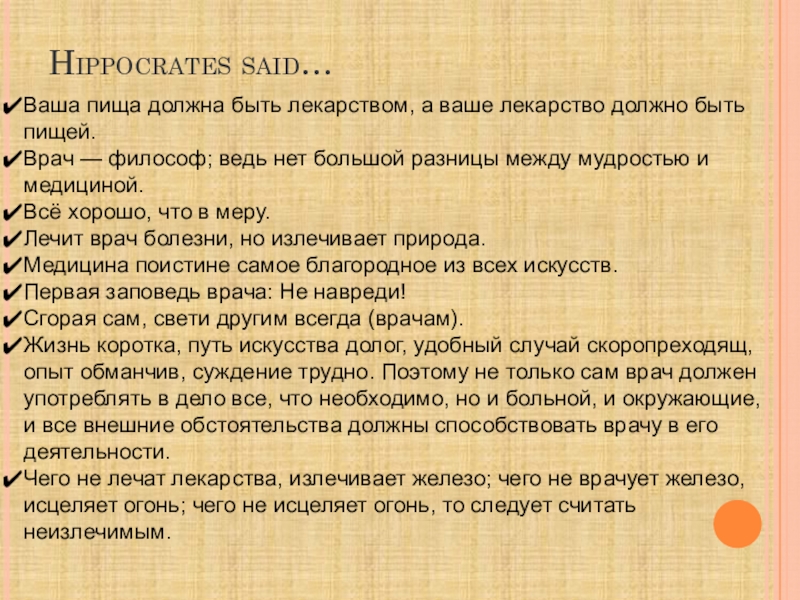
- 22. Hippocrates said…Ваша пища должна быть лекарством, а
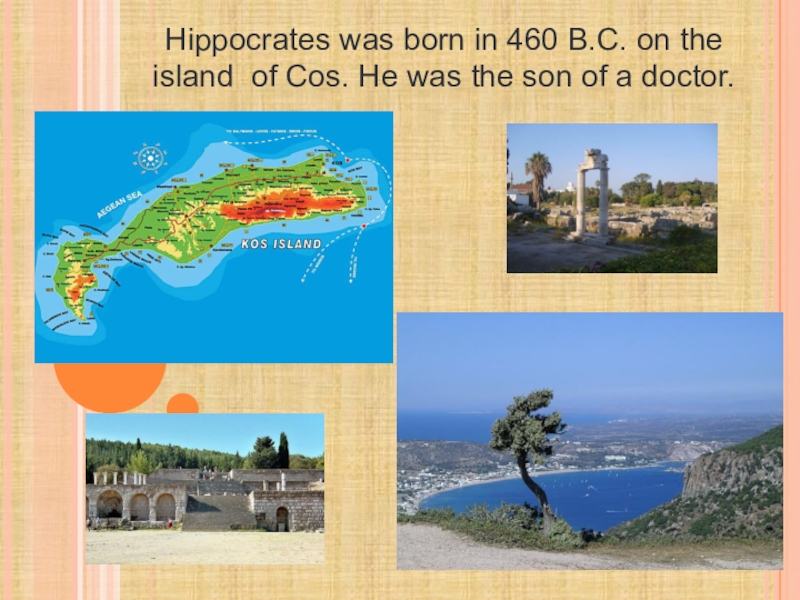
Hippocrates was born in 460 B.C. on the island of Cos. He was the son of a doctor.
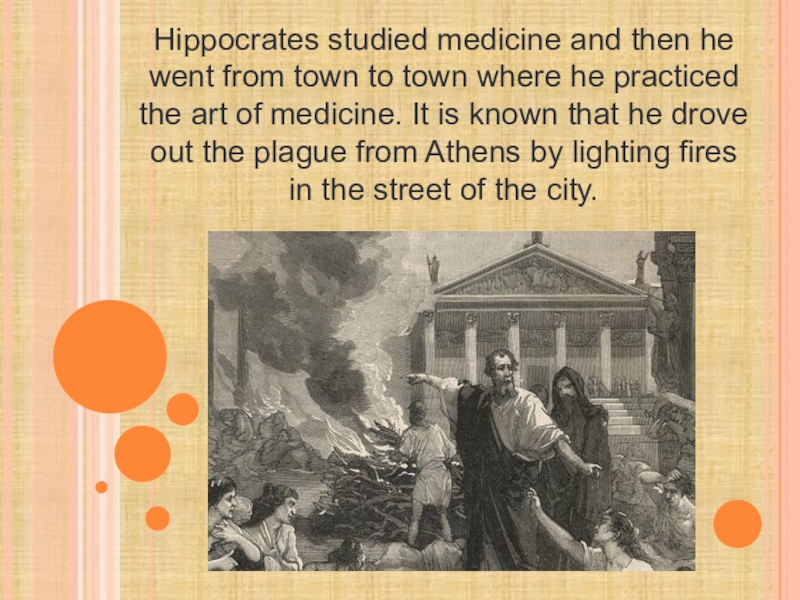
Слайд 3Hippocrates studied medicine and then he went from town to town
where he practiced the art of medicine. It is known that he drove out the plague from Athens by lighting fires in the street of the city.
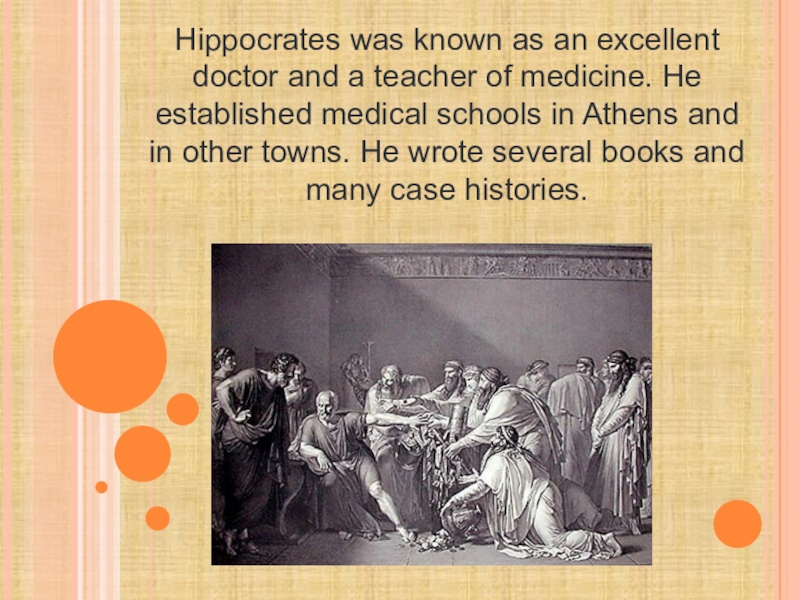
Слайд 4Hippocrates was known as an excellent doctor and a teacher of
medicine. He established medical schools in Athens and in other towns. He wrote several books and many case histories.
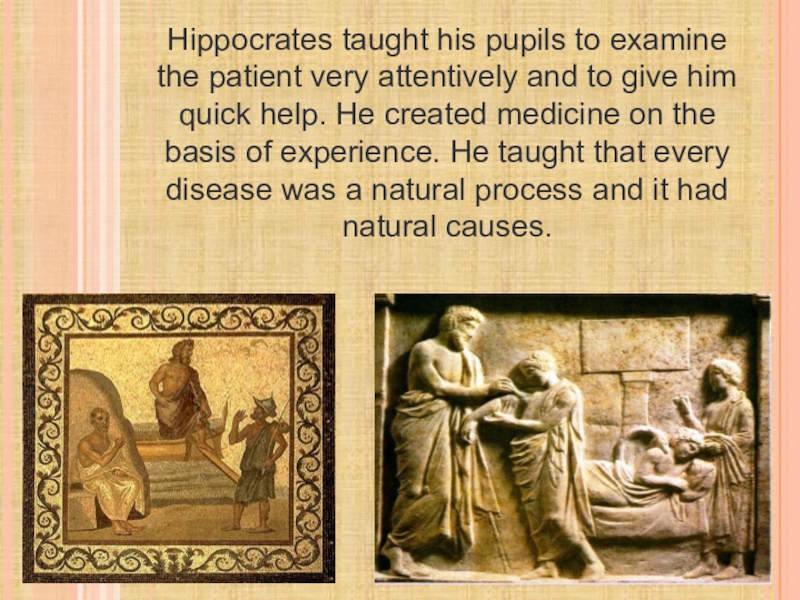
Слайд 5Hippocrates taught his pupils to examine the patient very attentively and
to give him quick help. He created medicine on the basis of experience. He taught that every disease was a natural process and it had natural causes.
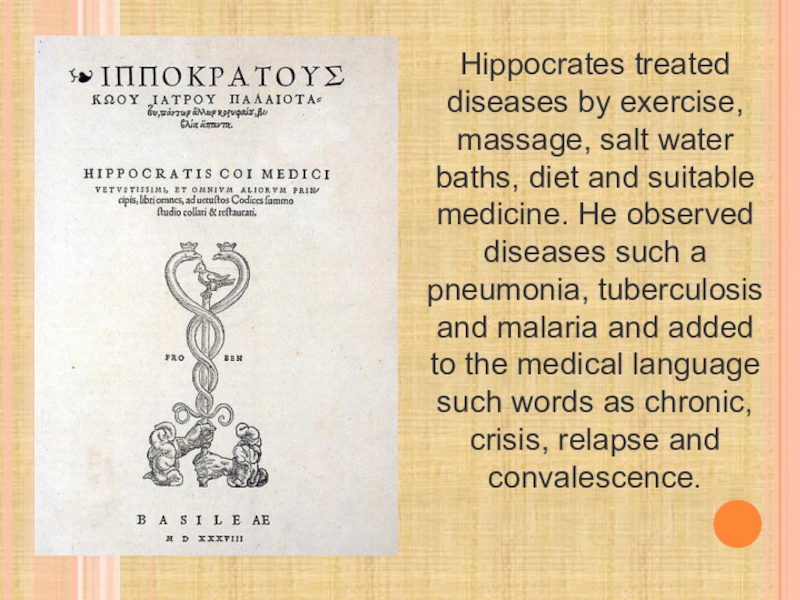
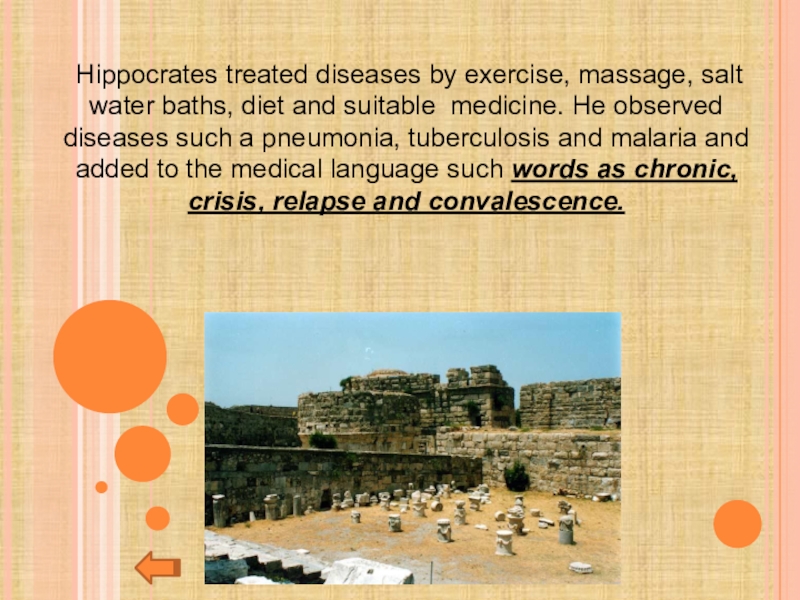
Слайд 6Hippocrates treated diseases by exercise, massage, salt water baths, diet and
suitable medicine. He observed diseases such a pneumonia, tuberculosis and malaria and added to the medical language such words as chronic, crisis, relapse and convalescence.
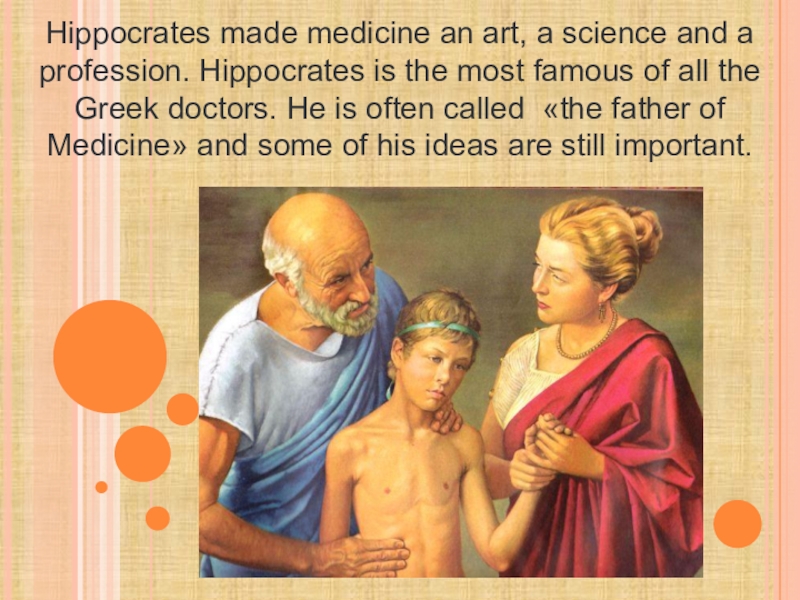
Слайд 7Hippocrates made medicine an art, a science and a profession. Hippocrates
is the most famous of all the Greek doctors. He is often called «the father of Medicine» and some of his ideas are still important.
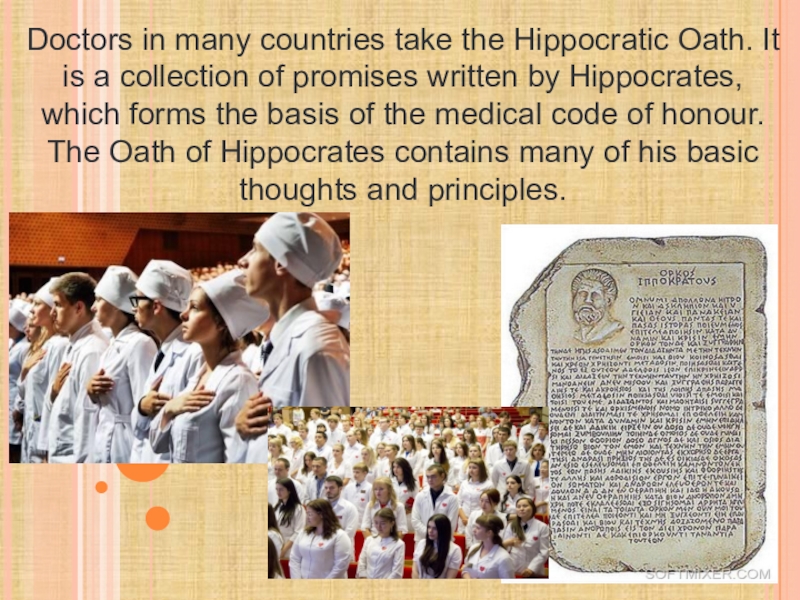
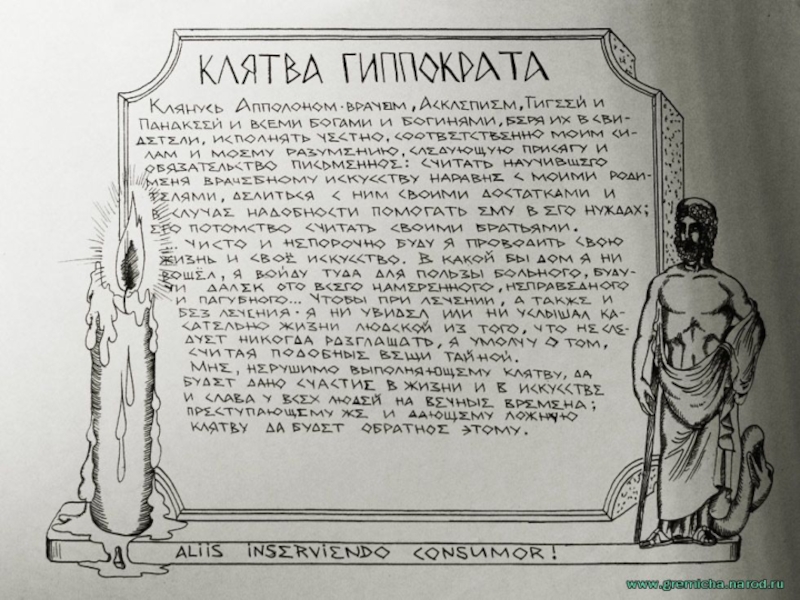
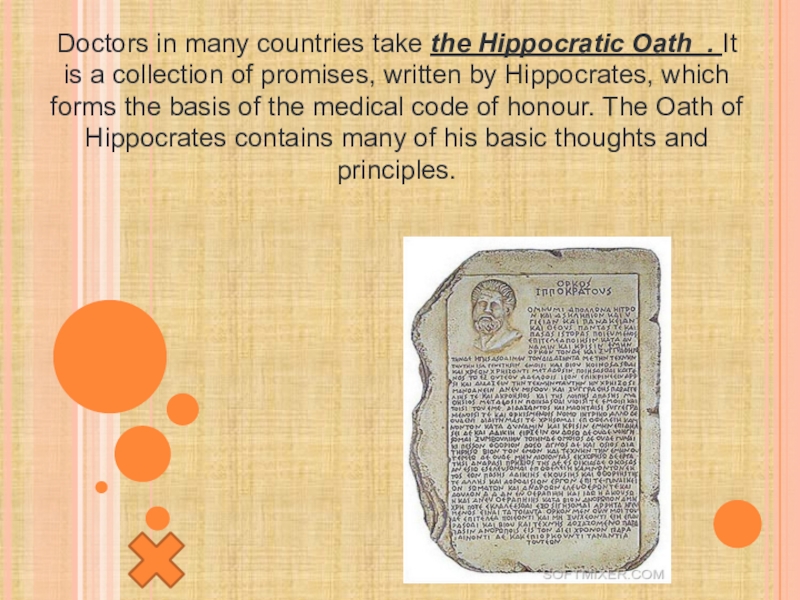
Слайд 8Doctors in many countries take the Hippocratic Oath. It is a
collection of promises written by Hippocrates, which forms the basis of the medical code of honour. The Oath of Hippocrates contains many of his basic thoughts and principles.
Слайд 10Ответьте на вопросы к тексту:
When was Hippocrates born?
How did he practice
the art of medicine?
How did Hippocrates drive out the plague from Athens?
Was Hippocrates an excellent doctor and a teacher of
medicine?
5) How did Hippocrates teach his pupils to examine the
patient?
6) How did Hippocrates treat diseases?
7) What are the words, added to the medical language,
by Hippocrates?
8) Who is the most famous of all Greek doctors?
9) Why is Hippocrates called “the Father of Medicine”?
10) How is a collection of promises, written by Hippocrates,
called?
How did Hippocrates drive out the plague from Athens?
Was Hippocrates an excellent doctor and a teacher of
medicine?
5) How did Hippocrates teach his pupils to examine the
patient?
6) How did Hippocrates treat diseases?
7) What are the words, added to the medical language,
by Hippocrates?
8) Who is the most famous of all Greek doctors?
9) Why is Hippocrates called “the Father of Medicine”?
10) How is a collection of promises, written by Hippocrates,
called?
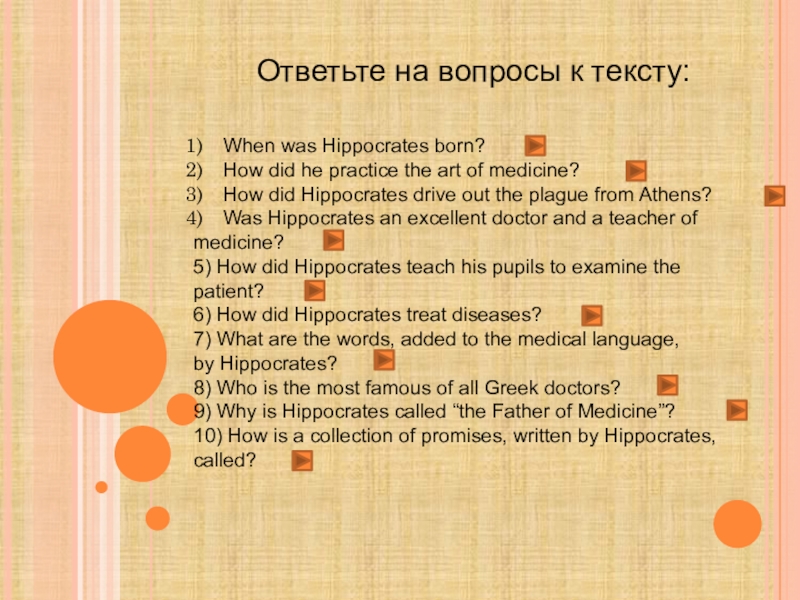
Слайд 11Hippocrates was born in 460 B.C. on the island of Cos.
He was the son of a doctor. Hippocrates studied medicine and then he went from town to town where he practiced the art of medicine. It is known that he drove out the plague from Athens by lighting fires in the street of the city.
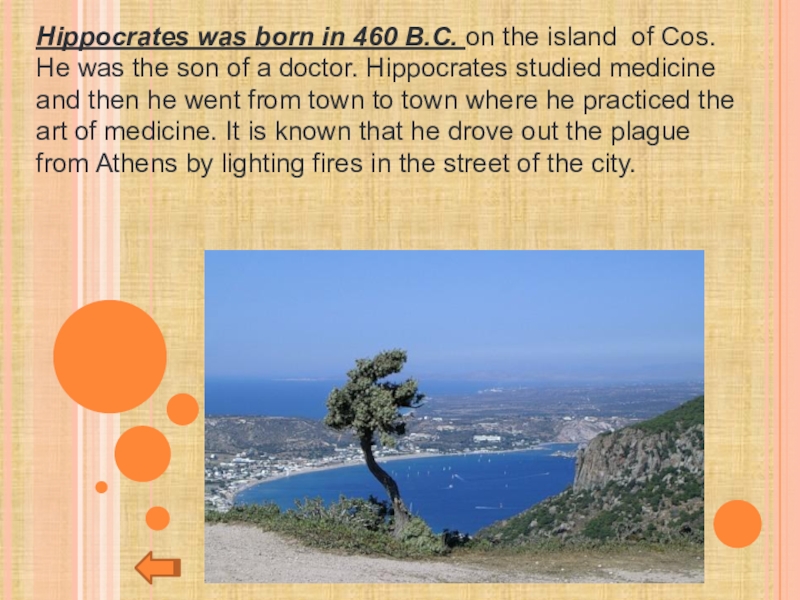
Слайд 12Hippocrates was born in 460 B.C. on the island of Cos.
He was the son of a doctor. Hippocrates studied medicine and then he went from town to town where he practiced the art of medicine. It is known that he drove out the plague from Athens by lighting fires in the street of the city.
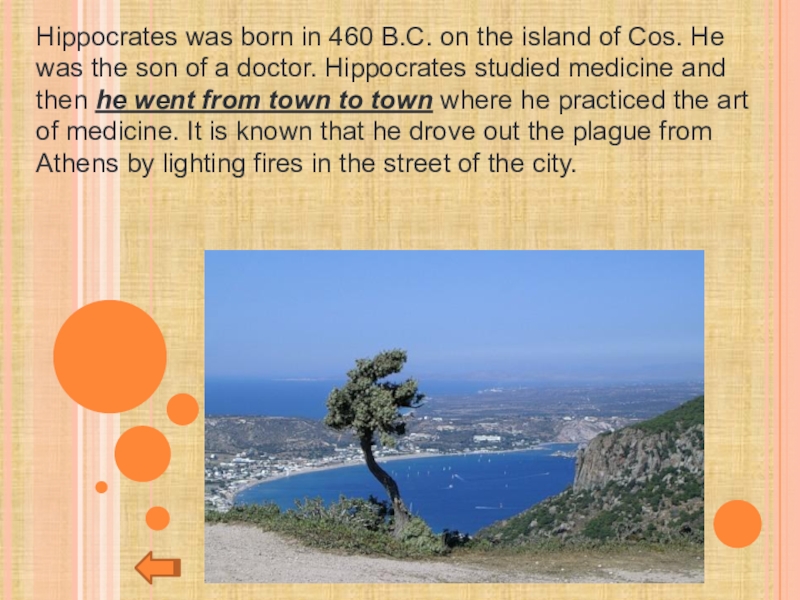
Слайд 13Hippocrates was born in 460 B.C. on the island of Cos.
He was the son of a doctor. Hippocrates studied medicine and then he went from town to town where he practiced the art of medicine. It is known that he drove out the plague from Athens by lighting fires in the street of the city.
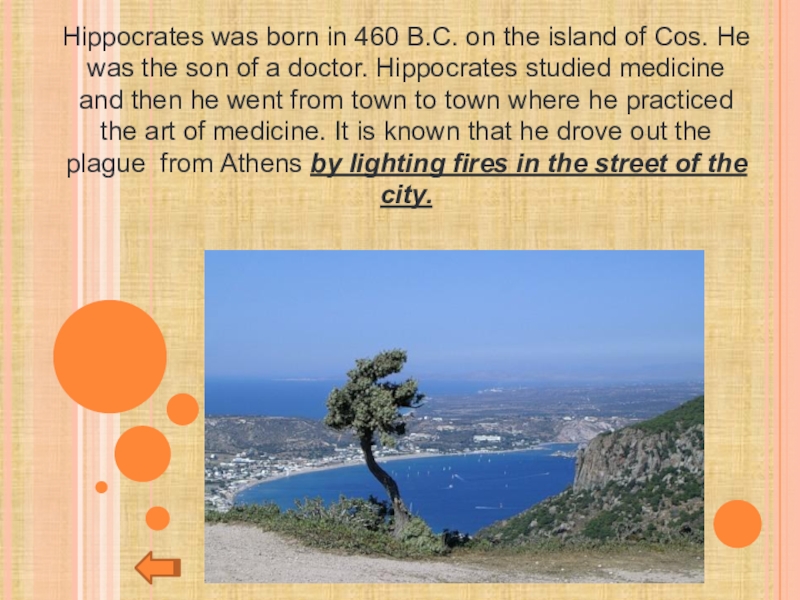
Слайд 14Hippocrates was known as an excellent doctor and a teacher of
medicine. He established medical schools in Athens and in other towns. He wrote several books and many case histories (история болезни).
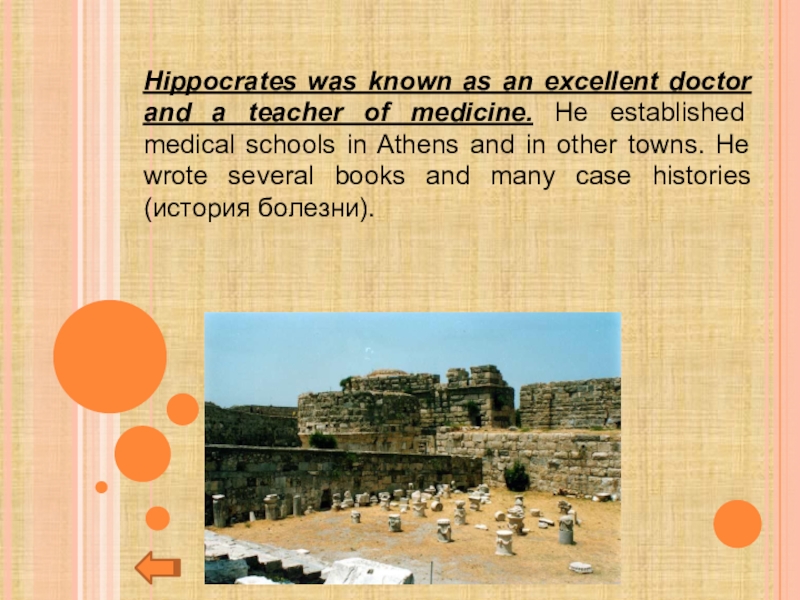
Слайд 15 Hippocrates taught his pupils to examine the patient very attentively
and to give him quick help. He created medicine on the basis of experience. He taught that every disease was a natural process and it had natural causes.
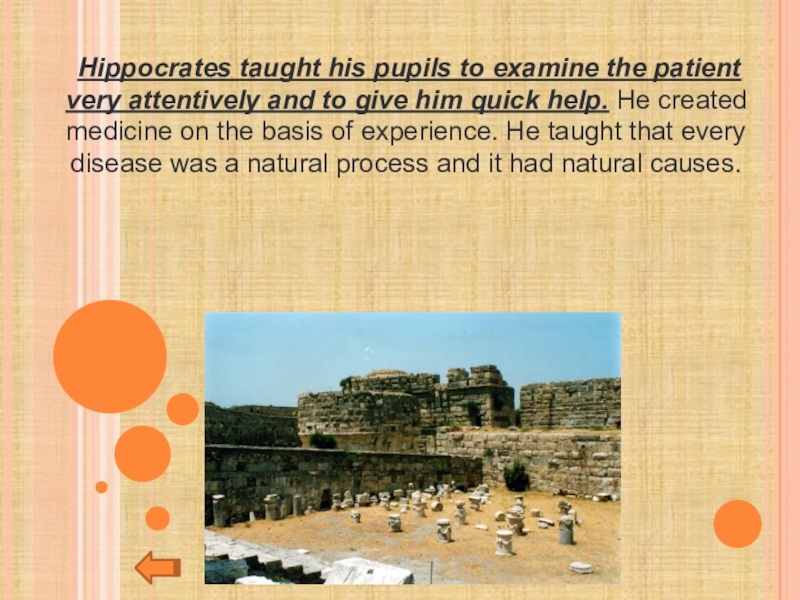
Слайд 16Hippocrates treated diseases by exercise, massage, salt water baths, diet and
suitable medicine. He observed diseases such a pneumonia, tuberculosis and malaria and added to the medical language such words as chronic, crisis, relapse and convalescence .
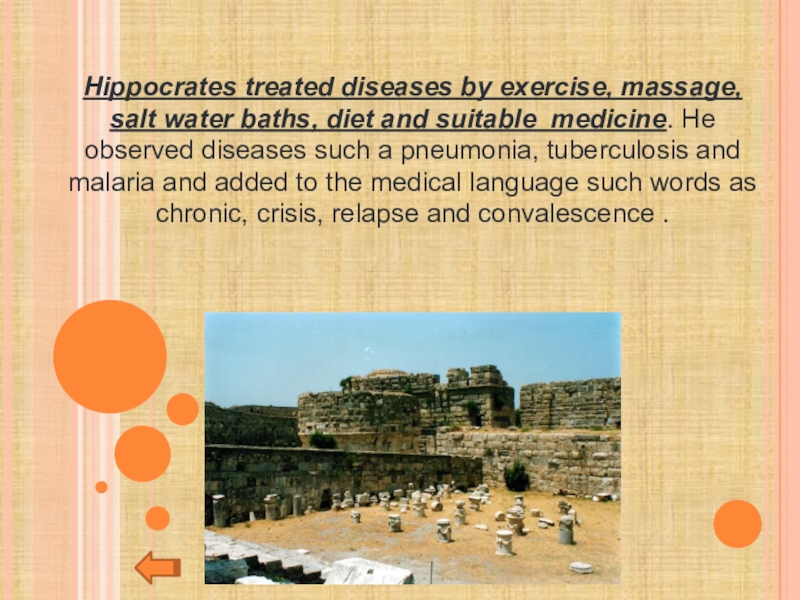
Слайд 17 Hippocrates treated diseases by exercise, massage, salt water baths, diet
and suitable medicine. He observed diseases such a pneumonia, tuberculosis and malaria and added to the medical language such words as chronic, crisis, relapse and convalescence.
Слайд 18Hippocrates made medicine an art, a science and a profession. Hippocrates
is the most famous of all the Greek doctors. He is often called «the father of Medicine» and some of his ideas are still important.
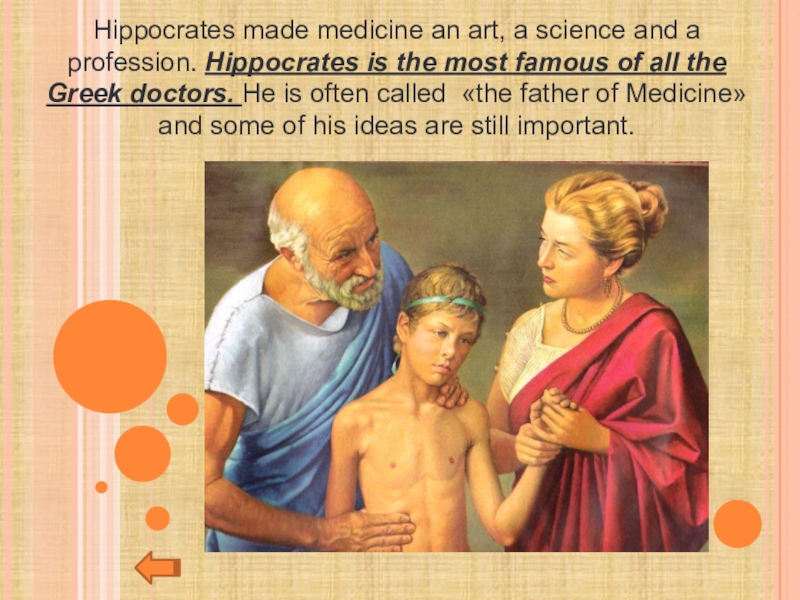
Слайд 19Hippocrates made medicine an art, a science and a profession. Hippocrates
is the most famous of all the Greek doctors. He is often called «the father of Medicine» and some of his ideas are still important.

Слайд 20Doctors in many countries take the Hippocratic Oath . It is
a collection of promises, written by Hippocrates, which forms the basis of the medical code of honour. The Oath of Hippocrates contains many of his basic thoughts and principles.
Слайд 21Some interesting facts about Hippocrates
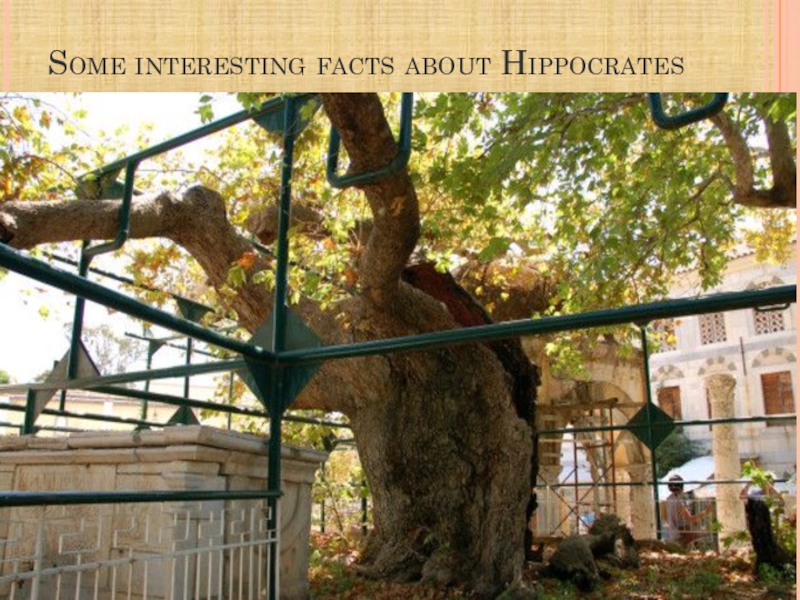
Платан Гиппократа
У входа в Замок Рыцарей растет
легендарное дерево — платан, который по легенде был посажен самим Гиппократом. Его так и называют — платан Гиппократа (πλάτανος του Ιπποκράτη). По легенде именно под этим деревом великий античный врач занимался со своими учениками.
По легенде дереву уже более двух тысяч лет. Оно выглядит огромным, т.к. его окружность превышает 14 метров.
Из-за многовекового возраста платана, чтобы его ветви не опустились до земли, их разместили на металлические подпорки, специальную конструкцию, которую установили под самим деревом.
Согласно гипотезе других ученых, возраст этого дерева составляет немногим более 500 лет. И все же, исторически зафиксировано, что именно на этом месте Гиппократ посадил дерево, а нынешний платан является как минимум его прямым потомком.
По легенде дереву уже более двух тысяч лет. Оно выглядит огромным, т.к. его окружность превышает 14 метров.
Из-за многовекового возраста платана, чтобы его ветви не опустились до земли, их разместили на металлические подпорки, специальную конструкцию, которую установили под самим деревом.
Согласно гипотезе других ученых, возраст этого дерева составляет немногим более 500 лет. И все же, исторически зафиксировано, что именно на этом месте Гиппократ посадил дерево, а нынешний платан является как минимум его прямым потомком.
Слайд 22Hippocrates said…
Ваша пища должна быть лекарством, а ваше лекарство должно быть
пищей.
Врач — философ; ведь нет большой разницы между мудростью и медициной.
Всё хорошо, что в меру.
Лечит врач болезни, но излечивает природа.
Медицина поистине самое благородное из всех искусств.
Первая заповедь врача: Не навреди!
Сгорая сам, свети другим всегда (врачам).
Жизнь коротка, путь искусства долог, удобный случай скоропреходящ, опыт обманчив, суждение трудно. Поэтому не только сам врач должен употреблять в дело все, что необходимо, но и больной, и окружающие, и все внешние обстоятельства должны способствовать врачу в его деятельности.
Чего не лечат лекарства, излечивает железо; чего не врачует железо, исцеляет огонь; чего не исцеляет огонь, то следует считать неизлечимым.
Врач — философ; ведь нет большой разницы между мудростью и медициной.
Всё хорошо, что в меру.
Лечит врач болезни, но излечивает природа.
Медицина поистине самое благородное из всех искусств.
Первая заповедь врача: Не навреди!
Сгорая сам, свети другим всегда (врачам).
Жизнь коротка, путь искусства долог, удобный случай скоропреходящ, опыт обманчив, суждение трудно. Поэтому не только сам врач должен употреблять в дело все, что необходимо, но и больной, и окружающие, и все внешние обстоятельства должны способствовать врачу в его деятельности.
Чего не лечат лекарства, излечивает железо; чего не врачует железо, исцеляет огонь; чего не исцеляет огонь, то следует считать неизлечимым.