- Главная
- Разное
- Образование
- Спорт
- Естествознание
- Природоведение
- Религиоведение
- Французский язык
- Черчение
- Английский язык
- Астрономия
- Алгебра
- Биология
- География
- Геометрия
- Детские презентации
- Информатика
- История
- Литература
- Математика
- Музыка
- МХК
- Немецкий язык
- ОБЖ
- Обществознание
- Окружающий мир
- Педагогика
- Русский язык
- Технология
- Физика
- Философия
- Химия
- Шаблоны, фоны, картинки для презентаций
- Экология
- Экономика
Презентация, доклад на Английском языке: Ecological Atmosphere in Moscow.
Содержание
- 1. Презентация на Английском языке: Ecological Atmosphere in Moscow.
- 2. The main environmental problem is the situation of the atmosphere in our capital.
- 3. The main and permanent sources of air
- 4. There are three general transitional factors govern
- 5. This entails many changes, but in the
- 6. There are more implications in this regard
- 7. As important as these two factors are,
- 8. Experts consider Moscow an ecological disaster zone
- 9. Environmental services, health care workers have long
- 10. Overall condition of green spaces of the
- 11. Planted on Tverskaya Street under Stalin times
- 12. The main enemy of the forest are
- 13. And not just dump waste, and for
- 14. All of us must struggle for good
- 15. The End
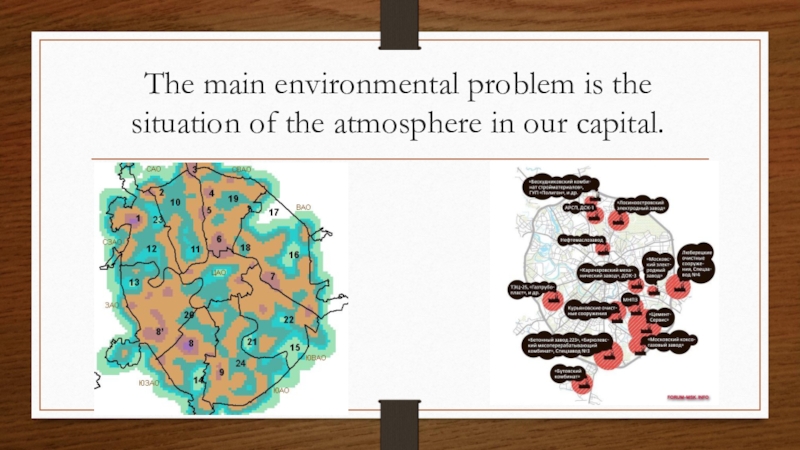
The main environmental problem is the situation of the atmosphere in our capital.
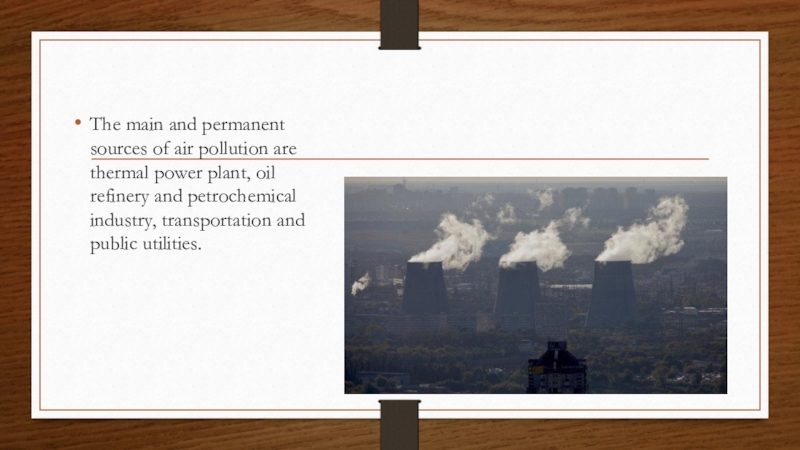
Слайд 3The main and permanent sources of air pollution are thermal power
plant, oil refinery and petrochemical industry, transportation and public utilities.
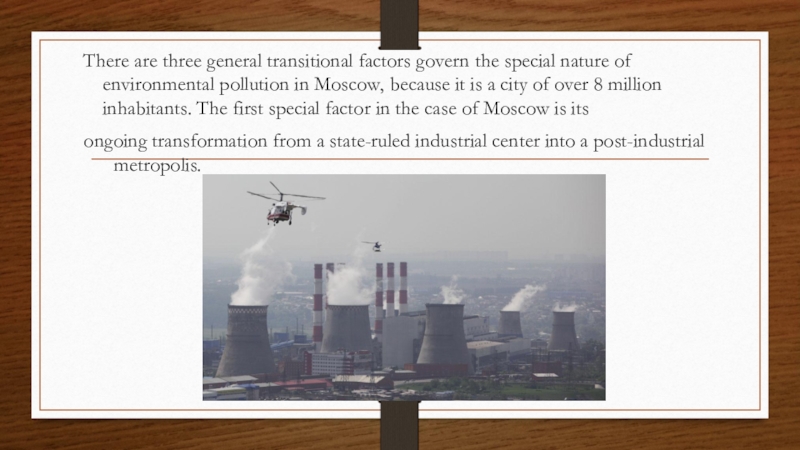
Слайд 4There are three general transitional factors govern the special nature of
environmental pollution in Moscow, because it is a city of over 8 million inhabitants. The first special factor in the case of Moscow is its
ongoing transformation from a state-ruled industrial center into a post-industrial metropolis.
ongoing transformation from a state-ruled industrial center into a post-industrial metropolis.
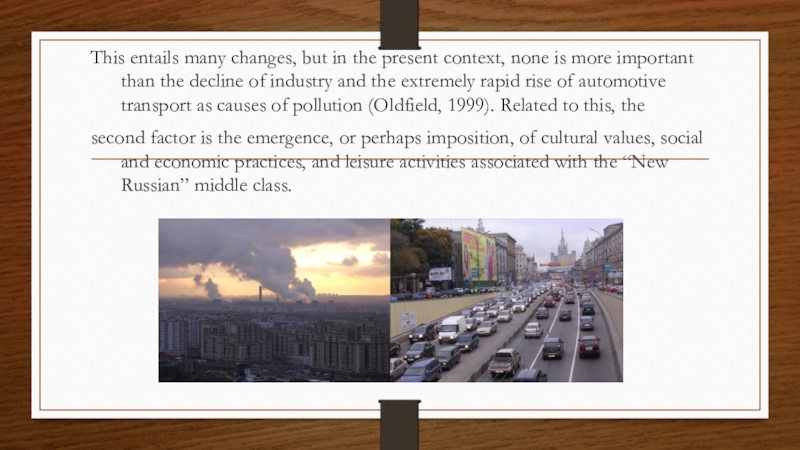
Слайд 5This entails many changes, but in the present context, none is
more important than the decline of industry and the extremely rapid rise of automotive transport as causes of pollution (Oldfield, 1999). Related to this, the
second factor is the emergence, or perhaps imposition, of cultural values, social and economic practices, and leisure activities associated with the “New Russian” middle class.
second factor is the emergence, or perhaps imposition, of cultural values, social and economic practices, and leisure activities associated with the “New Russian” middle class.
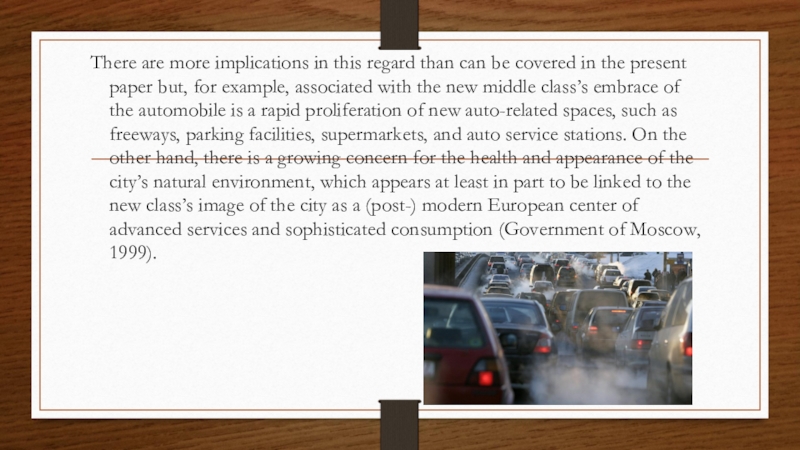
Слайд 6There are more implications in this regard than can be covered
in the present paper but, for example, associated with the new middle class’s embrace of the automobile is a rapid proliferation of new auto-related spaces, such as freeways, parking facilities, supermarkets, and auto service stations. On the other hand, there is a growing concern for the health and appearance of the city’s natural environment, which appears at least in part to be linked to the new class’s image of the city as a (post-) modern European center of advanced services and sophisticated consumption (Government of Moscow, 1999).
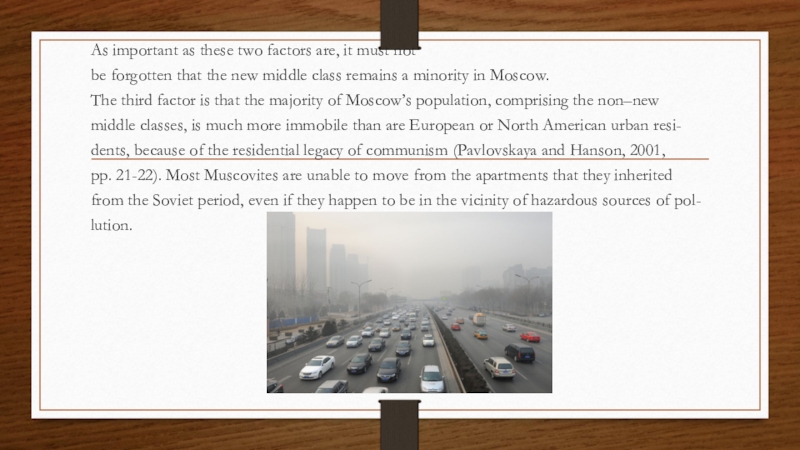
Слайд 7As important as these two factors are, it must not
be forgotten
that the new middle class remains a minority in Moscow.
The third factor is that the majority of Moscow’s population, comprising the non–new
middle classes, is much more immobile than are European or North American urban resi-
dents, because of the residential legacy of communism (Pavlovskaya and Hanson, 2001,
pp. 21-22). Most Muscovites are unable to move from the apartments that they inherited
from the Soviet period, even if they happen to be in the vicinity of hazardous sources of pol-
lution.
The third factor is that the majority of Moscow’s population, comprising the non–new
middle classes, is much more immobile than are European or North American urban resi-
dents, because of the residential legacy of communism (Pavlovskaya and Hanson, 2001,
pp. 21-22). Most Muscovites are unable to move from the apartments that they inherited
from the Soviet period, even if they happen to be in the vicinity of hazardous sources of pol-
lution.
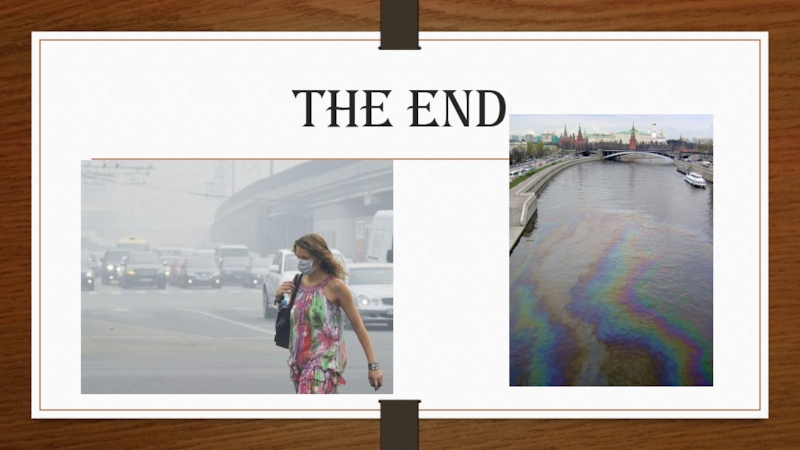
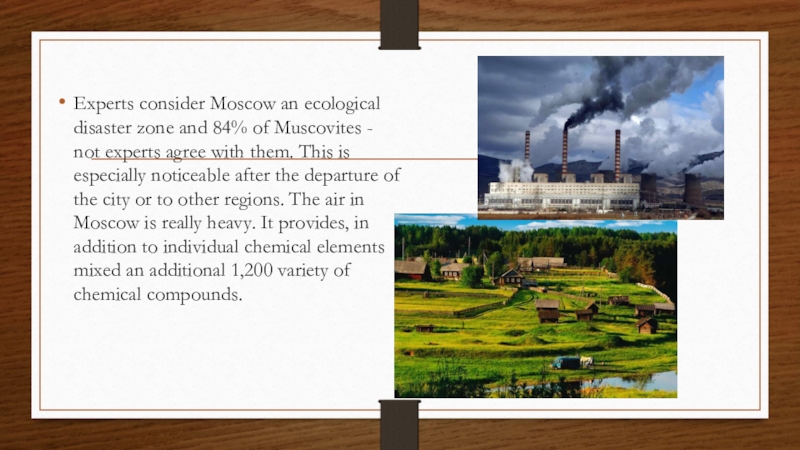
Слайд 8Experts consider Moscow an ecological disaster zone and 84% of Muscovites
- not experts agree with them. This is especially noticeable after the departure of the city or to other regions. The air in Moscow is really heavy. It provides, in addition to individual chemical elements mixed an additional 1,200 variety of chemical compounds.
Слайд 9Environmental services, health care workers have long said that to live
in Moscow, especially children, becoming dangerous
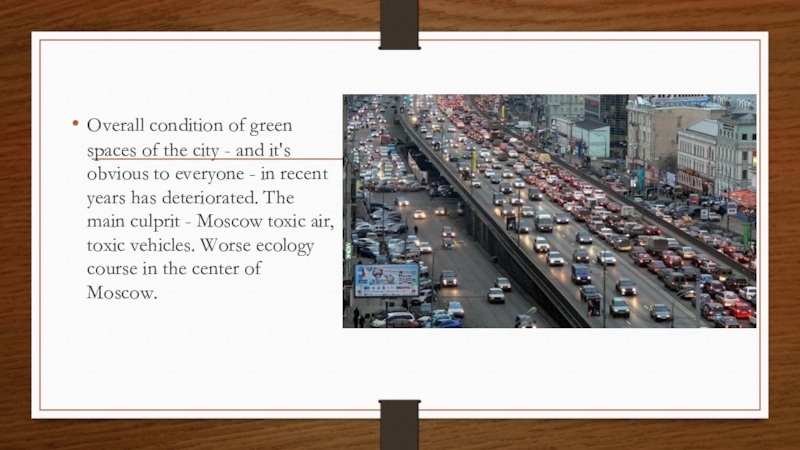
Слайд 10Overall condition of green spaces of the city - and it's
obvious to everyone - in recent years has deteriorated. The main culprit - Moscow toxic air, toxic vehicles. Worse ecology course in the center of Moscow.
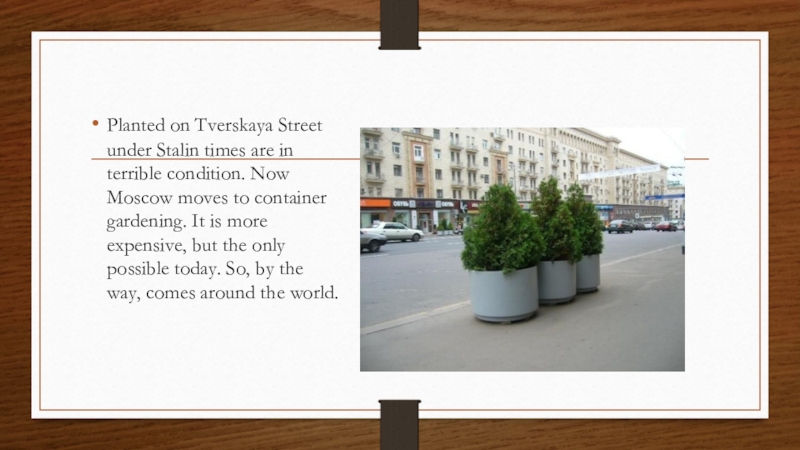
Слайд 11Planted on Tverskaya Street under Stalin times are in terrible condition.
Now Moscow moves to container gardening. It is more expensive, but the only possible today. So, by the way, comes around the world.
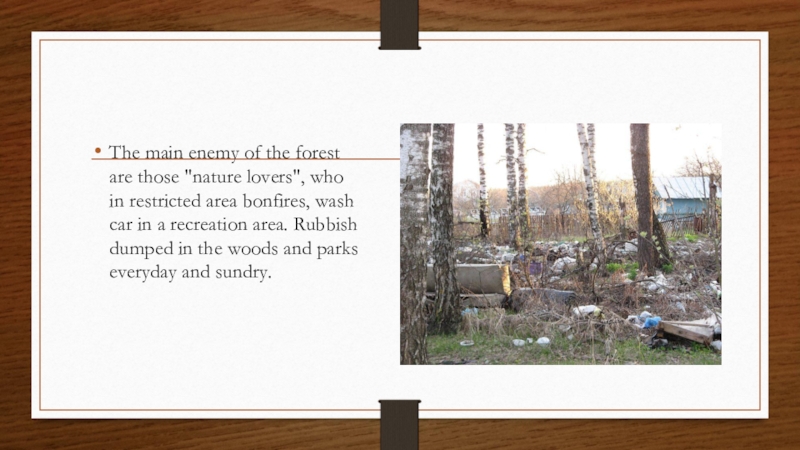
Слайд 12The main enemy of the forest are those "nature lovers", who
in restricted area bonfires, wash car in a recreation area. Rubbish dumped in the woods and parks everyday and sundry.
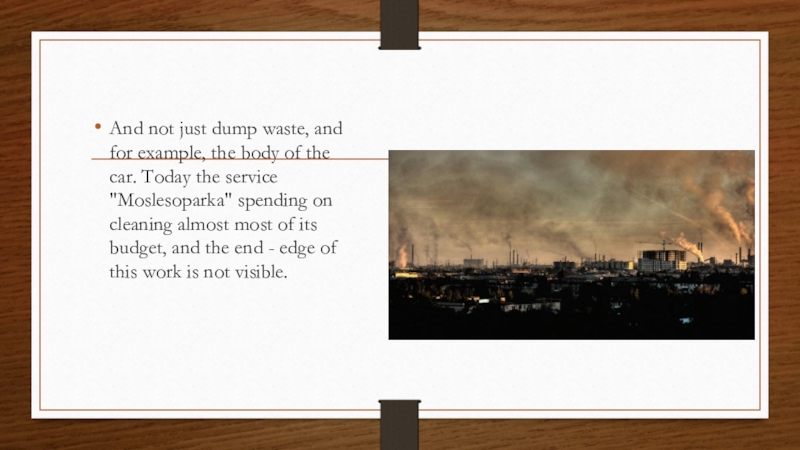
Слайд 13And not just dump waste, and for example, the body of
the car. Today the service "Moslesoparka" spending on cleaning almost most of its budget, and the end - edge of this work is not visible.
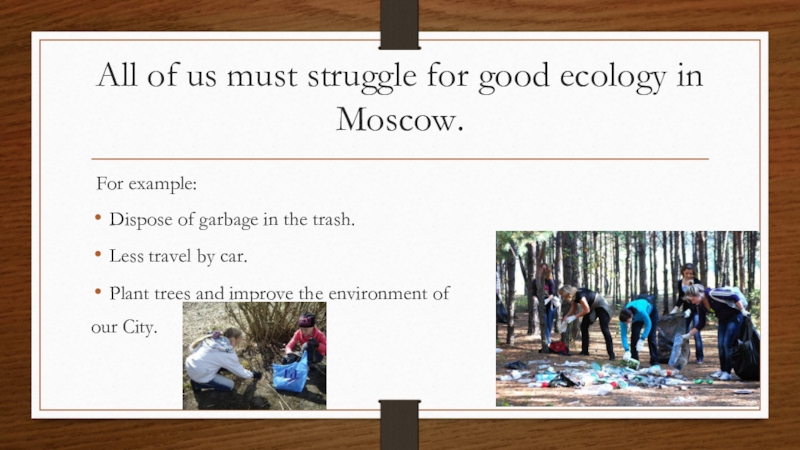
Слайд 14All of us must struggle for good ecology in Moscow.
For
example:
Dispose of garbage in the trash.
Less travel by car.
Plant trees and improve the environment of
our City.
Dispose of garbage in the trash.
Less travel by car.
Plant trees and improve the environment of
our City.