- Главная
- Разное
- Образование
- Спорт
- Естествознание
- Природоведение
- Религиоведение
- Французский язык
- Черчение
- Английский язык
- Астрономия
- Алгебра
- Биология
- География
- Геометрия
- Детские презентации
- Информатика
- История
- Литература
- Математика
- Музыка
- МХК
- Немецкий язык
- ОБЖ
- Обществознание
- Окружающий мир
- Педагогика
- Русский язык
- Технология
- Физика
- Философия
- Химия
- Шаблоны, фоны, картинки для презентаций
- Экология
- Экономика
Презентация, доклад Мой родной город
Содержание
- 1. Презентация Мой родной город
- 2. Cavalier Battery One of the
- 3. House of the Governor-General. Not far
- 4. In the corner of a small room
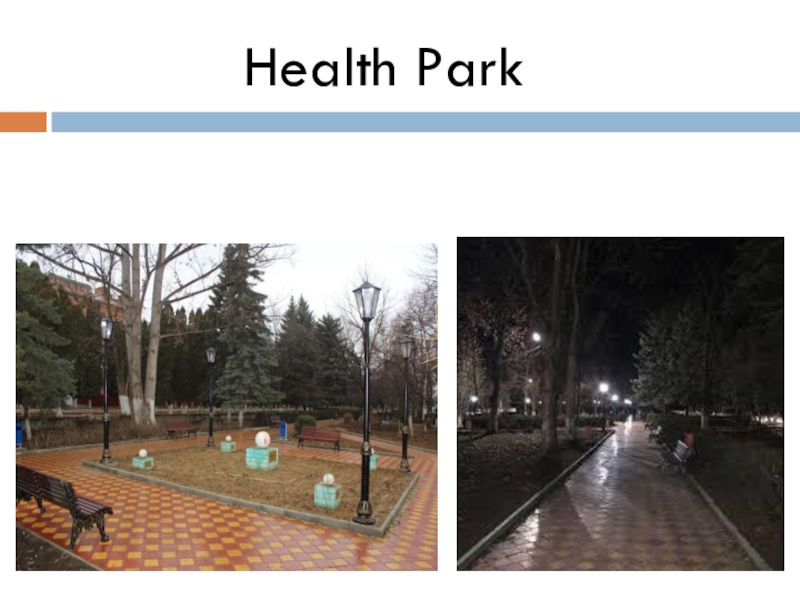
- 5. Health Park
- 6. Theater Not far from the pedagogical
- 7. The building was left “alive”, including due
- 8. Memory of Dumas Another house with
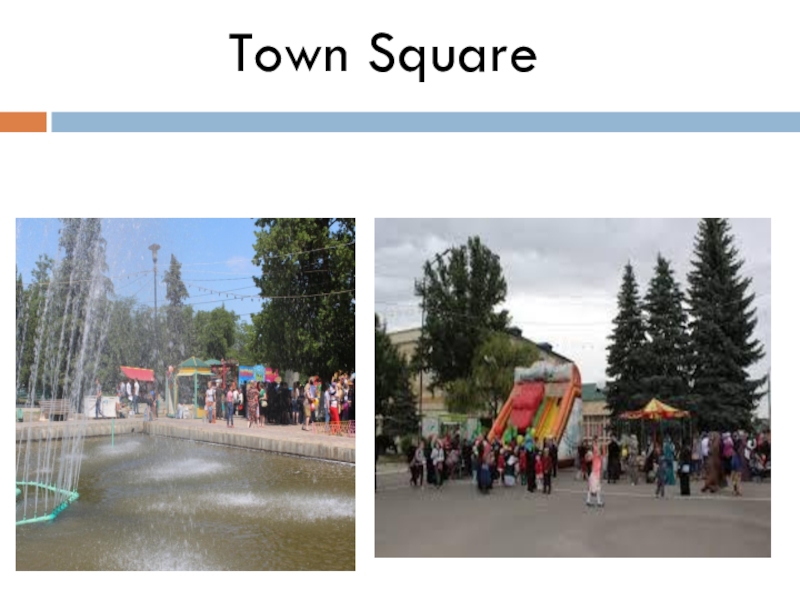
- 9. Town Square
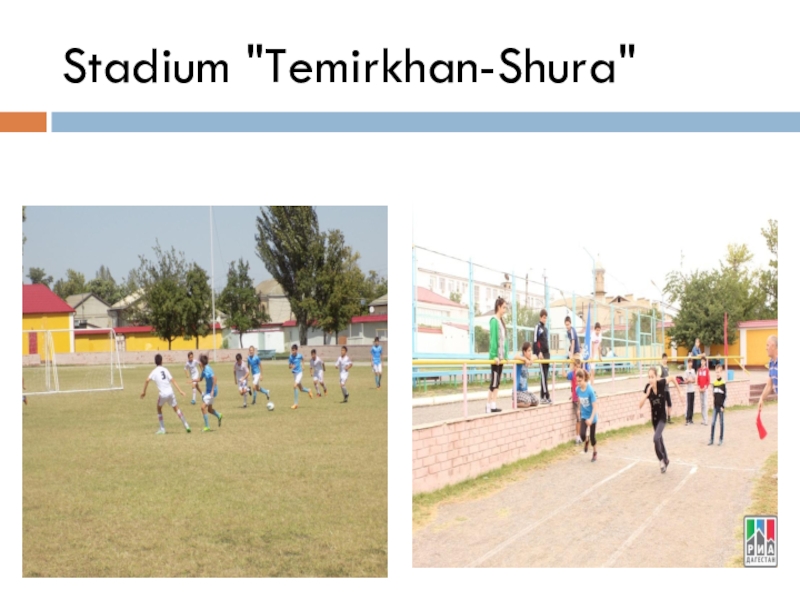
- 10. Stadium "Temirkhan-Shura"
- 11. End Completed: female
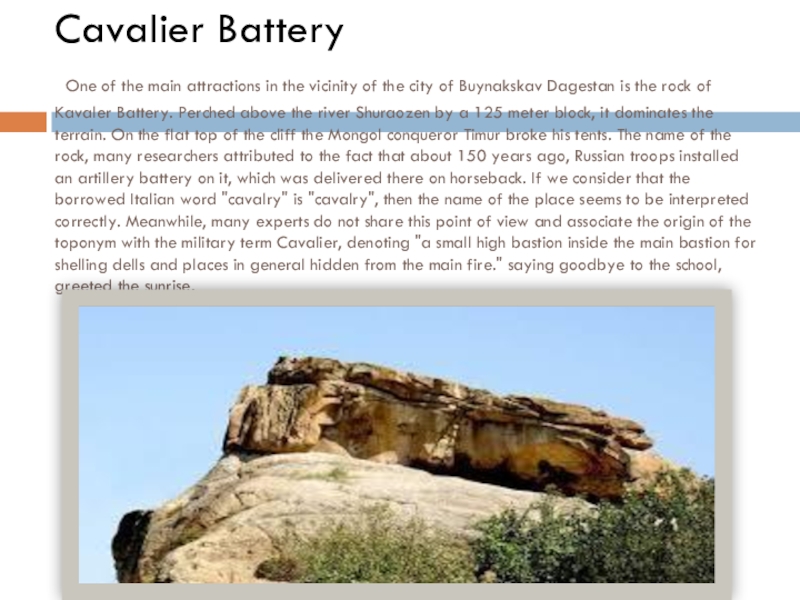
Cavalier Battery One of the main attractions in the vicinity of the city of Buynakskav Dagestan is the rock of Kavaler Battery. Perched above the river Shuraozen by a 125 meter block, it dominates

Слайд 2 Cavalier Battery One of the main attractions in the vicinity of
the city of Buynakskav Dagestan is the rock of Kavaler Battery. Perched above the river Shuraozen by a 125 meter block, it dominates the terrain. On the flat top of the cliff the Mongol conqueror Timur broke his tents. The name of the rock, many researchers attributed to the fact that about 150 years ago, Russian troops installed an artillery battery on it, which was delivered there on horseback. If we consider that the borrowed Italian word "cavalry" is "cavalry", then the name of the place seems to be interpreted correctly. Meanwhile, many experts do not share this point of view and associate the origin of the toponym with the military term Cavalier, denoting "a small high bastion inside the main bastion for shelling dells and places in general hidden from the main fire." saying goodbye to the school, greeted the sunrise.
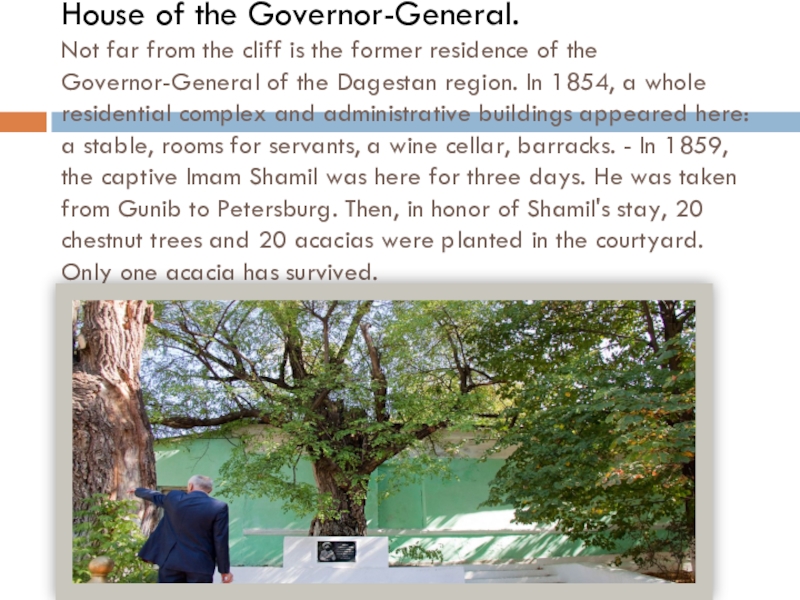
Слайд 3House of the Governor-General. Not far from the cliff is the
former residence of the Governor-General of the Dagestan region. In 1854, a whole residential complex and administrative buildings appeared here: a stable, rooms for servants, a wine cellar, barracks. - In 1859, the captive Imam Shamil was here for three days. He was taken from Gunib to Petersburg. Then, in honor of Shamil's stay, 20 chestnut trees and 20 acacias were planted in the courtyard. Only one acacia has survived.
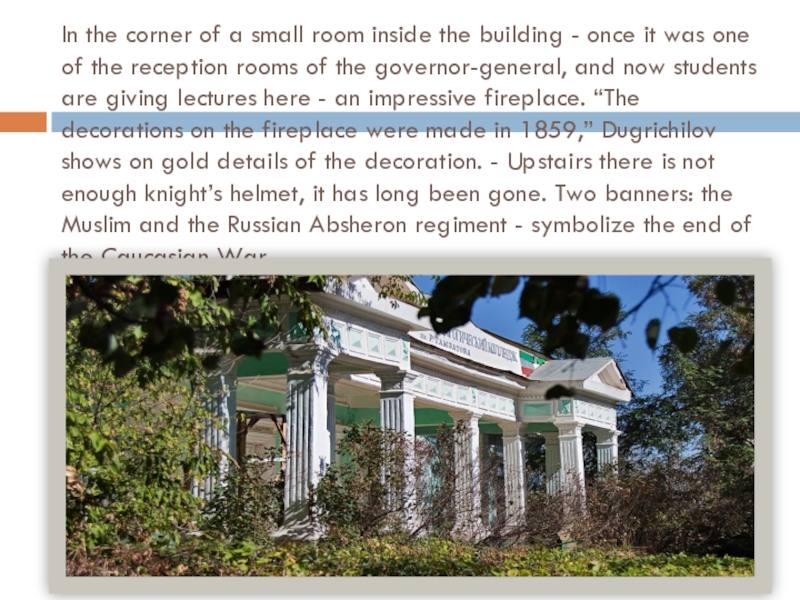
Слайд 4In the corner of a small room inside the building -
once it was one of the reception rooms of the governor-general, and now students are giving lectures here - an impressive fireplace. “The decorations on the fireplace were made in 1859,” Dugrichilov shows on gold details of the decoration. - Upstairs there is not enough knight’s helmet, it has long been gone. Two banners: the Muslim and the Russian Absheron regiment - symbolize the end of the Caucasian War.
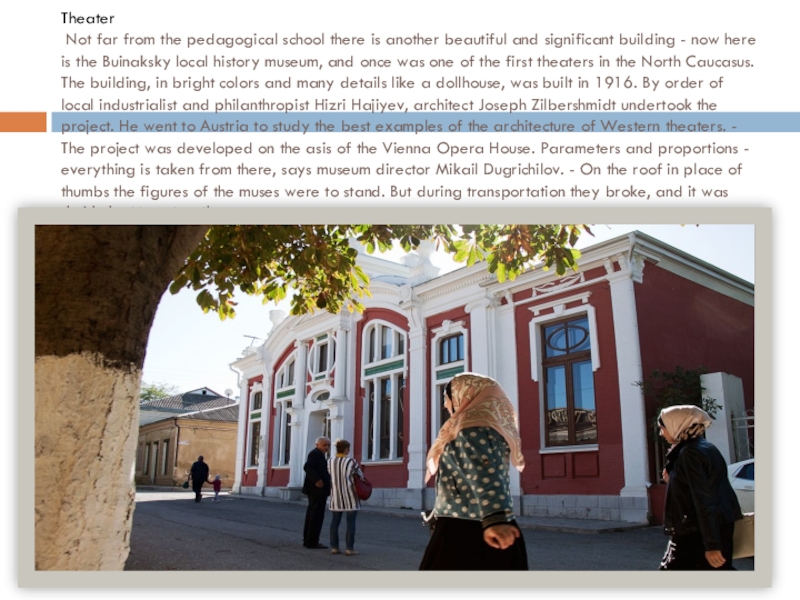
Слайд 6Theater Not far from the pedagogical school there is another beautiful
and significant building - now here is the Buinaksky local history museum, and once was one of the first theaters in the North Caucasus. The building, in bright colors and many details like a dollhouse, was built in 1916. By order of local industrialist and philanthropist Hizri Hajiyev, architect Joseph Zilbershmidt undertook the project. He went to Austria to study the best examples of the architecture of Western theaters. - The project was developed on the asis of the Vienna Opera House. Parameters and proportions - everything is taken from there, says museum director Mikail Dugrichilov. - On the roof in place of thumbs the figures of the muses were to stand. But during transportation they broke, and it was decided not to restore them.
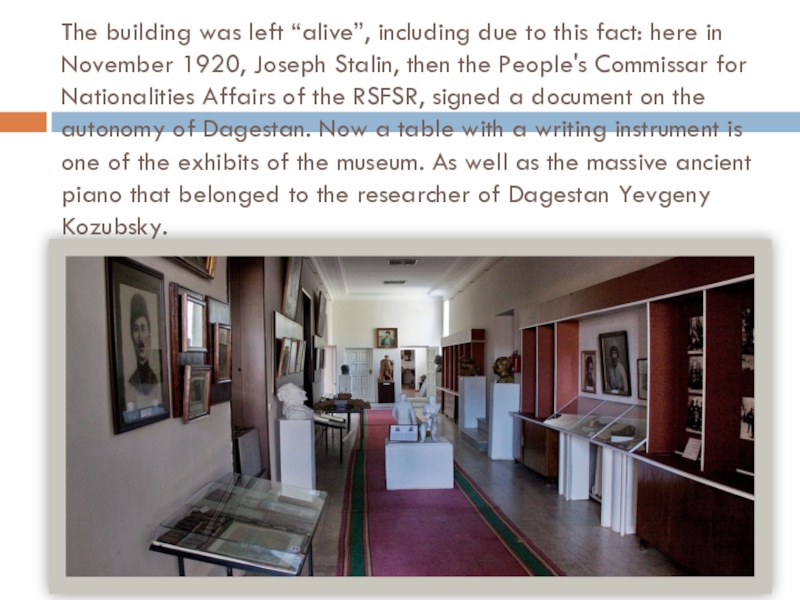
Слайд 7The building was left “alive”, including due to this fact: here
in November 1920, Joseph Stalin, then the People's Commissar for Nationalities Affairs of the RSFSR, signed a document on the autonomy of Dagestan. Now a table with a writing instrument is one of the exhibits of the museum. As well as the massive ancient piano that belonged to the researcher of Dagestan Yevgeny Kozubsky.
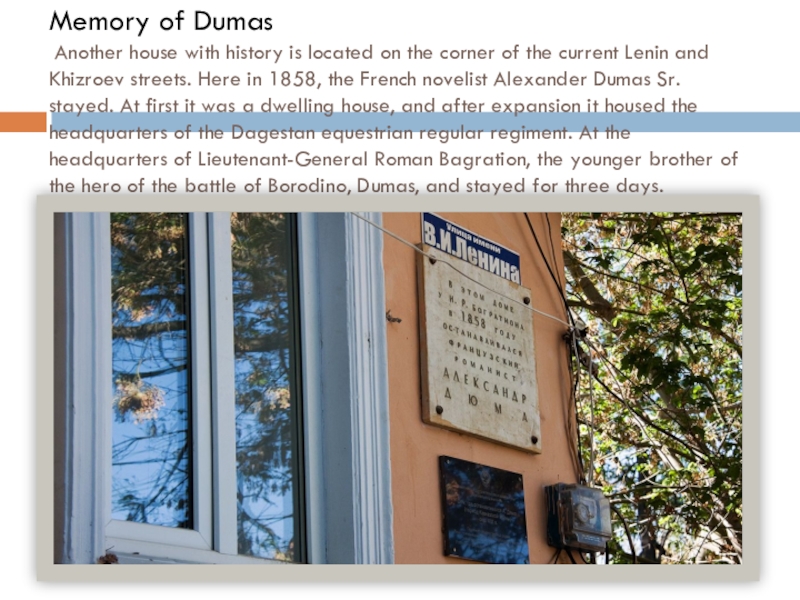
Слайд 8Memory of Dumas Another house with history is located on the
corner of the current Lenin and Khizroev streets. Here in 1858, the French novelist Alexander Dumas Sr. stayed. At first it was a dwelling house, and after expansion it housed the headquarters of the Dagestan equestrian regular regiment. At the headquarters of Lieutenant-General Roman Bagration, the younger brother of the hero of the battle of Borodino, Dumas, and stayed for three days.
Слайд 11End Completed: female students 11 «А» class Nasrulaeva Ravzanat Daibova Madina Gasanova Zulpat
Teacher:
Ума Хаджаловна