- Главная
- Разное
- Образование
- Спорт
- Естествознание
- Природоведение
- Религиоведение
- Французский язык
- Черчение
- Английский язык
- Астрономия
- Алгебра
- Биология
- География
- Геометрия
- Детские презентации
- Информатика
- История
- Литература
- Математика
- Музыка
- МХК
- Немецкий язык
- ОБЖ
- Обществознание
- Окружающий мир
- Педагогика
- Русский язык
- Технология
- Физика
- Философия
- Химия
- Шаблоны, фоны, картинки для презентаций
- Экология
- Экономика
Презентация, доклад Lake Michigan (9 класс)
Содержание
- 1. Презентация Lake Michigan (9 класс)
- 2. Lake Michigan is one of the five Great Lakes of North
- 3. Lake Michigan is bounded, from west to east, by the U.S. states of Wisconsin, Illinois, Indiana, and Michigan.
- 4. The word "Michigan" originally referred to the lake itself, and is believed to come from the Ojibwa word mishigami meaning "great water"
- 5. Some of the earliest human inhabitants of
- 6. It has a surface area of 22,400
- 7. Слайд 7
- 8. Слайд 8
- 9. Twelve million people live along Lake Michigan's
- 10. Lake Michigan has many beaches. The region
- 11. Слайд 11
- 12. Слайд 12
- 13. Lake Michigan has unique conditions that support
- 14. Слайд 14
- 15. Agricultural and industrial products such as iron
- 16. Слайд 16
- 17. Слайд 17
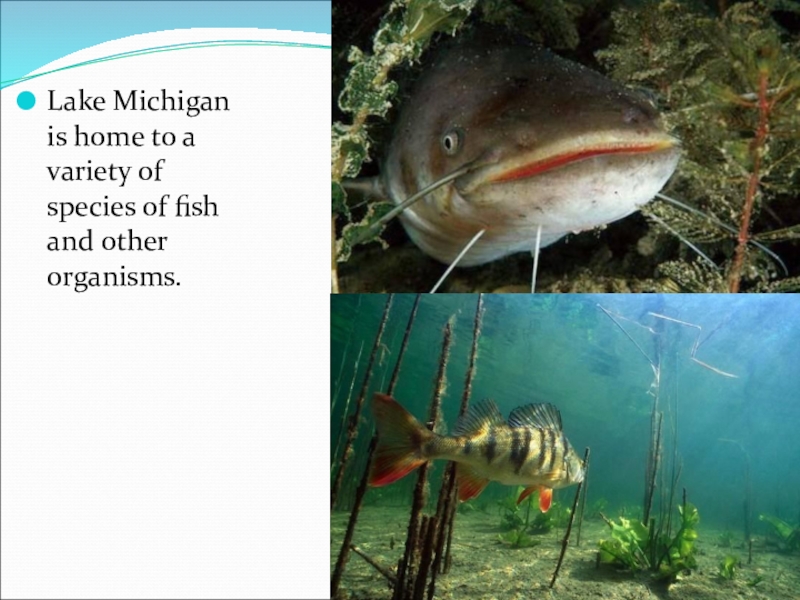
- 18. Lake Michigan is home to a variety of species of fish and other organisms.
- 19. The shores of Lake Michigan are dotted
- 20. Слайд 20
- 21. Lake Michigan is a fisherman's dream.If fishing
- 22. Слайд 22
- 23. Swimming is obviously one of them, but
- 24. Слайд 24
- 25. Lake Michigan has miles of sandy beaches,
- 26. Слайд 26
- 27. Слайд 27
- 28. Слайд 28
- 29. Слайд 29
- 30. Слайд 30
- 31. Thank you for your attention!
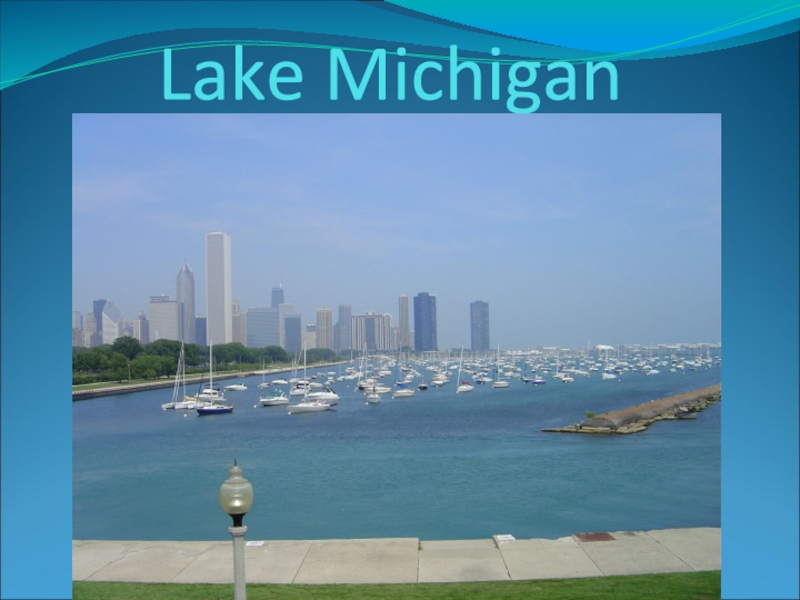
Lake Michigan is one of the five Great Lakes of North America and the only one located entirely within the United States. The other four Great Lakes are shared by the U.S. and Canada. It is the second largest of the Great Lakes by volume and
Слайд 2
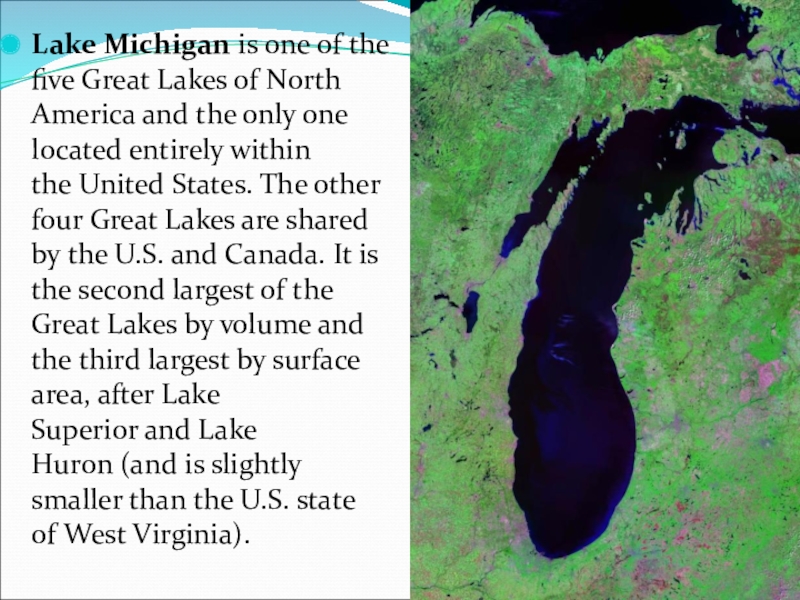
Lake Michigan is one of the five Great Lakes of North America and the only one
located entirely within the United States. The other four Great Lakes are shared by the U.S. and Canada. It is the second largest of the Great Lakes by volume and the third largest by surface area, after Lake Superior and Lake Huron (and is slightly smaller than the U.S. state of West Virginia).
Слайд 3
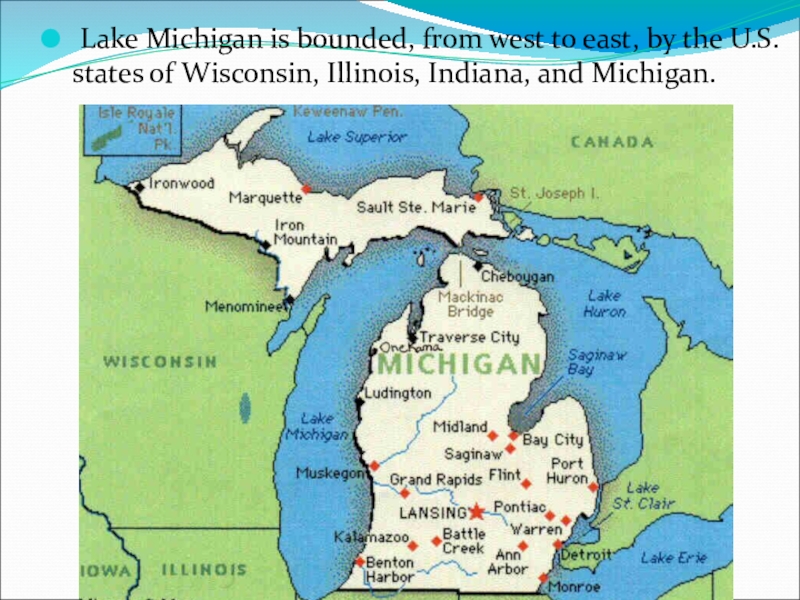
Lake Michigan is bounded, from west to east, by the U.S. states of Wisconsin, Illinois, Indiana,
and Michigan.
Слайд 4
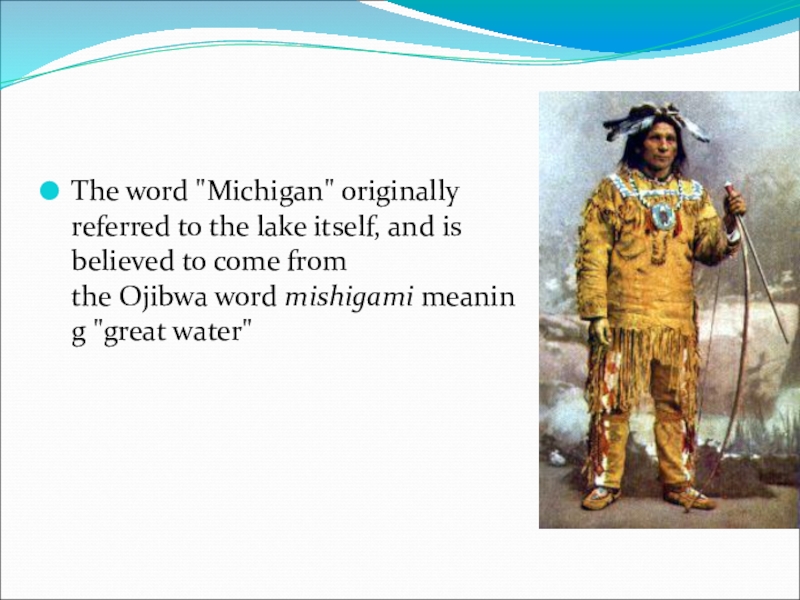
The word "Michigan" originally referred to the lake itself, and is believed to
come from the Ojibwa word mishigami meaning "great water"
Слайд 5
Some of the earliest human inhabitants of the Lake Michigan region
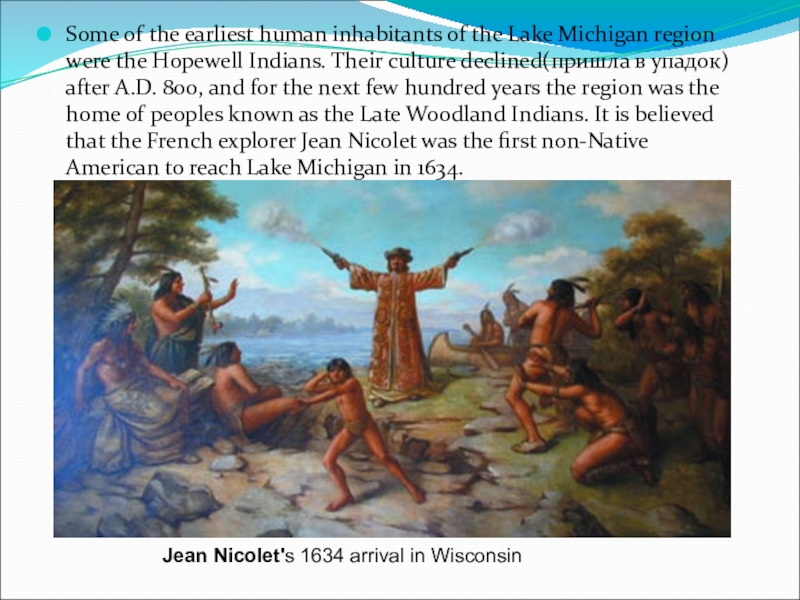
were the Hopewell Indians. Their culture declined(пришла в упадок) after A.D. 800, and for the next few hundred years the region was the home of peoples known as the Late Woodland Indians. It is believed that the French explorer Jean Nicolet was the first non-Native American to reach Lake Michigan in 1634.
Jean Nicolet's 1634 arrival in Wisconsin
Слайд 6
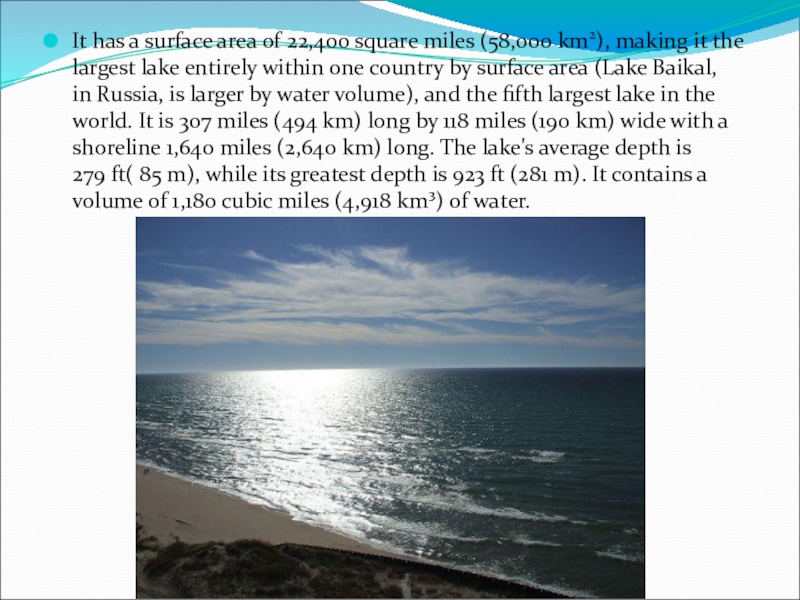
It has a surface area of 22,400 square miles (58,000 km2), making it
the largest lake entirely within one country by surface area (Lake Baikal, in Russia, is larger by water volume), and the fifth largest lake in the world. It is 307 miles (494 km) long by 118 miles (190 km) wide with a shoreline 1,640 miles (2,640 km) long. The lake's average depth is 279 ft( 85 m), while its greatest depth is 923 ft (281 m). It contains a volume of 1,180 cubic miles (4,918 km³) of water.
Слайд 9
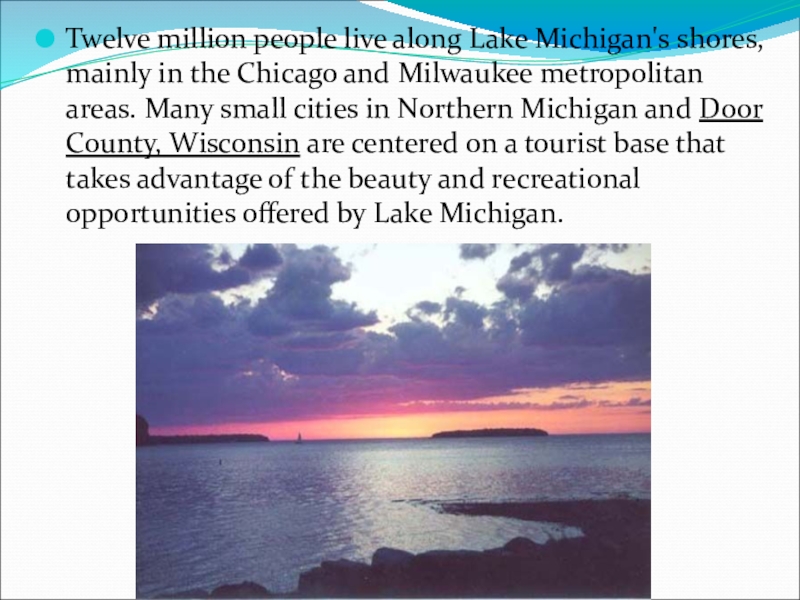
Twelve million people live along Lake Michigan's shores, mainly in the Chicago and Milwaukee metropolitan
areas. Many small cities in Northern Michigan and Door County, Wisconsin are centered on a tourist base that takes advantage of the beauty and recreational opportunities offered by Lake Michigan.
Слайд 10
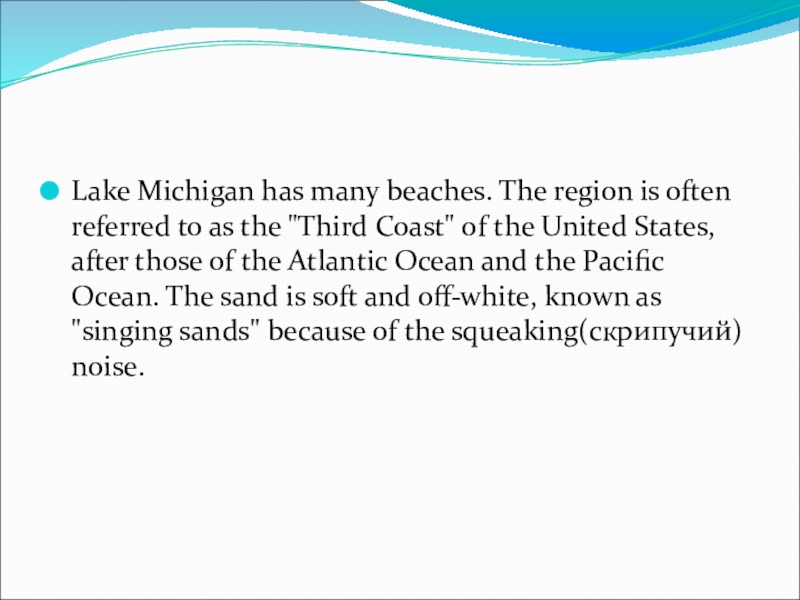
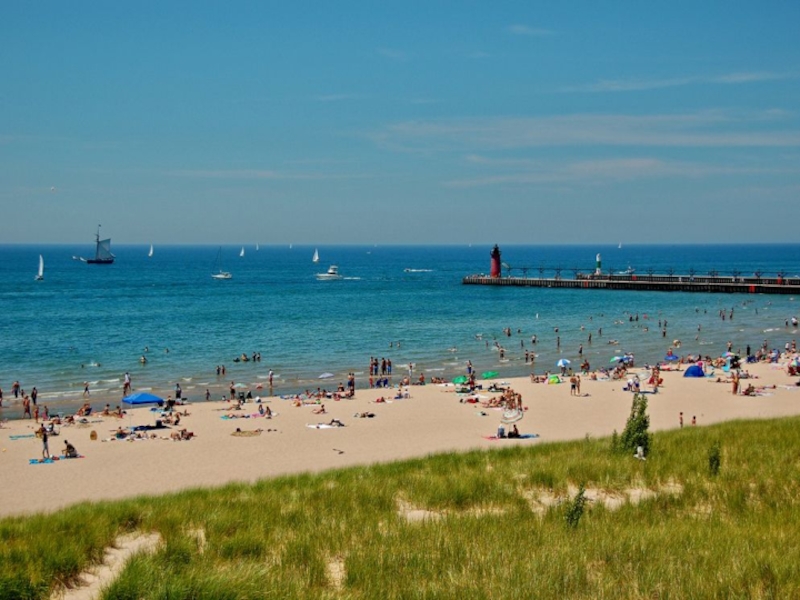
Lake Michigan has many beaches. The region is often referred to
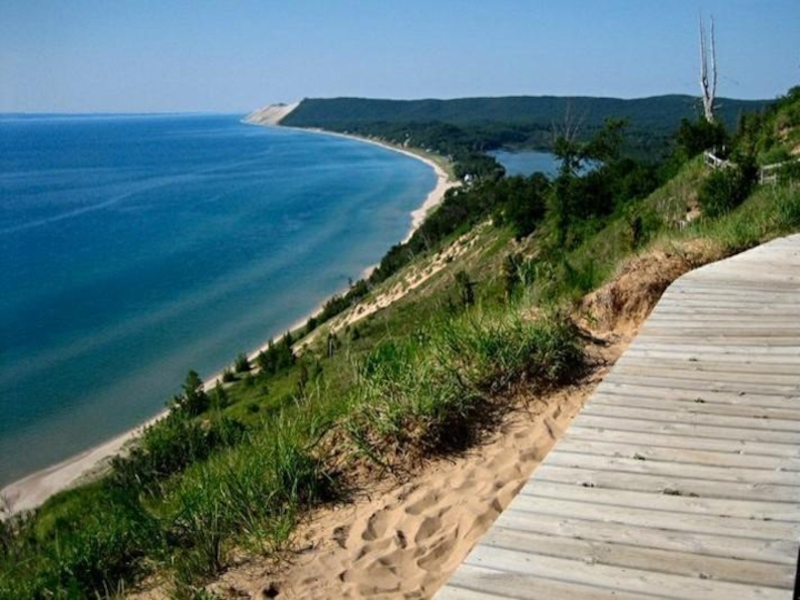
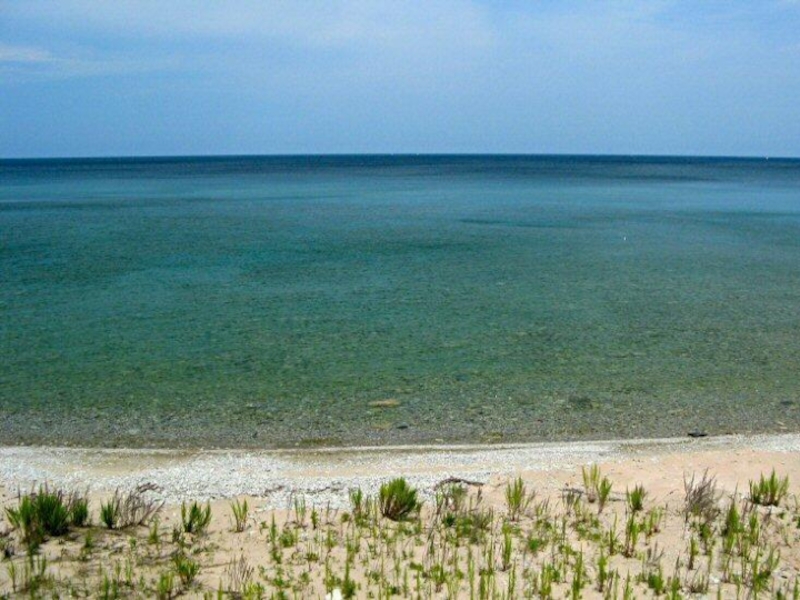
as the "Third Coast" of the United States, after those of the Atlantic Ocean and the Pacific Ocean. The sand is soft and off-white, known as "singing sands" because of the squeaking(скрипучий) noise.
Слайд 13
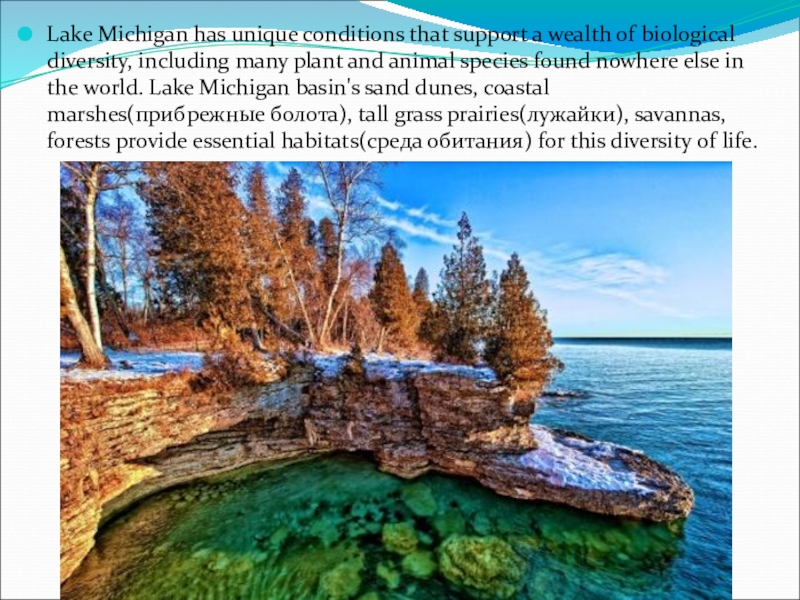
Lake Michigan has unique conditions that support a wealth of biological
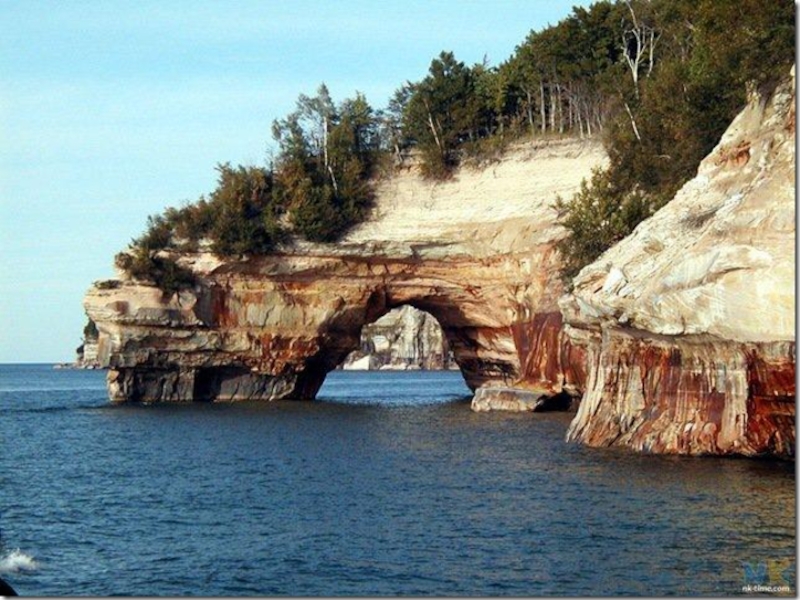
diversity, including many plant and animal species found nowhere else in the world. Lake Michigan basin's sand dunes, coastal marshes(прибрежные болота), tall grass prairies(лужайки), savannas, forests provide essential habitats(среда обитания) for this diversity of life.
Слайд 15
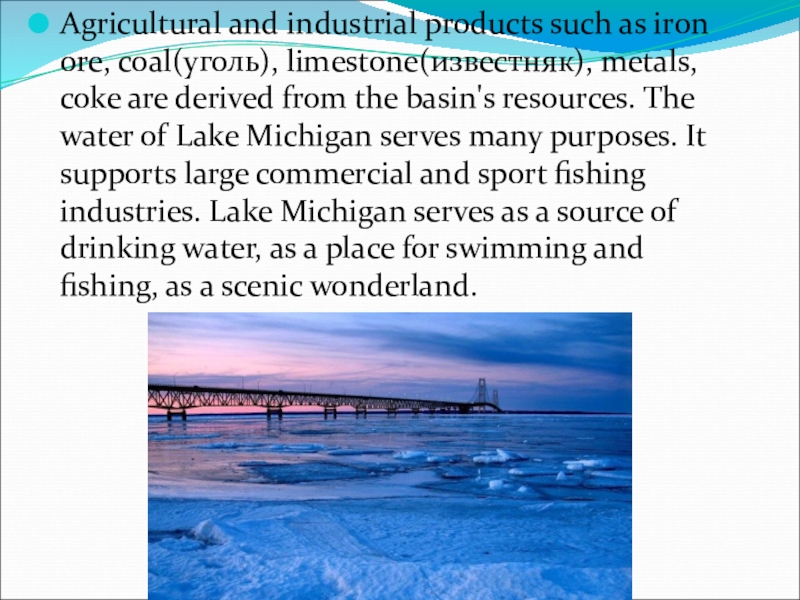
Agricultural and industrial products such as iron ore, coal(уголь), limestone(известняк), metals,
coke are derived from the basin's resources. The water of Lake Michigan serves many purposes. It supports large commercial and sport fishing industries. Lake Michigan serves as a source of drinking water, as a place for swimming and fishing, as a scenic wonderland.
Слайд 19
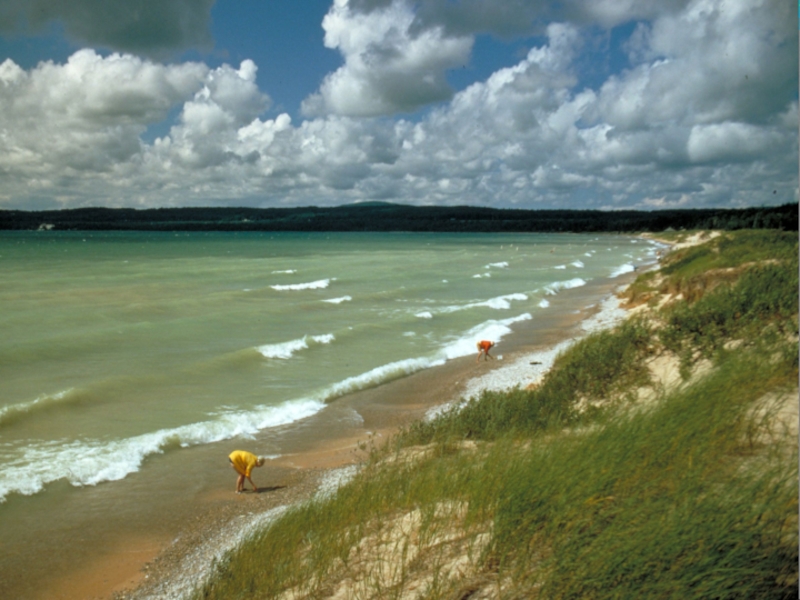
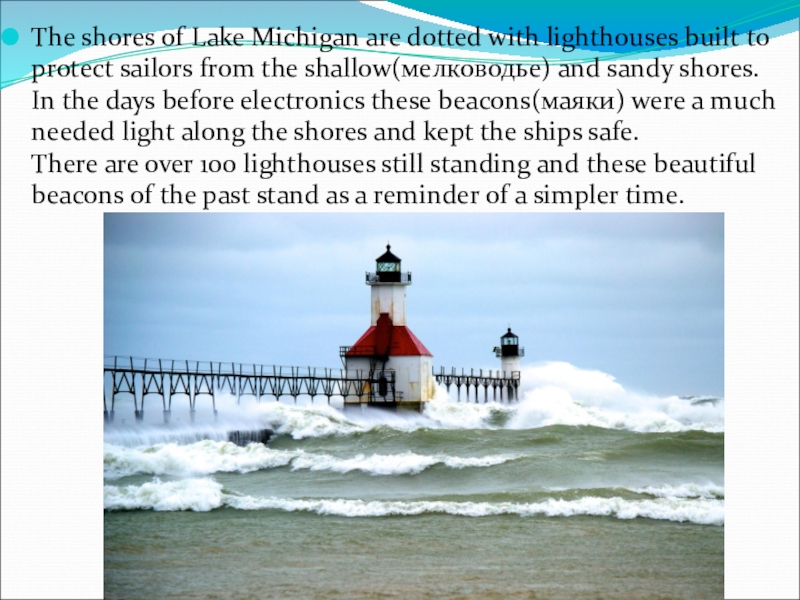
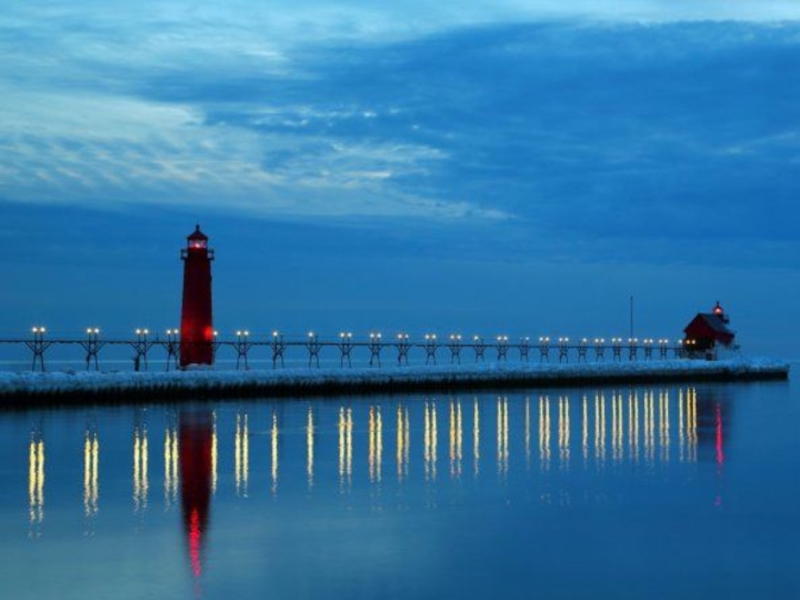
The shores of Lake Michigan are dotted with lighthouses built to
protect sailors from the shallow(мелководье) and sandy shores. In the days before electronics these beacons(маяки) were a much needed light along the shores and kept the ships safe.
There are over 100 lighthouses still standing and these beautiful beacons of the past stand as a reminder of a simpler time.
Слайд 21
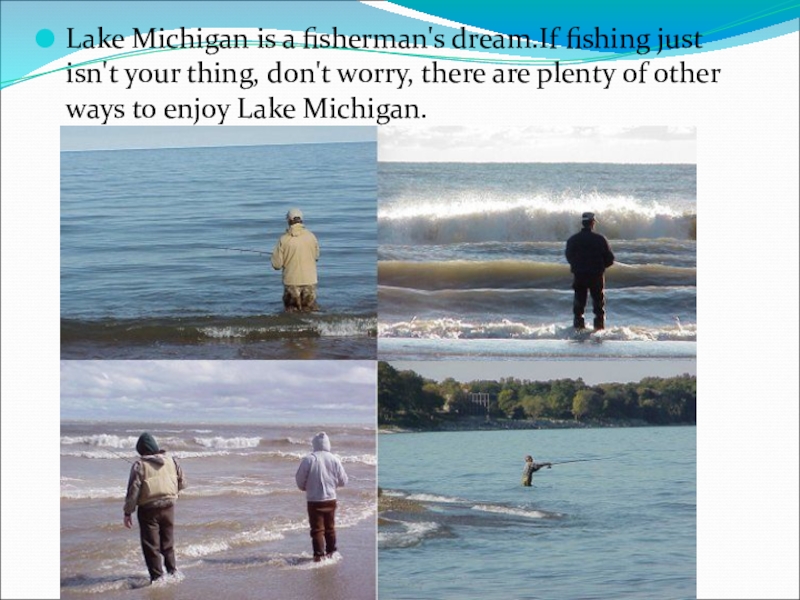
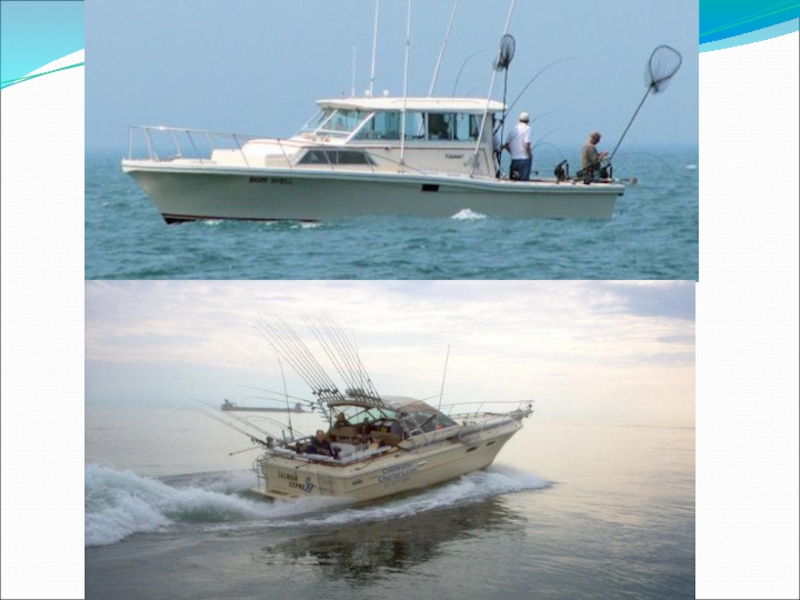
Lake Michigan is a fisherman's dream.If fishing just isn't your thing,
don't worry, there are plenty of other ways to enjoy Lake Michigan.
Слайд 23
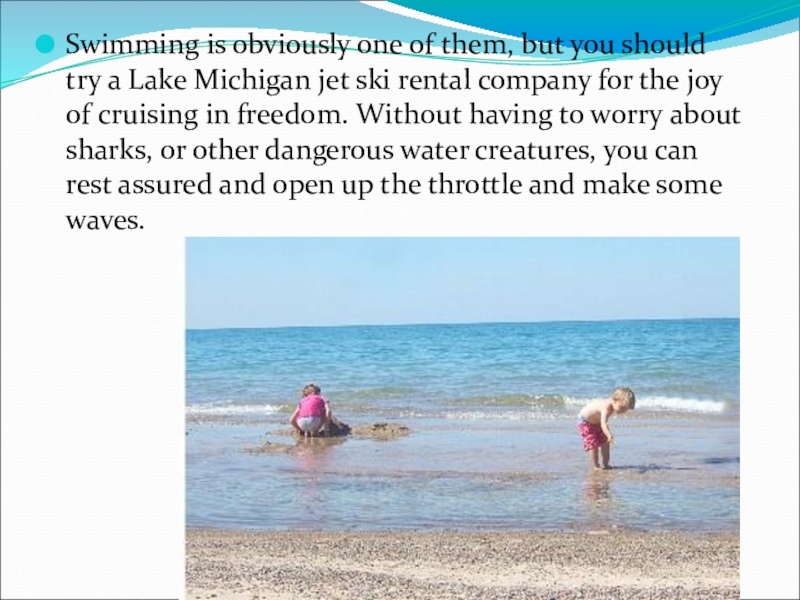
Swimming is obviously one of them, but you should try a
Lake Michigan jet ski rental company for the joy of cruising in freedom. Without having to worry about sharks, or other dangerous water creatures, you can rest assured and open up the throttle and make some waves.
Слайд 25
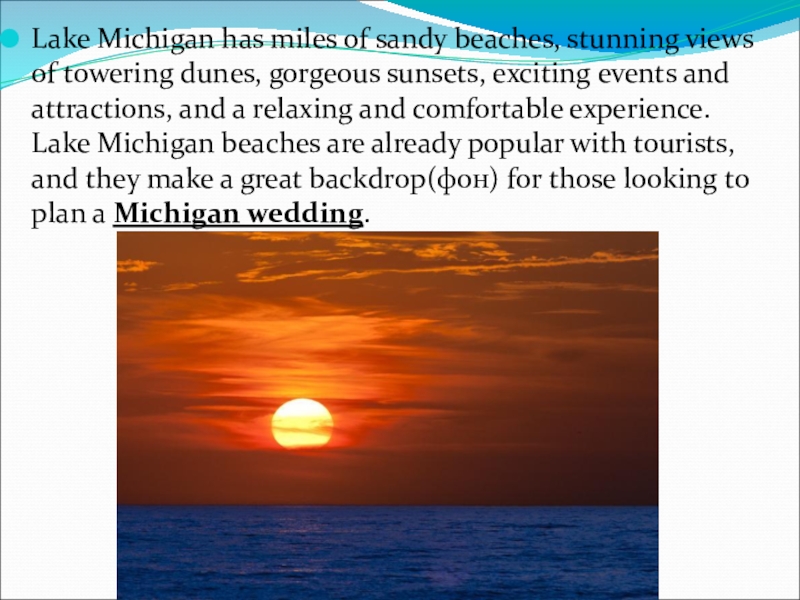
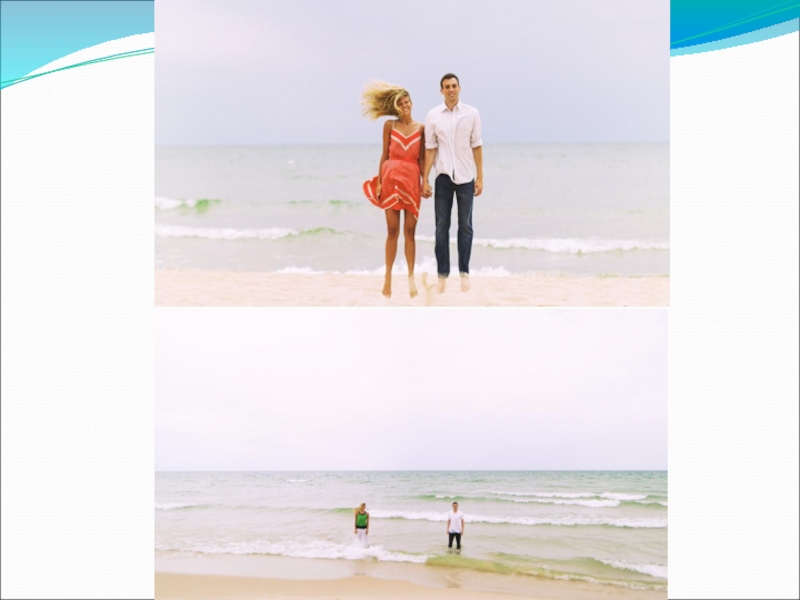
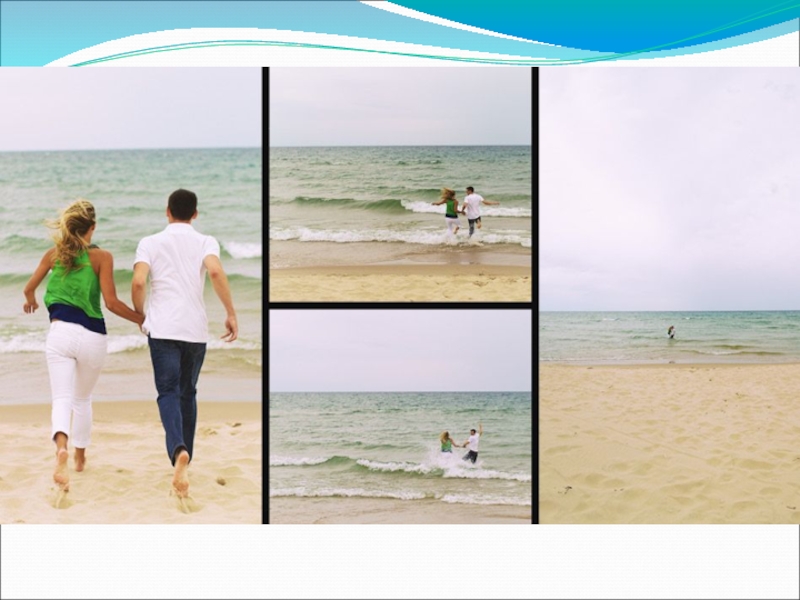
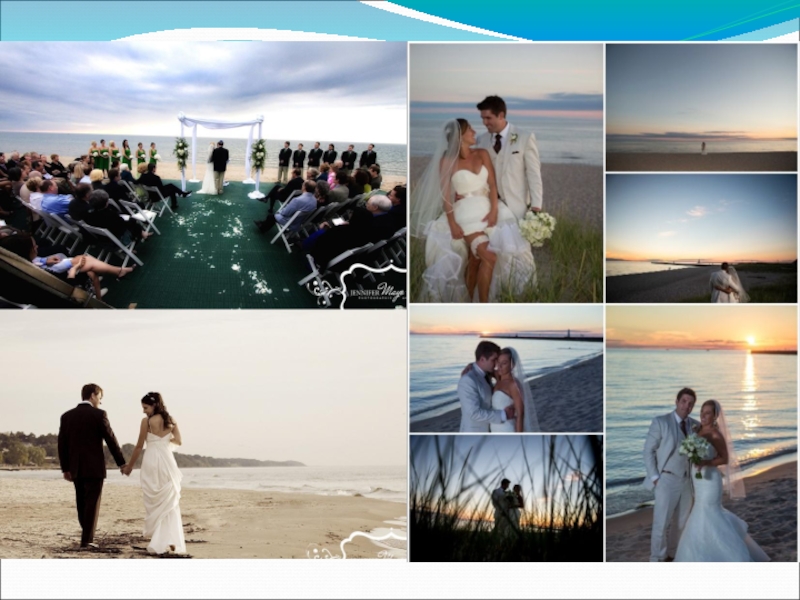
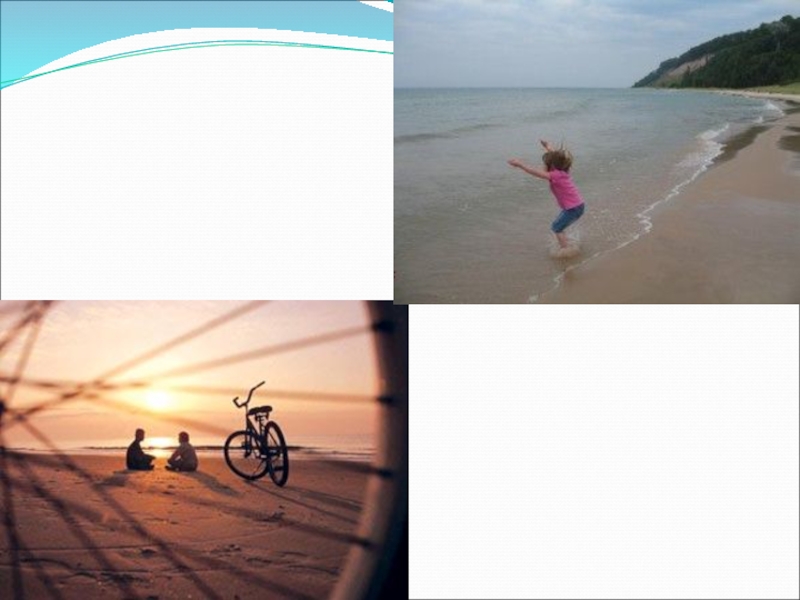
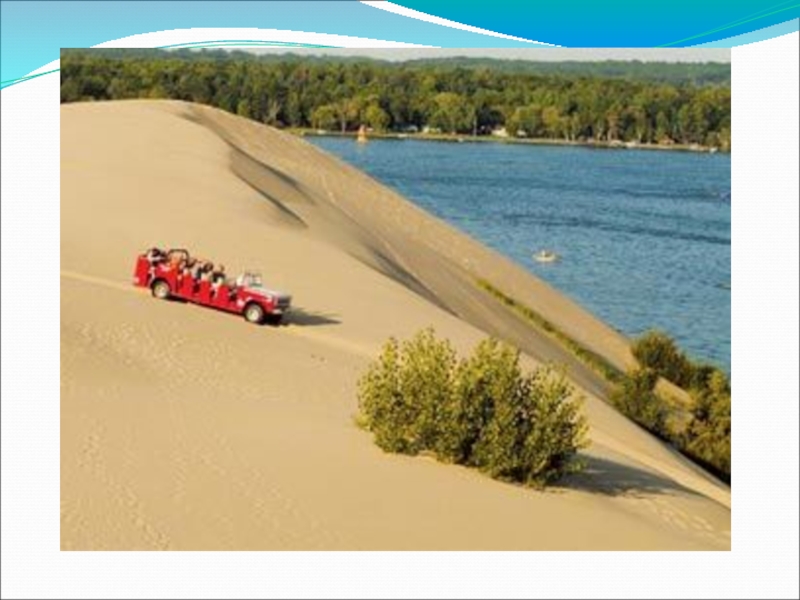
Lake Michigan has miles of sandy beaches, stunning views of towering
dunes, gorgeous sunsets, exciting events and attractions, and a relaxing and comfortable experience. Lake Michigan beaches are already popular with tourists, and they make a great backdrop(фон) for those looking to plan a Michigan wedding.