Britain and Northern Ireland
- Главная
- Разное
- Образование
- Спорт
- Естествознание
- Природоведение
- Религиоведение
- Французский язык
- Черчение
- Английский язык
- Астрономия
- Алгебра
- Биология
- География
- Геометрия
- Детские презентации
- Информатика
- История
- Литература
- Математика
- Музыка
- МХК
- Немецкий язык
- ОБЖ
- Обществознание
- Окружающий мир
- Педагогика
- Русский язык
- Технология
- Физика
- Философия
- Химия
- Шаблоны, фоны, картинки для презентаций
- Экология
- Экономика
Презентация, доклад к уроку по теме Scotland
Содержание
- 1. Презентация к уроку по теме Scotland
- 2. Scotland (Scottish Gaelic: Alba)
- 3. Location of Scotland within the United Kingdom
- 4. Scotland mapBesides the mainland, Scotland includes over
- 5. Flag of OrkneyThe name of the Orkney
- 6. The 1654 map of the Orkney and
- 7. The Shetland IslandsFlag and Coat-of-arms of ShetlandsThe
- 8. Map of the Inner and Outer HebridesThe
- 9. Skara Brae, a Neolithic settlement located in
- 10. Monument marking the site of the Roman
- 11. The famous Hadrian's Wall built by the
- 12. The Kingdom of the Picts was the
- 13. A Pictish eagle (symbol) stone in StrathpefferThe
- 14. Old cities of ScotlandBy the 10th century
- 15. Daniel Mytens, Portrait of James VI (of
- 16. Lion Rampant - Royal standard of ScotlandSince 1707 Scotland has been part of Great Britain.
- 17. Kingdom of Scotland Royal coat-of-armsScotland's Head of state is the monarch of the United Kingdom.
- 18. The Flag of Scotland(the Cross of Saint
- 19. The thistle (Onopordum acanthium), Scotland's Floral emblem.The thistle is a Scotland's floral emblem.
- 20. Highlands and Lowlands of ScotlandMainland Scotland is
- 21. Ballachulish, Western Highlands, ScotlandThe Highlands is the
- 22. Scottish Highlands. Caledonia“Caledonia” is the Latin name
- 23. Duneaton Valley, LowlandsConfusingly, some parts of the
- 24. National parks of ScotlandScotland contains the most mountainous terrain in Great Britain.
- 25. Ben Nevis, the highest peak in Great
- 26. Scotland Map showing the major Lochs in
- 27. A Highland Loch (lake)Loch – is a
- 28. Loch Ness, Urquhart CastleThe most famous lake
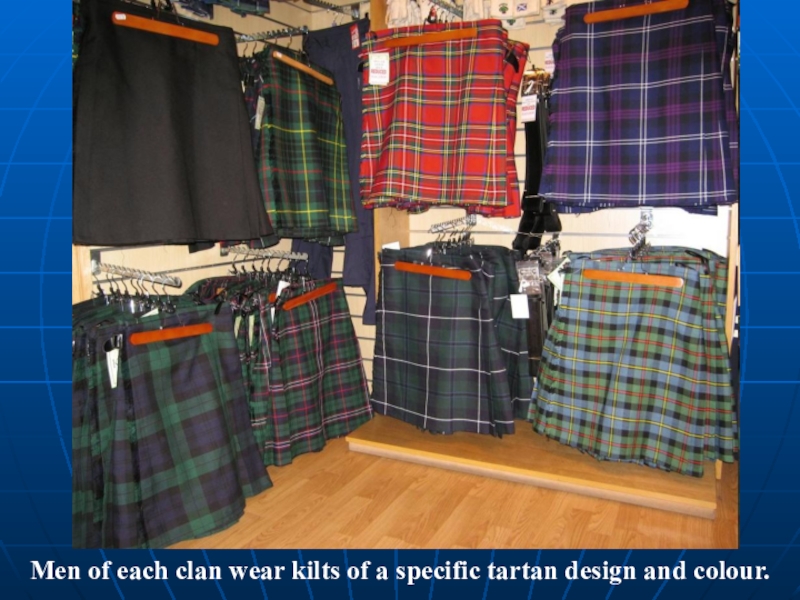
- 29. Clan Tartans RallyThe Scots are very proud
- 30. Men of each clan wear kilts of a specific tartan design and colour.
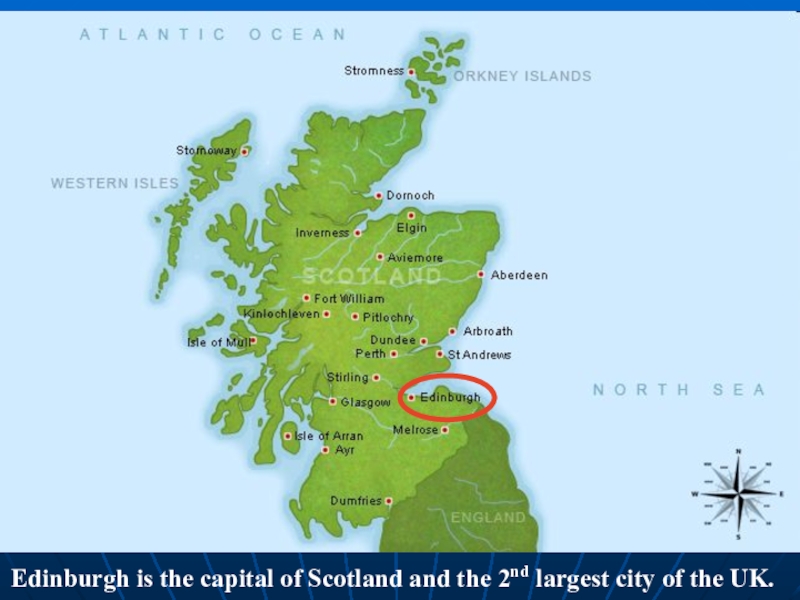
- 31. Edinburgh is the capital of Scotland and the 2nd largest city of the UK.
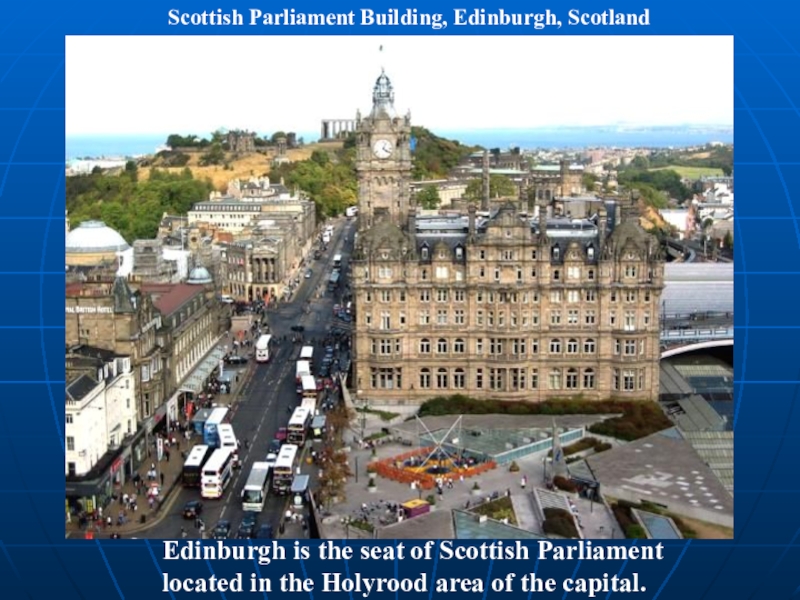
- 32. Scottish Parliament Building, Edinburgh, ScotlandEdinburgh is the
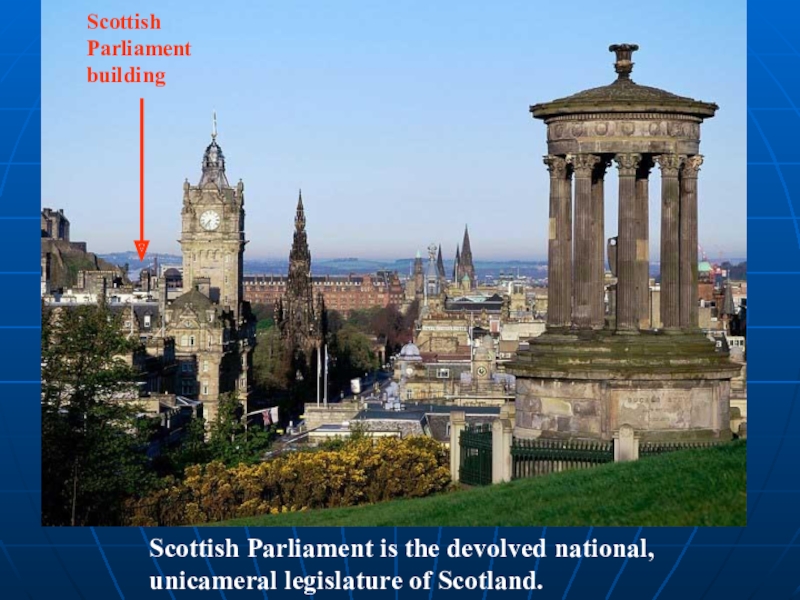
- 33. Scottish Parliament buildingScottish Parliament is the devolved national, unicameral legislature of Scotland.
- 34. Scottish Parliament at Perth, the Ancient Capital
- 35. Parliament House, EdinburghFollowing a referendum in 1997,
- 36. New Scottish Parliament BuildingIn 1999 Scottish Parliament
- 37. Debating chamber of Scottish ParliamentParliament, informally referred
- 38. Members of Scottish ParliamentMembers are elected for
- 39. Alexander Nasmith, Portrait of Robert Burns (National
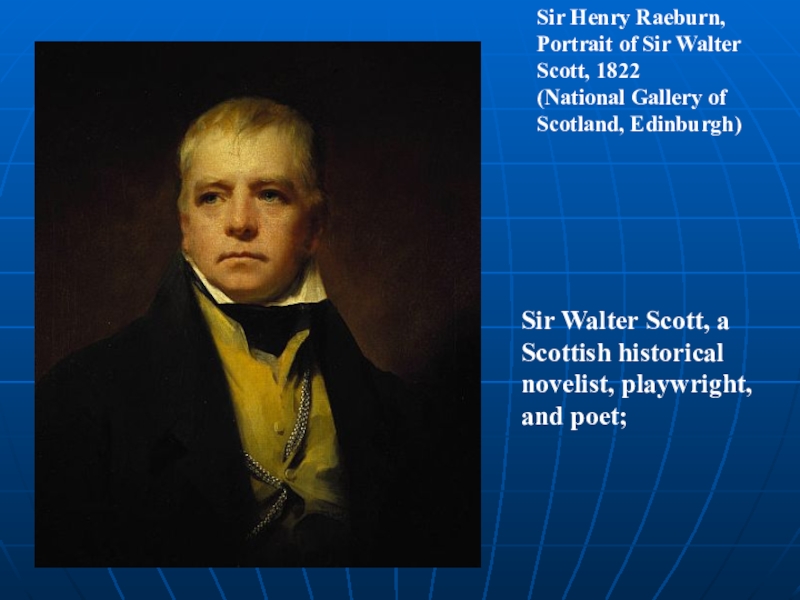
- 40. Sir Henry Raeburn, Portrait of Sir Walter
Scotland (Scottish Gaelic: Alba)
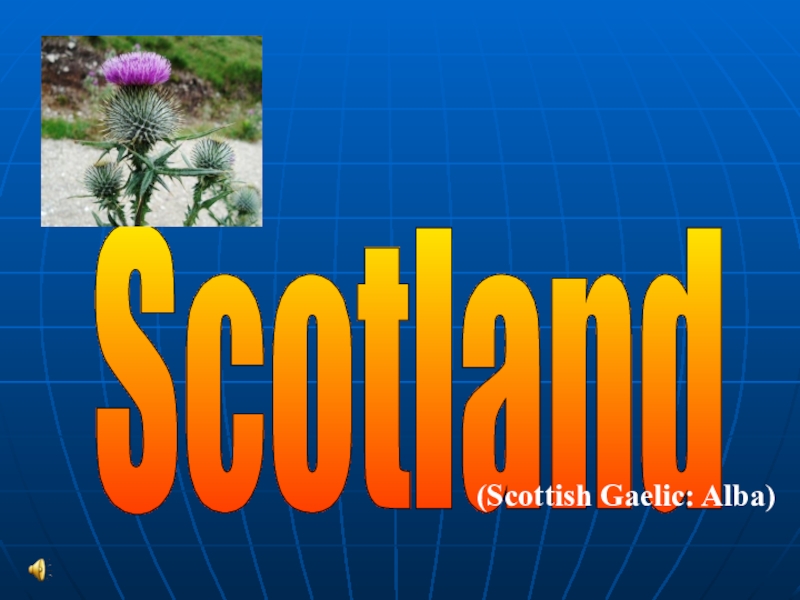
Слайд 3Location of Scotland within the United Kingdom and in the European
continent
Scotland is part of the United Kingdom occupying the northern third of the island of Great Britain. It borders on England in the south and is washed by the North Sea in the east, the Atlantic Ocean in the north and west, and the North Channel and Irish Sea in the southwest.
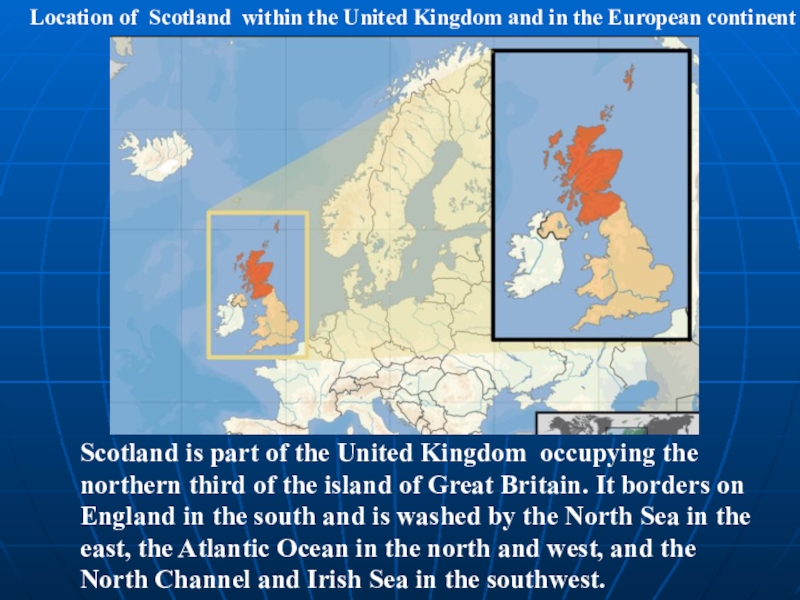
Слайд 4Scotland map
Besides the mainland, Scotland includes over 790 islands among them
the Northern Isles - the Orkney, the Shetland Islands and the Hebrides.
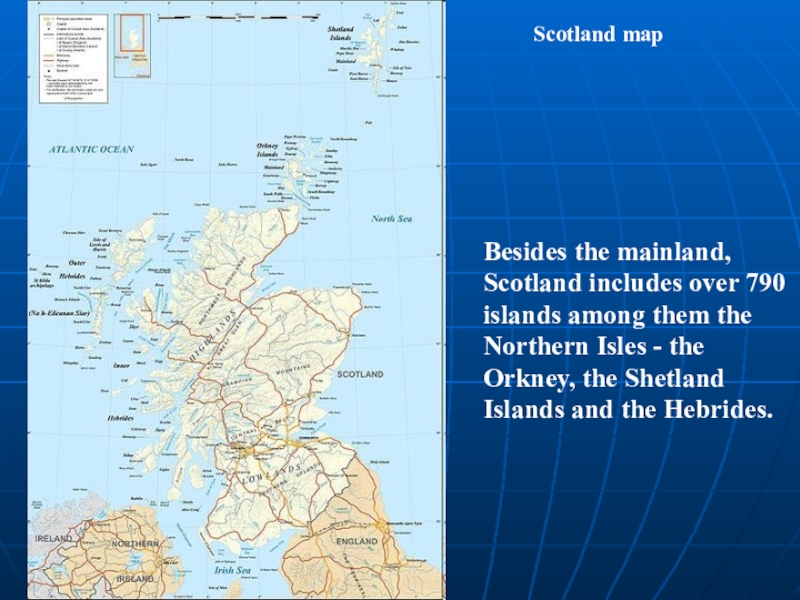
Слайд 5Flag of Orkney
The name of the Orkney Islands, "Orkney" dates back
to the 1st century BC or earlier, and the islands have been inhabited for at least 8,500 years.
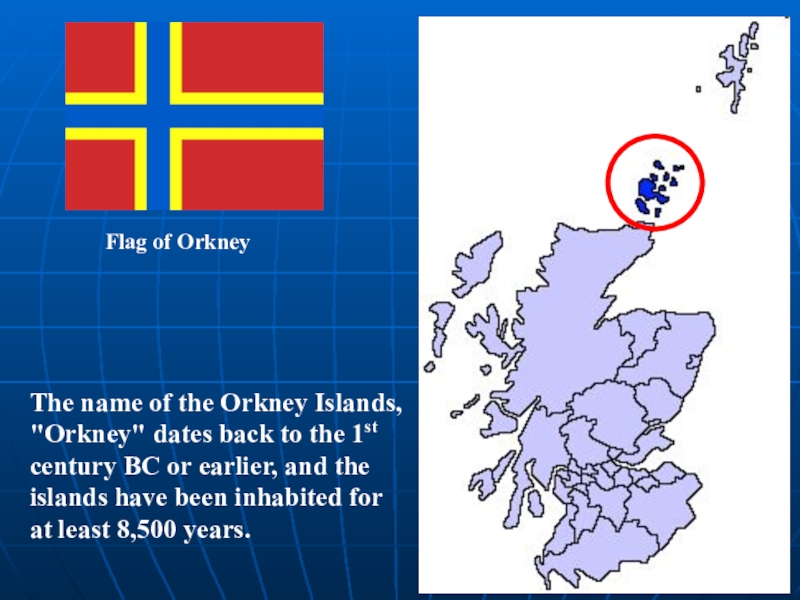
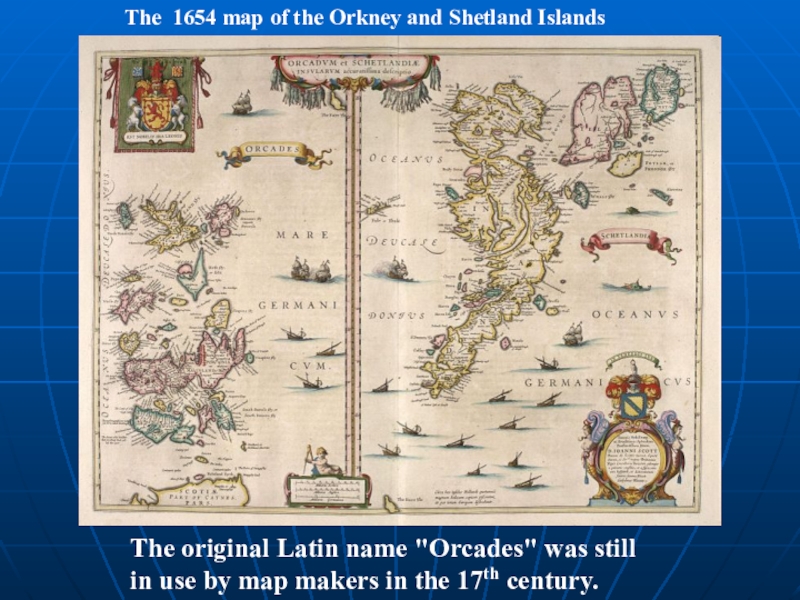
Слайд 6The 1654 map of the Orkney and Shetland Islands
The original Latin
name "Orcades" was still in use by map makers in the 17th century.
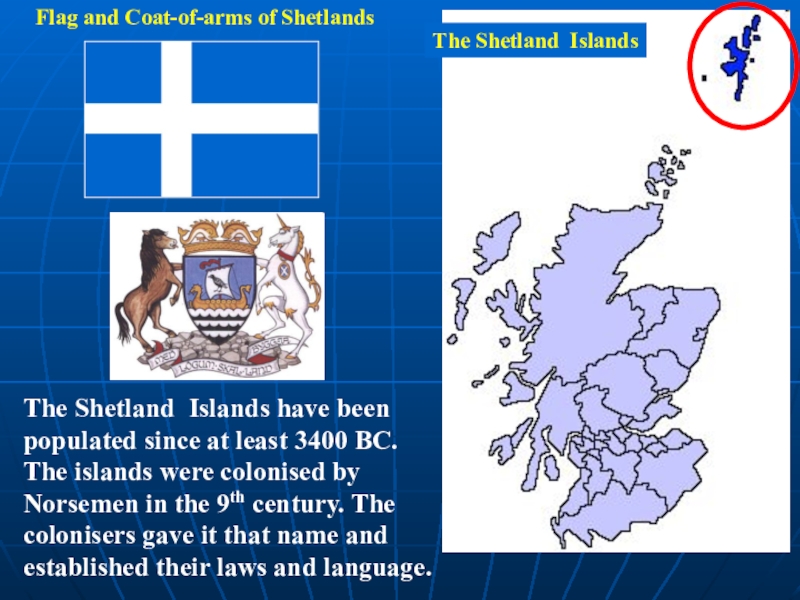
Слайд 7The Shetland Islands
Flag and Coat-of-arms of Shetlands
The Shetland Islands have been
populated since at least 3400 BC. The islands were colonised by Norsemen in the 9th century. The colonisers gave it that name and established their laws and language.
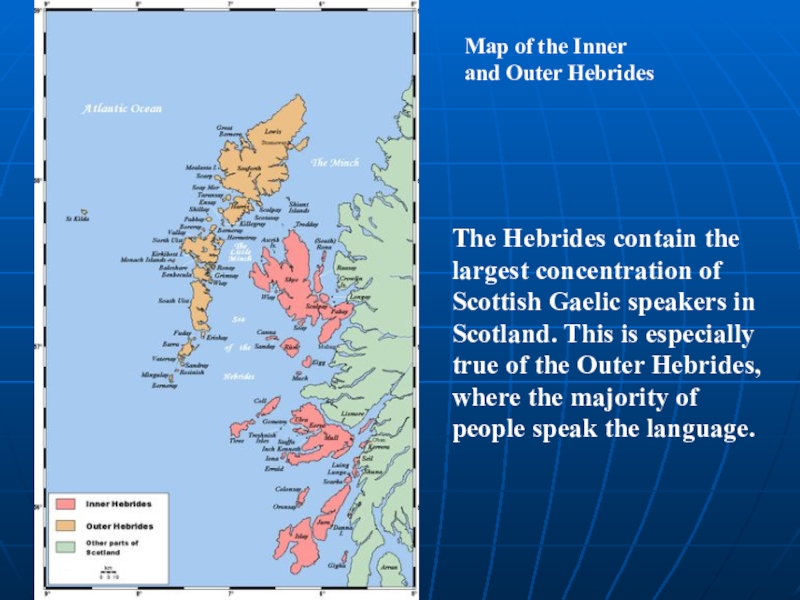
Слайд 8
Map of the Inner and Outer Hebrides
The Hebrides contain the largest
concentration of Scottish Gaelic speakers in Scotland. This is especially true of the Outer Hebrides, where the majority of people speak the language.
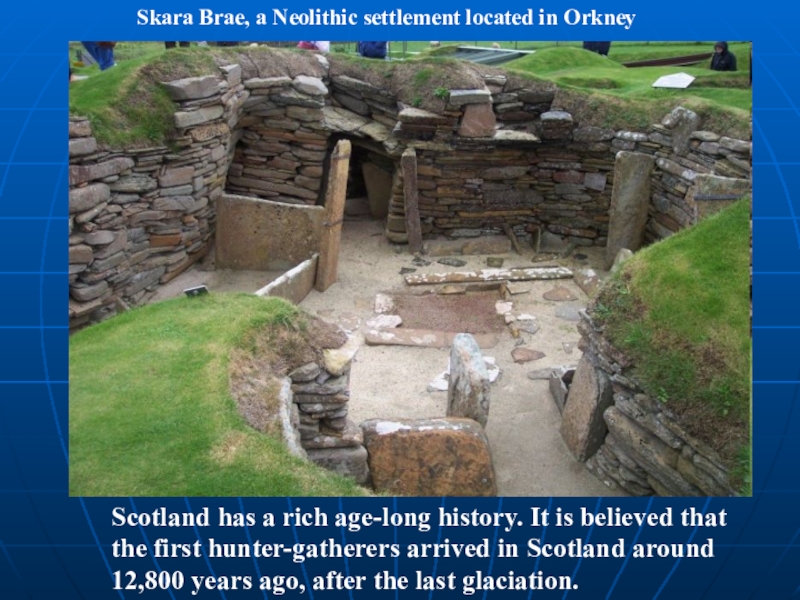
Слайд 9Skara Brae, a Neolithic settlement located in Orkney
Scotland has a rich
age-long history. It is believed that the first hunter-gatherers arrived in Scotland around 12,800 years ago, after the last glaciation.
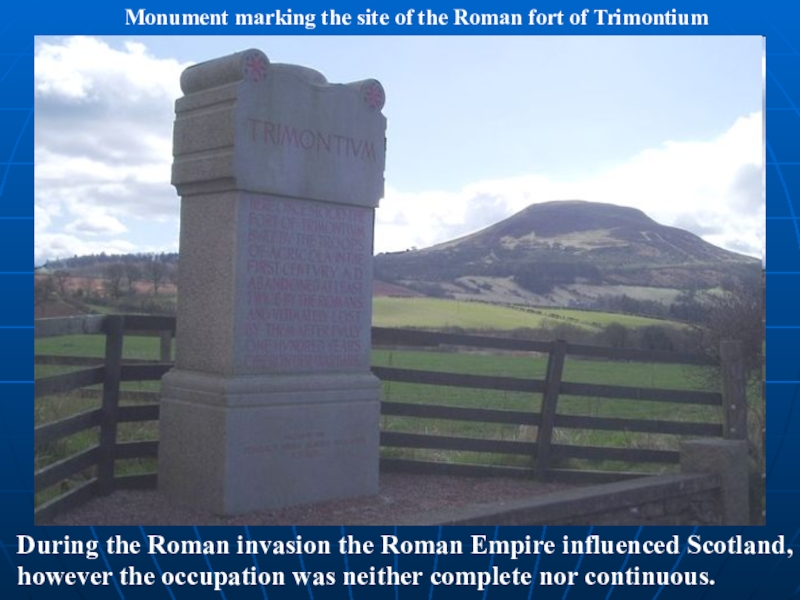
Слайд 10Monument marking the site of the Roman fort of Trimontium
During the
Roman invasion the Roman Empire influenced Scotland, however the occupation was neither complete nor continuous.
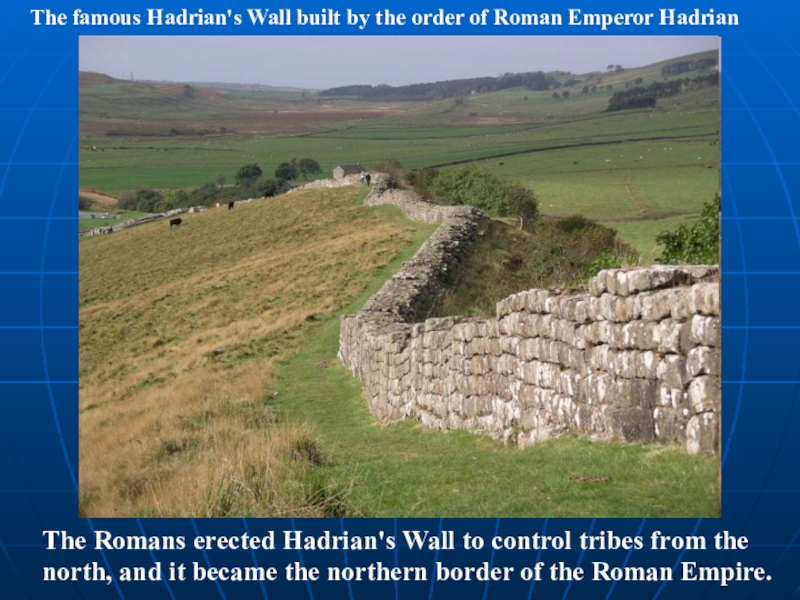
Слайд 11The famous Hadrian's Wall built by the order of Roman Emperor
Hadrian
The Romans erected Hadrian's Wall to control tribes from the north, and it became the northern border of the Roman Empire.
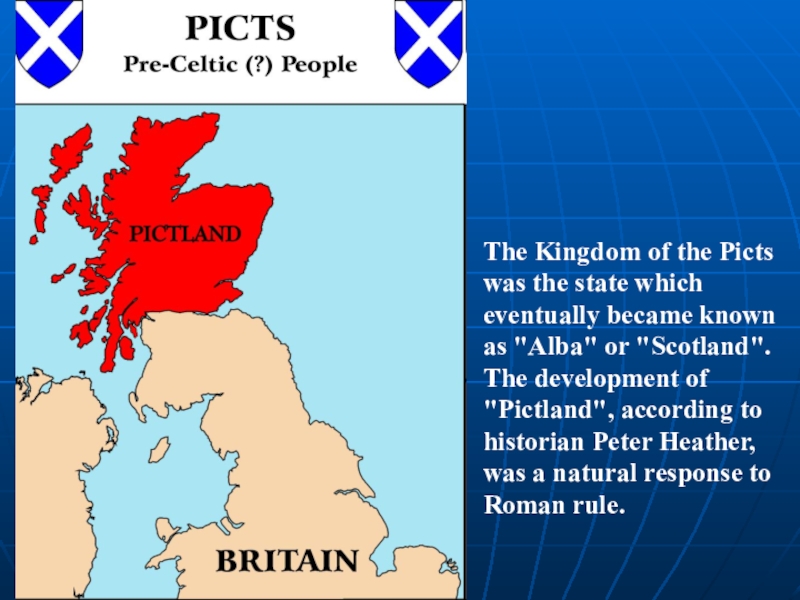
Слайд 12The Kingdom of the Picts was the state which eventually became
known as "Alba" or "Scotland". The development of "Pictland", according to historian Peter Heather, was a natural response to Roman rule.
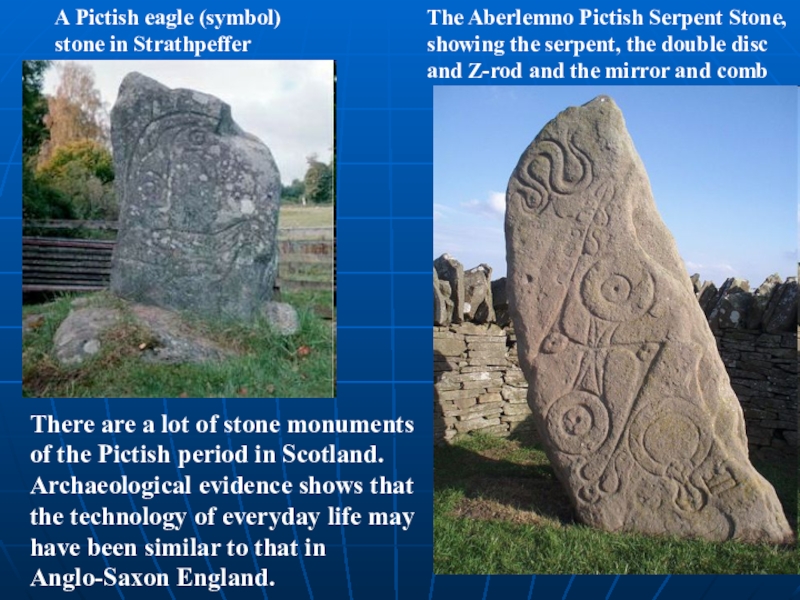
Слайд 13A Pictish eagle (symbol) stone in Strathpeffer
The Aberlemno Pictish Serpent Stone,
showing the serpent, the double disc and Z-rod and the mirror and comb
There are a lot of stone monuments of the Pictish period in Scotland. Archaeological evidence shows that the technology of everyday life may have been similar to that in Anglo-Saxon England.
Слайд 14
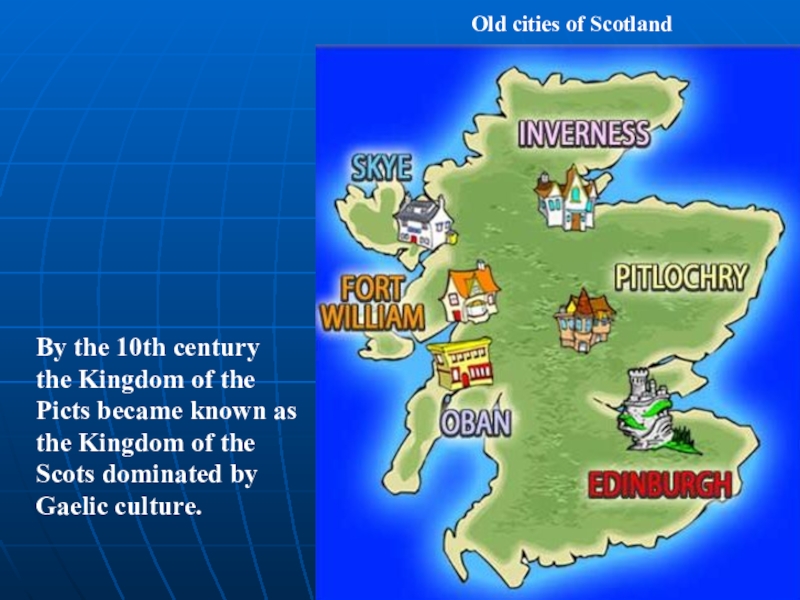
Old cities of Scotland
By the 10th century the Kingdom of the
Picts became known as the Kingdom of the Scots dominated by Gaelic culture.
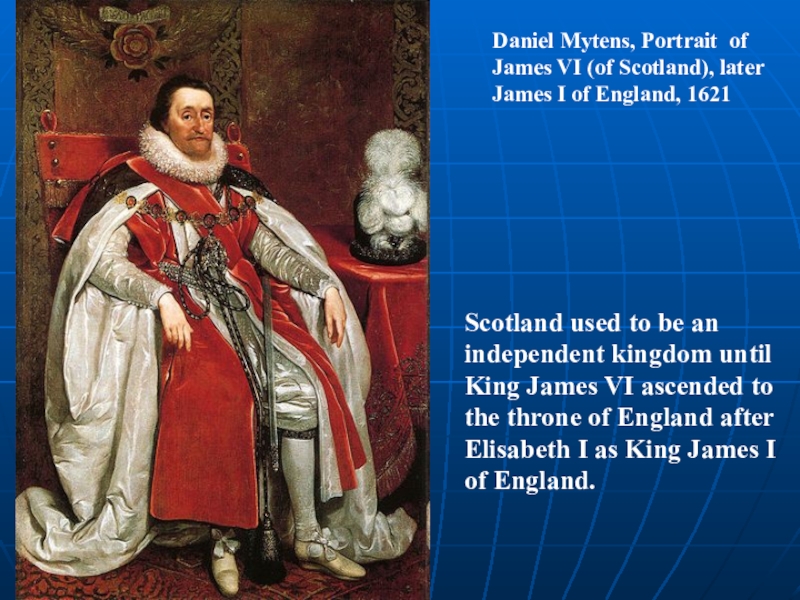
Слайд 15Daniel Mytens, Portrait of James VI (of Scotland), later James I
of England, 1621
Scotland used to be an independent kingdom until King James VI ascended to the throne of England after Elisabeth I as King James I of England.
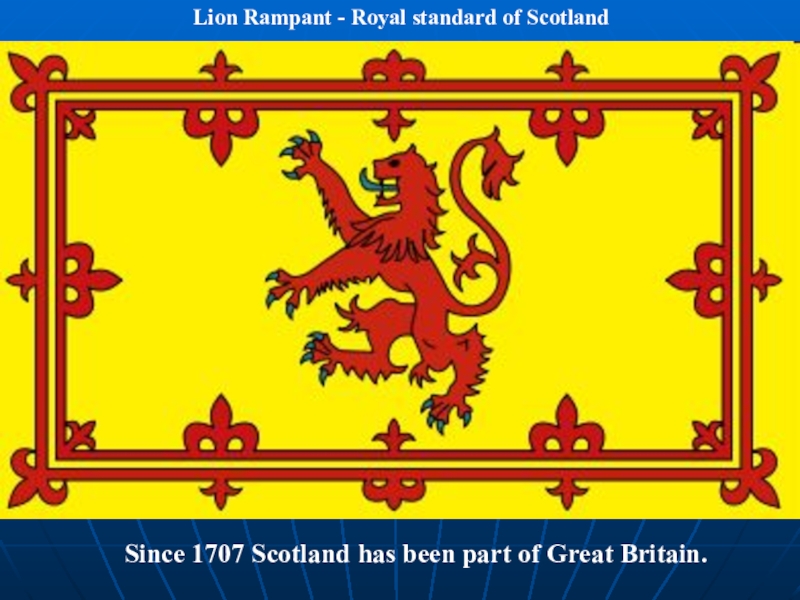
Слайд 16Lion Rampant - Royal standard of Scotland
Since 1707 Scotland has been
part of Great Britain.
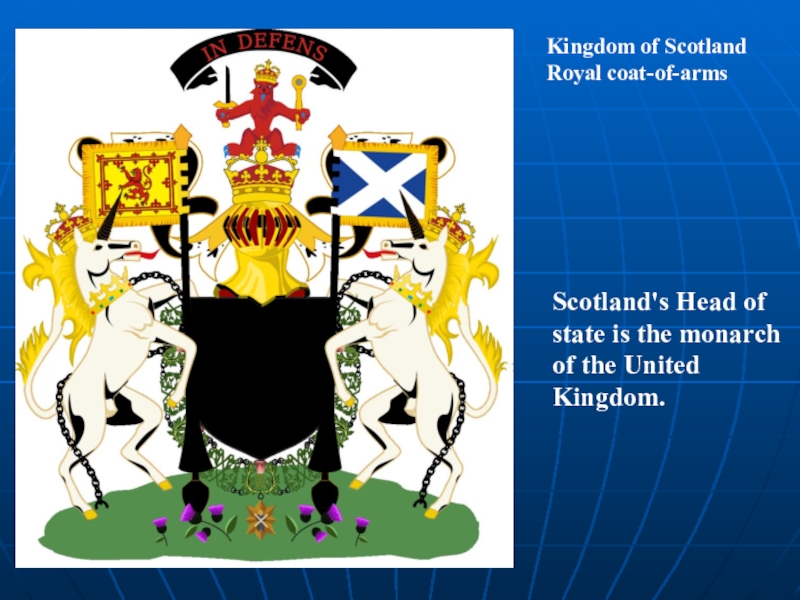
Слайд 17Kingdom of Scotland Royal coat-of-arms
Scotland's Head of state is the monarch
of the United Kingdom.
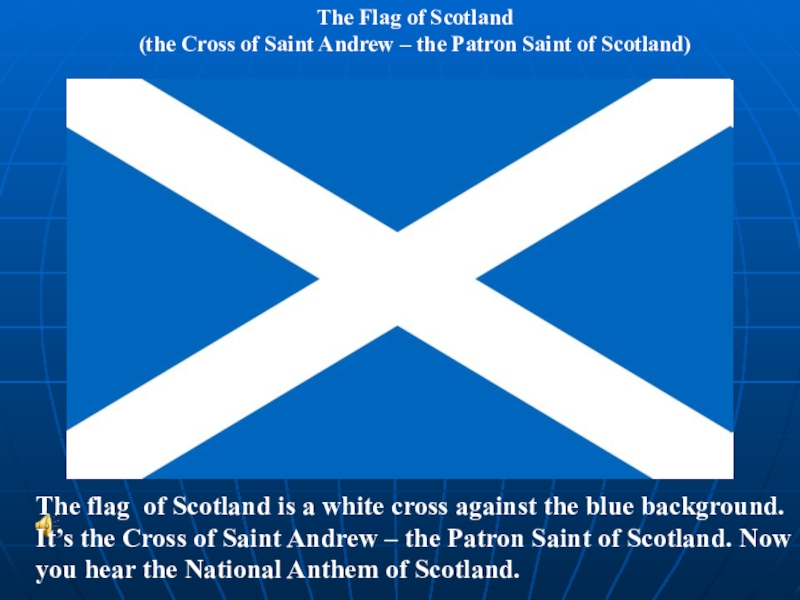
Слайд 18The Flag of Scotland
(the Cross of Saint Andrew – the Patron
Saint of Scotland)
The flag of Scotland is a white cross against the blue background. It’s the Cross of Saint Andrew – the Patron Saint of Scotland. Now you hear the National Anthem of Scotland.
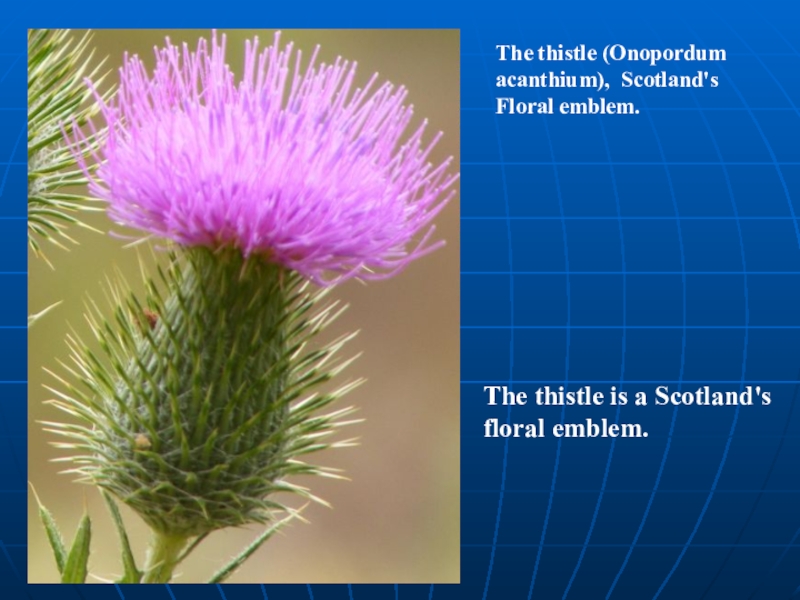
Слайд 19The thistle (Onopordum acanthium), Scotland's Floral emblem.
The thistle is a Scotland's
floral emblem.
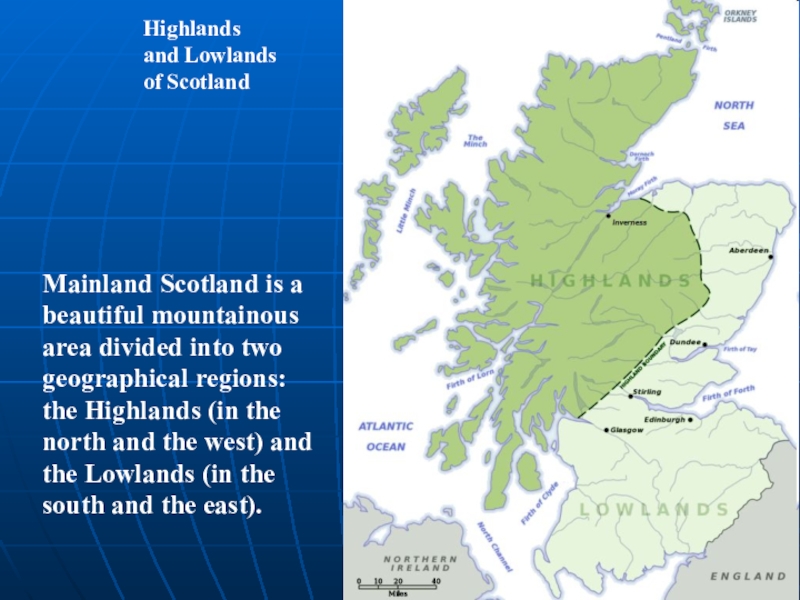
Слайд 20Highlands and Lowlands of Scotland
Mainland Scotland is a beautiful mountainous area
divided into two geographical regions: the Highlands (in the north and the west) and the Lowlands (in the south and the east).
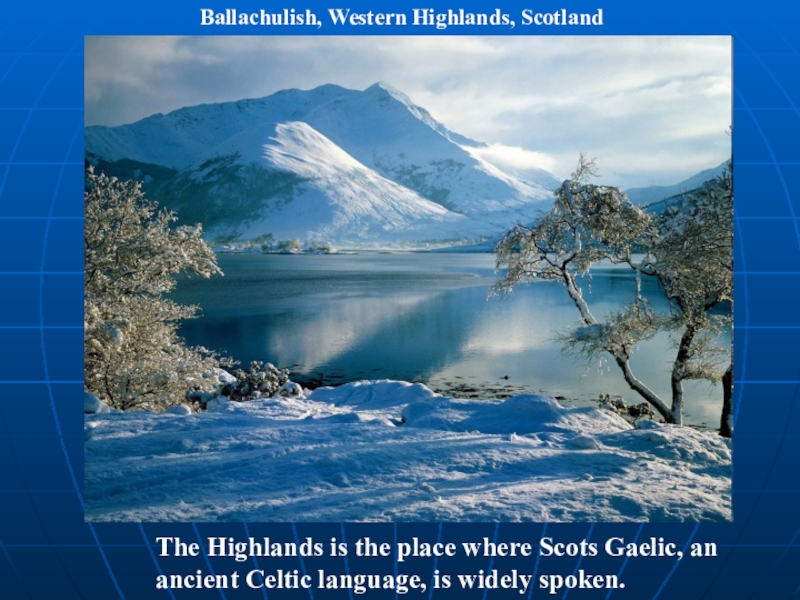
Слайд 21Ballachulish, Western Highlands, Scotland
The Highlands is the place where Scots Gaelic,
an ancient Celtic language, is widely spoken.
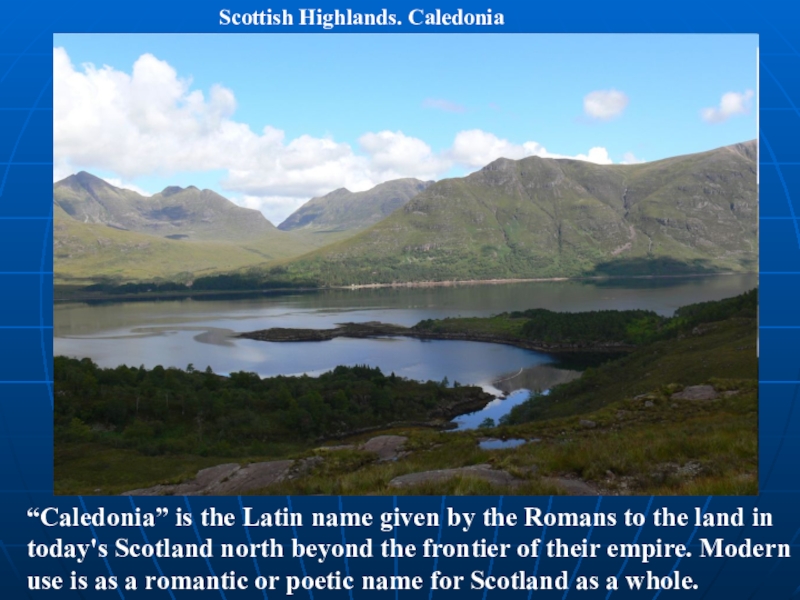
Слайд 22Scottish Highlands. Caledonia
“Caledonia” is the Latin name given by the Romans
to the land in today's Scotland north beyond the frontier of their empire. Modern use is as a romantic or poetic name for Scotland as a whole.
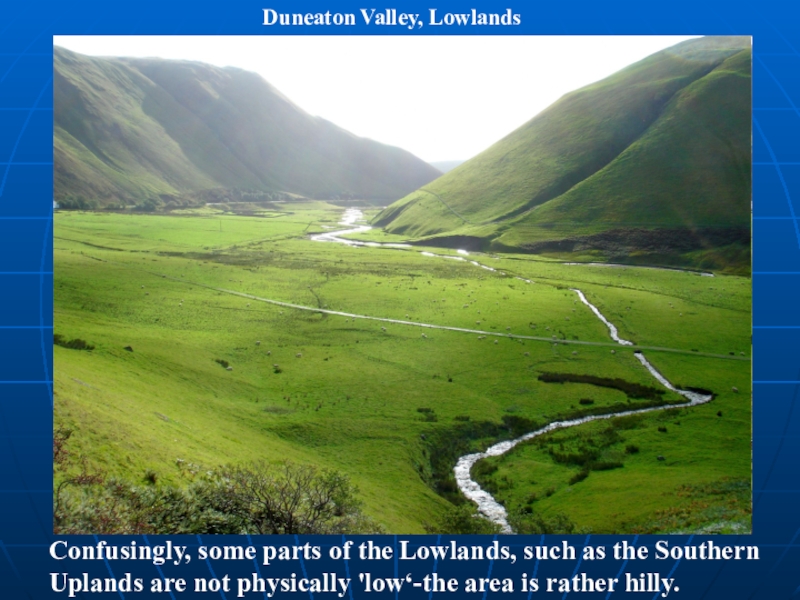
Слайд 23Duneaton Valley, Lowlands
Confusingly, some parts of the Lowlands, such as the
Southern Uplands are not physically 'low‘-the area is rather hilly.
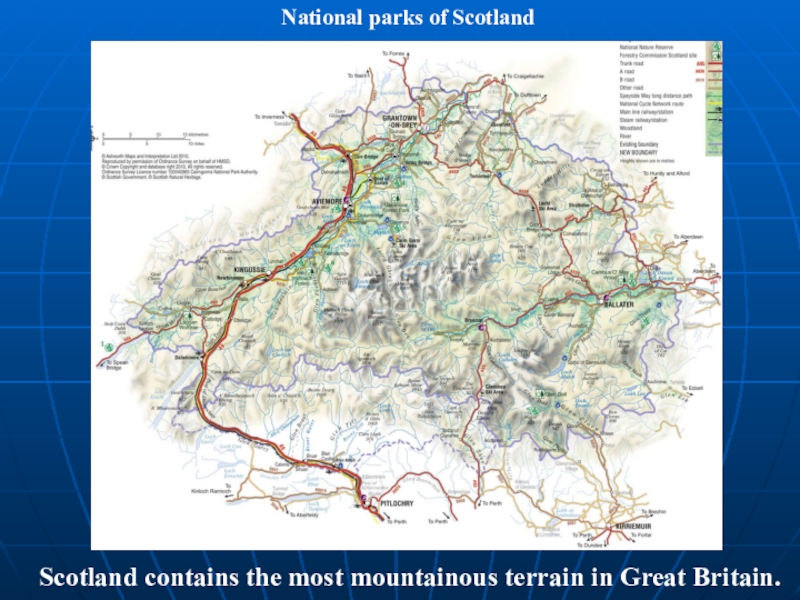
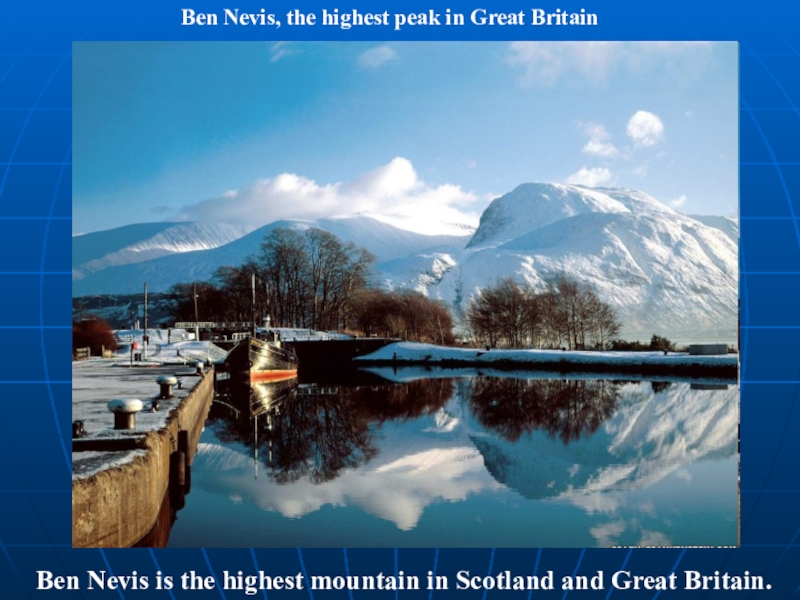
Слайд 25Ben Nevis, the highest peak in Great Britain
Ben Nevis is the
highest mountain in Scotland and Great Britain.
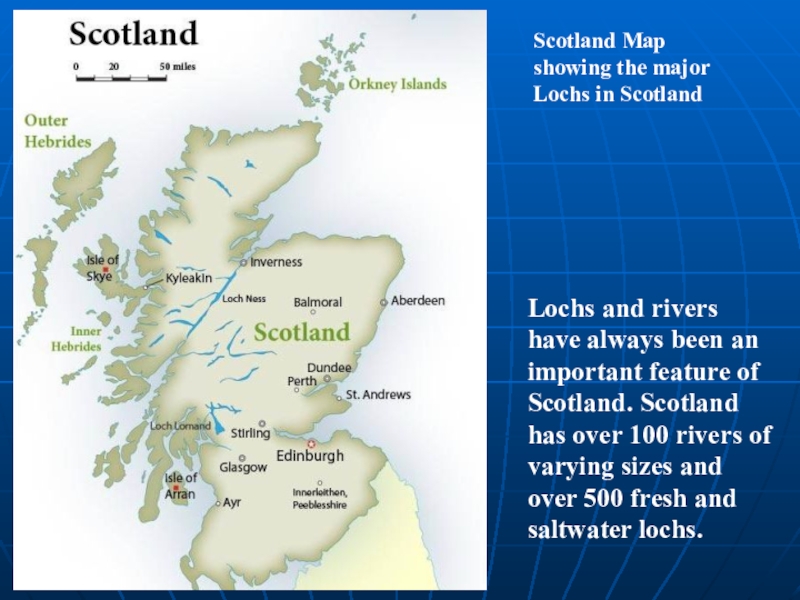
Слайд 26Scotland Map showing the major Lochs in Scotland
Lochs and rivers have
always been an important feature of Scotland. Scotland has over 100 rivers of varying sizes and over 500 fresh and saltwater lochs.
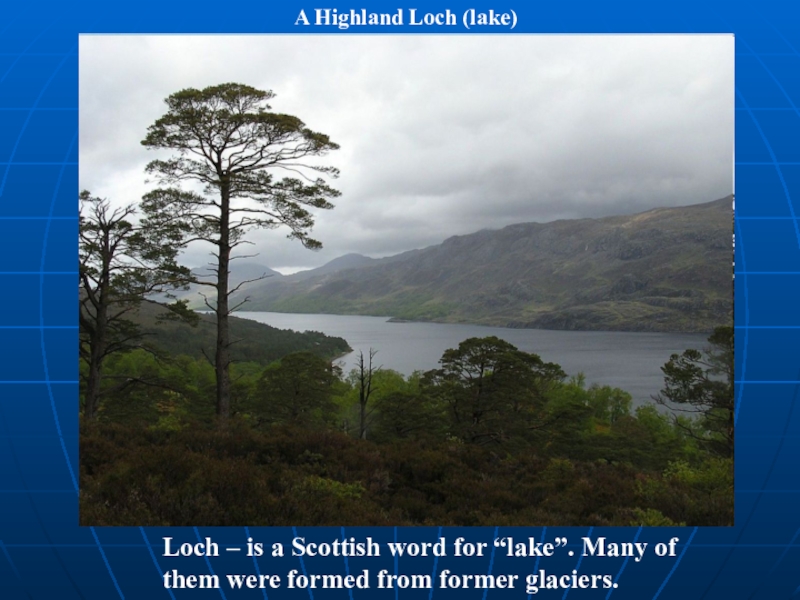
Слайд 27A Highland Loch (lake)
Loch – is a Scottish word for “lake”.
Many of them were formed from former glaciers.
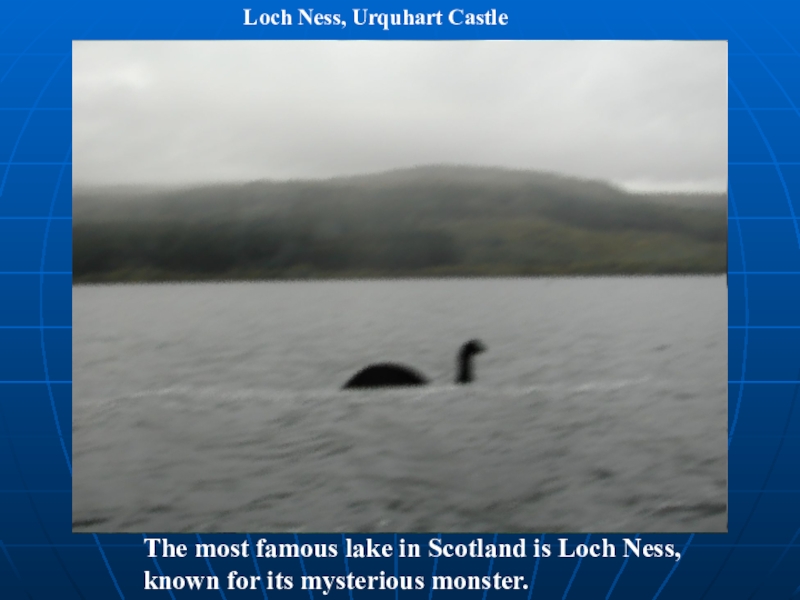
Слайд 28Loch Ness, Urquhart Castle
The most famous lake in Scotland is Loch
Ness, known for its mysterious monster.
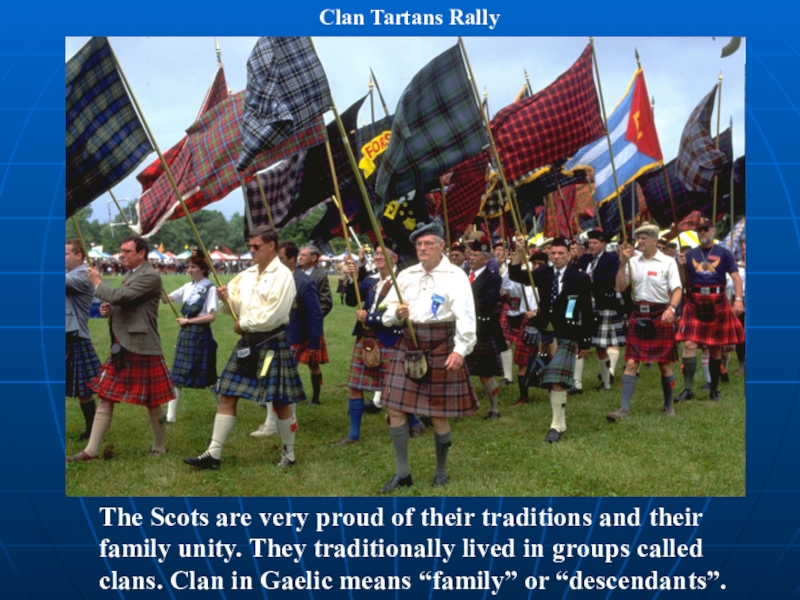
Слайд 29Clan Tartans Rally
The Scots are very proud of their traditions and
their family unity. They traditionally lived in groups called clans. Clan in Gaelic means “family” or “descendants”.
Слайд 32Scottish Parliament Building, Edinburgh, Scotland
Edinburgh is the seat of Scottish Parliament
located in the Holyrood area of the capital.
Слайд 33Scottish Parliament building
Scottish Parliament is the devolved national, unicameral legislature of
Scotland.
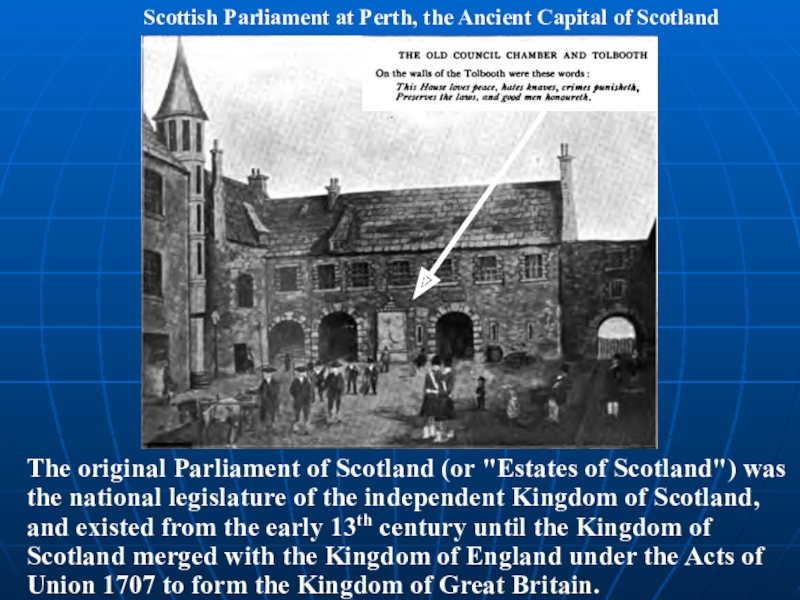
Слайд 34Scottish Parliament at Perth, the Ancient Capital of Scotland
The original Parliament
of Scotland (or "Estates of Scotland") was the national legislature of the independent Kingdom of Scotland, and existed from the early 13th century until the Kingdom of Scotland merged with the Kingdom of England under the Acts of Union 1707 to form the Kingdom of Great Britain.
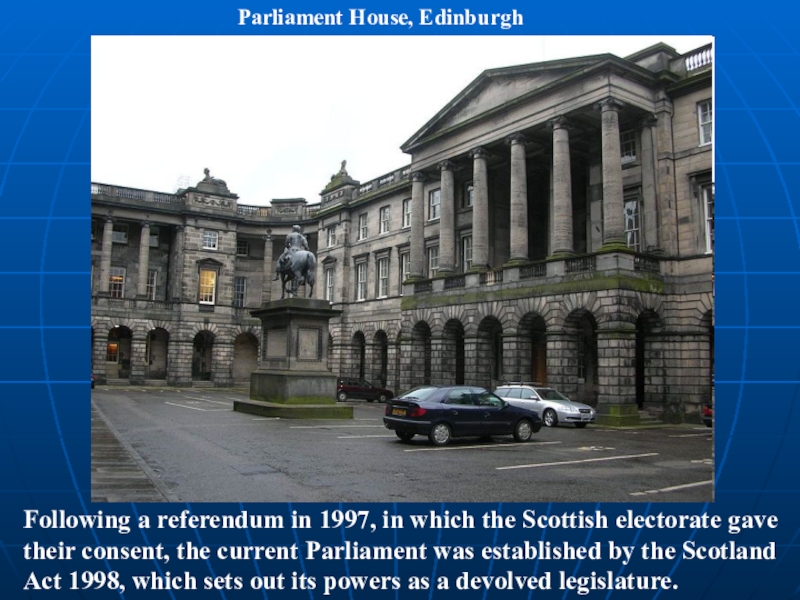
Слайд 35Parliament House, Edinburgh
Following a referendum in 1997, in which the Scottish
electorate gave their consent, the current Parliament was established by the Scotland Act 1998, which sets out its powers as a devolved legislature.
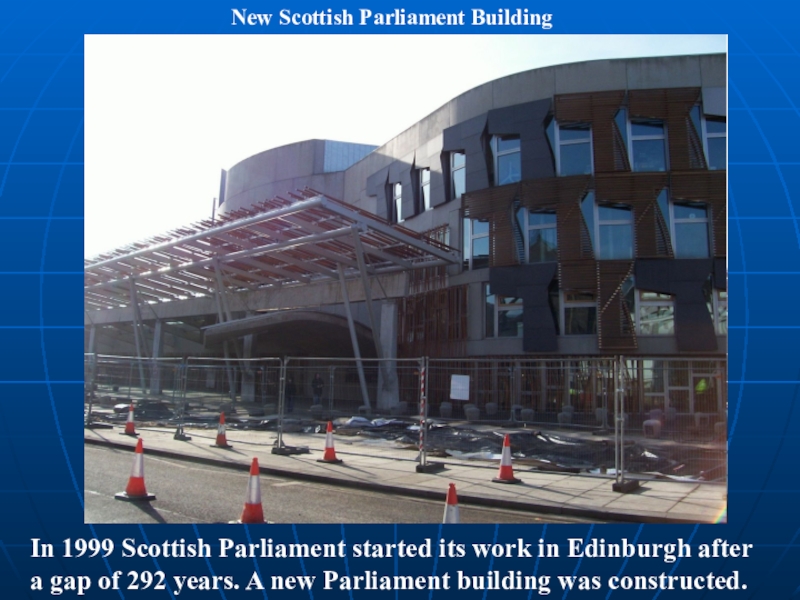
Слайд 36New Scottish Parliament Building
In 1999 Scottish Parliament started its work in
Edinburgh after a gap of 292 years. A new Parliament building was constructed.
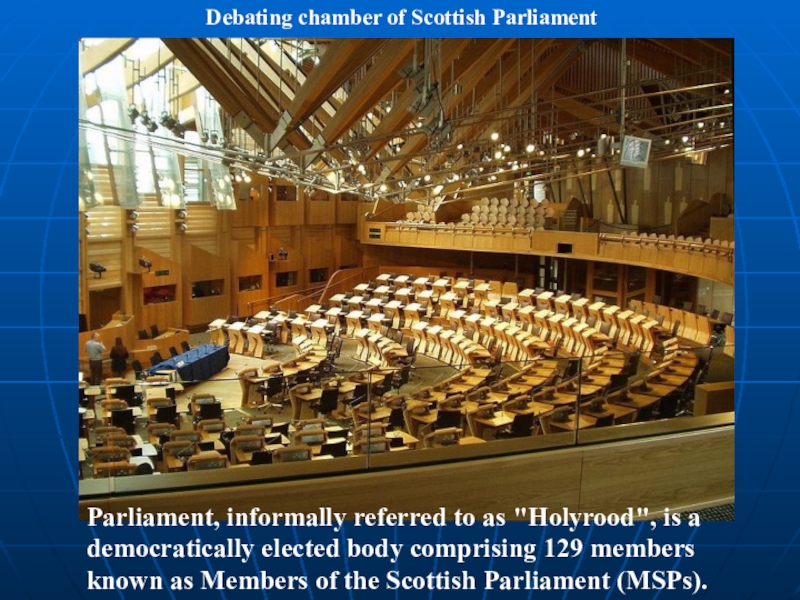
Слайд 37Debating chamber of Scottish Parliament
Parliament, informally referred to as "Holyrood", is
a democratically elected body comprising 129 members known as Members of the Scottish Parliament (MSPs).
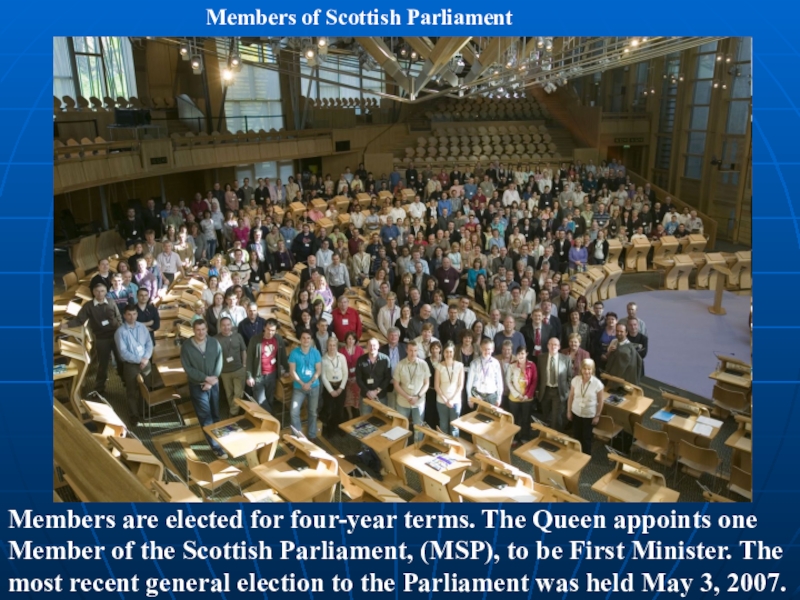
Слайд 38Members of Scottish Parliament
Members are elected for four-year terms. The Queen
appoints one Member of the Scottish Parliament, (MSP), to be First Minister. The most recent general election to the Parliament was held May 3, 2007.
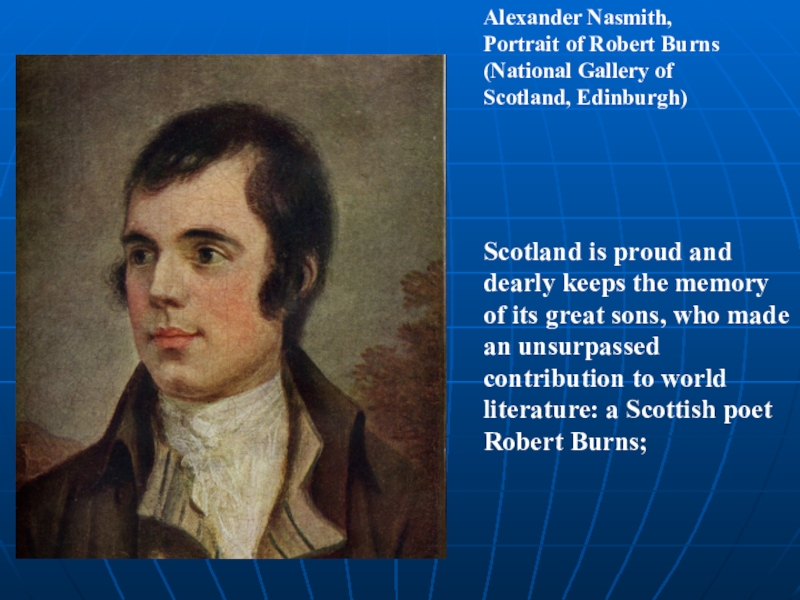
Слайд 39Alexander Nasmith, Portrait of Robert Burns (National Gallery of Scotland, Edinburgh)
Scotland
is proud and dearly keeps the memory of its great sons, who made an unsurpassed contribution to world literature: a Scottish poet Robert Burns;
Слайд 40Sir Henry Raeburn,
Portrait of Sir Walter Scott, 1822
(National Gallery of
Scotland, Edinburgh)
Sir Walter Scott, a Scottish historical novelist, playwright, and poet;