TOPIC:
" Amazing Canada"
- Главная
- Разное
- Образование
- Спорт
- Естествознание
- Природоведение
- Религиоведение
- Французский язык
- Черчение
- Английский язык
- Астрономия
- Алгебра
- Биология
- География
- Геометрия
- Детские презентации
- Информатика
- История
- Литература
- Математика
- Музыка
- МХК
- Немецкий язык
- ОБЖ
- Обществознание
- Окружающий мир
- Педагогика
- Русский язык
- Технология
- Физика
- Философия
- Химия
- Шаблоны, фоны, картинки для презентаций
- Экология
- Экономика
Презентация, доклад к уроку английского языка в 11 классе по теме: Канада.
Содержание
- 1. Презентация к уроку английского языка в 11 классе по теме: Канада.
- 2. Canada
- 3. WELCOME TO CANADA !
- 4. CANADA
- 5. OUR JOUNEY BEGINS!
- 6. Coat of arms of Canada
- 7. DexterCrestsinisterSinister“God and my right”UnicornCanadaGB
- 8. Слайд 8
- 9. Interesting Facts about CanadaBeaver A maple leafCartierThe Great Seal of Canada
- 10. Flag of Canada
- 11. Слайд 11
- 12. Geographical locationCanada has an
- 13. PopulationThe
- 14. The capital of Canada is Ottawa
- 15. Ottawa
- 16. Montreal
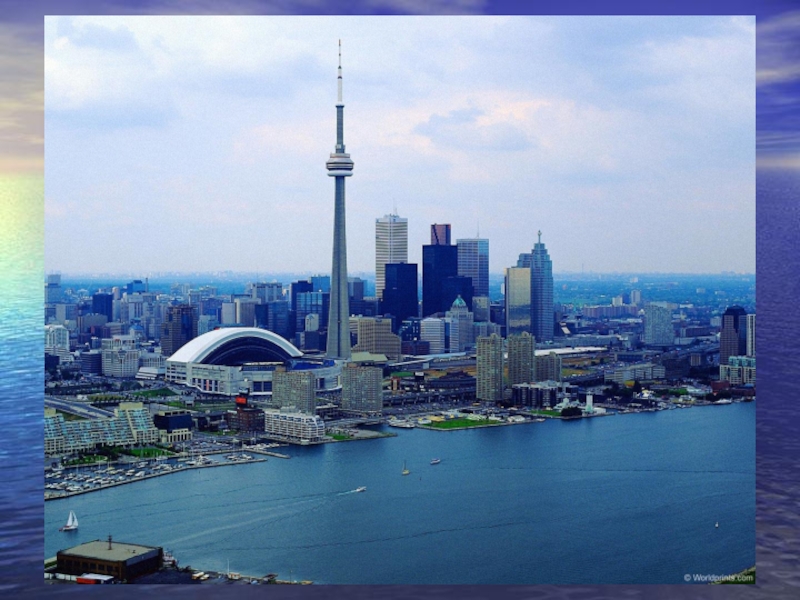
- 17. Toronto
- 18. Vancouver
- 19. Quebec
- 20. The capital of Canada is Ottawa. Other
- 21. Canada’s main agricultural products are wheat, meat,
- 22. THE CLIMATE OF CANADA. The
- 23. The political system Canada
- 24. HISTORY OF Canada.
- 25. Слайд 25
- 26. Games and Sports.Canadians, both
- 27. XXI Winter Olympic Games
- 28. Слайд 28
- 29. Слайд 29
- 30. CANADA is the country of lakesThe Niagara Falls
- 31. AlbertaLake Moraine
- 32. Sights of Canada.
- 33. Слайд 33
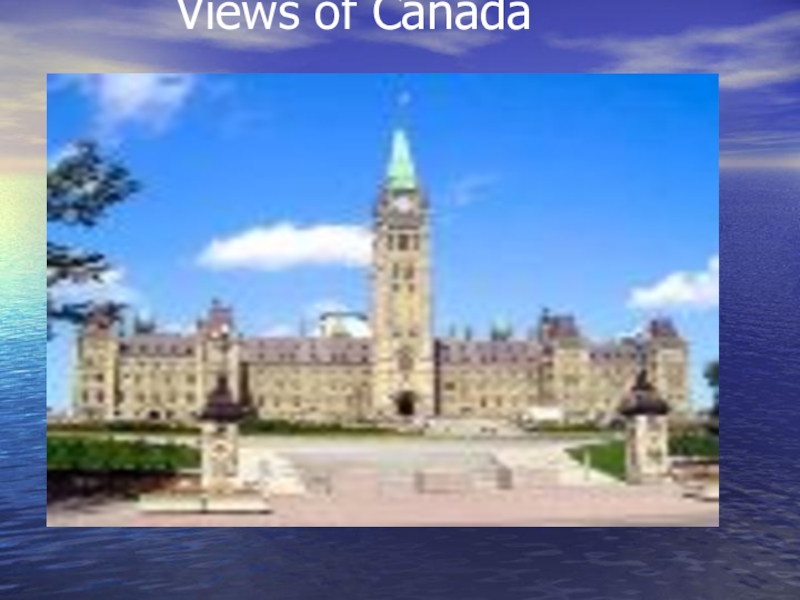
- 34. Parliament Hill, Ottawa
- 35. Слайд 35
- 36. Слайд 36
- 37. The chamber of the House of Commons
- 38. Слайд 38
- 39. Views of Canada
- 40. Слайд 40
- 41. Слайд 41
- 42. Слайд 42
- 43. Слайд 43
- 44. Слайд 44
- 45. Слайд 45
- 46. Слайд 46
- 47. Слайд 47
- 48. Слайд 48
- 49. Слайд 49
- 50. Слайд 50
- 51. Слайд 51
- 52. Слайд 52
- 53. Слайд 53
- 54. Слайд 54
- 55. Слайд 55
- 56. Слайд 56
- 57. Слайд 57
- 58. Слайд 58
- 59. Слайд 59
- 60. Слайд 60
- 61. Слайд 61
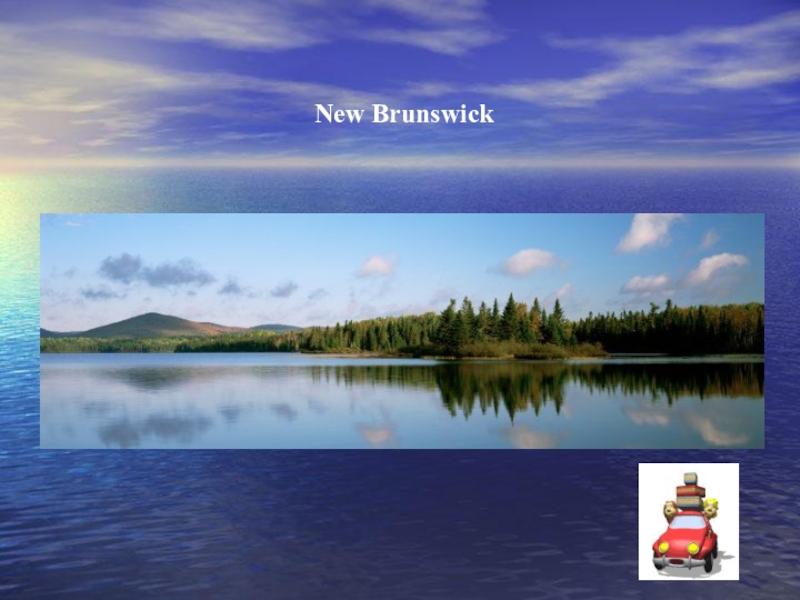
- 62. New Brunswick
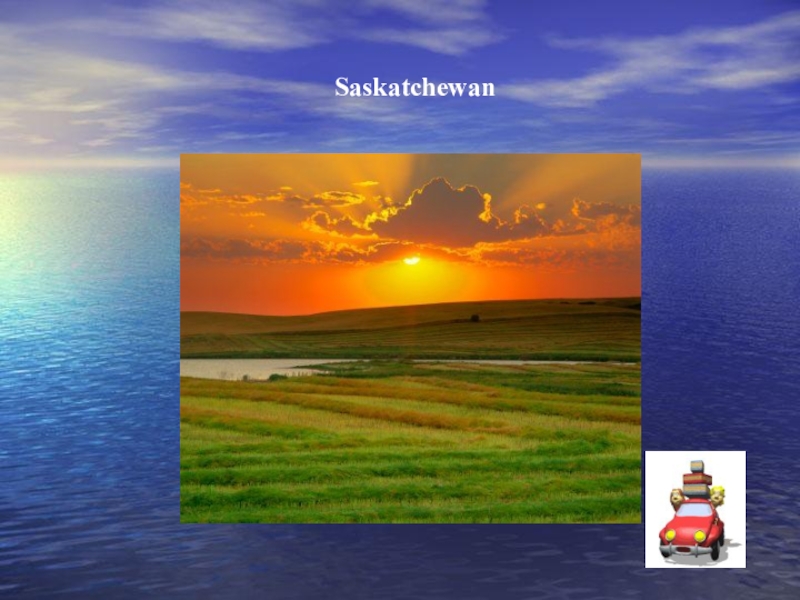
- 63. Saskatchewan
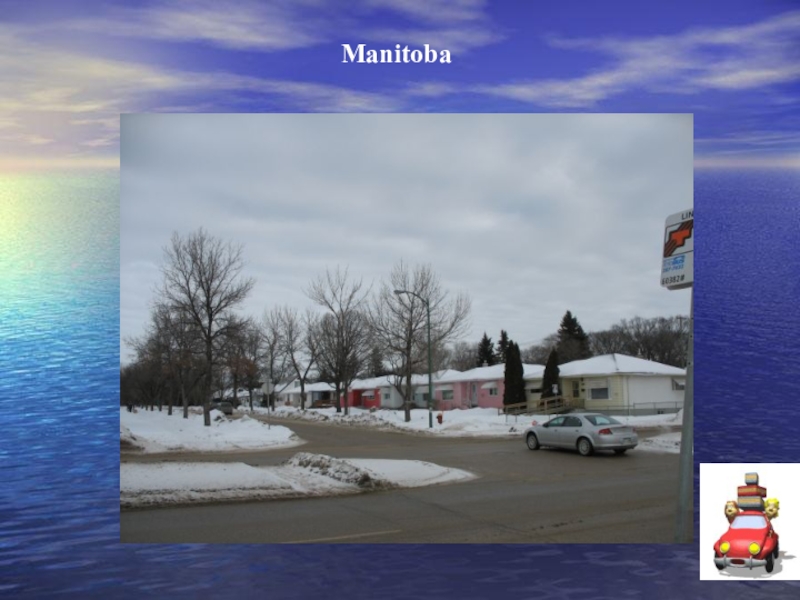
- 64. Manitoba
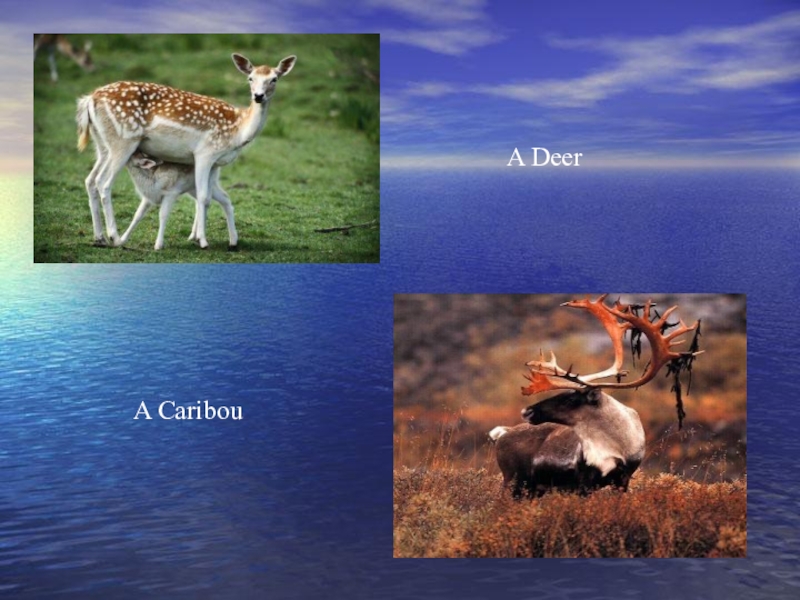
- 65. A DeerA Caribou
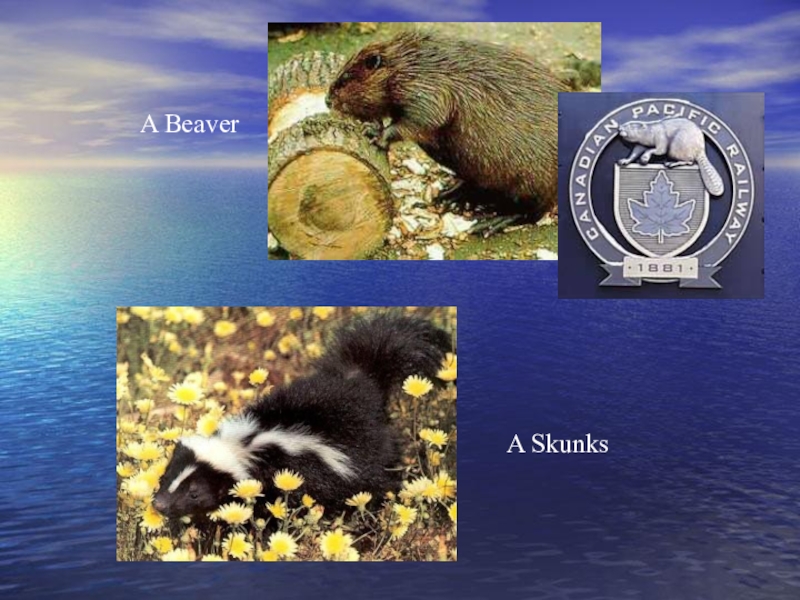
- 66. A BeaverA Skunks
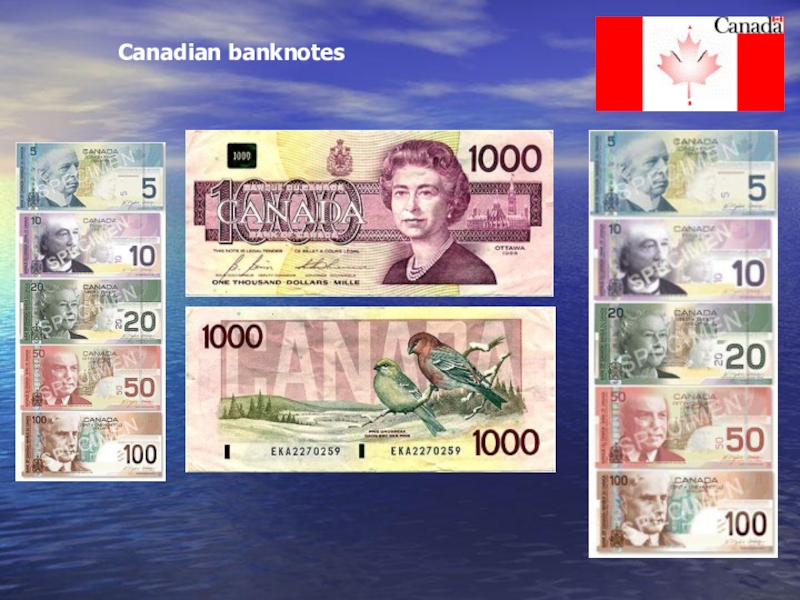
- 67. Canadian banknotes
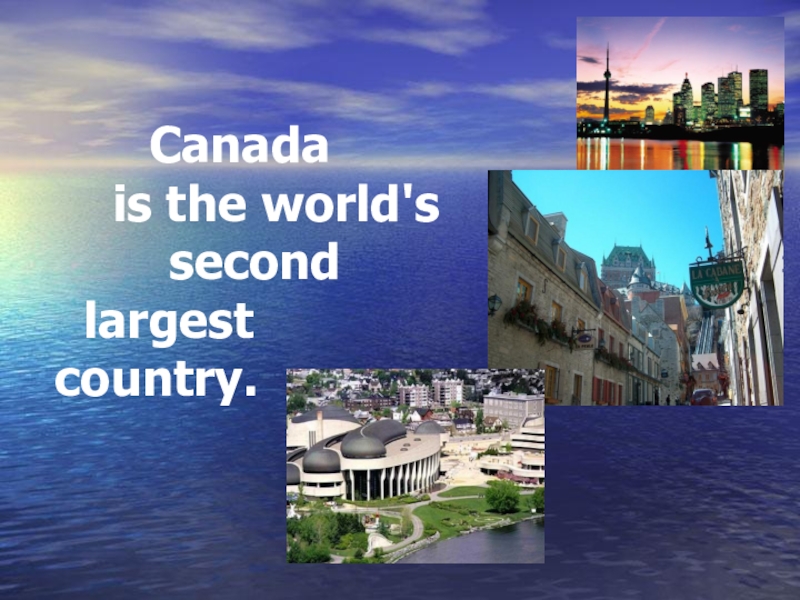
- 68. Canada is
- 69. THANK YOU VERY MUCH!
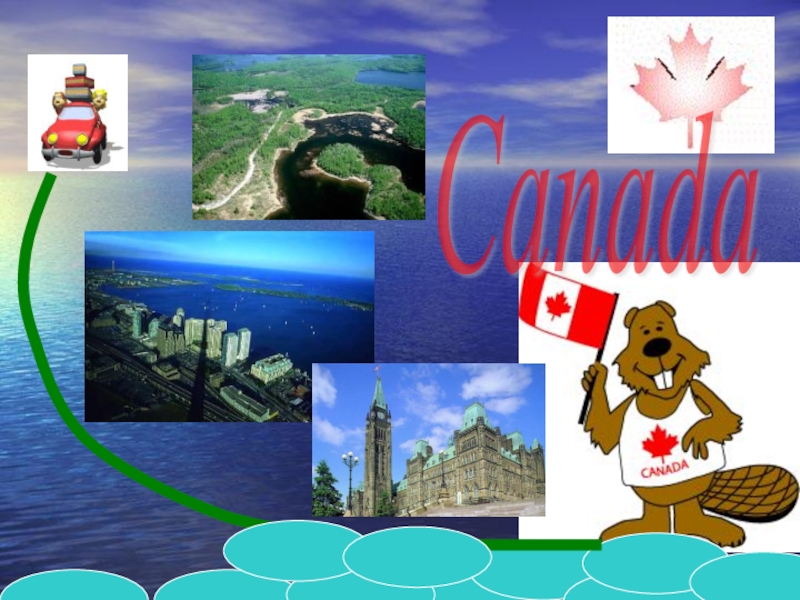
Canada



Слайд 12 Geographical location
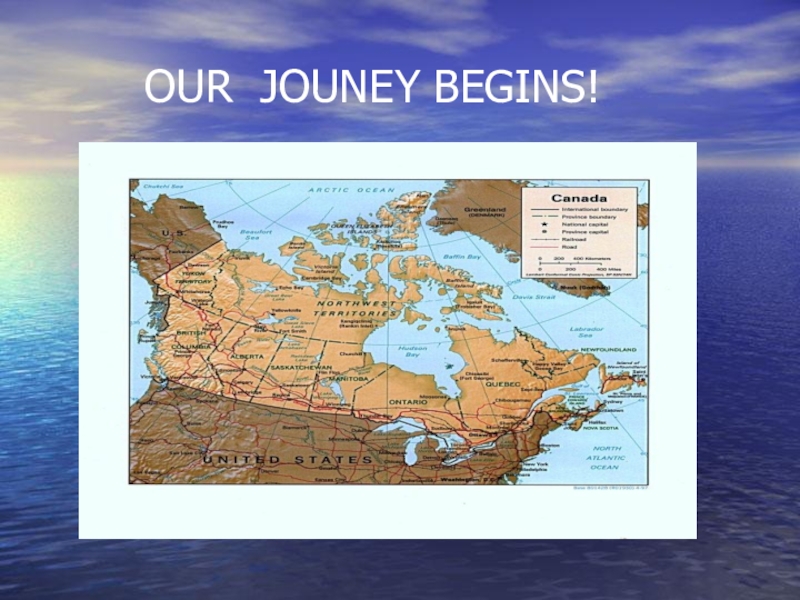
Canada has an area of nearly ten
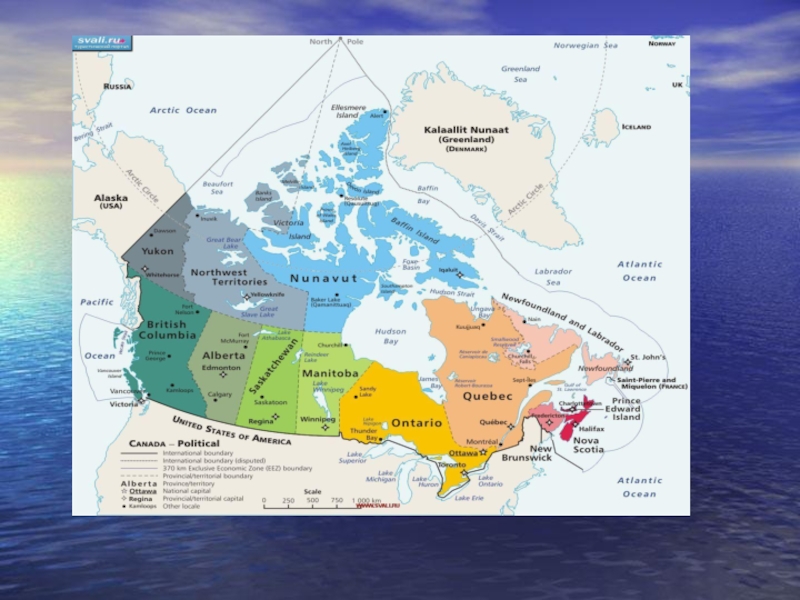
million square kilometers. Its western coast is washed by the Pacific Ocean and its eastern coast by the Atlantic Ocean. There are many islands in the north of Canada.
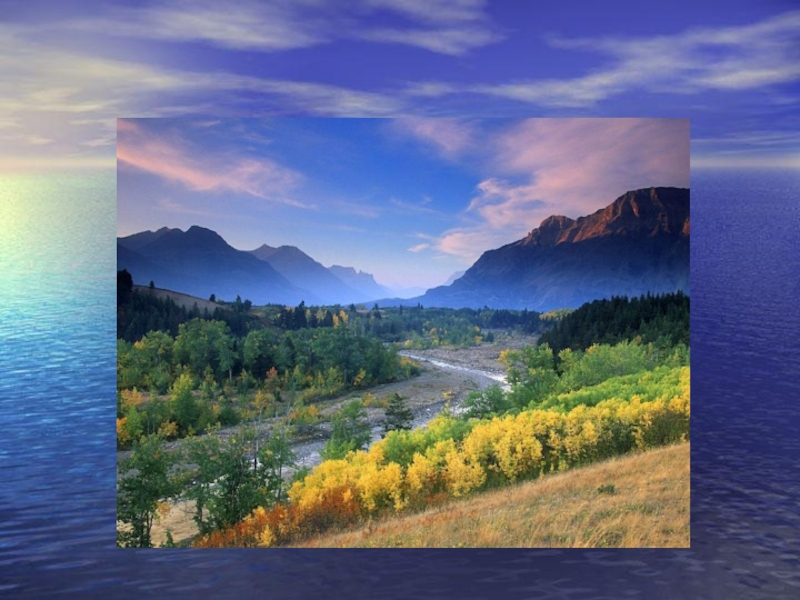
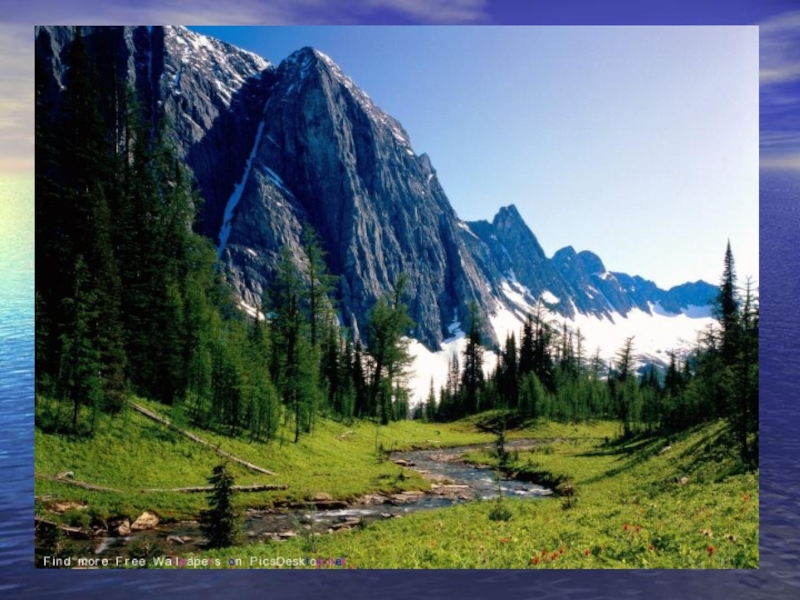
Canada has mountains, high plains and low plains.
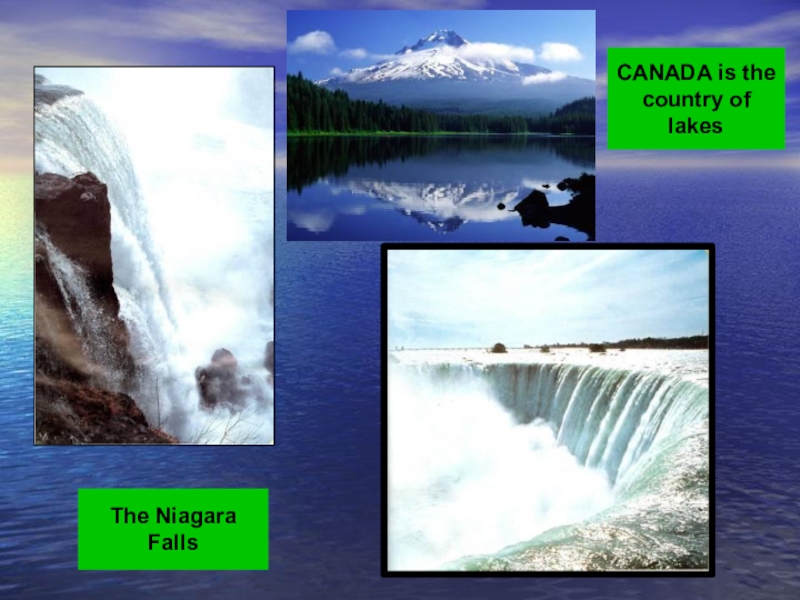
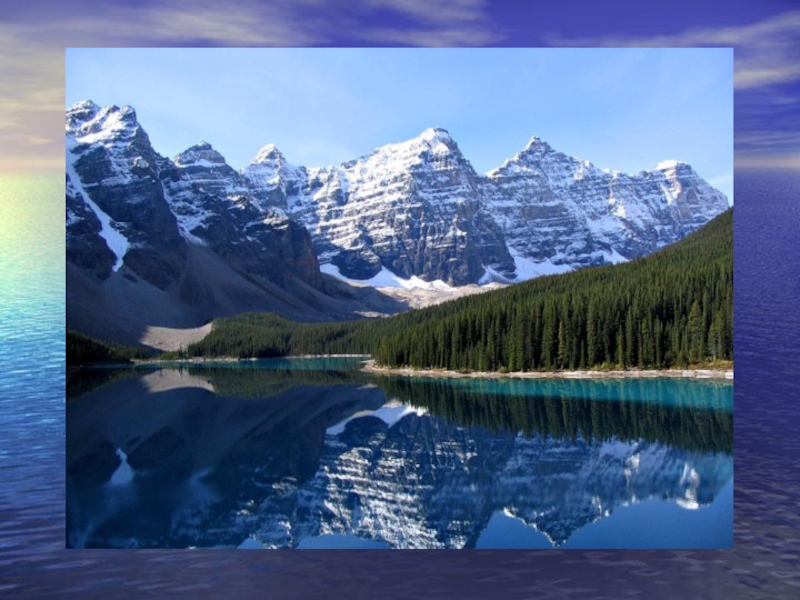
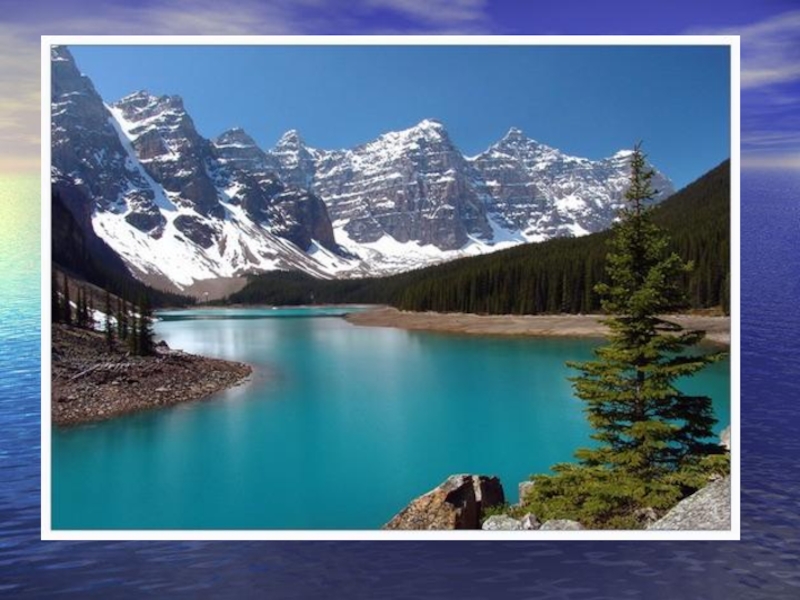
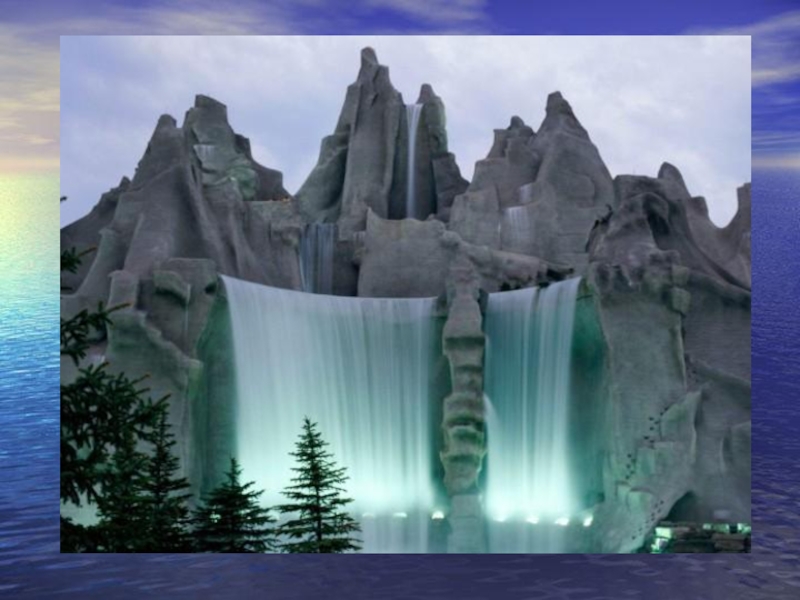
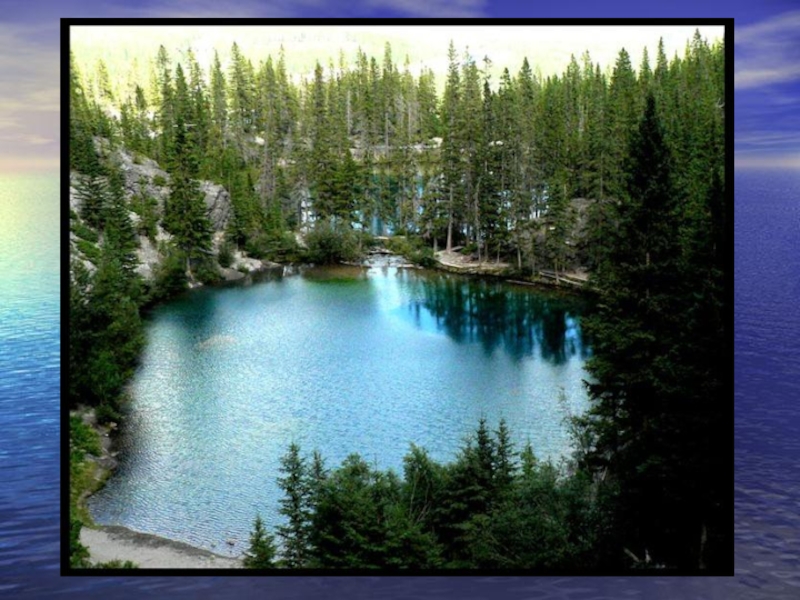
Canada is country of lakes. There are: Lakes Superior, Huron, Erie and Ontario. And other very large lakes, for example, Great Bear Lake, Great Slave Lake and Lake Winnipeg.
Canada also has large rivers: Mackenzie, Yukon and St. Lawrence River.
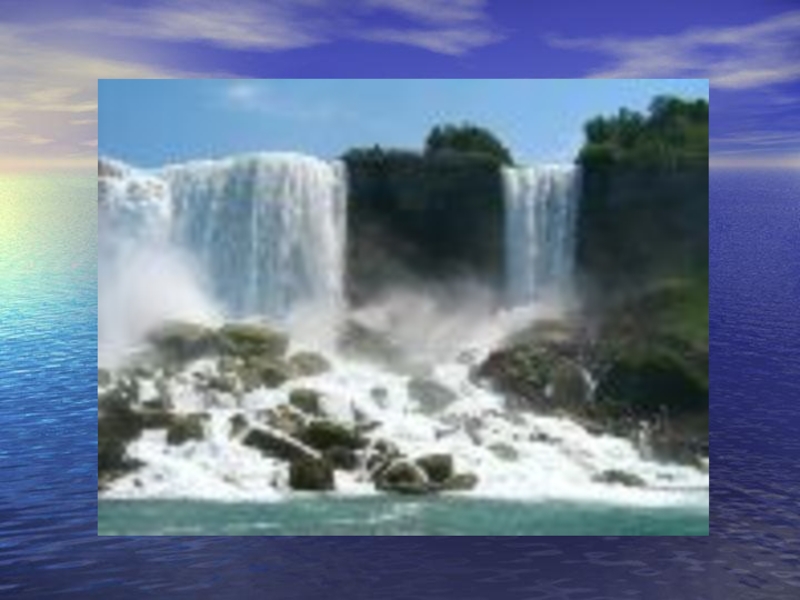
The Niagara Falls are one of the most splendid sights in the world.
Canada has mountains, high plains and low plains.
Canada is country of lakes. There are: Lakes Superior, Huron, Erie and Ontario. And other very large lakes, for example, Great Bear Lake, Great Slave Lake and Lake Winnipeg.
Canada also has large rivers: Mackenzie, Yukon and St. Lawrence River.
The Niagara Falls are one of the most splendid sights in the world.
Слайд 13 Population
The population of Canada is
over 24 million people. In the country there are 330,000 Indians and 25,000 Eskimos, who live mostly in the North.
Today more than 40 per cent of the people of Canada came originally from Britain, about 30 per cent from France and 20 per cent from other countries.
Today more than 40 per cent of the people of Canada came originally from Britain, about 30 per cent from France and 20 per cent from other countries.
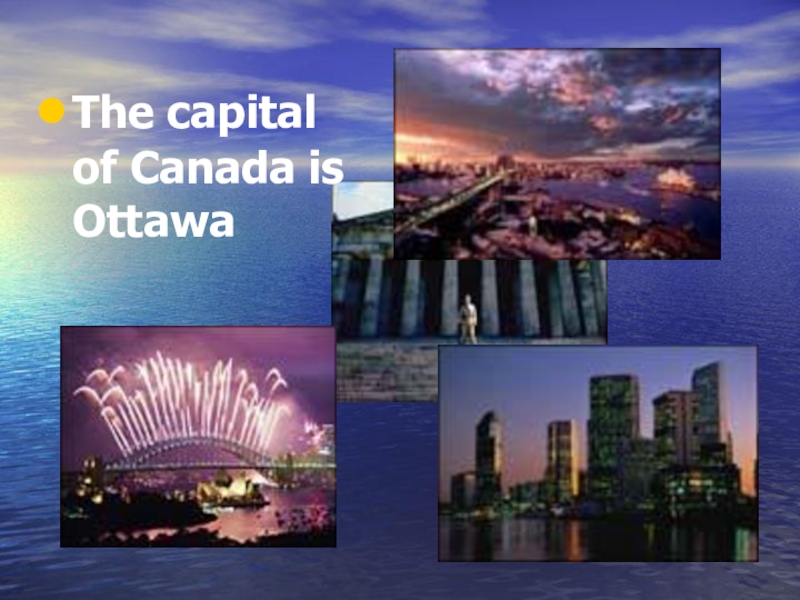
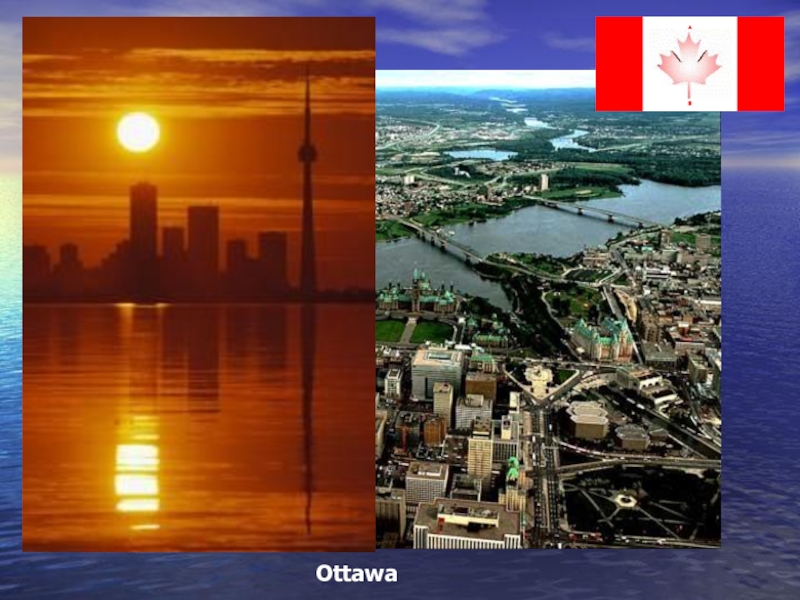
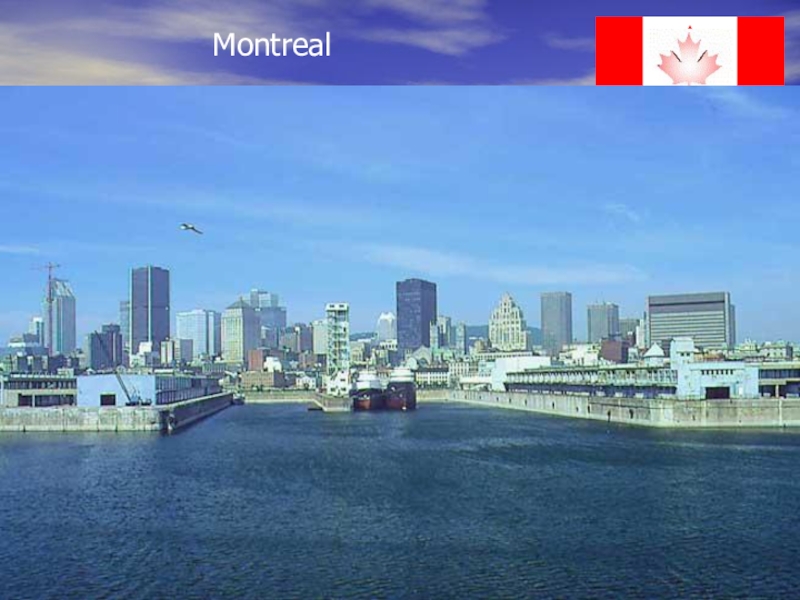
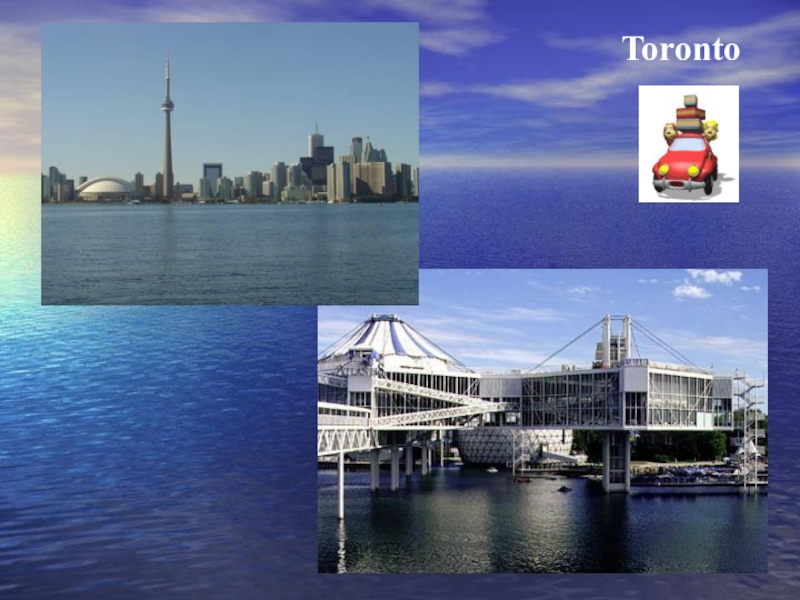
Слайд 20The capital of Canada is Ottawa. Other large important towns are
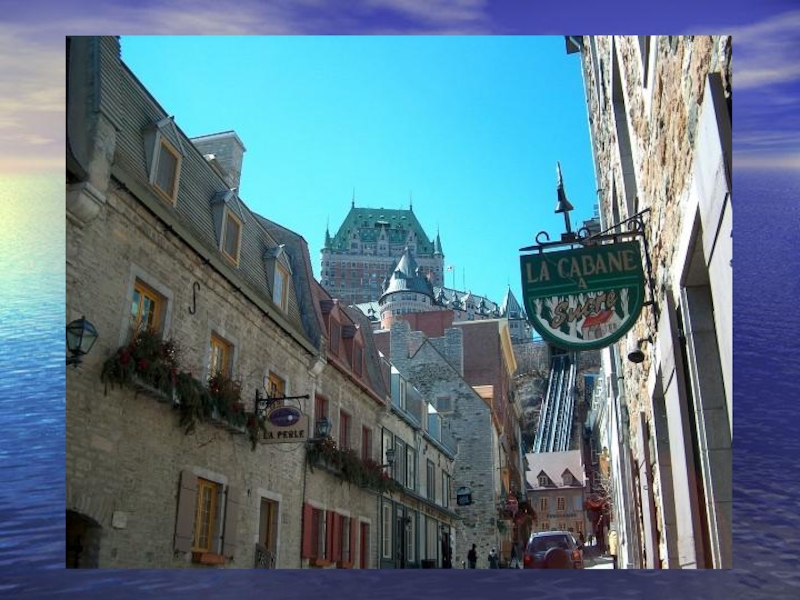
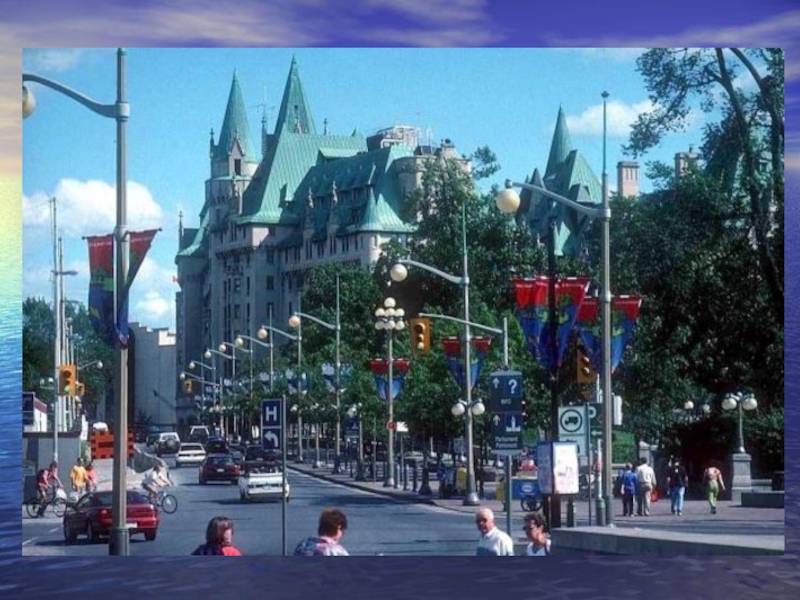
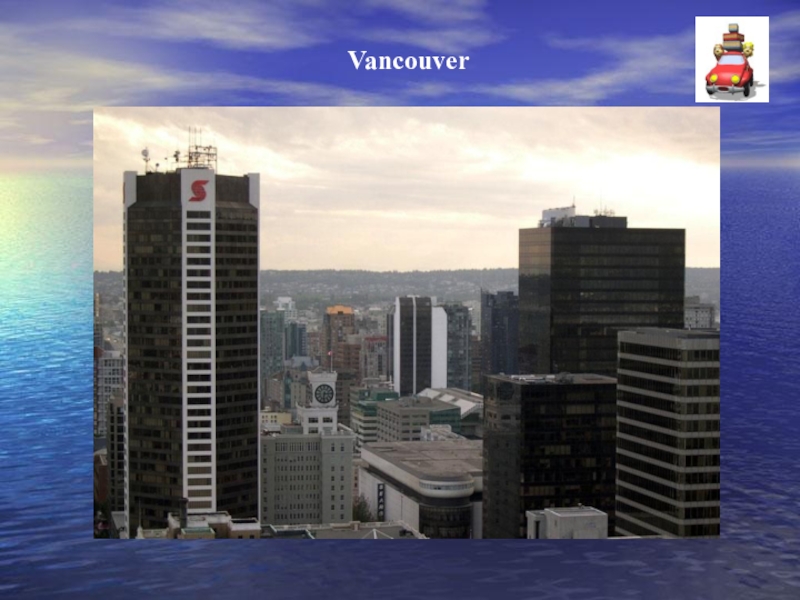
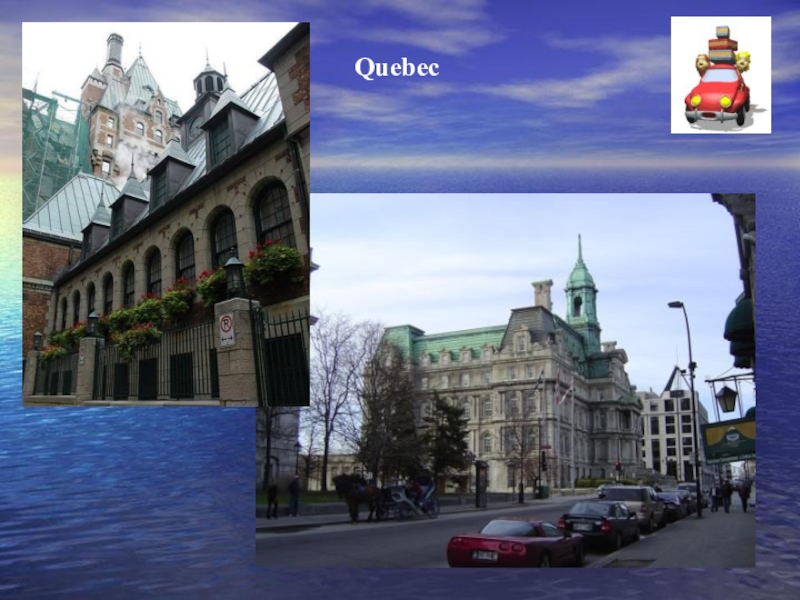
Montreal, Toronto, Vancouver, Edmonton, Hamilton, Winnipeg and Quebec.
Canada is rich in metal ores, oil and gas, and the metal, machine-building, motor-car and ship-building industries are highly developed.
The hydro-electric industry is highly developed, its main centers are in the provinces of Quebec and Ontario. There is a very large hydro-electric station at the Niagara Falls.
Canada is rich in metal ores, oil and gas, and the metal, machine-building, motor-car and ship-building industries are highly developed.
The hydro-electric industry is highly developed, its main centers are in the provinces of Quebec and Ontario. There is a very large hydro-electric station at the Niagara Falls.
Слайд 21Canada’s main agricultural products are wheat, meat, some kinds of fruit,
especially apples, and dairy products.
The provinces of Quebec, Ontario and British Columbia, with their great forests, produce wood for papermaking and building.
Many of the lakes and rivers are polluted today and few of them have fish now. But Canada’s fishing industry is still important on both the Pacific and Atlantic coasts. Canada’s largest ports are Vancouver, Montreal and Halifax.
The provinces of Quebec, Ontario and British Columbia, with their great forests, produce wood for papermaking and building.
Many of the lakes and rivers are polluted today and few of them have fish now. But Canada’s fishing industry is still important on both the Pacific and Atlantic coasts. Canada’s largest ports are Vancouver, Montreal and Halifax.
Слайд 22 THE CLIMATE OF CANADA.
The climate of Canada is
rather cold: winters are usually long and snowy and summers is Northern Canada are short and cool. Summers in Southern Canada are longer and warmer.
Слайд 23 The political system
Canada is federal state and
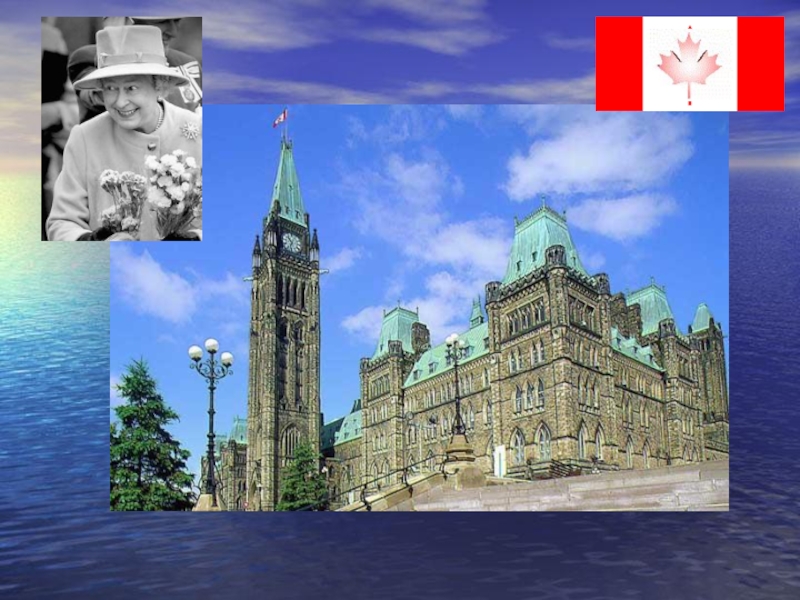
a member of the Commonwealth. Formally the head of the state is the King or Queen of England, represented by the Governor-General, who is named by the Canadian cabinet. The leading figure in the political life of the country is the Prime Minister. The Federal Parliament consists of the Senate, whose members are appointed by the Governor-General, and the House of Commons whose members are elected by the people for a period of five years.
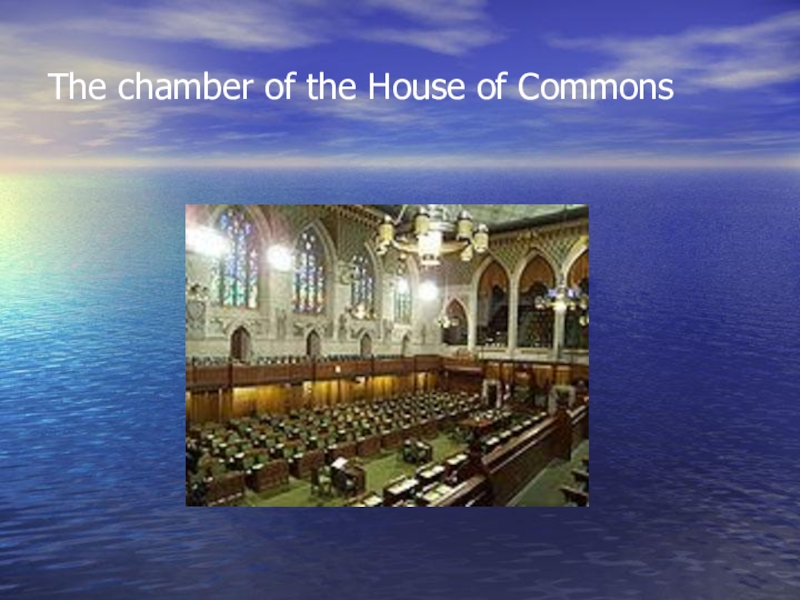
The cabinet is headed by the Prime Minister, usually the leader of the party which has the majority in the House of Commons. The ministers are members of the House Commons, but the Prime Minister may name one minister from the Senate.
In all the provinces there is a legislative assembly elected by the people for five years.
The cabinet is headed by the Prime Minister, usually the leader of the party which has the majority in the House of Commons. The ministers are members of the House Commons, but the Prime Minister may name one minister from the Senate.
In all the provinces there is a legislative assembly elected by the people for five years.
Слайд 24 HISTORY OF Canada. Indians and Eskimos were the first
settlers in Canada who came from Asia. Perhaps they crossed the narrow Bering Strait in boats. Some scientists say that they came when there was a land bridge between Asia and North America.
The Vikings came to North America about a thousand years ago. There are ruins of a Viking settlement in the northern part of Newfoundland.
After Christopher Columbus’s first voyage, the news of discoveries reached many European countries. Kings and navigators began to dream of the reaches just across the sea. One of these dreamers was also a very practical man. He was a sea captain named John Cabot. In 1497 he decided to cross the sea in a boat with his son and seventeen other men. When they saw land, about seven weeks later, they thought they had reached Asia.
They returned home without gold. But during their voyage they found something equally important. It was fish in the waters to the South of Newfoundland. Fishing became the first important industry of Canada.
Слайд 25 Schools.
In Canada, when birds
fly south in autumn, school bells ring and everywhere across the land children sit again at their desks. Some of the schools are modern buildings, some have only one or two rooms. On the prairies, children from distant farms go by bus to big schools. In Quebec, children and teachers speak French, schoolbooks are written in French.
Слайд 26 Games and Sports.
Canadians, both children and grown-ups, play
different games – baseball, football, volleyball, ice-hockey, tennis and a great number of other games. Ice-hockey is Canada’s national sport and everyone from grandfather down to the youngest child is a fan. Children take to skis and skates almost as soon as they can walk, and snowshoes in some places are standard equipment for getting to school.