- Главная
- Разное
- Образование
- Спорт
- Естествознание
- Природоведение
- Религиоведение
- Французский язык
- Черчение
- Английский язык
- Астрономия
- Алгебра
- Биология
- География
- Геометрия
- Детские презентации
- Информатика
- История
- Литература
- Математика
- Музыка
- МХК
- Немецкий язык
- ОБЖ
- Обществознание
- Окружающий мир
- Педагогика
- Русский язык
- Технология
- Физика
- Философия
- Химия
- Шаблоны, фоны, картинки для презентаций
- Экология
- Экономика
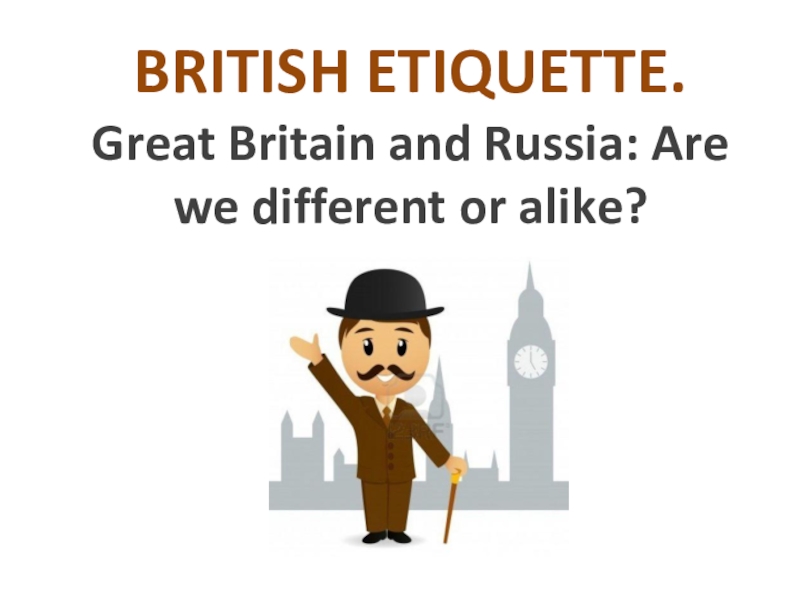
Презентация, доклад исследовательский проект Британский этикет
Содержание
- 1. Презентация исследовательский проект Британский этикет
- 2. Aim: to improve students’ cultural background concerning
- 3. What is Etiquette? The customary code of
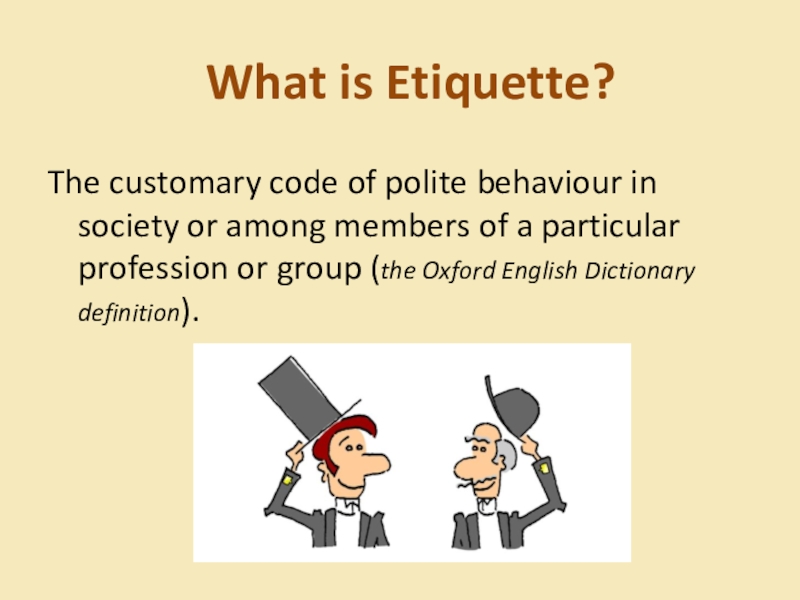
- 4. Types of EtiquetteEtiquetteDiningWeddingCourtDiplomaticBusinessReligiousSpeechCivil
- 5. The English behaviorAn Englishman is a person
- 6. British Etiquette and Customs you should learnThere
- 7. DOs and DON’Ts in EnglandDo stand in
- 8. The English speech etiquetteEven if your speech
- 9. Which topics are safe for small talk?
- 10. Which topics should be avoided?Age Appearance or
- 11. Etiquette and Customs in Russia
- 12. Rules of behaviour in RussiaEveryone should pay attention tomeeting etiquette;naming conventions;body language;dress;gift giving etiquette;dinning etiquette;table manners.
- 13. Some DOs in RussiaDO shake hands when
- 14. Some DON’Ts in RussiaDON’T use “affectionate” names
- 15. Survey
- 16. Survey
- 17. Survey
- 18. Survey
- 19. Survey
- 20. Survey
- 21. Are we different or alike?
- 22. We are alike and we have
- 23. Conclusion Having studied the rules of behavior,
Aim: to improve students’ cultural background concerning social etiquette in GB in order to become culturally aware and study general rules of English behaviour. Tasks:- to select information about English etiquette and study different
Слайд 2Aim: to improve students’ cultural background concerning social etiquette in GB
in order to become culturally aware and study general rules of English behaviour.
Tasks:
- to select information about English etiquette and study different aspects of the English behaviour;
- to compare British and Russian character;
- to make students’ survey to find out their awareness about English etiquette;
to make a conclusion about general rules of behaviour.
Hypothesis: If we know some distinctive features and similarities of social etiquette of two nations, we can just accept the rules set in these countries and make ourselves feel at ease in any of them.
Tasks:
- to select information about English etiquette and study different aspects of the English behaviour;
- to compare British and Russian character;
- to make students’ survey to find out their awareness about English etiquette;
to make a conclusion about general rules of behaviour.
Hypothesis: If we know some distinctive features and similarities of social etiquette of two nations, we can just accept the rules set in these countries and make ourselves feel at ease in any of them.
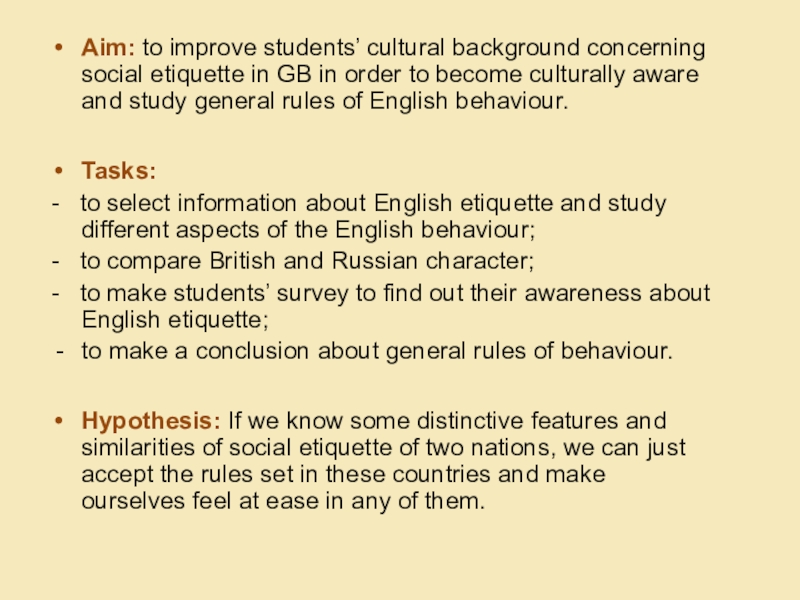
Слайд 3What is Etiquette?
The customary code of polite behaviour in society or
among members of a particular profession or group (the Oxford English Dictionary definition).
Слайд 5The English behavior
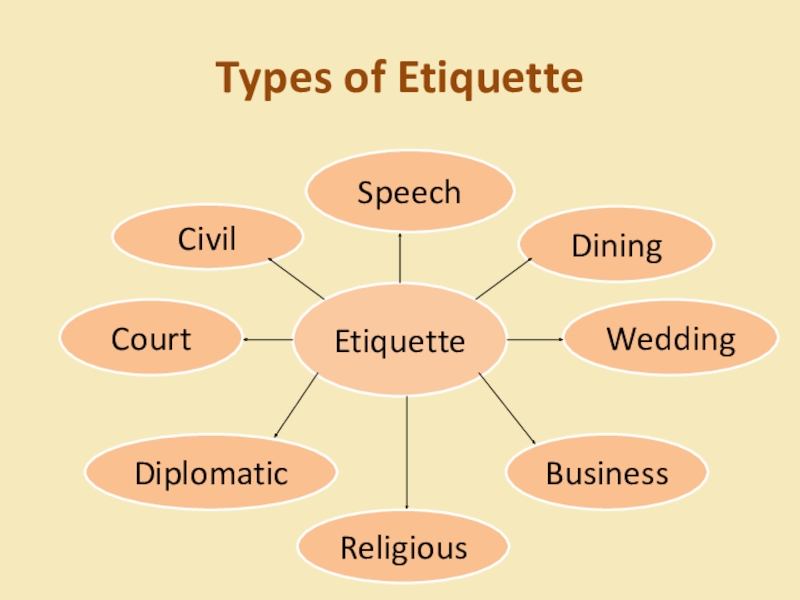
An Englishman is a person who does things
because
they have been done before.
Mark Twain
Every culture across the ages has been defined by the concept of etiquette and accepted social interaction. However, it is the British – and the English in particular – who have historically been known to place a great deal of importance in good manners. Whether it be in relation to speech, timeliness, body language or dining, politeness is key.
Every culture across the ages has been defined by the concept of etiquette and accepted social interaction. However, it is the British – and the English in particular – who have historically been known to place a great deal of importance in good manners. Whether it be in relation to speech, timeliness, body language or dining, politeness is key.
Слайд 6British Etiquette and Customs
you should learn
There is a proper way to
act in most situations concerning
visiting and greeting;
gift giving etiquette;
queuing;
punctuality;
dining etiquette;
making friends;
tipping;
how to behave in public places;
body language;
dress code;
thank you/I’m sorry/please.
visiting and greeting;
gift giving etiquette;
queuing;
punctuality;
dining etiquette;
making friends;
tipping;
how to behave in public places;
body language;
dress code;
thank you/I’m sorry/please.
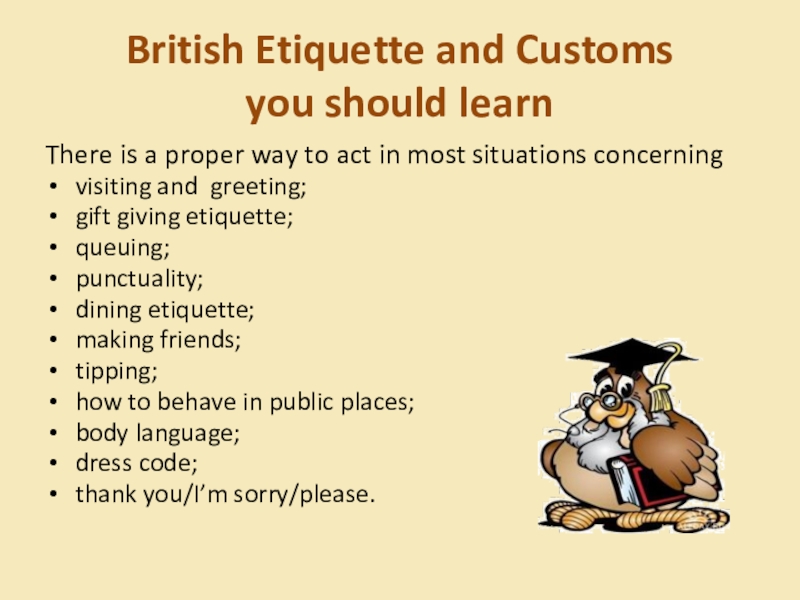
Слайд 7DOs and DON’Ts in England
Do stand in line;
Do take your hat
off when you go indoors (men only);
Do say "Excuse Me“, "Please" and "Thank you";
Do pay as you go;
Do cover your mouth when yawning or coughing;
Do shake hands when you are first introduced to someone;
Do say sorry if you accidentally bump into someone;
Do smile - a smiling face is a welcoming face;
Do open doors for other people;
Do not greet people with a kiss;
Avoid talking loudly in public;
It is impolite to stare at anyone in public;
Do not ask a lady her age;
Do not pick your nose in public;
Avoid doing gestures such as backslapping and hugging;
Do not spit;
Do not ask personal or intimate questions.
Do say "Excuse Me“, "Please" and "Thank you";
Do pay as you go;
Do cover your mouth when yawning or coughing;
Do shake hands when you are first introduced to someone;
Do say sorry if you accidentally bump into someone;
Do smile - a smiling face is a welcoming face;
Do open doors for other people;
Do not greet people with a kiss;
Avoid talking loudly in public;
It is impolite to stare at anyone in public;
Do not ask a lady her age;
Do not pick your nose in public;
Avoid doing gestures such as backslapping and hugging;
Do not spit;
Do not ask personal or intimate questions.
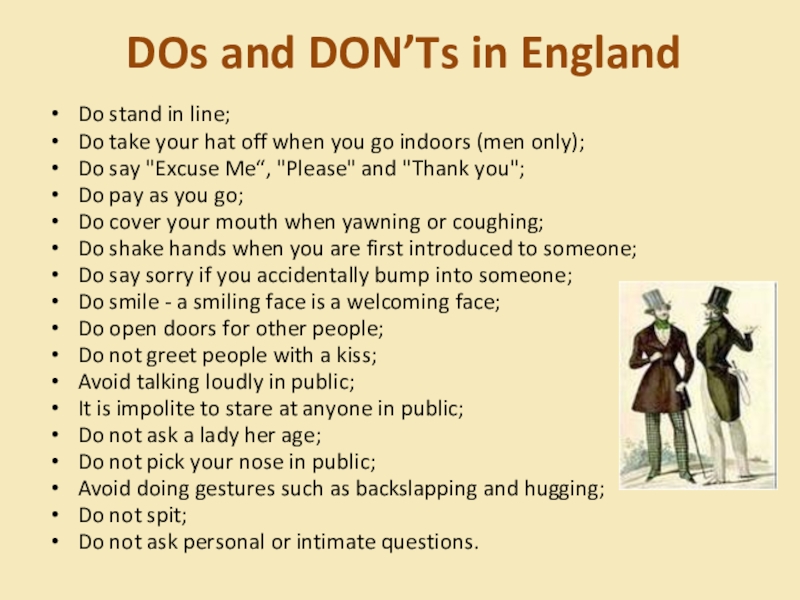
Слайд 8The English speech etiquette
Even if your speech is correct, it can
be difficult to know how to start a conversation, especially if your first language is not English.
Everyone should know about “small talk” in England.
Everyone should know about “small talk” in England.
Слайд 9Which topics are safe for small talk?
Introductions
Travel
Family
Hospitality
The weather
Holidays
Nature Pets
General news
Films
Work
Food
General matters about the person you are talking to
General matters on subjects that you know
The weather
Holidays
Nature Pets
General news
Films
Work
Food
General matters about the person you are talking to
General matters on subjects that you know
Слайд 10Which topics should be avoided?
Age
Appearance or weight
Personal gossip
Jokes that
might offend
Money
Previous or current relationships
Politics
Religion
Criticisms or complaints
Money
Previous or current relationships
Politics
Religion
Criticisms or complaints
Слайд 12Rules of behaviour in Russia
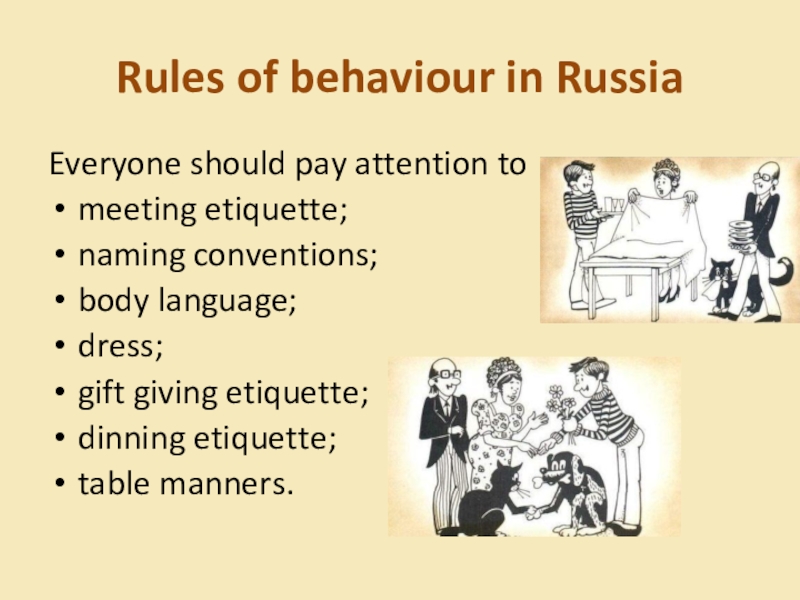
Everyone should pay attention to
meeting etiquette;
naming conventions;
body
language;
dress;
gift giving etiquette;
dinning etiquette;
table manners.
dress;
gift giving etiquette;
dinning etiquette;
table manners.
Слайд 13Some DOs in Russia
DO shake hands when you are first introduced
to someone.
DO maintain direct eye contact.
DO kiss three times (female friends).
DO pat each other on the bag and hug (close make friends).
DO use first name, second name and last name in formal situation.
DO smile when you are pleased to meet someone.
DO dress modestly.
DO observe gift giving Etiquette.
DO maintain direct eye contact.
DO kiss three times (female friends).
DO pat each other on the bag and hug (close make friends).
DO use first name, second name and last name in formal situation.
DO smile when you are pleased to meet someone.
DO dress modestly.
DO observe gift giving Etiquette.
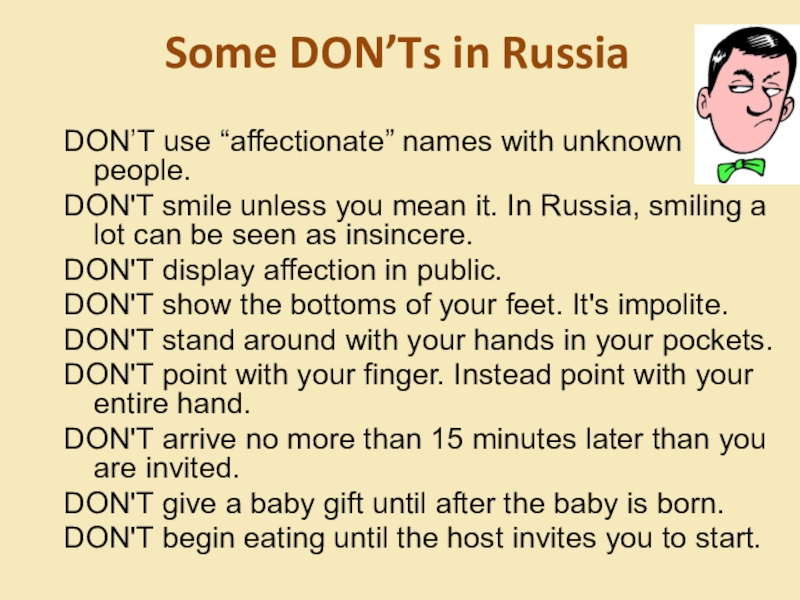
Слайд 14Some DON’Ts in Russia
DON’T use “affectionate” names with unknown people.
DON'T smile unless
you mean it. In Russia, smiling a lot can be seen as insincere.
DON'T display affection in public.
DON'T show the bottoms of your feet. It's impolite.
DON'T stand around with your hands in your pockets.
DON'T point with your finger. Instead point with your entire hand.
DON'T arrive no more than 15 minutes later than you are invited.
DON'T give a baby gift until after the baby is born.
DON'T begin eating until the host invites you to start.
DON'T display affection in public.
DON'T show the bottoms of your feet. It's impolite.
DON'T stand around with your hands in your pockets.
DON'T point with your finger. Instead point with your entire hand.
DON'T arrive no more than 15 minutes later than you are invited.
DON'T give a baby gift until after the baby is born.
DON'T begin eating until the host invites you to start.
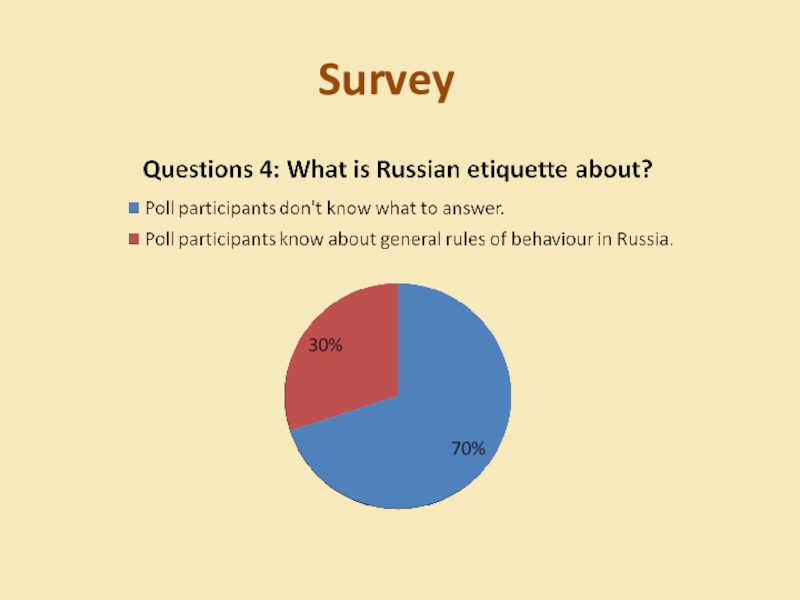
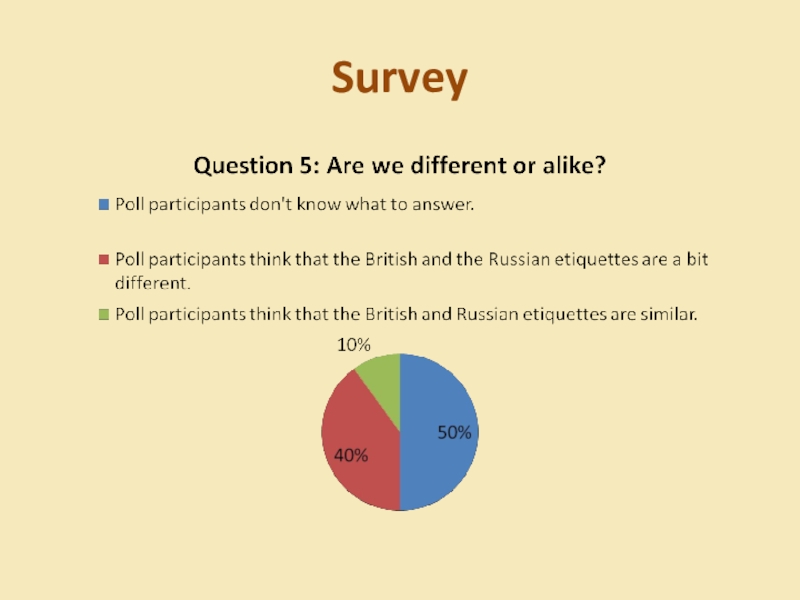
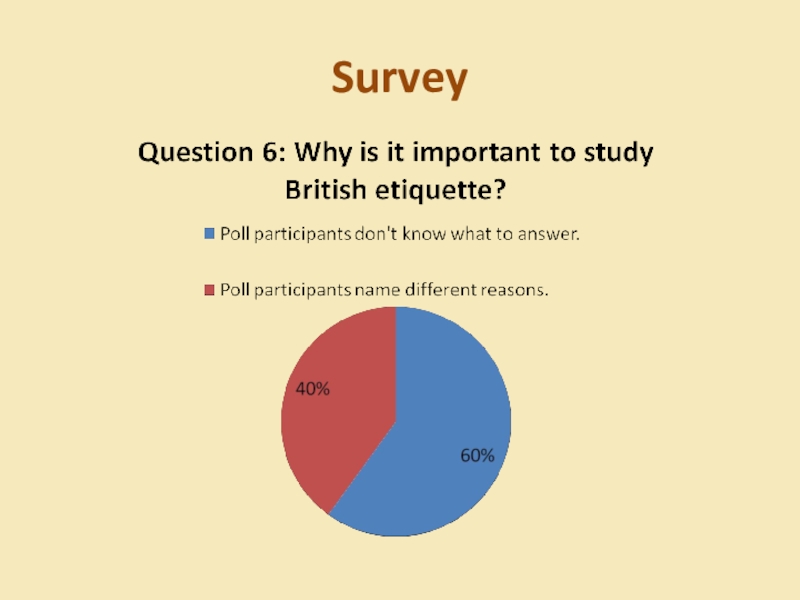
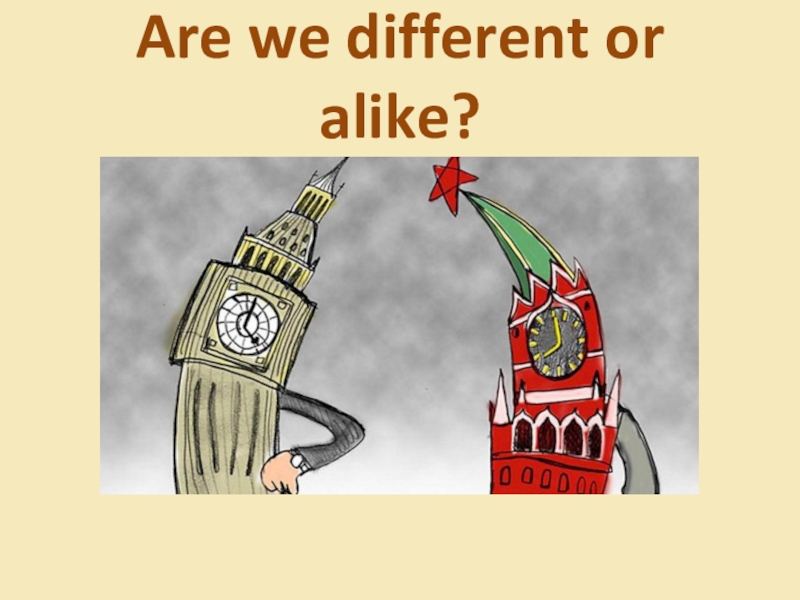
Слайд 22 We are alike and we have much in common in
social etiquette. But English people are more reserved in manners, speech and dress, more disciplined, punctual, tolerant and polite. The Russians are more uninhibited despite the same norms and sometimes considered to be rather rude.
Слайд 23Conclusion
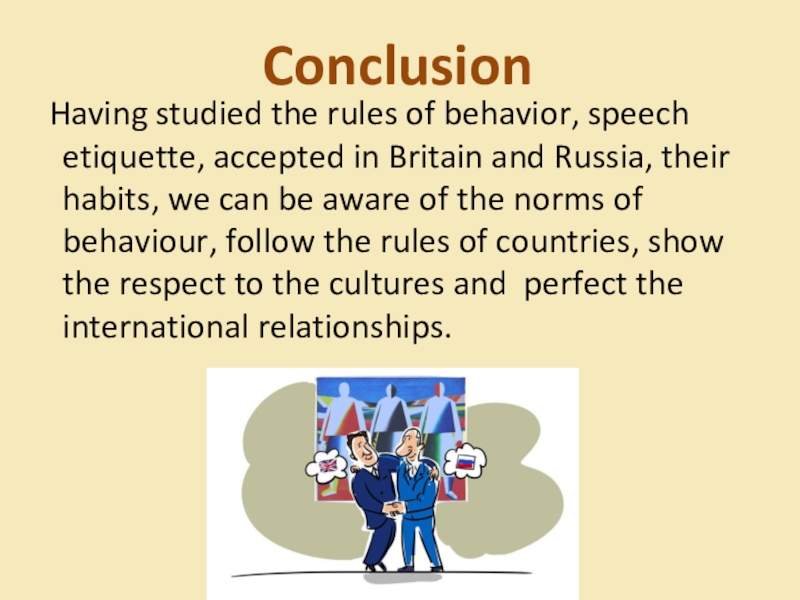
Having studied the rules of behavior, speech etiquette, accepted in
Britain and Russia, their habits, we can be aware of the norms of behaviour, follow the rules of countries, show the respect to the cultures and perfect the international relationships.