- Главная
- Разное
- Образование
- Спорт
- Естествознание
- Природоведение
- Религиоведение
- Французский язык
- Черчение
- Английский язык
- Астрономия
- Алгебра
- Биология
- География
- Геометрия
- Детские презентации
- Информатика
- История
- Литература
- Математика
- Музыка
- МХК
- Немецкий язык
- ОБЖ
- Обществознание
- Окружающий мир
- Педагогика
- Русский язык
- Технология
- Физика
- Философия
- Химия
- Шаблоны, фоны, картинки для презентаций
- Экология
- Экономика
Презентация, доклад Famous British Queens
Содержание
- 1. Презентация Famous British Queens
- 2. Aim: -What should British queens be
- 3. Queen Elizabeth I
- 4. Queen Elizabeth I was born to King
- 5. Mary, the Catholic daughter of Catherine
- 6. Elizabeth I was a diplomatic ruler and
- 7. For Elizabeth it was very important to
- 8. Queen Victoria
- 9. Queen Victoria came to the throne as
- 10. Victoria remained one of most successful and
- 11. “ We have to come to believe
- 12. Queen Elizabeth II
- 13. For sixty-four years British monarchy has been
- 14. Elizabeth never visited a common school, she
- 15. On 20th November1947 Elizabeth married Philip, Duke
- 16. The Queen is widely known for her
- 17. An important part of the work of
- 18. Besides the official duties the Queen devotes
- 19. Queen Elizabeth I ruled for about 45
Aim: -What should British queens be remembered for? Tasks: -to select the most significant events and activities of their life stories ; -to evaluate their impact on the British history ; -to develop
Слайд 2Aim: -What should British queens be remembered for? Tasks: -to select the most
significant events and activities of their life stories ;
-to evaluate their impact on the British history ;
-to develop historical understanding of those periods.
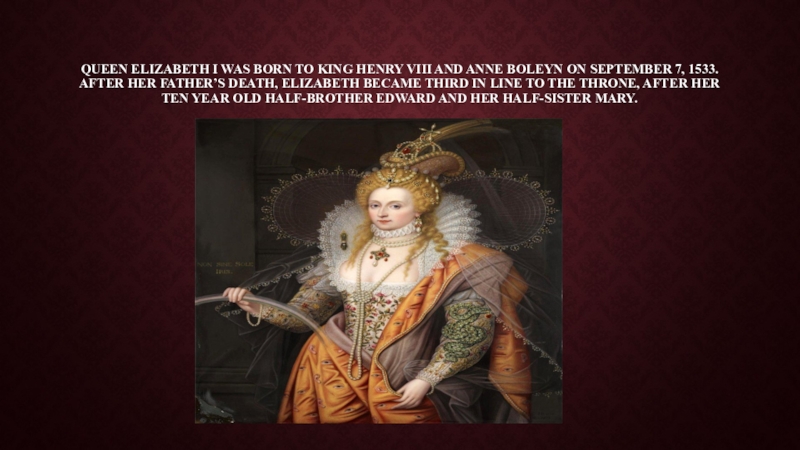
Слайд 4Queen Elizabeth I was born to King Henry VIII and Anne
Boleyn on September 7, 1533. After her father’s death, Elizabeth became third in line to the throne, after her ten year old half-brother Edward and her half-sister Mary.
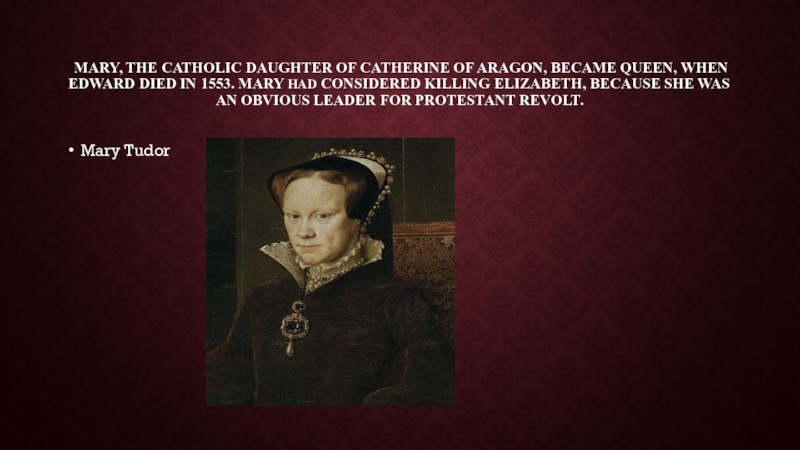
Слайд 5 Mary, the Catholic daughter of Catherine of Aragon, became queen,
when Edward died in 1553. Mary had considered killing Elizabeth, because she was an obvious leader for Protestant revolt.
Mary Tudor
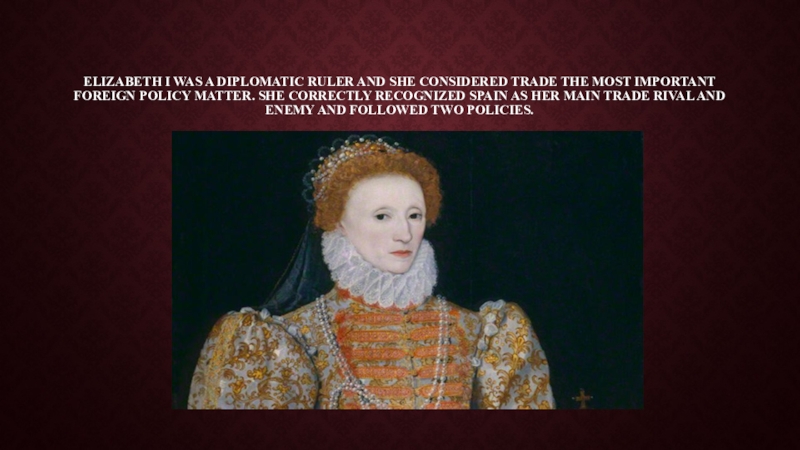
Слайд 6Elizabeth I was a diplomatic ruler and she considered trade the
most important foreign policy matter. She correctly recognized Spain as her main trade rival and enemy and followed two policies.
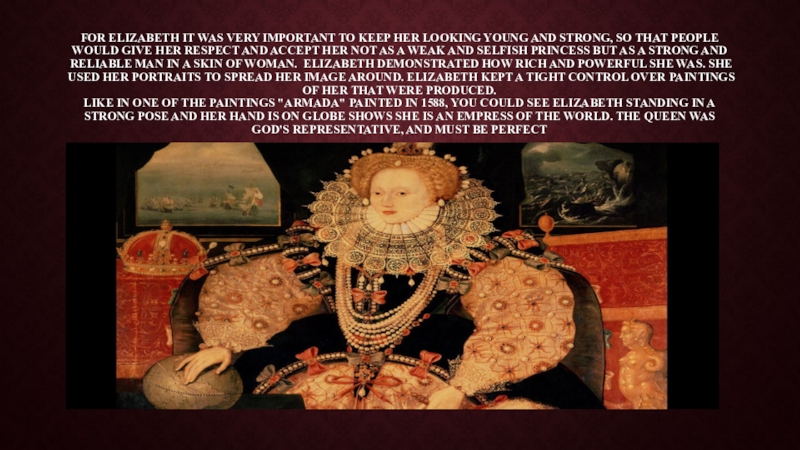
Слайд 7For Elizabeth it was very important to keep her looking young
and strong, so that people would give her respect and accept her not as a weak and selfish princess but as a strong and reliable man in a skin of woman. Elizabeth demonstrated how rich and powerful she was. She used her portraits to spread her image around. Elizabeth kept a tight control over paintings of her that were produced.
Like in one of the paintings "Armada" painted in 1588, you could see Elizabeth standing in a strong pose and her hand is on globe shows she is an Empress of the world. The Queen was God's representative, and must be perfect
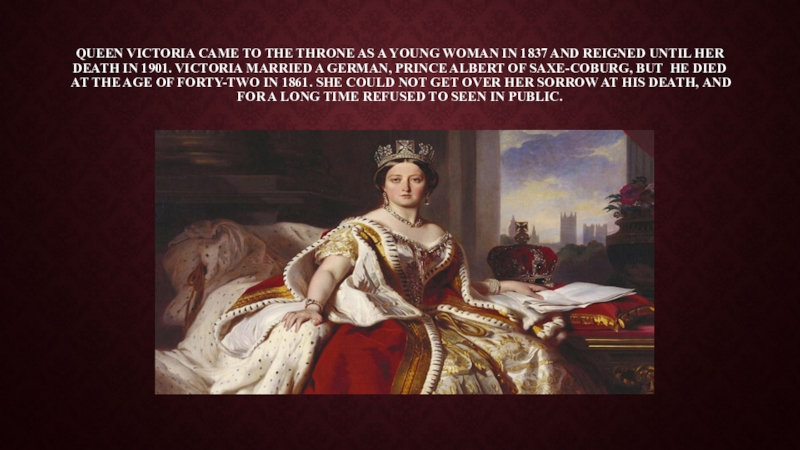
Слайд 9Queen Victoria came to the throne as a young woman in
1837 and reigned until her death in 1901. Victoria married a German, Prince Albert of Saxe-Coburg, but he died at the age of forty-two in 1861. She could not get over her sorrow at his death, and for a long time refused to seen in public.
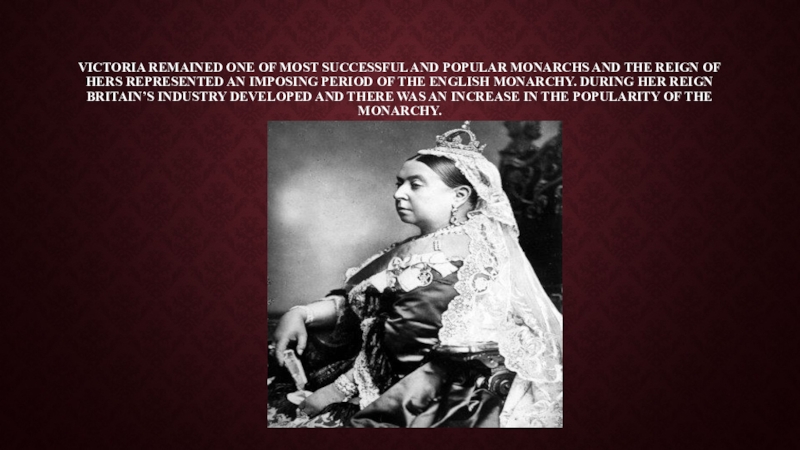
Слайд 10Victoria remained one of most successful and popular monarchs and the
reign of hers represented an imposing period of the English monarchy. During her reign Britain’s industry developed and there was an increase in the popularity of the monarchy.
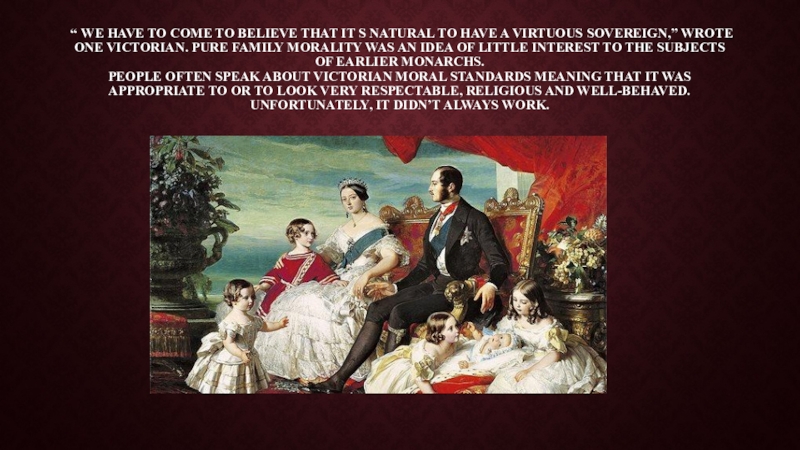
Слайд 11“ We have to come to believe that it s natural
to have a virtuous sovereign,” wrote one Victorian. Pure family morality was an idea of little interest to the subjects of earlier monarchs.
People often speak about Victorian moral standards meaning that it was appropriate to or to look very respectable, religious and well-behaved. Unfortunately, it didn’t always work.
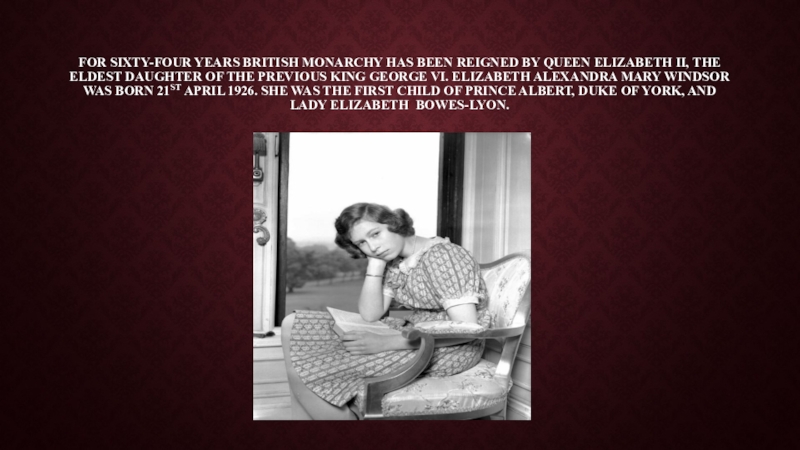
Слайд 13For sixty-four years British monarchy has been reigned by Queen Elizabeth
II, the eldest daughter of the previous King George VI. Elizabeth Alexandra Mary Windsor was born 21st April 1926. She was the first child of Prince Albert, Duke of York, and Lady Elizabeth Bowes-Lyon.
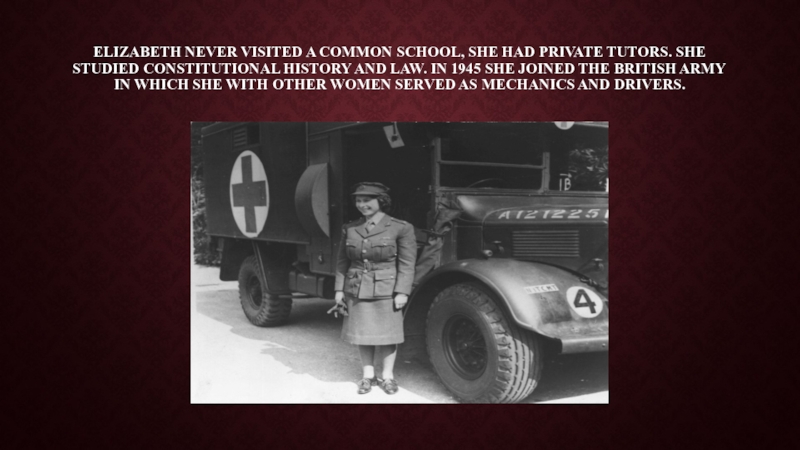
Слайд 14Elizabeth never visited a common school, she had private tutors. She
studied constitutional history and law. In 1945 she joined the British Army in which she with other women served as mechanics and drivers.
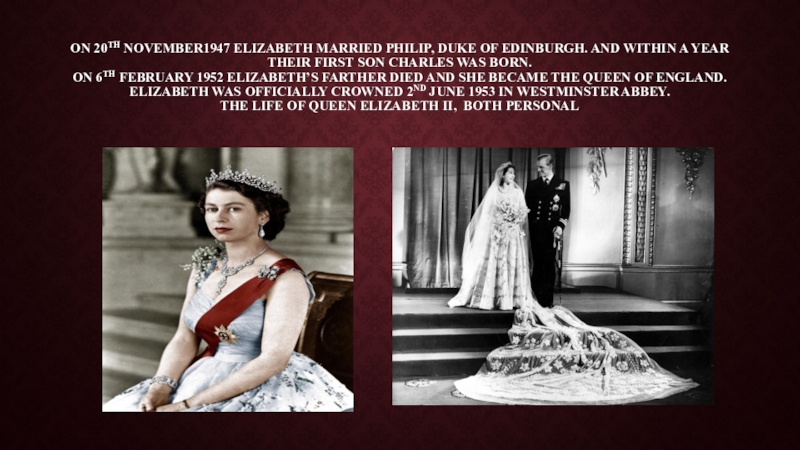
Слайд 15On 20th November1947 Elizabeth married Philip, Duke of Edinburgh. and within
a year their first son Charles was born.
On 6th February 1952 Elizabeth’s farther died and she became the Queen of England.
Elizabeth was officially crowned 2nd June 1953 in Westminster Abbey.
The life of Queen Elizabeth II, both personal
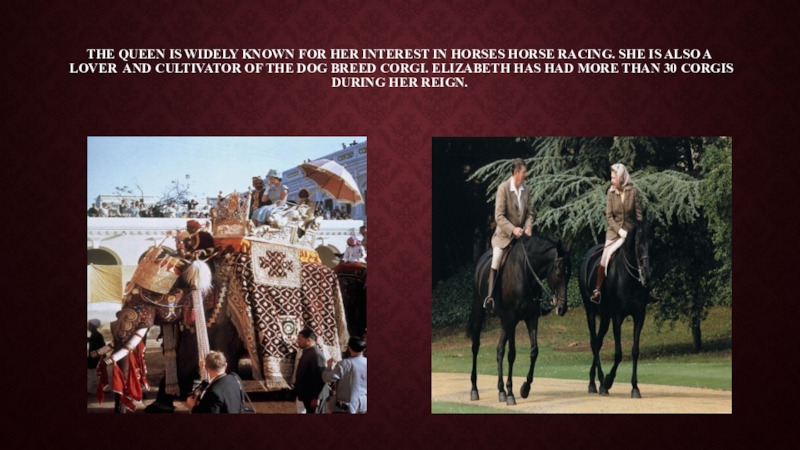
Слайд 16The Queen is widely known for her interest in horses horse
racing. She is also a lover and cultivator of the dog breed Corgi. Elizabeth has had more than 30 Corgis during her reign.
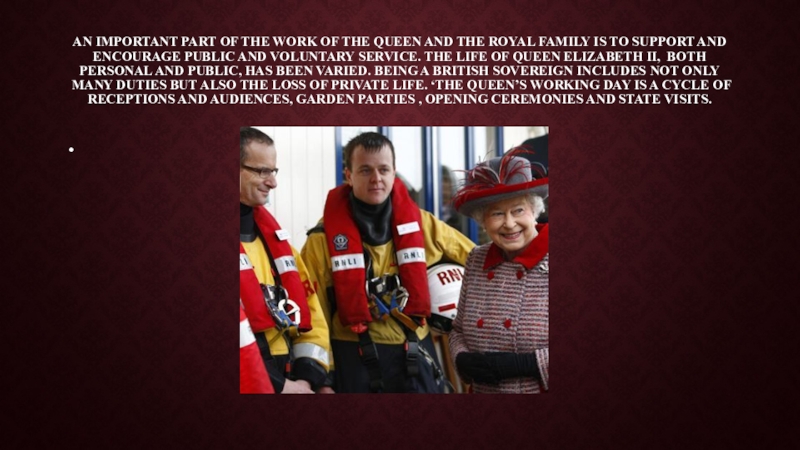
Слайд 17An important part of the work of The Queen and the
Royal Family is to support and encourage public and voluntary service. The life of Queen Elizabeth II, both personal and public, has been varied. Being a British sovereign includes not only many duties but also the loss of private life. ‘The Queen’s working day is a cycle of receptions and audiences, garden parties , opening ceremonies and state visits.
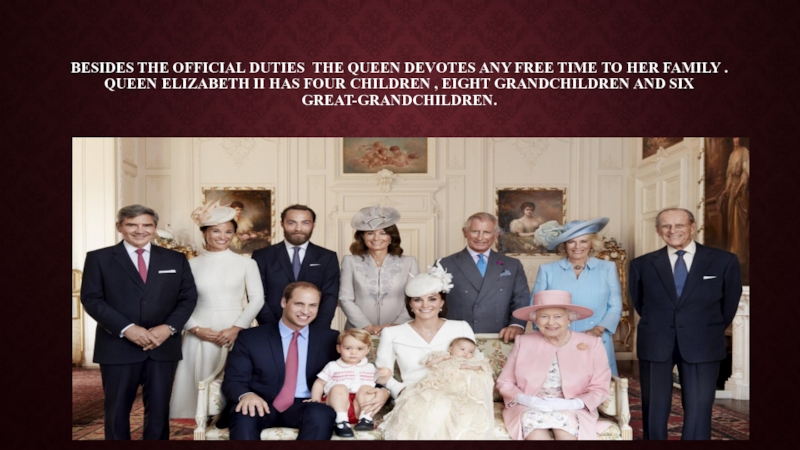
Слайд 18Besides the official duties the Queen devotes any free time to
her family . Queen Elizabeth II has four children , eight grandchildren and six great-grandchildren.
Слайд 19Queen Elizabeth I ruled for about 45 years and expanded the
English empire. She influenced many countries all over the world. Her rule was considered as the golden age of Elizabeth.
She was a decisive ruler. Elizabeth was able to avoid the Spanish invasion on England.
Queen Victoria enjoyed fantastic popularity amongst the majority of her people for most of her rule. She expanded the borders of the British Empire significantly more than any other Queen.
Victoria remained one of most successful and popular monarchs and the reign of hers represented an imposing period of the English monarchy. During her reign Britain’s industry developed and there was an increase in the popularity of the monarchy
Queen Elizabeth II
Elizabeth II, who acts as a representative of the British nation, helps cultivate good relationships among various countries. The international significance of the Queen is also supported by her role as Head of Commonwealth,