- Главная
- Разное
- Образование
- Спорт
- Естествознание
- Природоведение
- Религиоведение
- Французский язык
- Черчение
- Английский язык
- Астрономия
- Алгебра
- Биология
- География
- Геометрия
- Детские презентации
- Информатика
- История
- Литература
- Математика
- Музыка
- МХК
- Немецкий язык
- ОБЖ
- Обществознание
- Окружающий мир
- Педагогика
- Русский язык
- Технология
- Физика
- Философия
- Химия
- Шаблоны, фоны, картинки для презентаций
- Экология
- Экономика
Презентация, доклад Education in the USA
Содержание
- 1. Презентация Education in the USA
- 2. The USA does not have a national
- 3. Elementary education starts at the age of
- 4. The School SystemA child´s educational progress is
- 5. Electives Common types of electives include:Athletics (cross
- 6. Nevertheless, many students of high school don't
- 7. There are several ways to continue
- 8. College students usually spend four years at
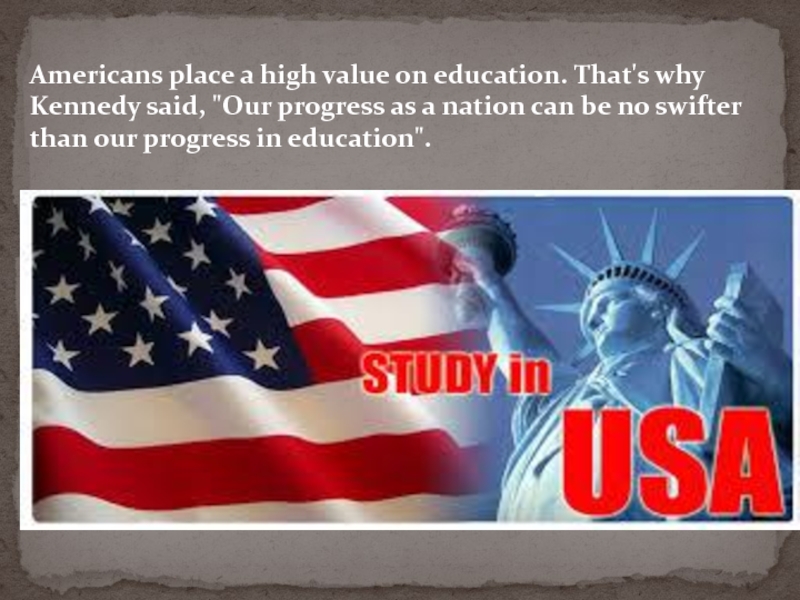
- 9. Americans place a high value on education.
The USA does not have a national system of education. All educational matters are left to states. 50 per cent of funds for education come from state sources, about 40 from local funds, and only 6
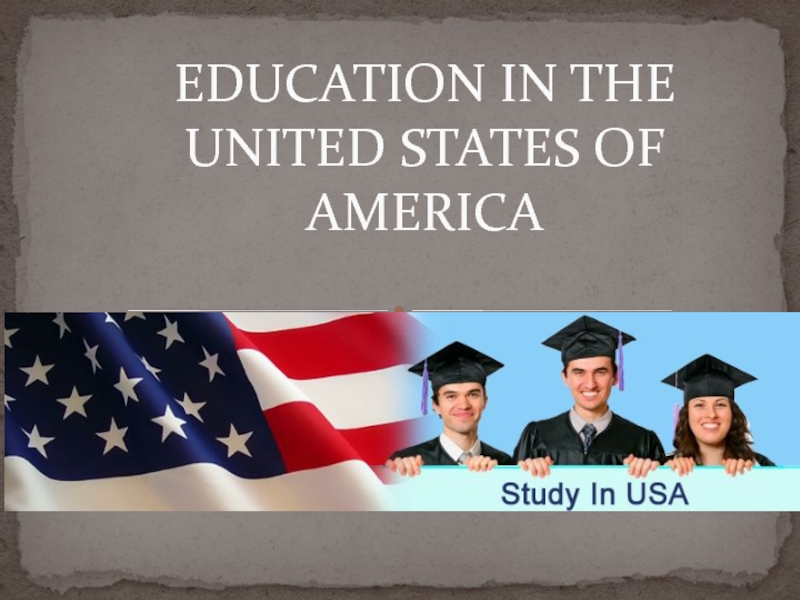
Слайд 2The USA does not have a national system of education. All
educational matters are left to states. 50 per cent of funds for education come from state sources, about 40 from local funds, and only 6 per cent from the federal government.
There are two major types of schools in the USA— public which are free, and private, or fee-paying. Four of five private schools are run by churches and other religious groups.
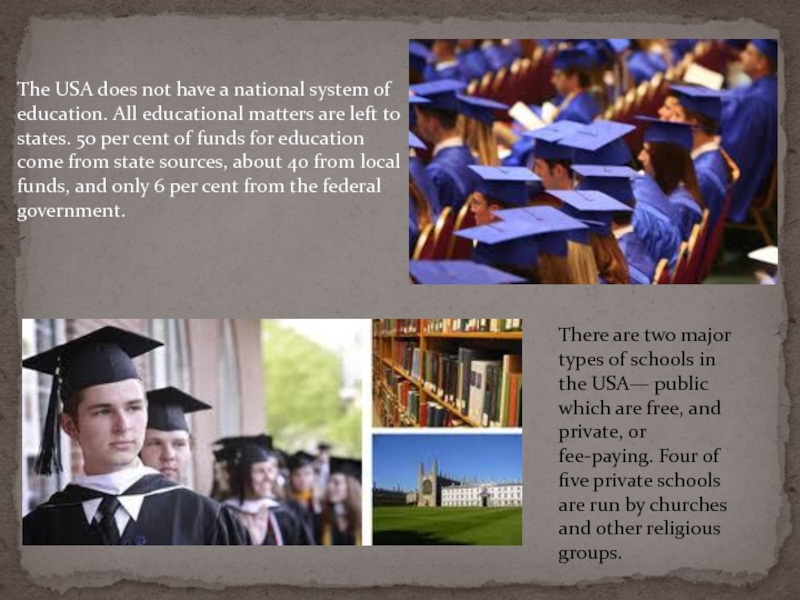
Слайд 3Elementary education starts at the age of 6 and continues till
10-11 years. Secondary education is provided from the age 11 — 12. Intermediate school includes grades 6 through 9 for ages 11-12 up to 14—15. A senior high school may include grades 9—10 through 12. A senior high school may be comprehensive, general or vocational. A comprehensive school offers a broad program of academic and vocational education, a general school offers a more limited program. A vocational school focuses
on vocational training
with some general
educational subjects.
All such programs —
academic, technical,
or practical are
generally taught under
one roof.
on vocational training
with some general
educational subjects.
All such programs —
academic, technical,
or practical are
generally taught under
one roof.
Слайд 4The School System
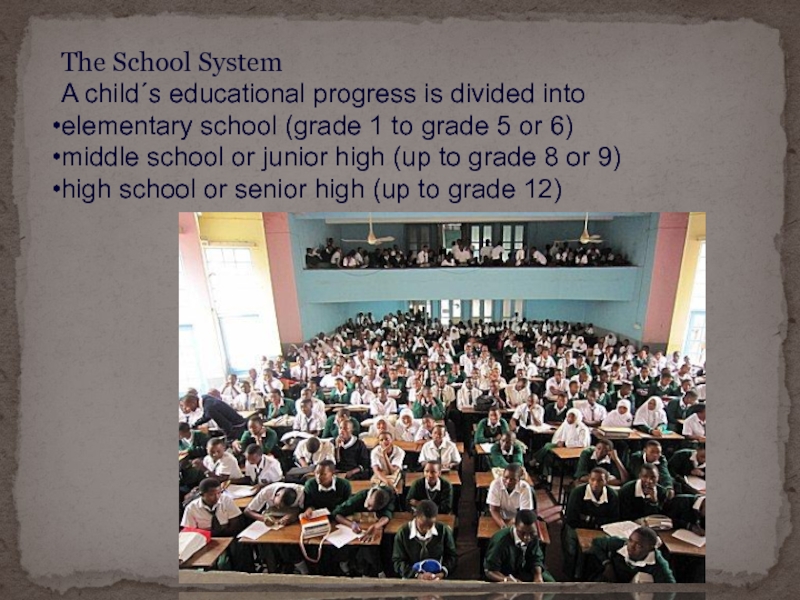
A child´s educational progress is divided into
elementary school (grade
1 to grade 5 or 6)
middle school or junior high (up to grade 8 or 9)
high school or senior high (up to grade 12)
middle school or junior high (up to grade 8 or 9)
high school or senior high (up to grade 12)
Слайд 5Electives Common types of electives include:
Athletics (cross country, football, baseball, basketball,
track and field, swimming, tennis, gymnastics, water polo, soccer, softball, wrestling, cheerleading, volleyball, lacrosse, ice hockey, field hockey, crew, boxing, skiing/snowboarding, golf, mountain biking, marching band)
Career and Technical Education, including Agriculture/Agriscience, Business/Marketing, Family and Consumer Science, Health occupations
Computer word processing, programming, and graphic design
Foreign languages (Spanish and French are common; Chinese, Latin, Ancient Greek, German, Italian, and Japanese are less common)[49]
Junior Reserve Officers' Training Corps
Performing Arts/Visual Arts, (choir, band, orchestra, drama, art, ceramics, photography, and dance)
Publishing, including journalism/student newspaper, yearbook/annual, and literary magazine
Career and Technical Education, including Agriculture/Agriscience, Business/Marketing, Family and Consumer Science, Health occupations
Computer word processing, programming, and graphic design
Foreign languages (Spanish and French are common; Chinese, Latin, Ancient Greek, German, Italian, and Japanese are less common)[49]
Junior Reserve Officers' Training Corps
Performing Arts/Visual Arts, (choir, band, orchestra, drama, art, ceramics, photography, and dance)
Publishing, including journalism/student newspaper, yearbook/annual, and literary magazine
Слайд 6Nevertheless, many students of high school don't finish it. 1 per
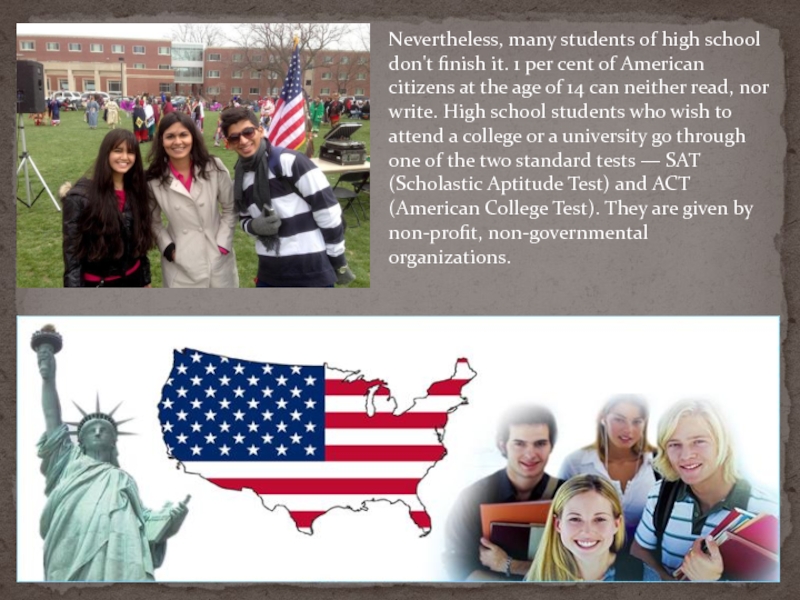
cent of American citizens at the age of 14 can neither read, nor write. High school students who wish to attend a college or a university go through one of the two standard tests — SAT (Scholastic Aptitude Test) and ACT (American College Test). They are given by non-profit, non-governmental organizations.
Слайд 7 There are several ways to continue in education: universities, colleges,
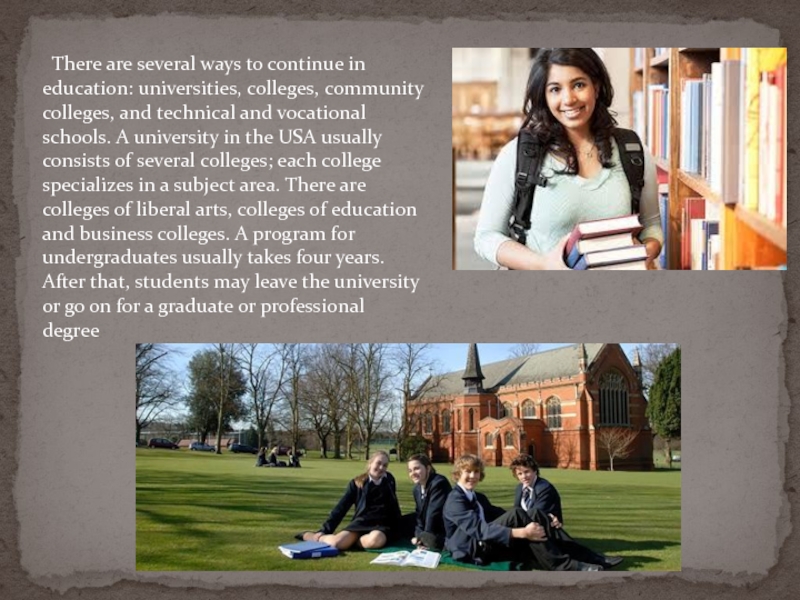
community colleges, and technical and vocational schools. A university in the USA usually consists of several colleges; each college specializes in a subject area. There are colleges of liberal arts, colleges of education and business colleges. A program for undergraduates usually takes four years. After that, students may leave the university or go on for a graduate or professional degree
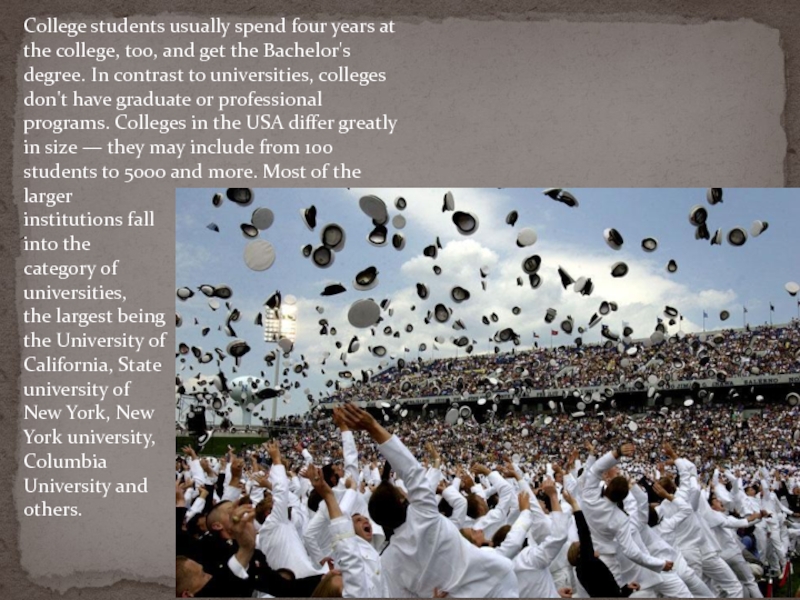
Слайд 8College students usually spend four years at the college, too, and
get the Bachelor's degree. In contrast to universities, colleges don't have graduate or professional programs. Colleges in the USA differ greatly in size — they may include from 100 students to 5000 and more. Most of the
larger
institutions fall
into the
category of
universities,
the largest being
the University of
California, State
university of
New York, New
York university,
Columbia
University and
others.
larger
institutions fall
into the
category of
universities,
the largest being
the University of
California, State
university of
New York, New
York university,
Columbia
University and
others.
Слайд 9Americans place a high value on education. That's why Kennedy said,
"Our progress as a nation can be no swifter than our progress in education".