- Главная
- Разное
- Образование
- Спорт
- Естествознание
- Природоведение
- Религиоведение
- Французский язык
- Черчение
- Английский язык
- Астрономия
- Алгебра
- Биология
- География
- Геометрия
- Детские презентации
- Информатика
- История
- Литература
- Математика
- Музыка
- МХК
- Немецкий язык
- ОБЖ
- Обществознание
- Окружающий мир
- Педагогика
- Русский язык
- Технология
- Физика
- Философия
- Химия
- Шаблоны, фоны, картинки для презентаций
- Экология
- Экономика
Презентация, доклад на тему Possessive case.
Содержание
- 1. Possessive case.
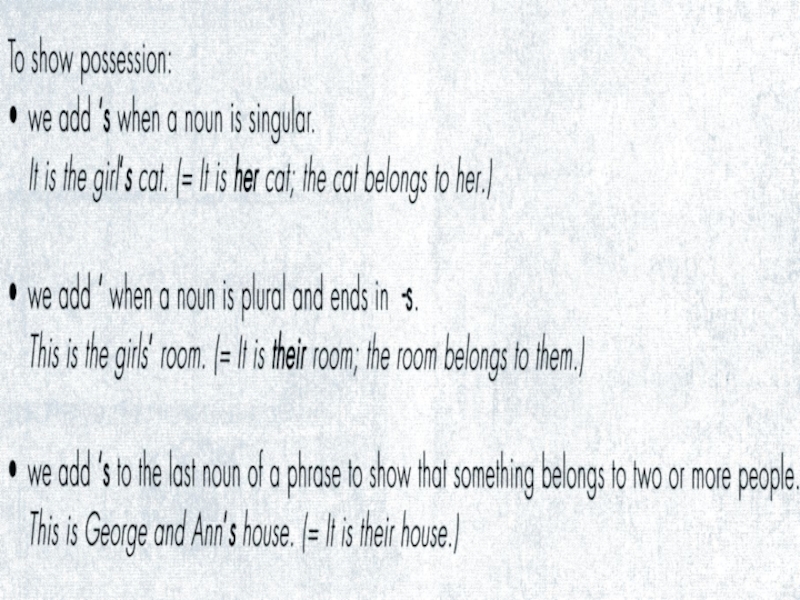
- 2. The Possessive Case
- 3. The Possessive Case is formed by means
- 4. If a noun in the plural ends
- 5. The Possessive Case is mainly used with
- 6. a) Nouns denoting time
- 7. The Possessive Case is used in some set expressions.
- 8. The ending -`s is added not only
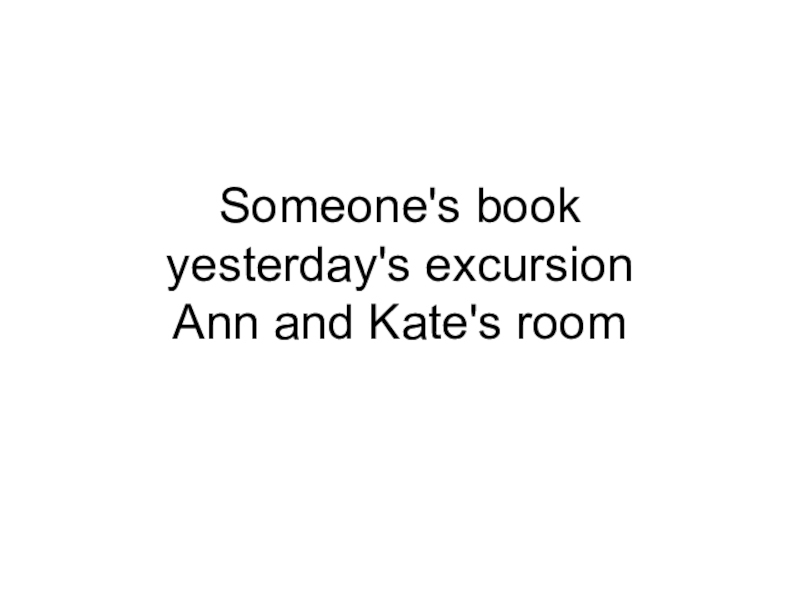
- 9. Someone's book yesterday's excursion Ann and Kate's room
The Possessive Case
Слайд 3The Possessive Case is formed by means of the ending -`s
which is pronounced [s] after voiceless consonants except sibilants, [z] after voiced consonants except sibilants and after vowels, and [iz] after sibilants.
![The Possessive Case is formed by means of the ending -`s which is pronounced [s] after voiceless](/img/tmb/5/482639/774df567a6e2a84558e75942c93f0019-800x.jpg "Possessive case. The Possessive Case is formed by means of the ending -`s")
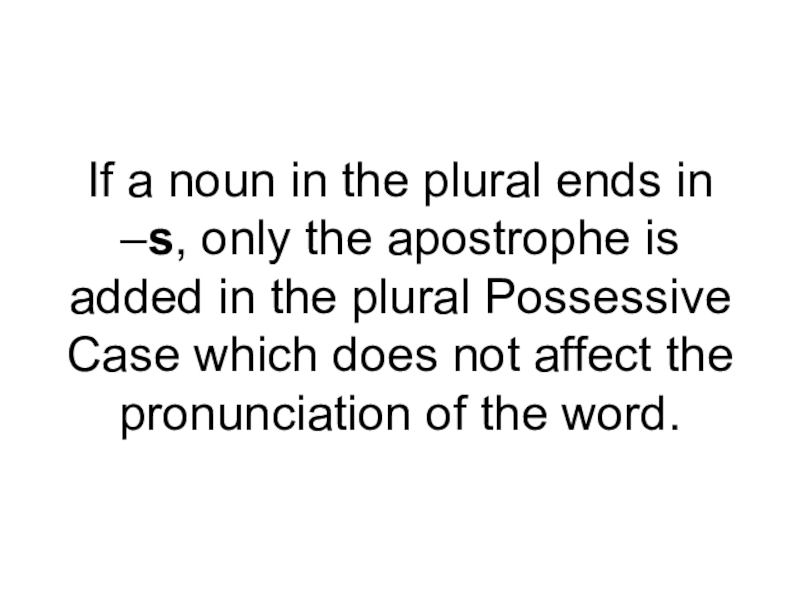
Слайд 4If a noun in the plural ends in –s, only the
apostrophe is added in the plural Possessive Case which does not affect the pronunciation of the word.
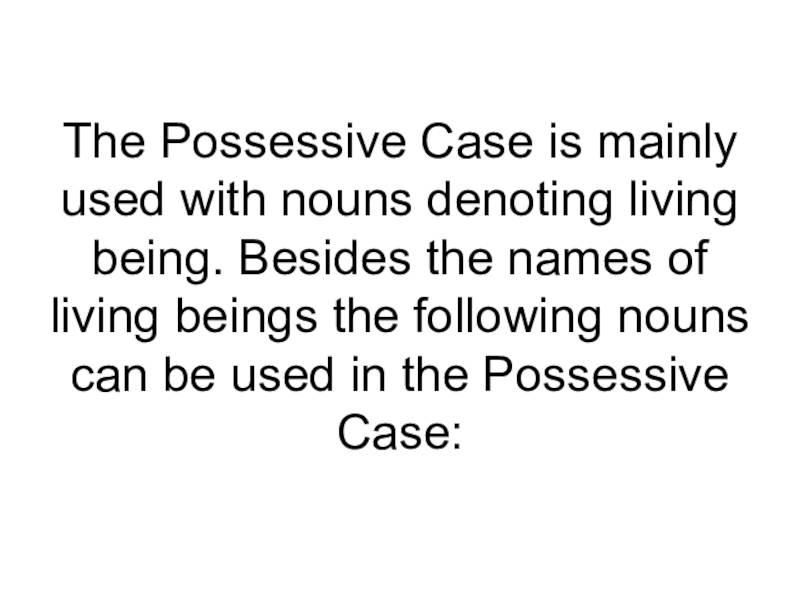
Слайд 5The Possessive Case is mainly used with nouns denoting living being.
Besides the names of living beings the following nouns can be used in the Possessive Case:
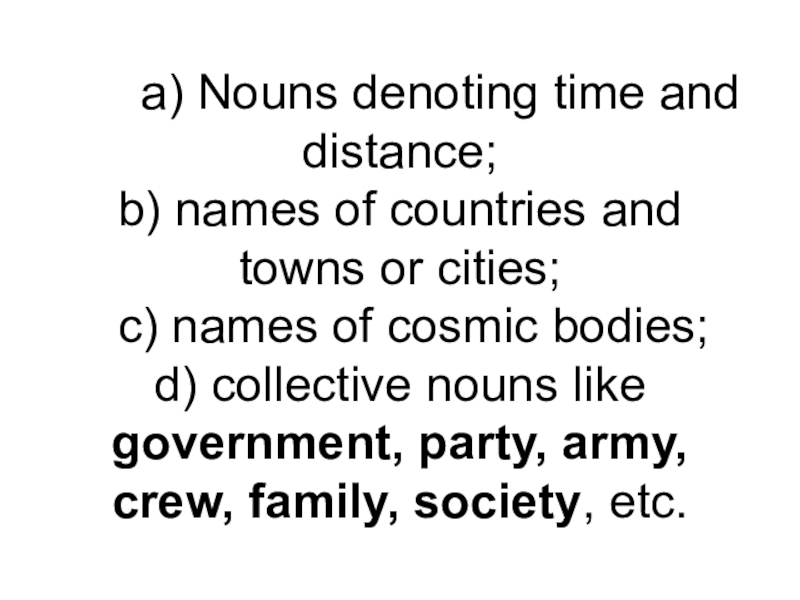
Слайд 6 a) Nouns denoting time and distance; b) names of
countries and towns or cities;
c) names of cosmic bodies;
d) collective nouns like government, party, army, crew, family, society, etc.
Слайд 8The ending -`s is added not only to nouns but also
to some pronouns and some adverbs of time; it may refer to a whole word combination.