области,
Яковлева Надежда Александровна
- Главная
- Разное
- Образование
- Спорт
- Естествознание
- Природоведение
- Религиоведение
- Французский язык
- Черчение
- Английский язык
- Астрономия
- Алгебра
- Биология
- География
- Геометрия
- Детские презентации
- Информатика
- История
- Литература
- Математика
- Музыка
- МХК
- Немецкий язык
- ОБЖ
- Обществознание
- Окружающий мир
- Педагогика
- Русский язык
- Технология
- Физика
- Философия
- Химия
- Шаблоны, фоны, картинки для презентаций
- Экология
- Экономика
Презентация, доклад на тему Обзорная презентация города Гласгоу на английском языке
Содержание
- 1. Обзорная презентация города Гласгоу на английском языке
- 2. Glasgow is the largest city in Scotland
- 3. Early origins and development The present site
- 4. Glasgow grew over the following centuries, the
- 5. Trading port After the Acts of Union
- 6. Industrialisation In its subsequent industrial era, Glasgow
- 7. By the late 1980s, there had been
- 8. The coat of arms of the City of Glasgow
- 9. Geography Glasgow is located on the banks
- 10. Districts and suburbs The old city of
- 11. Слайд 11
- 12. City centre The city centre is bounded
- 13. Merchant City The Merchant City was formerly
- 14. Financial district To the western edge of
- 15. West End Glasgow's West End refers to
- 16. East End The East End extends from
- 17. South Side Glasgow's South Side sprawls out
- 18. North Glasgow North Glasgow extends out from
- 19. Culture The city has many amenities for
- 20. Most of Scotland's national arts organisations are
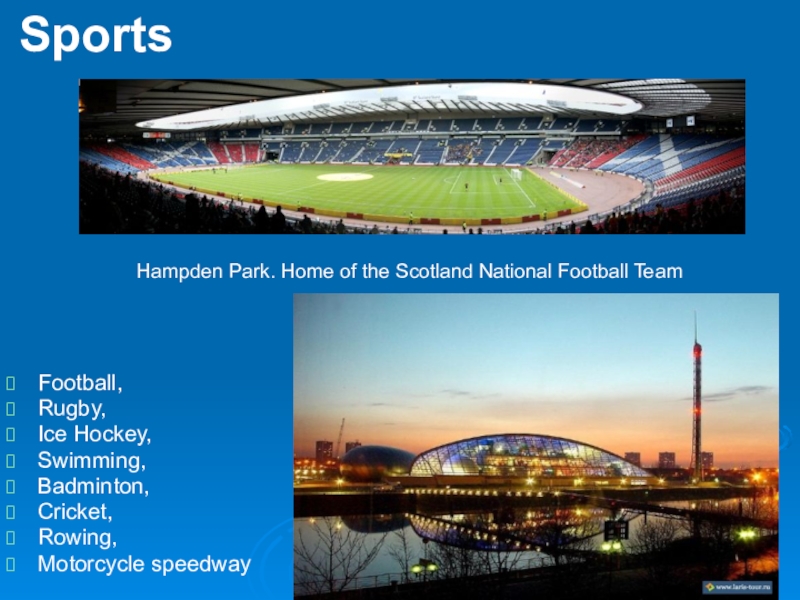
- 21. Sports Football, Rugby, Ice Hockey,Swimming,Badminton,Cricket,Rowing,Motorcycle speedway Hampden Park. Home of the Scotland National Football Team
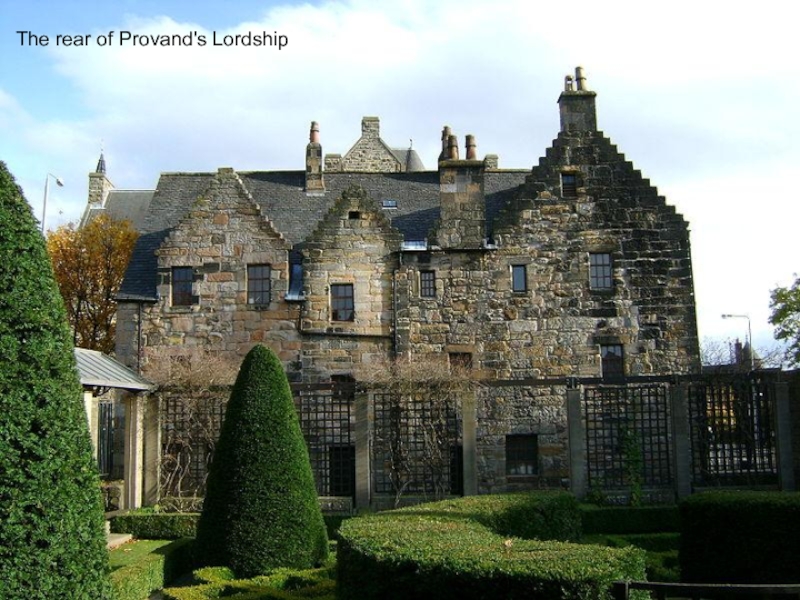
- 22. The rear of Provand's Lordship
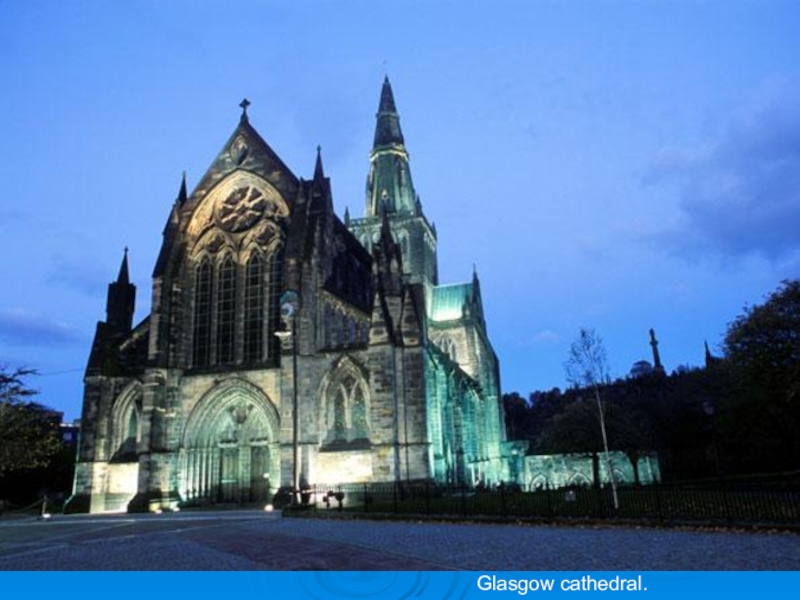
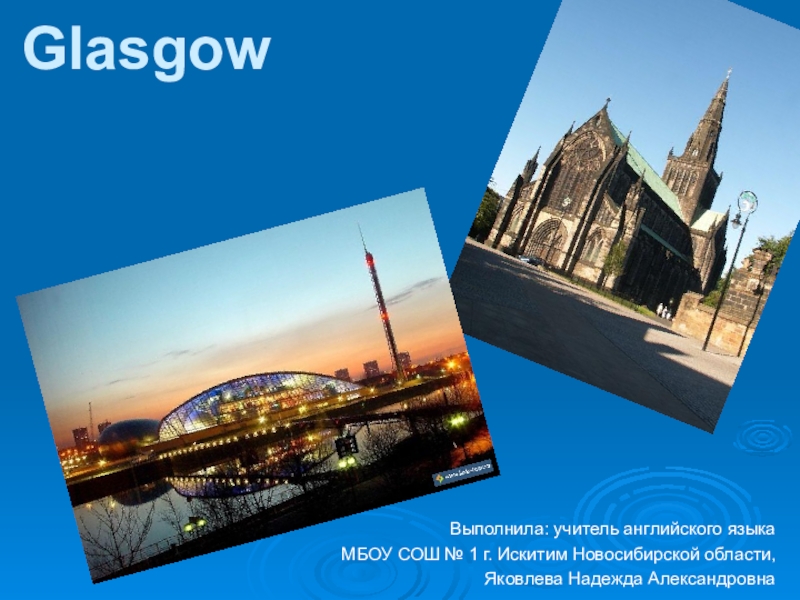
- 23. Glasgow cathedral.
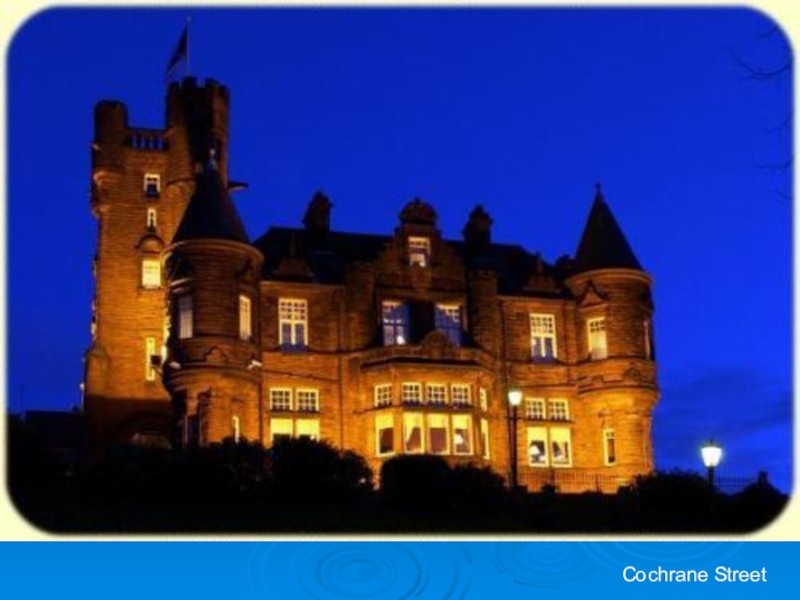
- 24. Cochrane Street
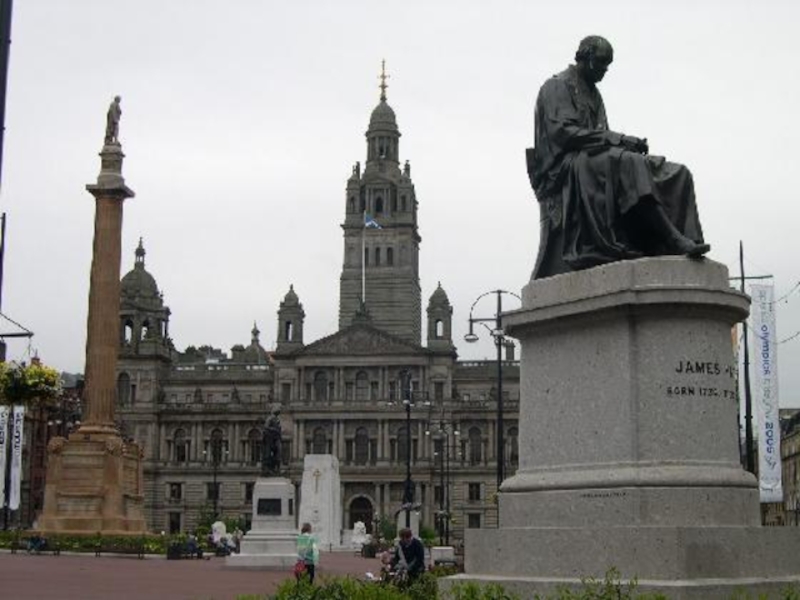
- 25. George Square
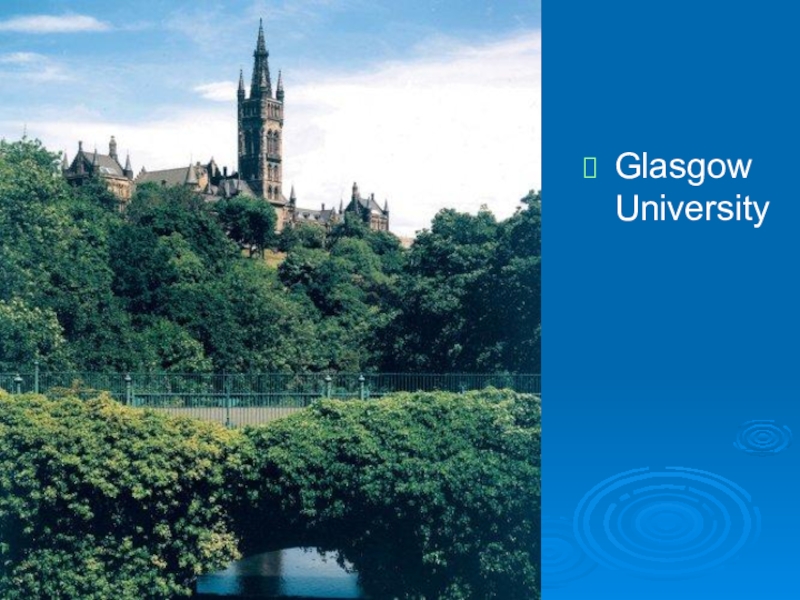
- 26. Glasgow University
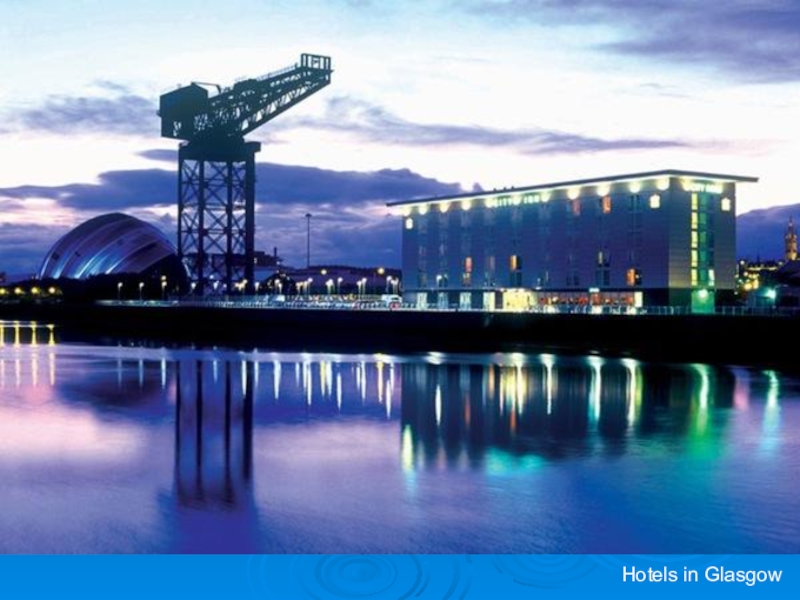
- 27. Hotels in Glasgow
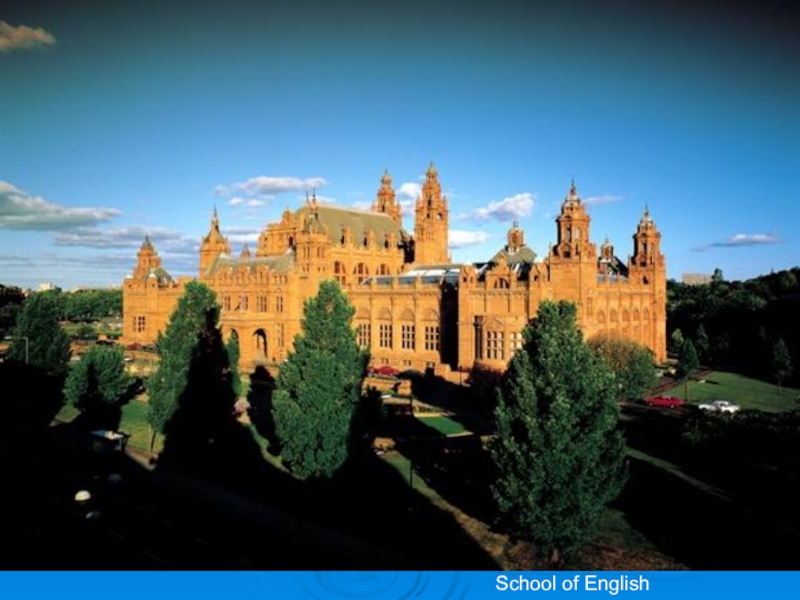
- 28. School of English
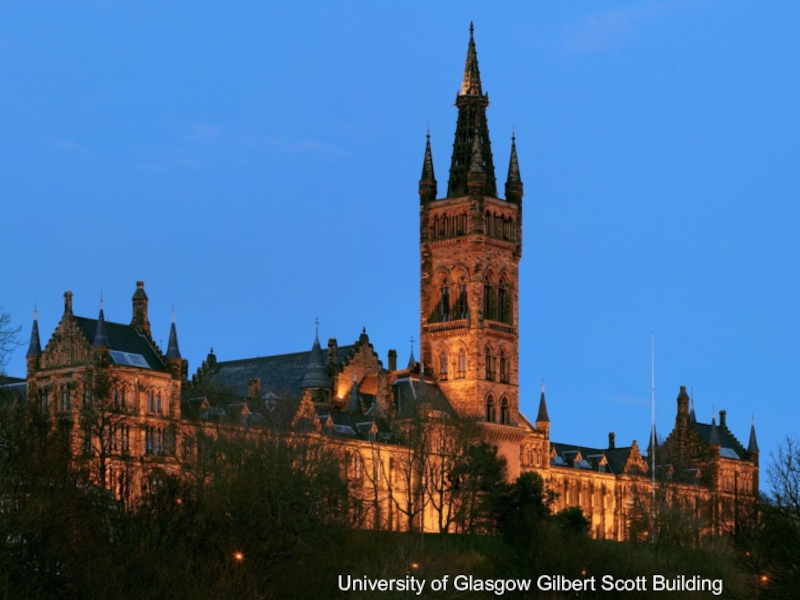
- 29. University of Glasgow Gilbert Scott Building
Glasgow is the largest city in Scotland and third most populous in the United Kingdom. The city is situated on the River Clyde in the country's west central lowlands. A person from Glasgow is known as
Слайд 2Glasgow is the largest city in Scotland and third most populous
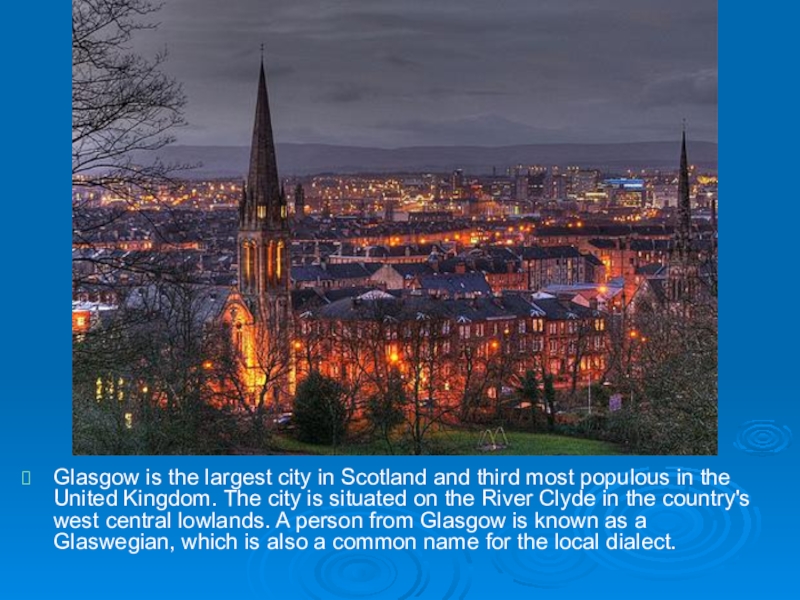
in the United Kingdom. The city is situated on the River Clyde in the country's west central lowlands. A person from Glasgow is known as a Glaswegian, which is also a common name for the local dialect.
Слайд 3Early origins and development
The present site of Glasgow has been
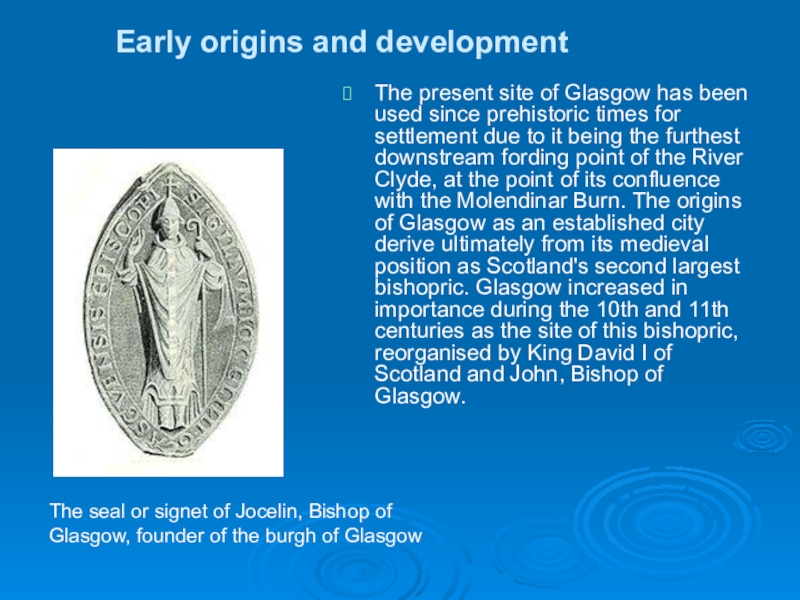
used since prehistoric times for settlement due to it being the furthest downstream fording point of the River Clyde, at the point of its confluence with the Molendinar Burn. The origins of Glasgow as an established city derive ultimately from its medieval position as Scotland's second largest bishopric. Glasgow increased in importance during the 10th and 11th centuries as the site of this bishopric, reorganised by King David I of Scotland and John, Bishop of Glasgow.
The seal or signet of Jocelin, Bishop of Glasgow, founder of the burgh of Glasgow
Слайд 4Glasgow grew over the following centuries, the first bridge over the
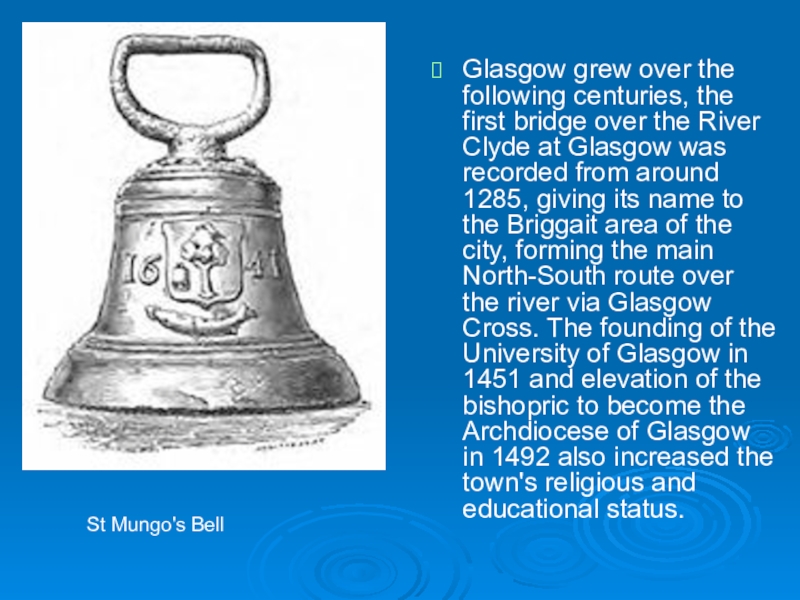
River Clyde at Glasgow was recorded from around 1285, giving its name to the Briggait area of the city, forming the main North-South route over the river via Glasgow Cross. The founding of the University of Glasgow in 1451 and elevation of the bishopric to become the Archdiocese of Glasgow in 1492 also increased the town's religious and educational status.
St Mungo's Bell
Слайд 5Trading port
After the Acts of Union in 1707, Scotland gained
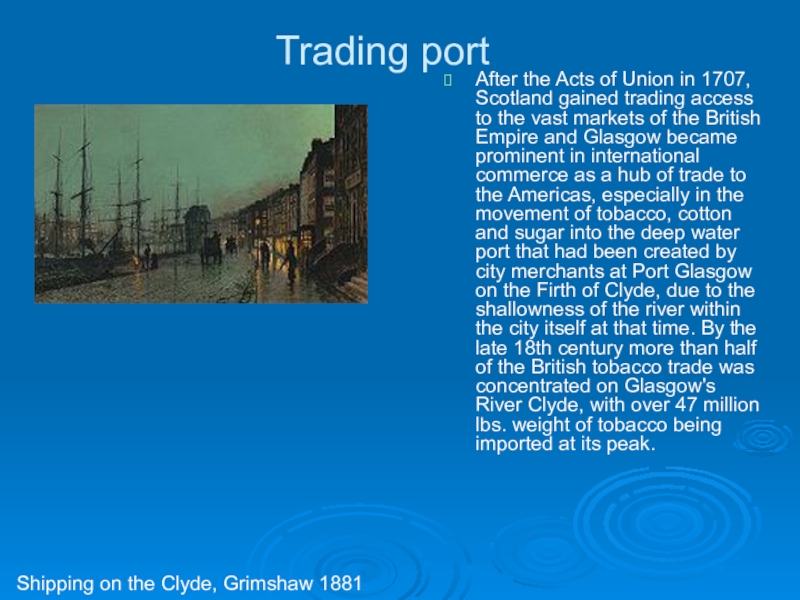
trading access to the vast markets of the British Empire and Glasgow became prominent in international commerce as a hub of trade to the Americas, especially in the movement of tobacco, cotton and sugar into the deep water port that had been created by city merchants at Port Glasgow on the Firth of Clyde, due to the shallowness of the river within the city itself at that time. By the late 18th century more than half of the British tobacco trade was concentrated on Glasgow's River Clyde, with over 47 million lbs. weight of tobacco being imported at its peak.
Shipping on the Clyde, Grimshaw 1881
Слайд 6Industrialisation
In its subsequent industrial era, Glasgow produced textiles, chemicals, engineered goods
and steel, which were exported. The opening of the Monkland Canal and basin at Port Dundas in 1795, facilitated access to the iron-ore and coal mines in Lanarkshire. After extensive River engineering projects to dredge and deepen the River Clyde as far as Glasgow, shipbuilding became a major industry on the upper stretches of the river, building many famous ships (although many were actually built in Clydebank). The 20th century witnessed both decline and renewal in the city. After World War I, the city suffered from the impact of the Post-World War I recession and from the later Great Depression, this also led to a rise of radical socialism and the "Red Clydeside" movement. The city had recovered by the outbreak of World War II and grew through the post-war boom that lasted through the 1950s.
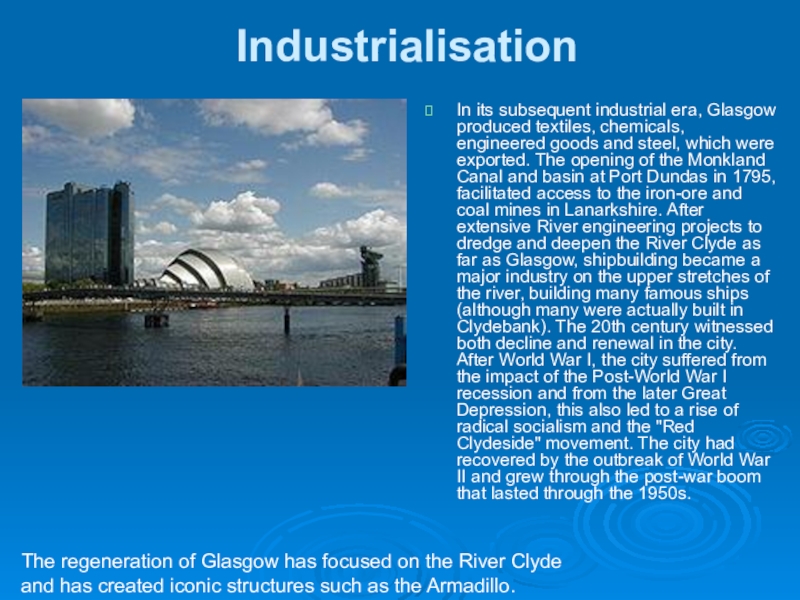
The regeneration of Glasgow has focused on the River Clyde and has created iconic structures such as the Armadillo.
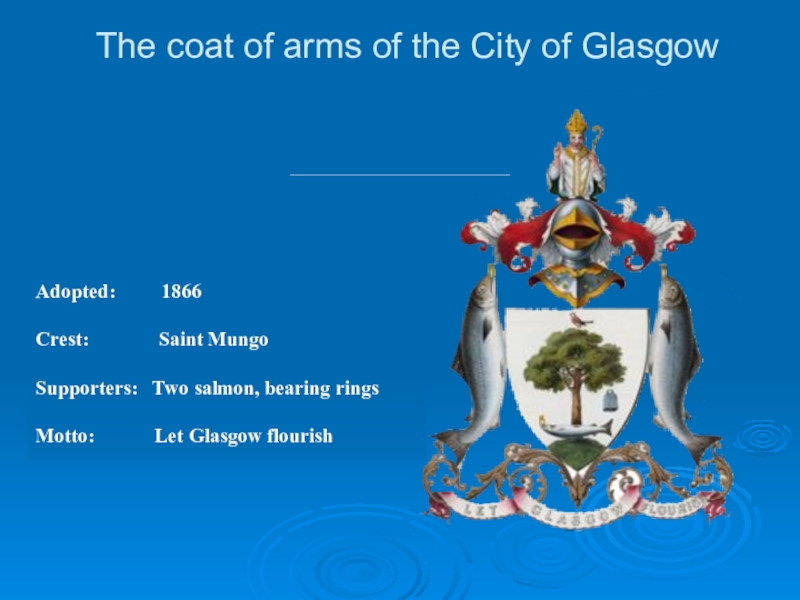
Слайд 7By the late 1980s, there had been a significant resurgence in
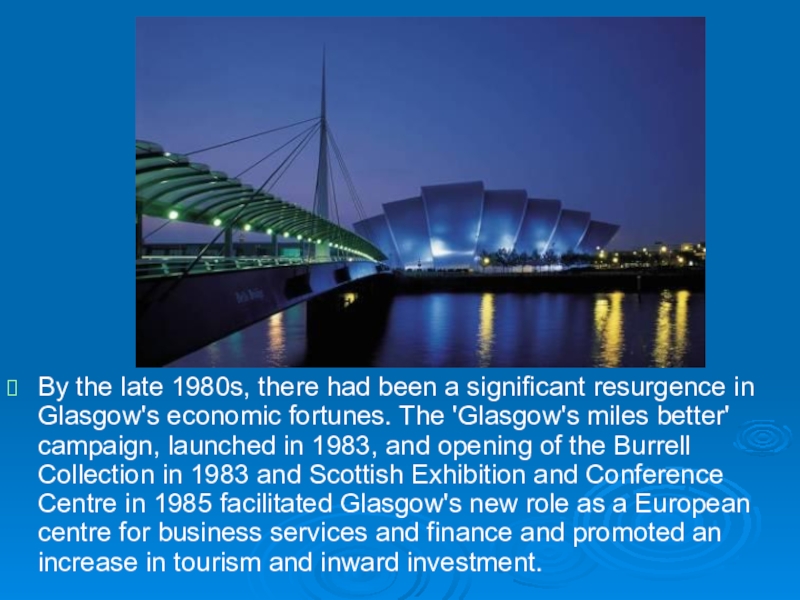
Glasgow's economic fortunes. The 'Glasgow's miles better' campaign, launched in 1983, and opening of the Burrell Collection in 1983 and Scottish Exhibition and Conference Centre in 1985 facilitated Glasgow's new role as a European centre for business services and finance and promoted an increase in tourism and inward investment.
Слайд 9Geography
Glasgow is located on the banks of the River Clyde,
in West Central Scotland. Its second most important river is the Kelvin whose name was used for creating the title of Baron Kelvin and thereby ended up as the scientific unit of temperature. It is often believed that Glasgow is in Lanarkshire. This is not the case. As already indicated, Glasgow is a unitary authority, and therefore cannot be held to be within any other authority's area. Postal addresses for Glasgow, in common with the rest of Scotland, do not require a "county".
Слайд 10Districts and suburbs
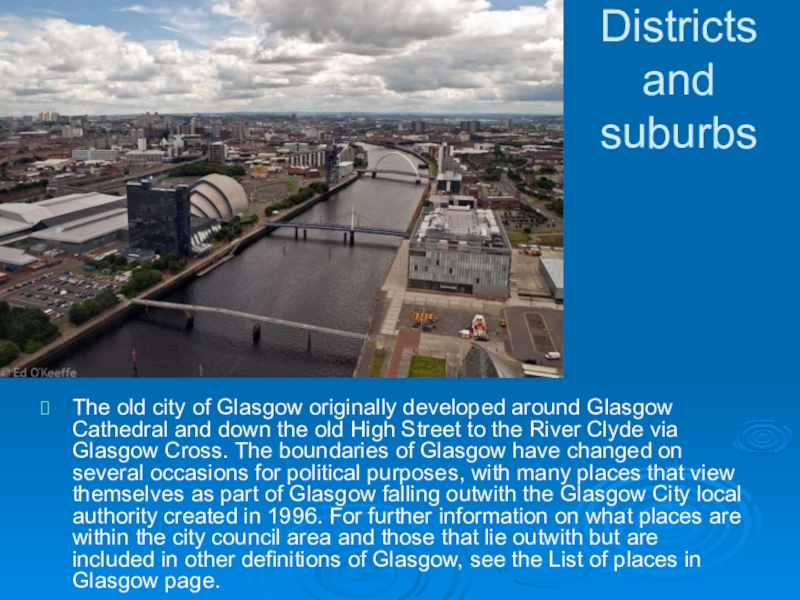
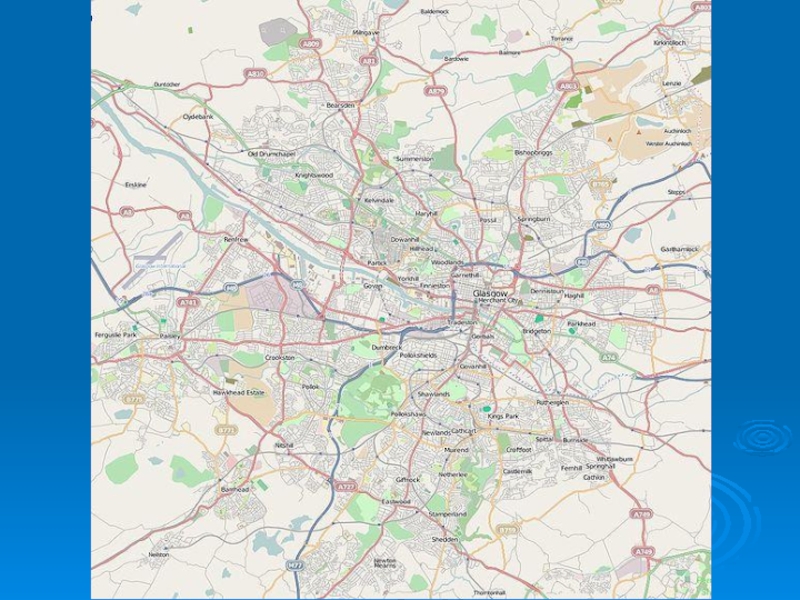
The old city of Glasgow originally developed around
Glasgow Cathedral and down the old High Street to the River Clyde via Glasgow Cross. The boundaries of Glasgow have changed on several occasions for political purposes, with many places that view themselves as part of Glasgow falling outwith the Glasgow City local authority created in 1996. For further information on what places are within the city council area and those that lie outwith but are included in other definitions of Glasgow, see the List of places in Glasgow page.
Слайд 12City centre
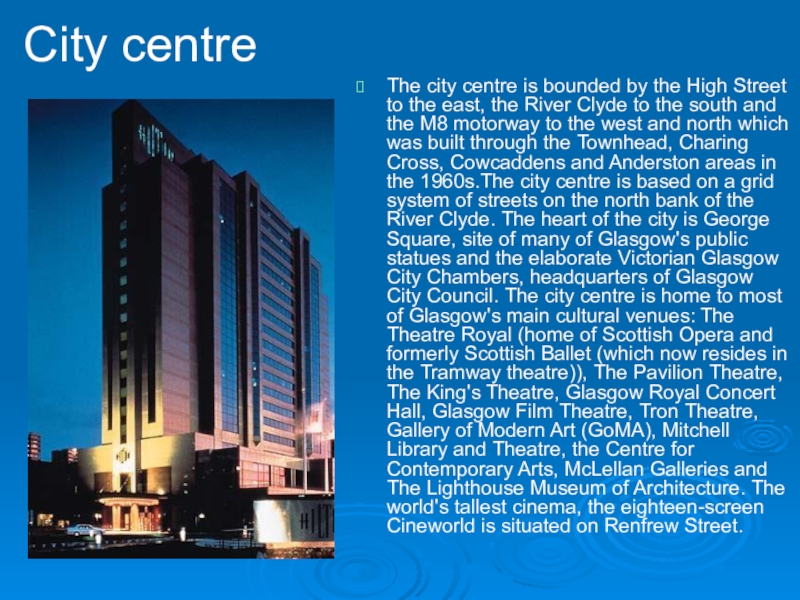
The city centre is bounded by the High Street
to the east, the River Clyde to the south and the M8 motorway to the west and north which was built through the Townhead, Charing Cross, Cowcaddens and Anderston areas in the 1960s.The city centre is based on a grid system of streets on the north bank of the River Clyde. The heart of the city is George Square, site of many of Glasgow's public statues and the elaborate Victorian Glasgow City Chambers, headquarters of Glasgow City Council. The city centre is home to most of Glasgow's main cultural venues: The Theatre Royal (home of Scottish Opera and formerly Scottish Ballet (which now resides in the Tramway theatre)), The Pavilion Theatre, The King's Theatre, Glasgow Royal Concert Hall, Glasgow Film Theatre, Tron Theatre, Gallery of Modern Art (GoMA), Mitchell Library and Theatre, the Centre for Contemporary Arts, McLellan Galleries and The Lighthouse Museum of Architecture. The world's tallest cinema, the eighteen-screen Cineworld is situated on Renfrew Street.
Слайд 13Merchant City
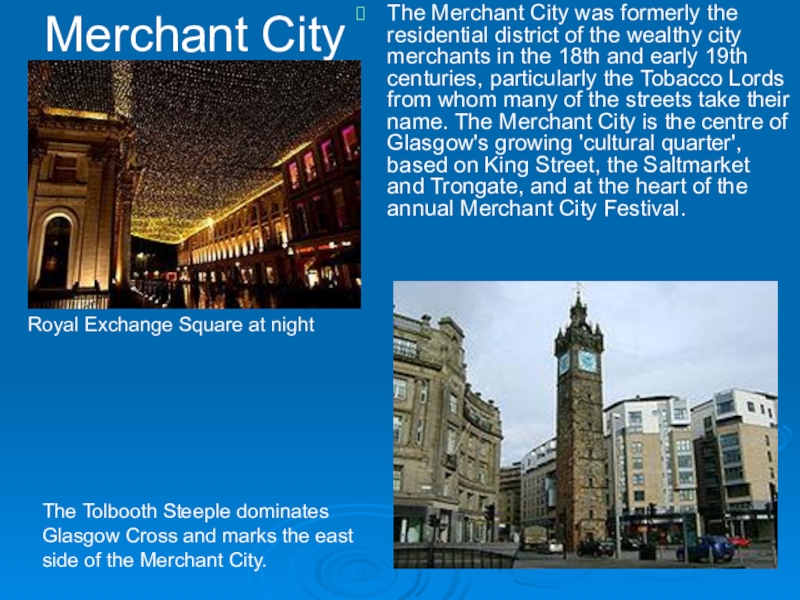
The Merchant City was formerly the residential district of
the wealthy city merchants in the 18th and early 19th centuries, particularly the Tobacco Lords from whom many of the streets take their name. The Merchant City is the centre of Glasgow's growing 'cultural quarter', based on King Street, the Saltmarket and Trongate, and at the heart of the annual Merchant City Festival.
Royal Exchange Square at night
The Tolbooth Steeple dominates Glasgow Cross and marks the east side of the Merchant City.
Слайд 14Financial district
To the western edge of the city centre, occupying
the areas of Blythswood Hill and Anderston, lies Glasgow's financial district, known officially as the International Financial Services District. Of the 10 largest general insurance companies in the UK, 8 have a base or head office in Glasgow – including Direct Line, Esure, AXA and Norwich Union. Key banking sector companies have also relocated some of their services to commercial property in Glasgow – Resolution, JPMorgan Chase, Abbey, HBOS, Barclays Wealth, Tesco Personal Finance , Morgan Stanley, Lloyds TSB, Clydesdale Bank, BNP Paribas, HSBC and the Royal Bank of Scotland.
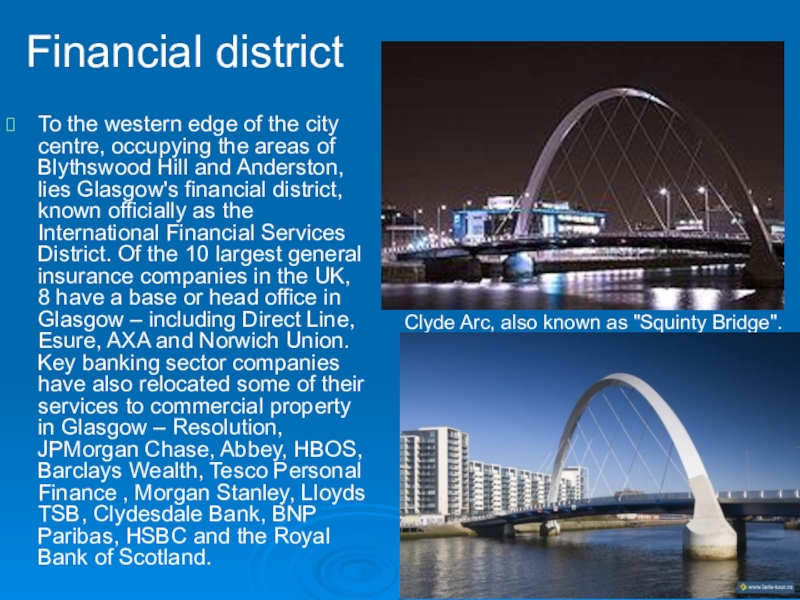
Clyde Arc, also known as "Squinty Bridge".
Слайд 15West End
Glasgow's West End refers to the bohemian district of
cafés, tea rooms, bars, boutiques, upmarket hotels, clubs and restaurants in the hinterland of Kelvingrove Park, the University of Glasgow, Glasgow Botanic Gardens and the Scottish Exhibition and Conference Centre. The West End includes residential areas of Hillhead, Dowanhill, Kelvingrove, Kelvinside, Hyndland
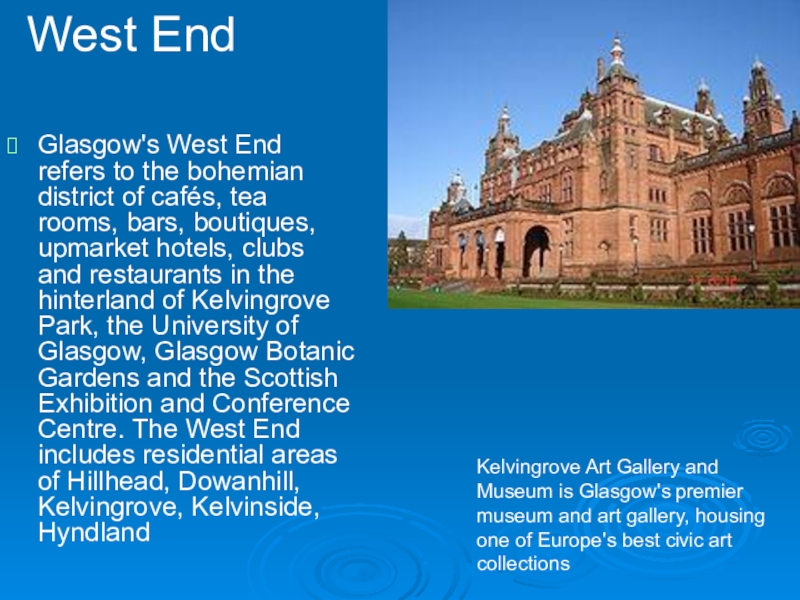
Kelvingrove Art Gallery and Museum is Glasgow's premier museum and art gallery, housing one of Europe's best civic art collections
Слайд 16East End
The East End extends from Glasgow Cross in the
City Centre to the boundary with North and South Lanarkshire. It is home to the famous Glasgow Barrowland Market, popularly known as 'The Barras',Barrowland Ballroom, Glasgow Green, and Celtic Park
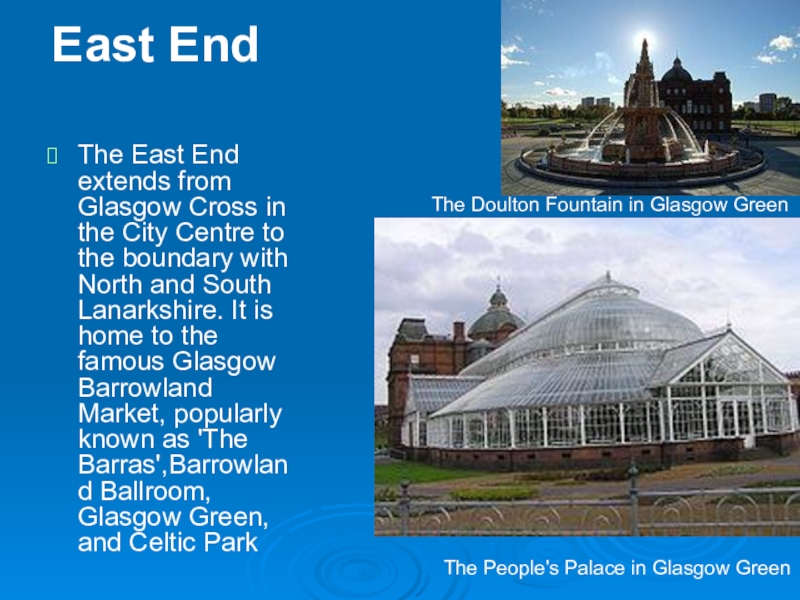
The Doulton Fountain in Glasgow Green
The People's Palace in Glasgow Green
Слайд 17South Side
Glasgow's South Side sprawls out south of the Clyde,
covering areas including Gorbals,Toryglen, Govan, Ibrox, Shawlands, Simshill, Strathbungo, Cardonald, Mount Florida, Pollokshaws, Nitshill, Pollokshields, Battlefield, Langside, Govanhill, Crosshill, Cessnock, Mosspark, Kinning Park, Mansewood, Arden, Darnley, Newlands, The South Side also includes many great parks, including Linn Park, Queen's Park, Bellahouston Park and Rouken Glen Park, and several golf clubs, including the championship course at Haggs Castle.
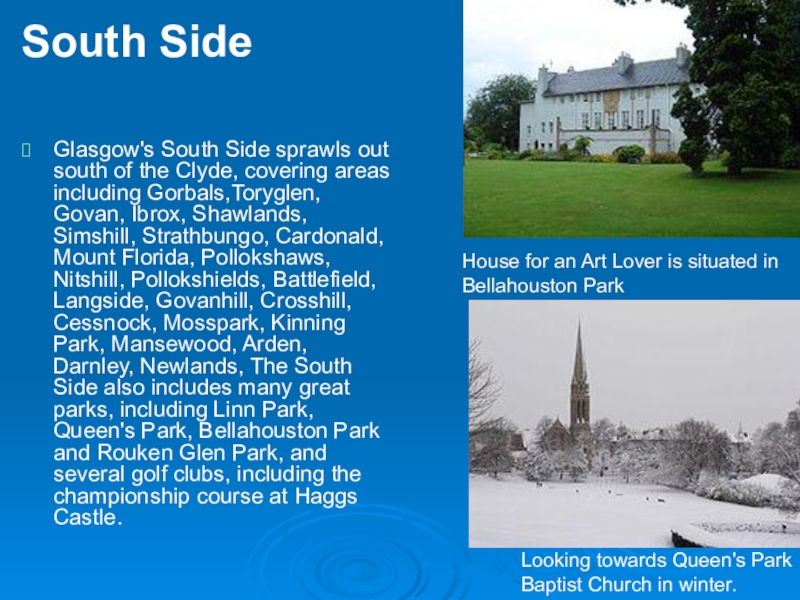
Looking towards Queen's Park Baptist Church in winter.
House for an Art Lover is situated in Bellahouston Park
Слайд 18North Glasgow
North Glasgow extends out from the north of the
city centre towards the affluent suburbs of Bearsden, Milngavie and Bishopbriggs in East Dunbartonshire and Clydebank in West Dunbartonshire. The area also contains some of the city's poorest residential areas. Possilpark is one such area, where levels of unemployment and drug abuse continue to be above the national average.
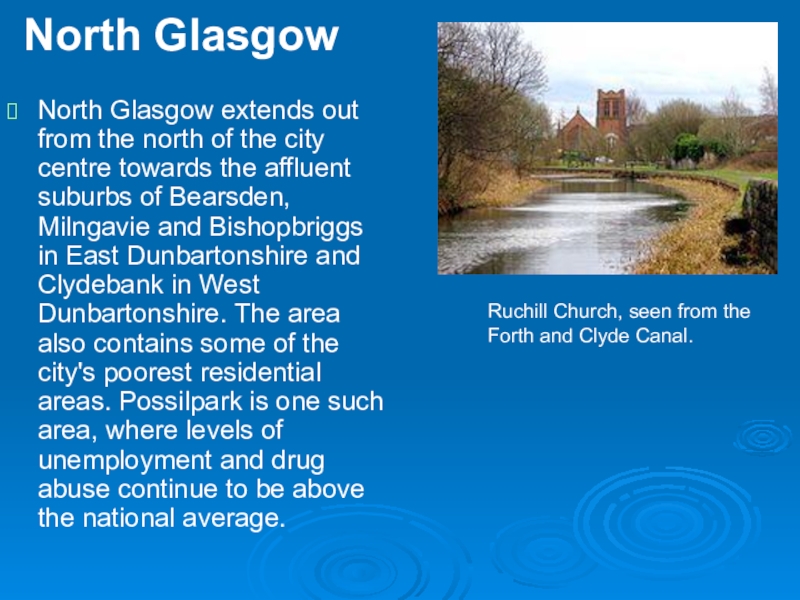
Ruchill Church, seen from the Forth and Clyde Canal.
Слайд 19Culture
The city has many amenities for a wide range of
cultural activities, from curling to opera, ballet and from football to art appreciation; it also has a large selection of museums that include those devoted to transport, religion, and modern art. Many of the city's cultural sites were celebrated in 1990 when Glasgow was designated European City of Culture.
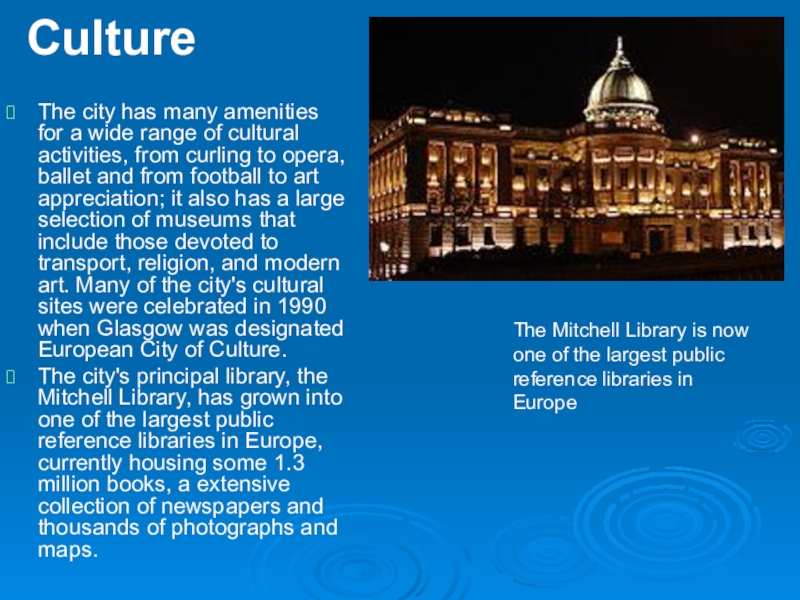
The city's principal library, the Mitchell Library, has grown into one of the largest public reference libraries in Europe, currently housing some 1.3 million books, a extensive collection of newspapers and thousands of photographs and maps.
The city's principal library, the Mitchell Library, has grown into one of the largest public reference libraries in Europe, currently housing some 1.3 million books, a extensive collection of newspapers and thousands of photographs and maps.
The Mitchell Library is now one of the largest public reference libraries in Europe
Слайд 20Most of Scotland's national arts organisations are based in Glasgow, including
Scottish Opera, Scottish Ballet, The National Theatre of Scotland, Royal Scottish National Orchestra, BBC Scottish Symphony Orchestra and Scottish Youth Theatre.
Glasgow has its own "Poet Laureate", a post created in 1999 for Edwin Morgan and as of 2007 occupied by Liz Lochhead. Weegie cuisine is famous in Britain for being heavily fatty, with such examples as the deep-fried Mars bar and the Stonner kebab originating from Glasgow.
Glasgow has its own "Poet Laureate", a post created in 1999 for Edwin Morgan and as of 2007 occupied by Liz Lochhead. Weegie cuisine is famous in Britain for being heavily fatty, with such examples as the deep-fried Mars bar and the Stonner kebab originating from Glasgow.
Слайд 21Sports
Football,
Rugby,
Ice Hockey,
Swimming,
Badminton,
Cricket,
Rowing,
Motorcycle speedway
Hampden Park. Home of
the Scotland National Football Team