- Главная
- Разное
- Образование
- Спорт
- Естествознание
- Природоведение
- Религиоведение
- Французский язык
- Черчение
- Английский язык
- Астрономия
- Алгебра
- Биология
- География
- Геометрия
- Детские презентации
- Информатика
- История
- Литература
- Математика
- Музыка
- МХК
- Немецкий язык
- ОБЖ
- Обществознание
- Окружающий мир
- Педагогика
- Русский язык
- Технология
- Физика
- Философия
- Химия
- Шаблоны, фоны, картинки для презентаций
- Экология
- Экономика
Презентация, доклад на тему Конспект урока на тему What's conflict? 9 класс
Содержание
- 1. Конспект урока на тему What's conflict? 9 класс
- 2. What is a conflict? A conflict
- 3. CONFLICTSRELIGIOUSPOLITICALECONOMICALBETWEENFAMILYMEMBERSBETWEEN PARENTSFATHERSAND SONSETHNICBETWEENFRIENDSBETWEENCLASSMATES
- 4. What is a conflict?What is a conflict?
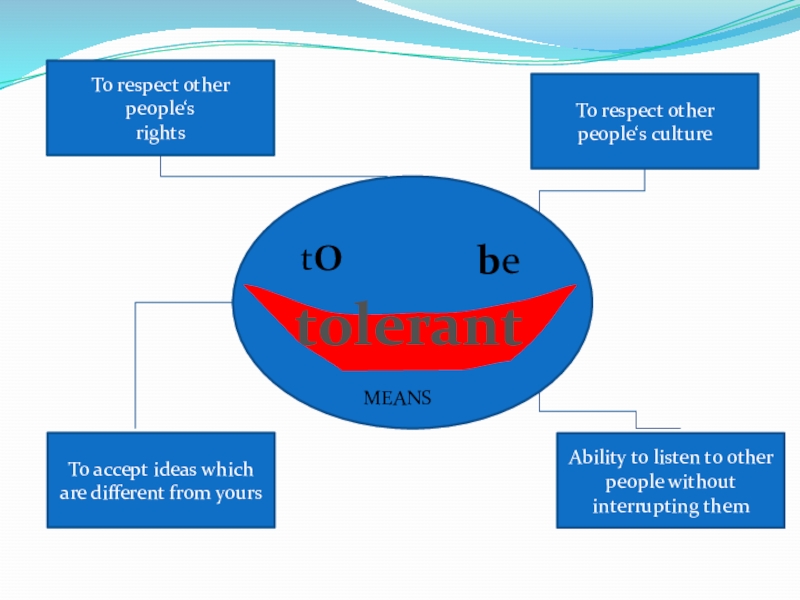
- 5. tObetolerantMEANSTo respect other people‘s rightsAbility to listen
- 6. BUT!We shouldn‘t be tolerant to people who behave violently, rude and immoral
- 7. Plant kindness and love will grow.It is
- 8. Слайд 8
- 9. Инфинитив представляет собой неличную форму глагола, которая
- 10. Инфинитив сочетает в себе функции существительного и
- 11. частью сказуемого (после глагола связки to be):
- 12. дополнением (частью сложного дополнения)I asked him to
- 13. обстоятельством цели:I went to the station (in
- 14. Инфинитив обычно употребляют с частицей
- 15. hope (надеяться) offer (предлагать) seem
- 16. Be tolerant! And you’ll prevent All
What is a conflict? A conflict – a clash of opposing goals, interests, opinions and views of people. It is a natural thing in our life
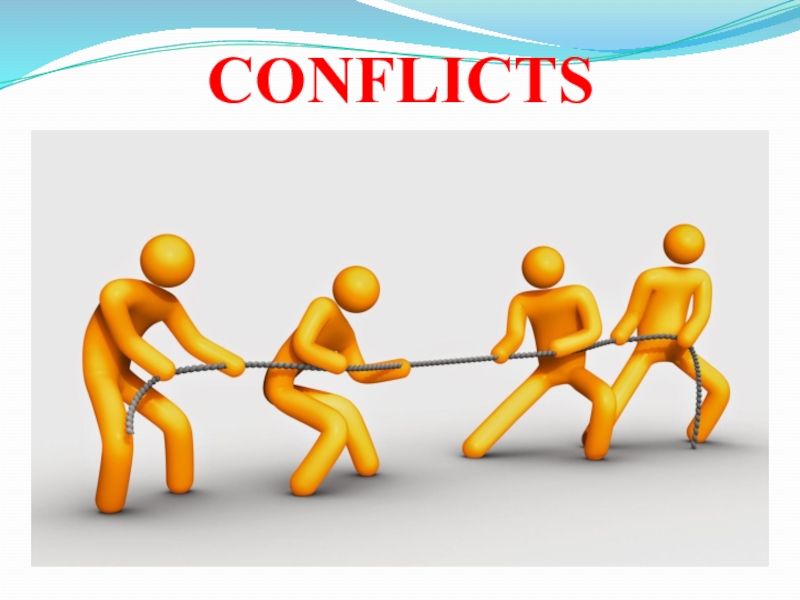
Слайд 2What is a conflict?
A conflict – a clash of
opposing goals, interests, opinions and views of people. It is a natural thing in our life
Слайд 3CONFLICTS
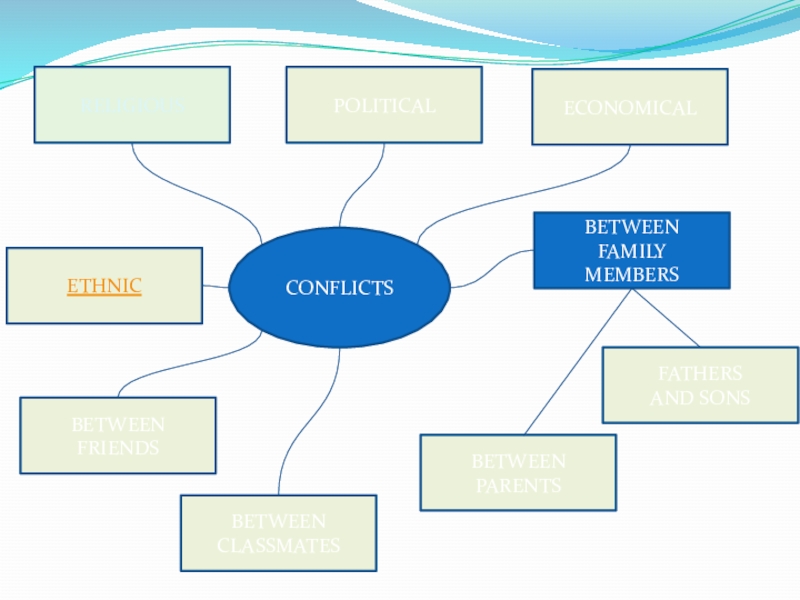
RELIGIOUS
POLITICAL
ECONOMICAL
BETWEEN
FAMILY
MEMBERS
BETWEEN
PARENTS
FATHERS
AND SONS
ETHNIC
BETWEEN
FRIENDS
BETWEEN
CLASSMATES
Слайд 4What is a conflict?
What is a conflict? –It’s a harmful thing.
That
makes us rude and cruel.
It breaks relationship and peace
And starts the fights and quarrels.
What should we do?
Who has to help us live without conflicts?
Don’t do to people harm!
And learn TO LIVE IN FRIENDSHIP!
It breaks relationship and peace
And starts the fights and quarrels.
What should we do?
Who has to help us live without conflicts?
Don’t do to people harm!
And learn TO LIVE IN FRIENDSHIP!
Слайд 5tO
be
tolerant
MEANS
To respect other people‘s
rights
Ability to listen to other
people without
interrupting them
To accept ideas which
are different from yours
To respect other people‘s culture
Слайд 7Plant kindness and love will grow.
It is easier to leave angry
words unspoken than to mend a heart those words have broken.
When someone does something good, applaud! You will make two people happy.
When angry, count to ten before you speak; when very angry, count to hundred.
We can do not great things, only small things with great love.
When someone does something good, applaud! You will make two people happy.
When angry, count to ten before you speak; when very angry, count to hundred.
We can do not great things, only small things with great love.

Слайд 9Инфинитив представляет собой неличную форму глагола, которая только называет действие.
Он не
имеет ни лица, ни числа и соответствует неопределённой
форме глагола в русском языке.
В словаре глагол даётся обычно в форме инфинитива.
Формальным признаком инфинитива является частица to.
to read – читать
to travel – путешествовать I like to help.
Я люблю (что делать?) помогать. Частица to;
Вопрос что делать?
форме глагола в русском языке.
В словаре глагол даётся обычно в форме инфинитива.
Формальным признаком инфинитива является частица to.
to read – читать
to travel – путешествовать I like to help.
Я люблю (что делать?) помогать. Частица to;
Вопрос что делать?
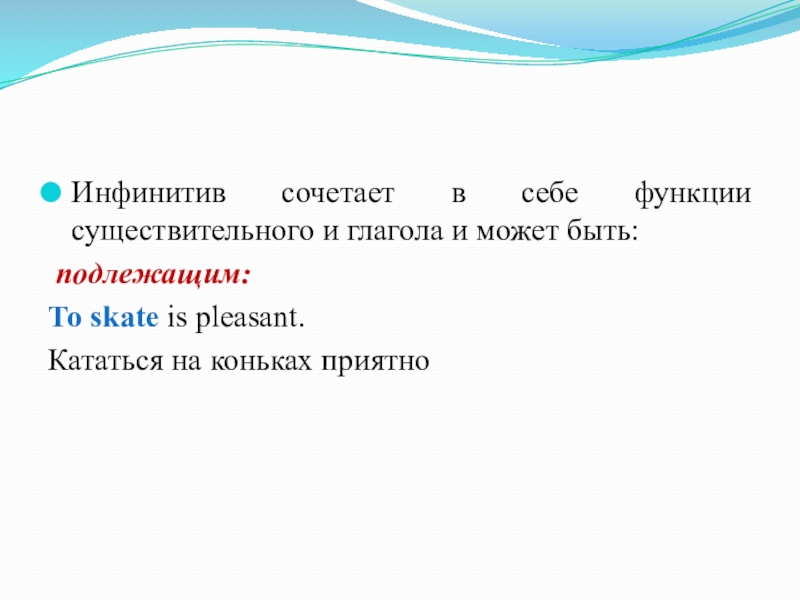
Слайд 10Инфинитив сочетает в себе функции существительного и глагола и может быть:
подлежащим:
То skate is pleasant.
Кататься на коньках приятно
То skate is pleasant.
Кататься на коньках приятно
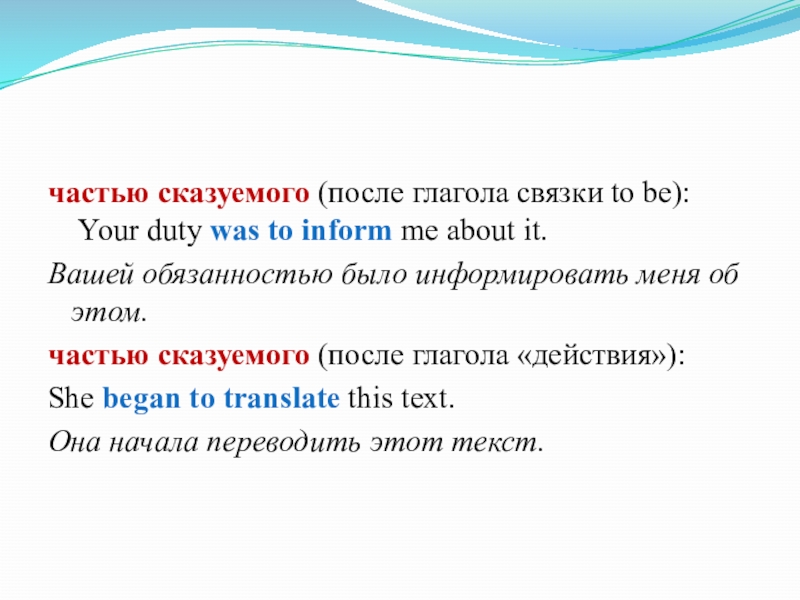
Слайд 11частью сказуемого (после глагола связки to be): Your duty was to inform
me about it.
Вашей обязанностью было информировать меня об этом.
частью сказуемого (после глагола «действия»):
She began to translate this text.
Она начала переводить этот текст.
Вашей обязанностью было информировать меня об этом.
частью сказуемого (после глагола «действия»):
She began to translate this text.
Она начала переводить этот текст.
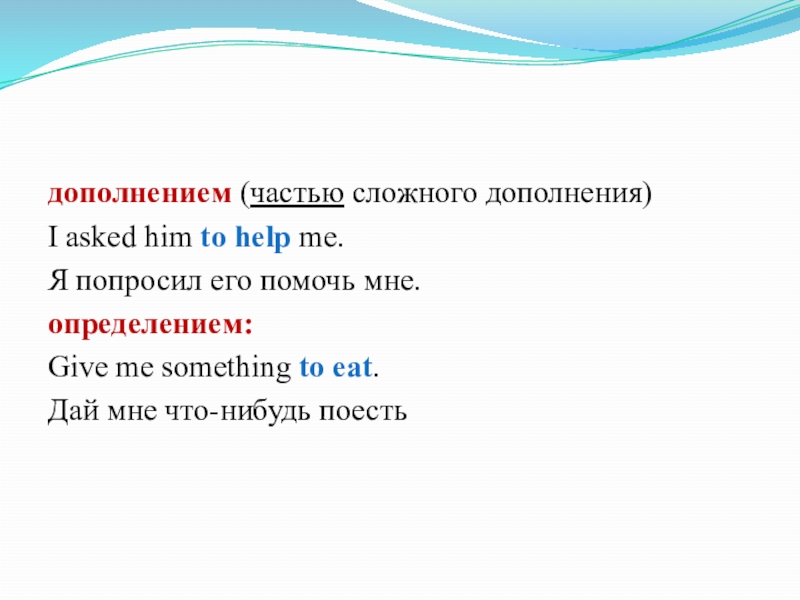
Слайд 12дополнением (частью сложного дополнения)
I asked him to help me.
Я попросил его
помочь мне.
определением:
Give me something to eat.
Дай мне что-нибудь поесть
определением:
Give me something to eat.
Дай мне что-нибудь поесть
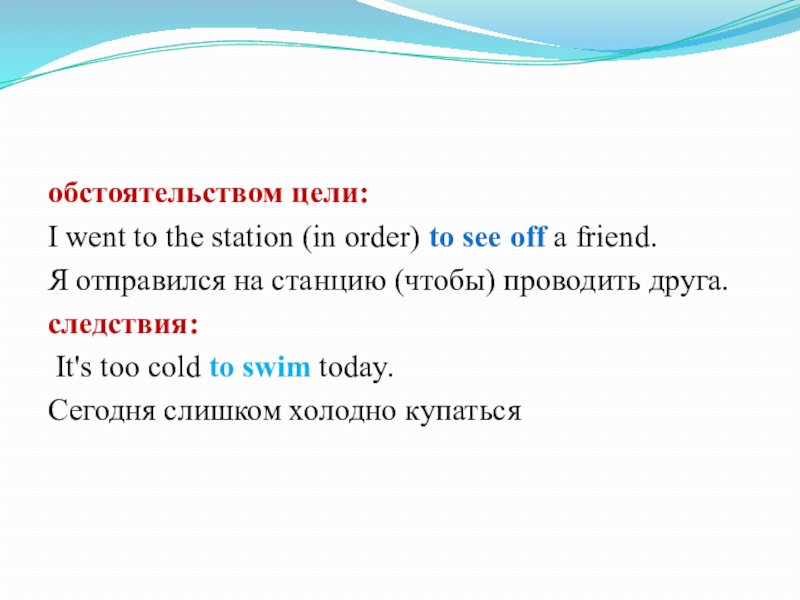
Слайд 13обстоятельством цели:
I went to the station (in order) to see off
a friend.
Я отправился на станцию (чтобы) проводить друга.
следствия:
It's too cold to swim today.
Сегодня слишком холодно купаться
Я отправился на станцию (чтобы) проводить друга.
следствия:
It's too cold to swim today.
Сегодня слишком холодно купаться
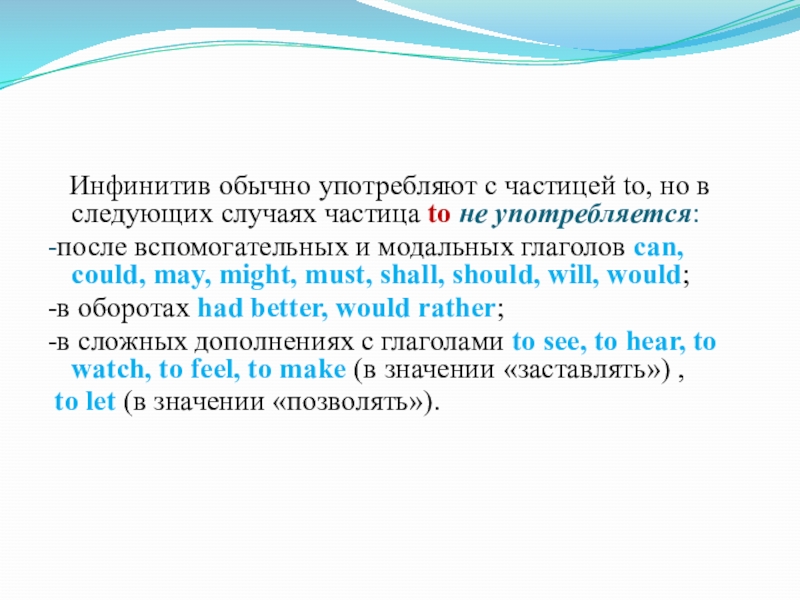
Слайд 14 Инфинитив обычно употребляют с частицей to, но в следующих
случаях частица to не употребляется:
-после вспомогательных и модальных глаголов can, could, may, might, must, shall, should, will, would;
-в оборотах had better, would rather;
-в сложных дополнениях с глаголами to see, to hear, to watch, to feel, to make (в значении «заставлять») ,
to let (в значении «позволять»).
-после вспомогательных и модальных глаголов can, could, may, might, must, shall, should, will, would;
-в оборотах had better, would rather;
-в сложных дополнениях с глаголами to see, to hear, to watch, to feel, to make (в значении «заставлять») ,
to let (в значении «позволять»).
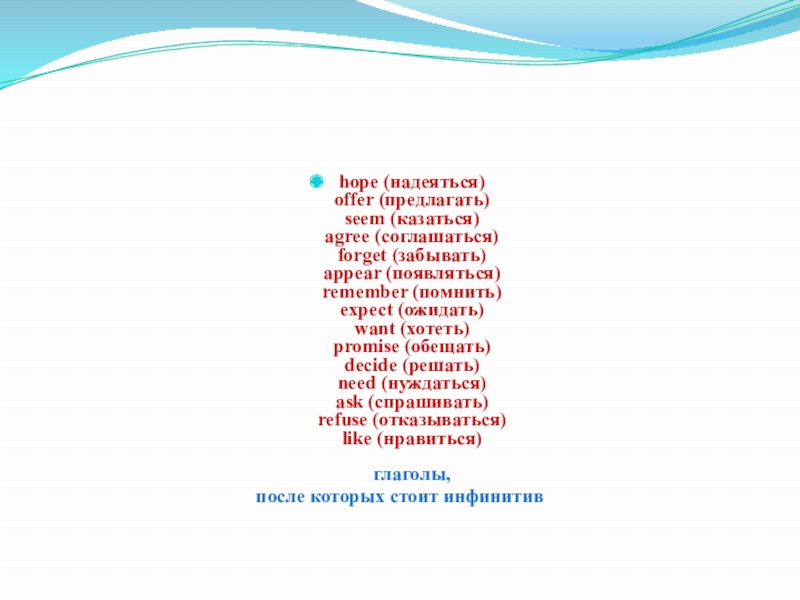
Слайд 15hope (надеяться) offer (предлагать) seem (казаться) agree (соглашаться) forget (забывать) appear
(появляться)
remember (помнить)
expect (ожидать)
want (хотеть)
promise (обещать)
decide (решать)
need (нуждаться)
ask (спрашивать)
refuse (отказываться)
like (нравиться)
глаголы,
после которых стоит инфинитив
после которых стоит инфинитив
Слайд 16Be tolerant! And you’ll prevent All conflicts in the world! We should learn
to live in peace
With classmates, parents, friends.