- Главная
- Разное
- Образование
- Спорт
- Естествознание
- Природоведение
- Религиоведение
- Французский язык
- Черчение
- Английский язык
- Астрономия
- Алгебра
- Биология
- География
- Геометрия
- Детские презентации
- Информатика
- История
- Литература
- Математика
- Музыка
- МХК
- Немецкий язык
- ОБЖ
- Обществознание
- Окружающий мир
- Педагогика
- Русский язык
- Технология
- Физика
- Философия
- Химия
- Шаблоны, фоны, картинки для презентаций
- Экология
- Экономика
Презентация, доклад на тему Internal combustion engine
Содержание
- 1. Internal combustion engine
- 2. The internal combustion engine is an engine
- 3. In an internal combustion engine the expansion
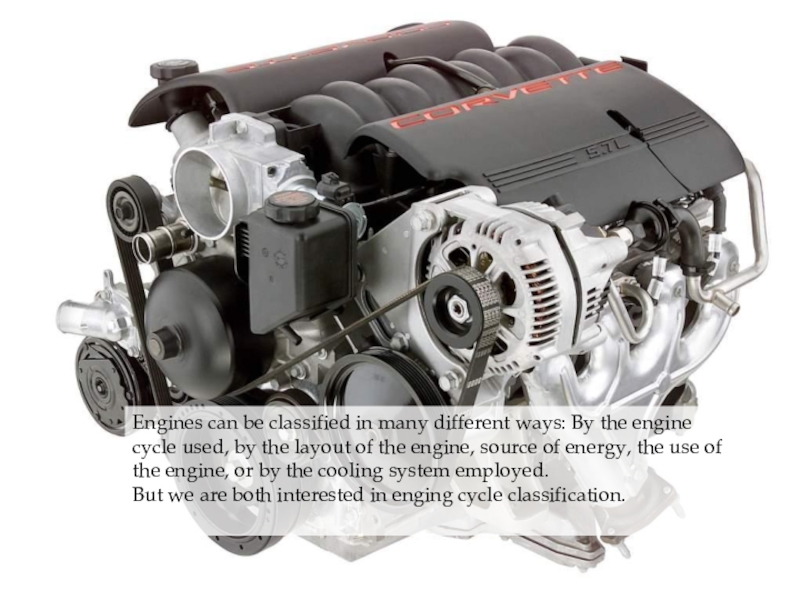
- 4. Engines can be classified in many different
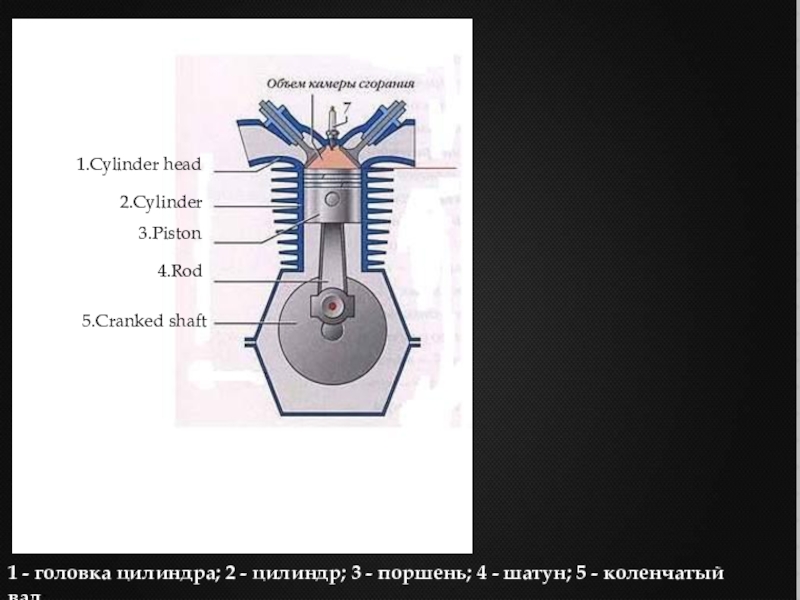
- 5. 1.Cylinder head2.Cylinder3.Piston4.Rod5.Cranked shaft1 - головка цилиндра; 2
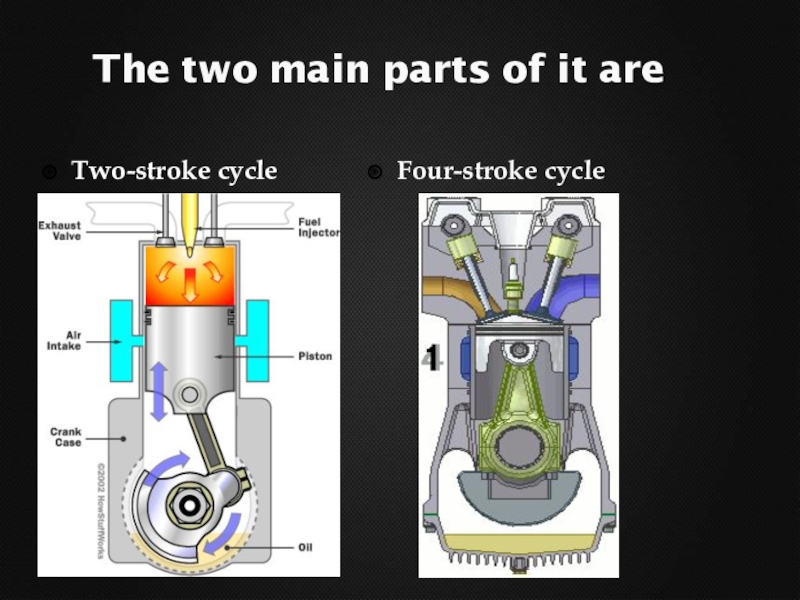
- 6. The two main parts of it are Two-stroke cycleFour-stroke cycle
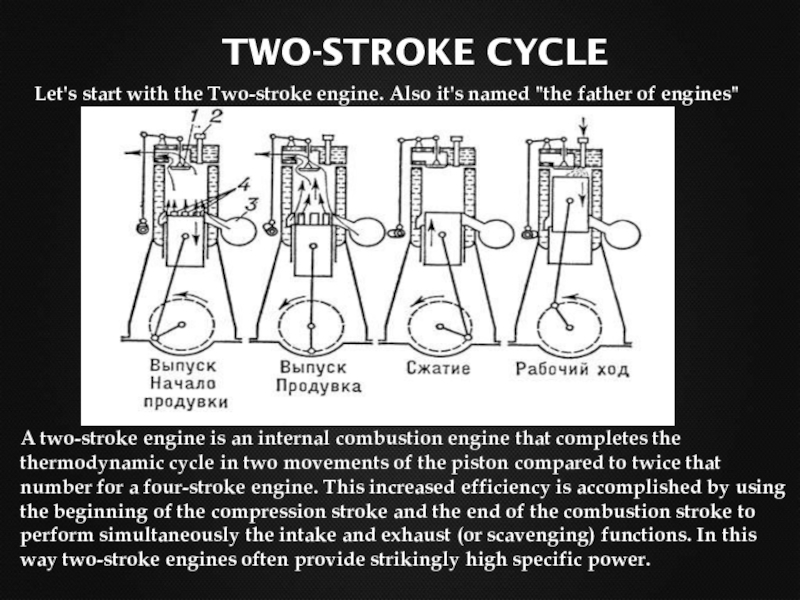
- 7. TWO-STROKE CYCLELet's start with the Two-stroke engine.
- 8. A two-stroke engine, in this case with
- 9. InventionInvention of the two-stroke cycle is attributed
- 10. The two-stroke engine was most popular throughout
- 11. Four-stroke engineToday, internal combustion engines in cars,
- 12. And let see how to increase the
- 13. SUPERCHARGING One way to increase engine power
- 14. Turbocharging The turbocharger was designed as a
- 15. When idling, and at low-to-moderate speeds, the
- 16. Turbocharging allows for more efficient engine operation

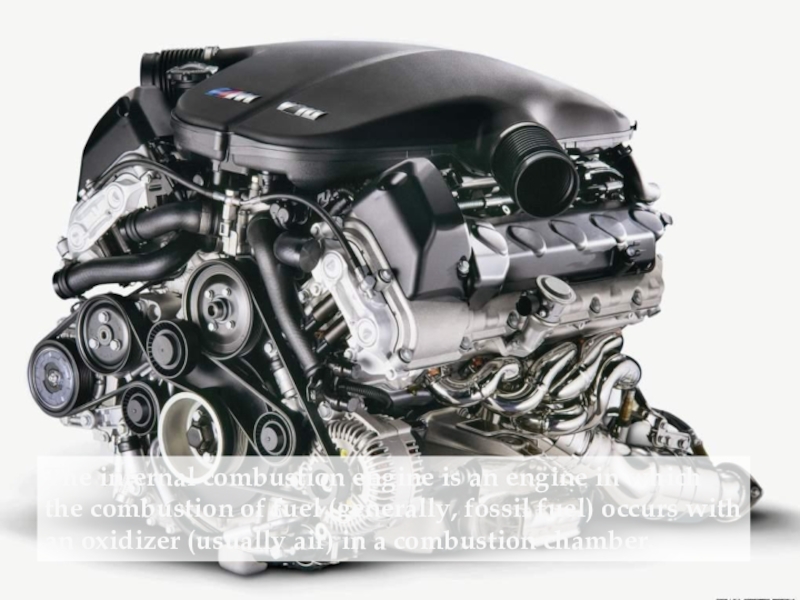
Слайд 2The internal combustion engine is an engine in which the combustion
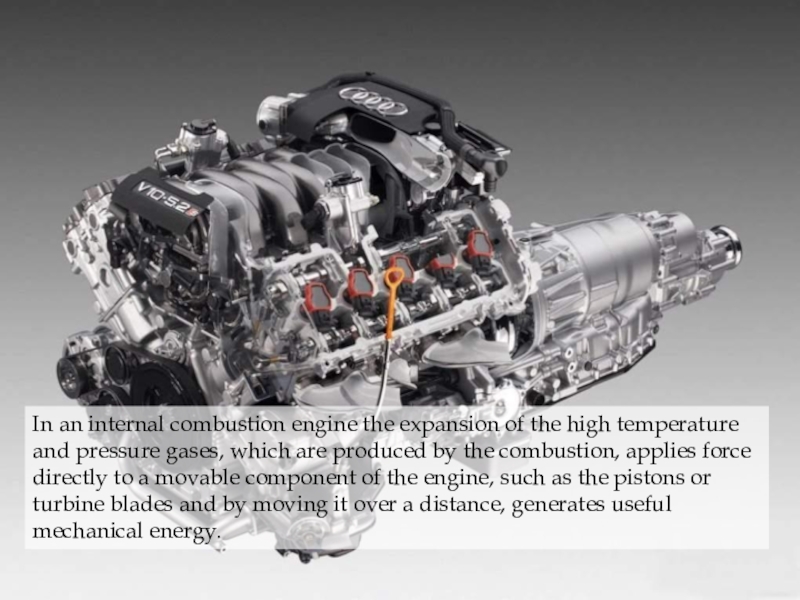
Слайд 3In an internal combustion engine the expansion of the high temperature
Слайд 4Engines can be classified in many different ways: By the engine
But we are both interested in enging cycle classification.
Слайд 51.Cylinder head
2.Cylinder
3.Piston
4.Rod
5.Cranked shaft
1 - головка цилиндра; 2 - цилиндр; 3 -
Слайд 7TWO-STROKE CYCLE
Let's start with the Two-stroke engine. Also it's named "the
A two-stroke engine is an internal combustion engine that completes the thermodynamic cycle in two movements of the piston compared to twice that number for a four-stroke engine. This increased efficiency is accomplished by using the beginning of the compression stroke and the end of the combustion stroke to perform simultaneously the intake and exhaust (or scavenging) functions. In this way two-stroke engines often provide strikingly high specific power.
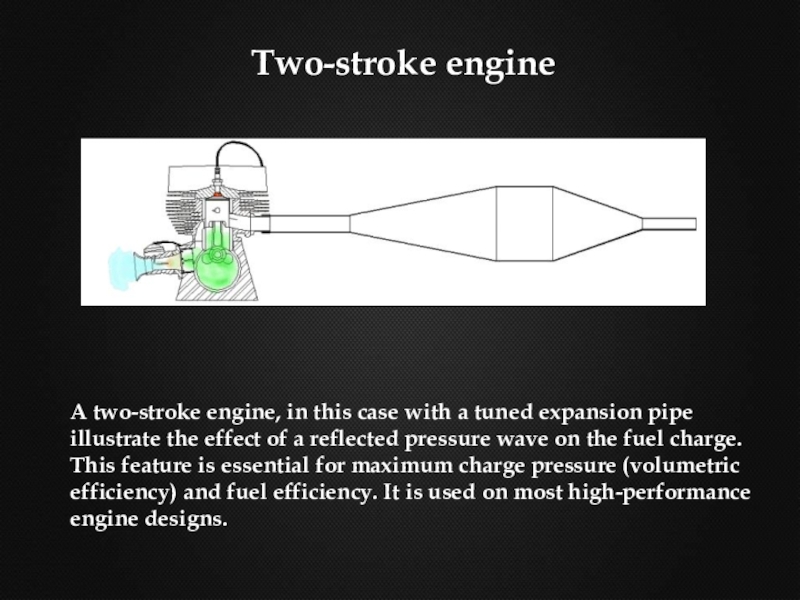
Слайд 8A two-stroke engine, in this case with a tuned expansion pipe
Two-stroke engine
Слайд 9Invention
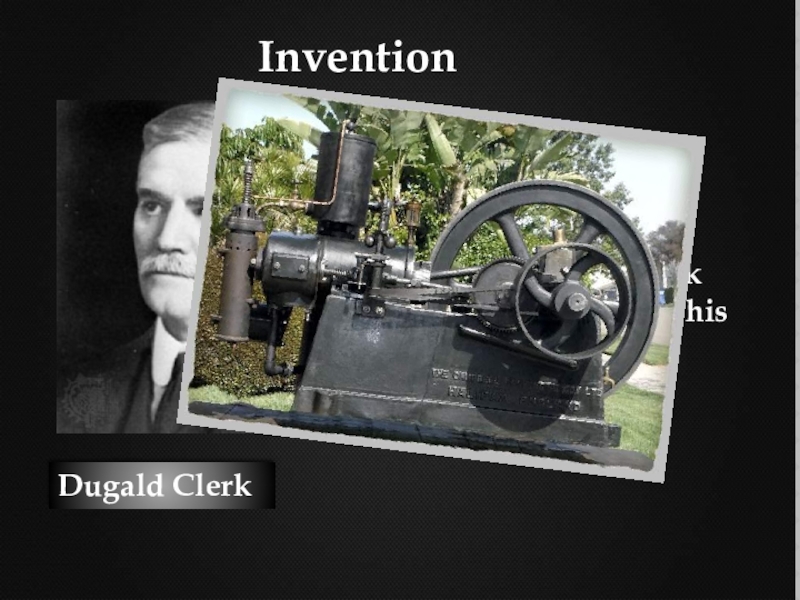
Invention of the two-stroke cycle is attributed to Scottish engineer Dugald
Dugald Clerk
Слайд 10
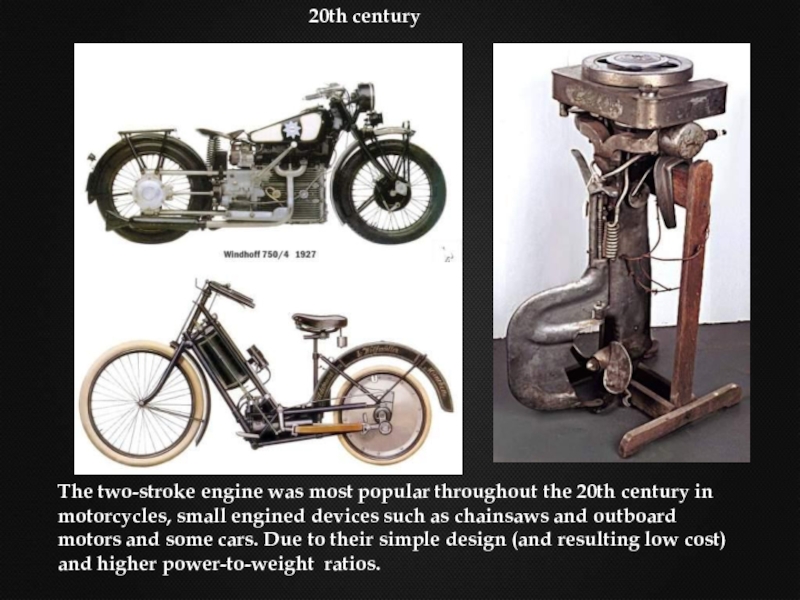
The two-stroke engine was most popular throughout the 20th century in
20th century
Слайд 11Four-stroke engine
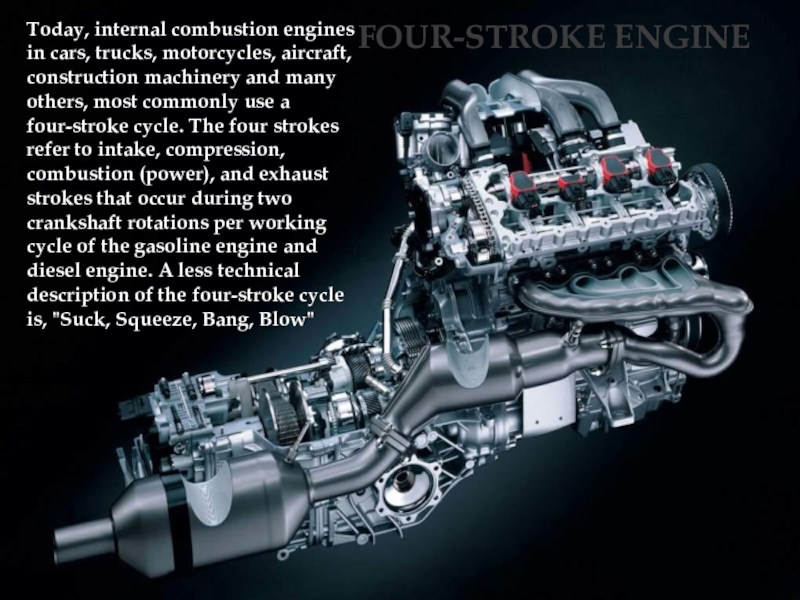
Today, internal combustion engines in cars, trucks, motorcycles, aircraft, construction
FOUR-STROKE ENGINE
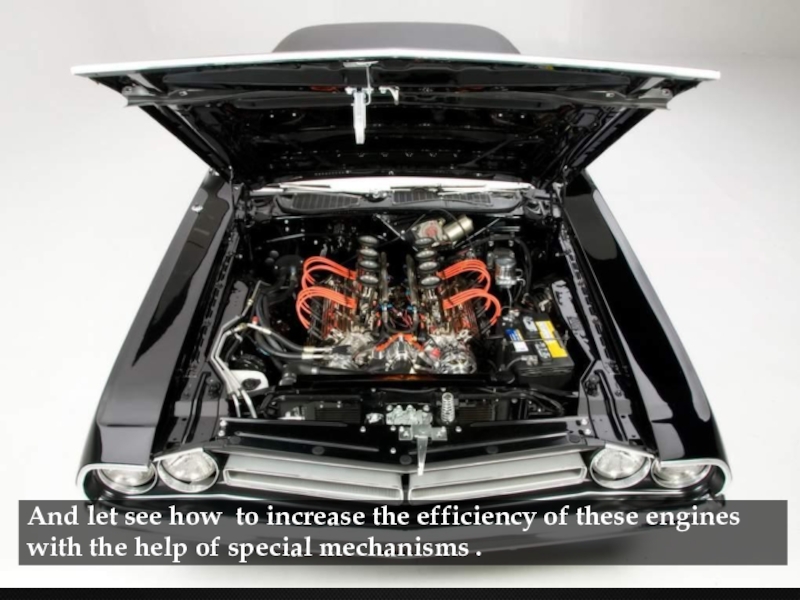
Слайд 12And let see how to increase the efficiency of these engines
Слайд 13SUPERCHARGING
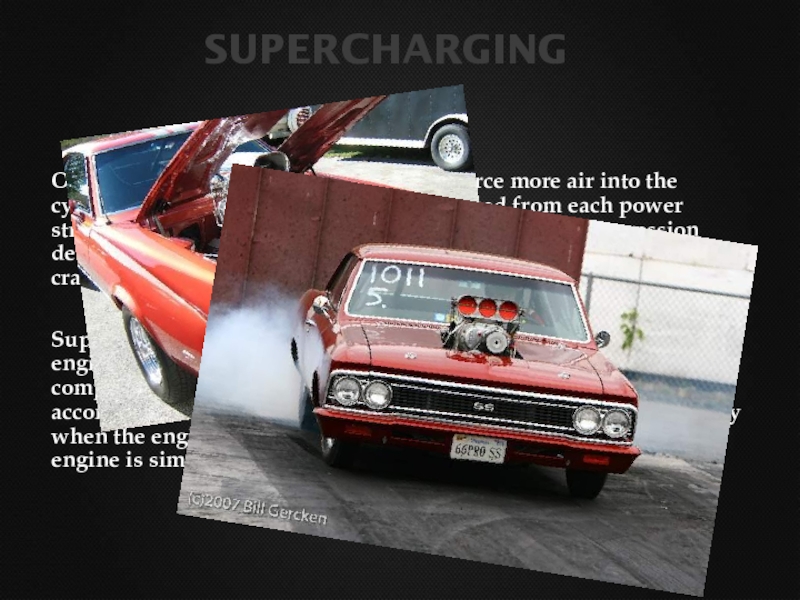
One way to increase engine power is to force more air
Supercharging increases the power output limits of four-stroke engine, but the supercharger is always running. Continuous compression of the intake air requires some mechanical energy to accomplish, so the supercharger has a cost of reduced fuel efficiency when the engine is operating at low power levels or when the engine is simply unloaded and idling.
Слайд 14Turbocharging
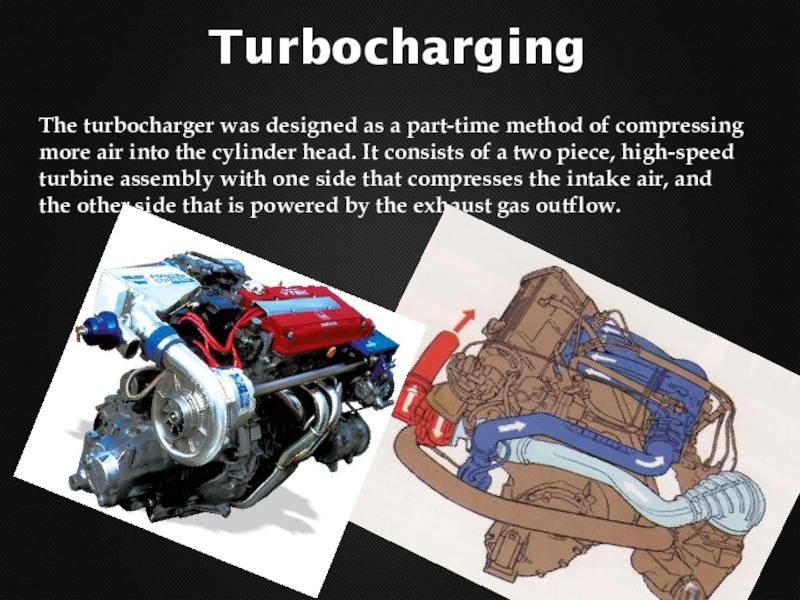
The turbocharger was designed as a part-time method of compressing more
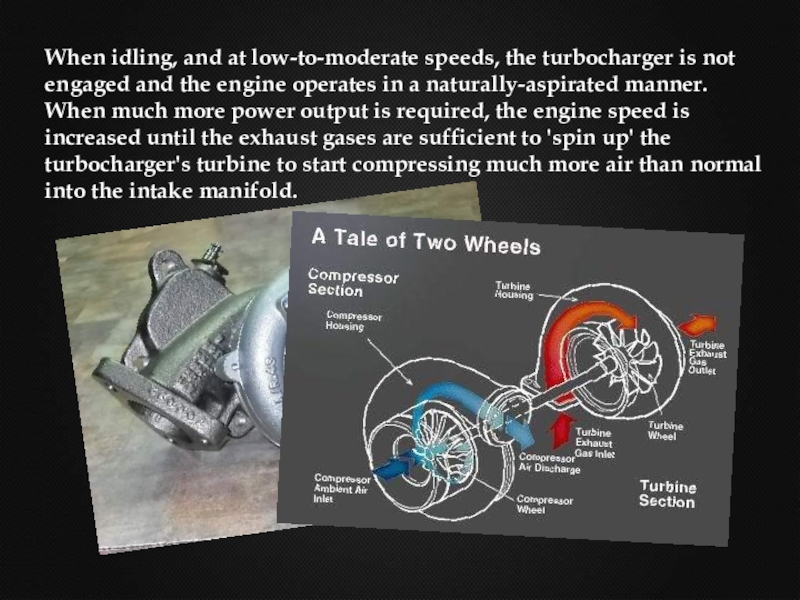
Слайд 15When idling, and at low-to-moderate speeds, the turbocharger is not engaged
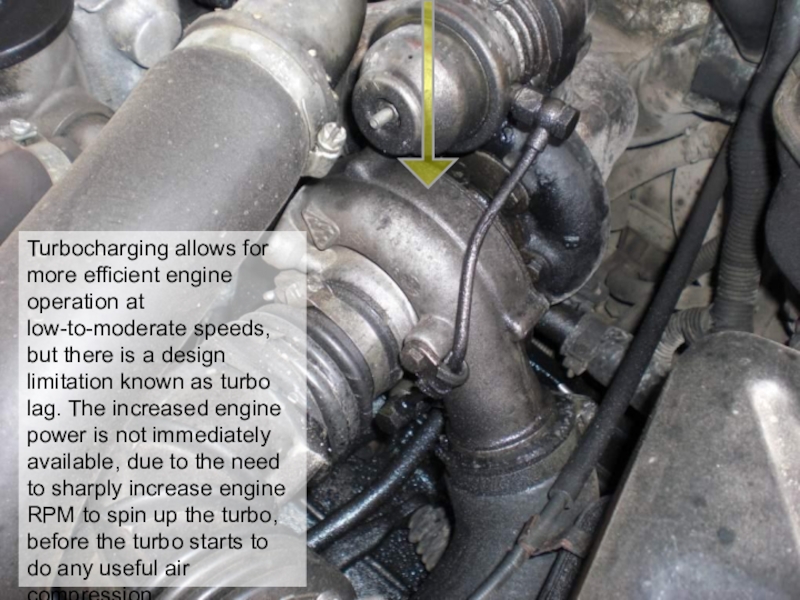
Слайд 16Turbocharging allows for more efficient engine operation at low-to-moderate speeds, but
Turbocharging allows for more efficient engine operation at low-to-moderate speeds, but there is a design limitation known as turbo lag. The increased engine power is not immediately available, due to the need to sharply increase engine RPM to spin up the turbo, before the turbo starts to do any useful air compression.