Слайд 1Учебный информационный проект по английскому языку
История Британии
Люди древней Британии
Выполнил: ученик
8 А класса
Безверхов Владимир
Руководитель: учитель английского языка
Берлет И. В.
Екатеринбург, 2016
Государственное казенное общеобразовательное учреждение Свердловской области «Екатеринбургская школа-интернат «Эверест»
Слайд 2History of Britain
People of Ancient Britain
By Bezverhov Vladimir
Teacher Berlet Irina
Yekaterinburg,
2016
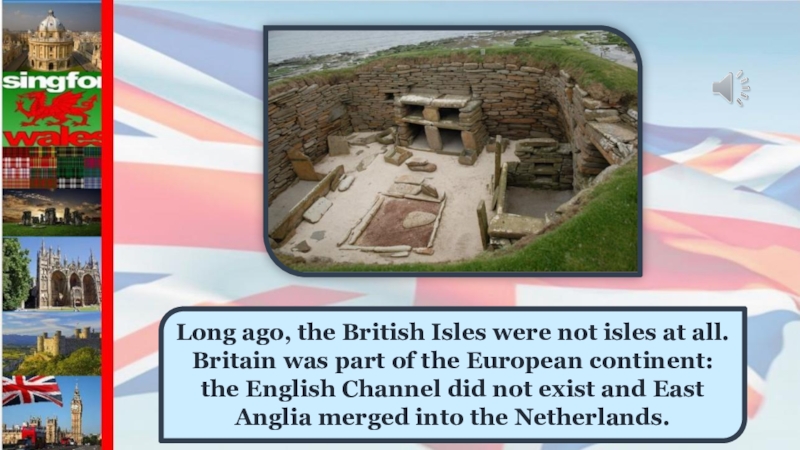
Слайд 3Long ago, the British Isles were not isles at all. Britain
was part of the European continent: the English Channel did not exist and East Anglia merged into the Netherlands.
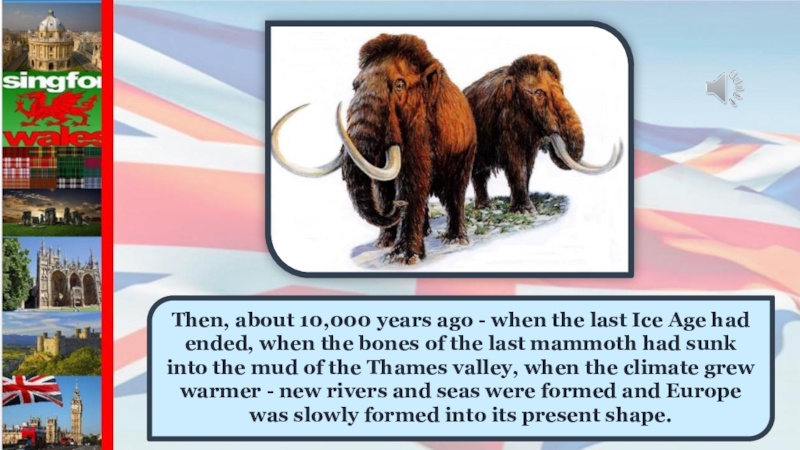
Слайд 4Then, about 10,000 years ago - when the last Ice Age
had ended, when the bones of the last mammoth had sunk into the mud of the Thames valley, when the climate grew warmer - new rivers and seas were formed and Europe was slowly formed into its present shape.
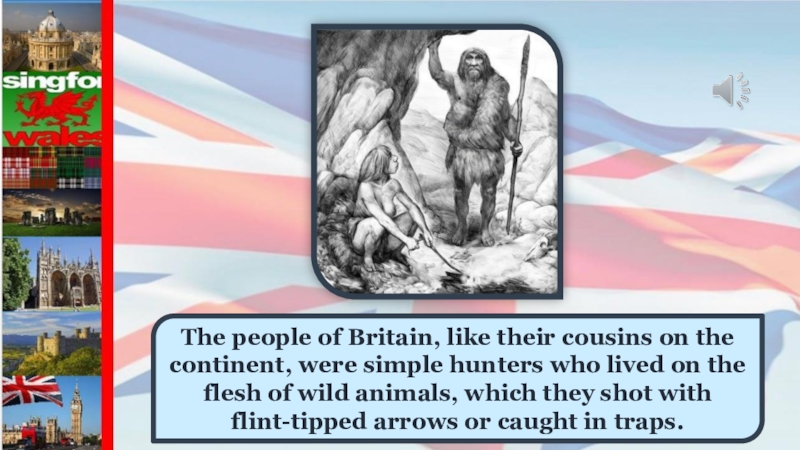
Слайд 5The people of Britain, like their cousins оn the continent, were
simple hunters who lived оn the flesh of wild animals, which they shot with flint-tipped arrows or caught in traps.
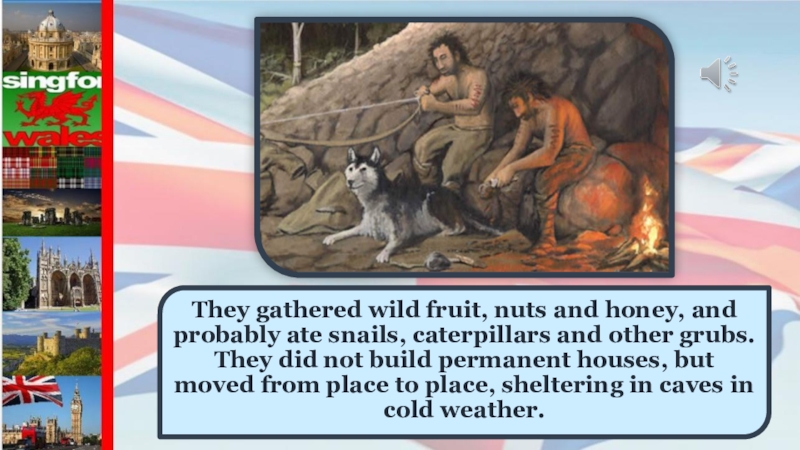
Слайд 6They gathered wild fruit, nuts and honey, and probably ate snails,
caterpillars and other grubs. They did not build permanent houses, but moved from place to place, sheltering in caves in cold weather.
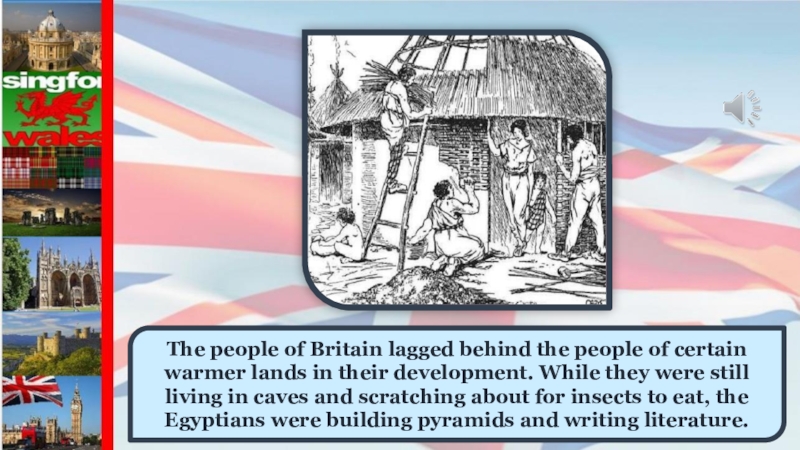
Слайд 7The people of Britain lagged behind the people of certain warmer
lands in their development. While they were still living in caves and scratching about for insects to eat, the Egyptians were building pyramids and writing literature.
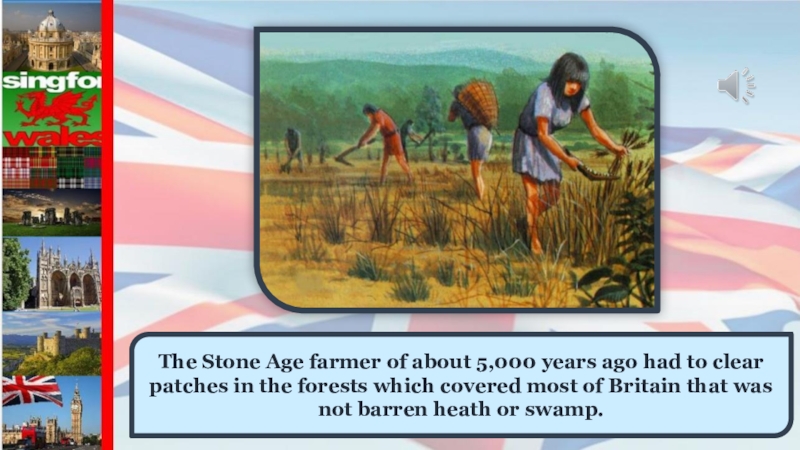
Слайд 8The Stone Age farmer of about 5,000 years ago had to
clear patches in the forests which covered most of Britain that was not barren heath or swamp.
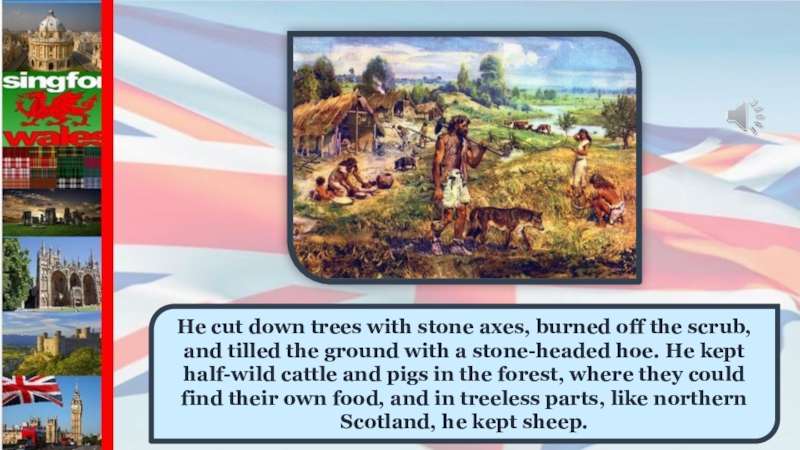
Слайд 9Не cut down trees with stone axes, burned off the scrub,
and tilled the ground with а stone-headed hoe. Не kept half-wild cattle and pigs in the forest, where they could find their own food, and in treeless parts, like northern Scotland, he kept sheep.
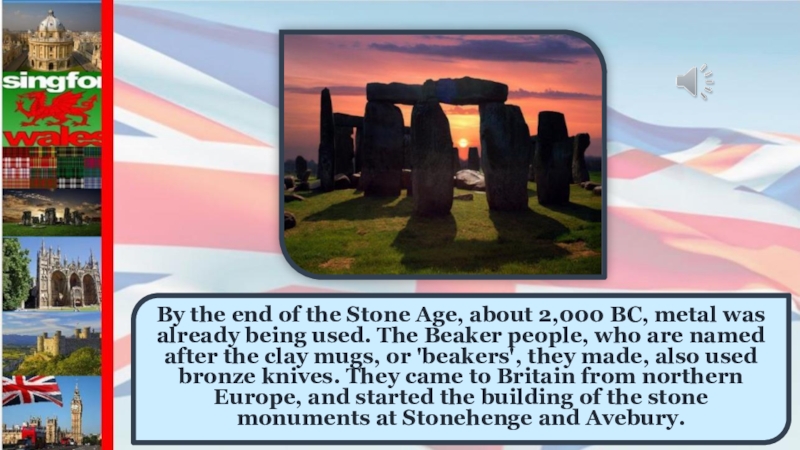
Слайд 10By the end of the Stone Age, about 2,000 BC, metal
was already being used. The Beaker people, who are named after the clay mugs, or 'beakers', they made, also used bronze knives. They came to Britain from northern Europe, and started the building of the stone monuments at Stonehenge and Avebury.
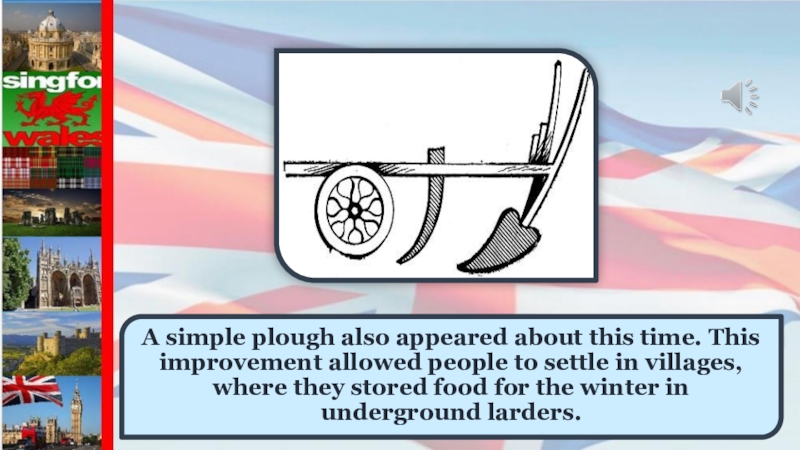
Слайд 11А simple plough also appeared about this time. This improvement allowed
people to settle in villages, where they stored food for the winter in underground larders.
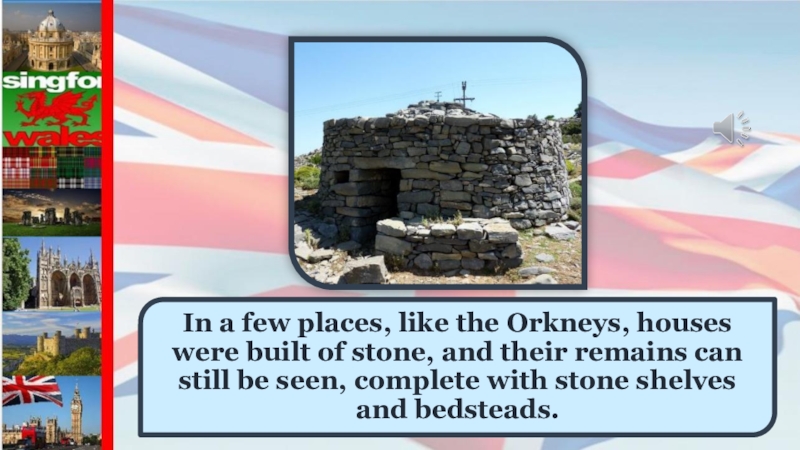
Слайд 12In a few places, like the Orkneys, houses were built of
stone, and their remains can still be seen, complete with stone shelves and bedsteads.
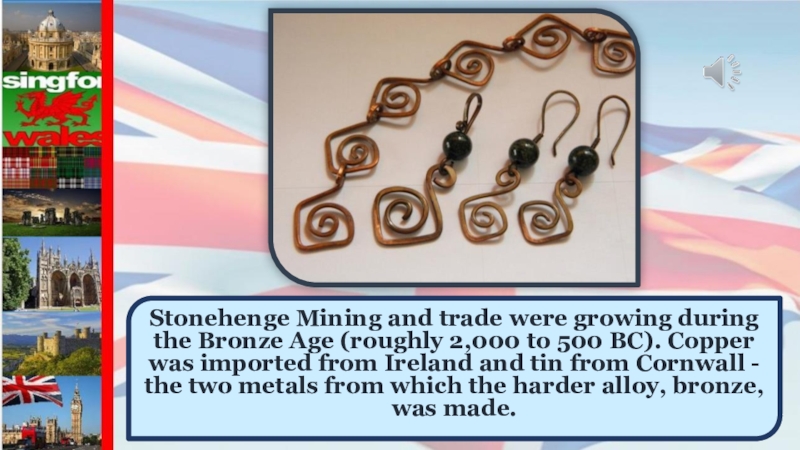
Слайд 13Stonehenge Mining and trade were growing during the Bronze Age (roughly
2,000 to 500 BC). Copper was imported from Ireland and tin from Cornwall - the two metals from which the harder alloy, bronze, was made.
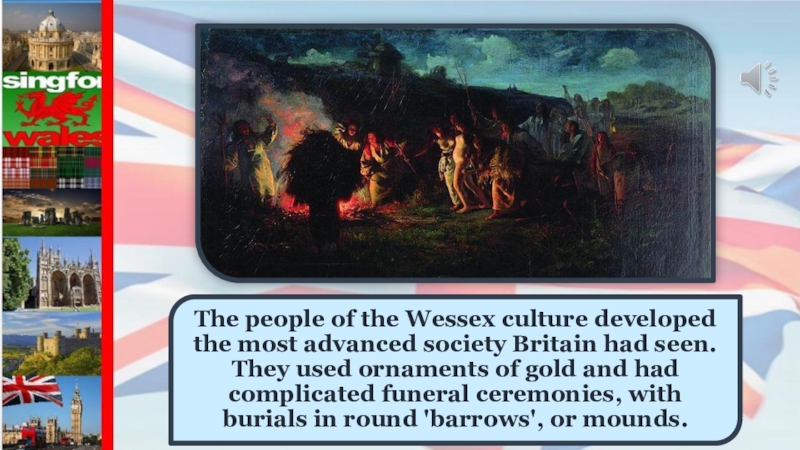
Слайд 14The people of the Wessex culture developed the most advanced society
Britain had seen. They used ornaments of gold and had complicated funeral ceremonies, with burials in round 'barrows', or mounds.
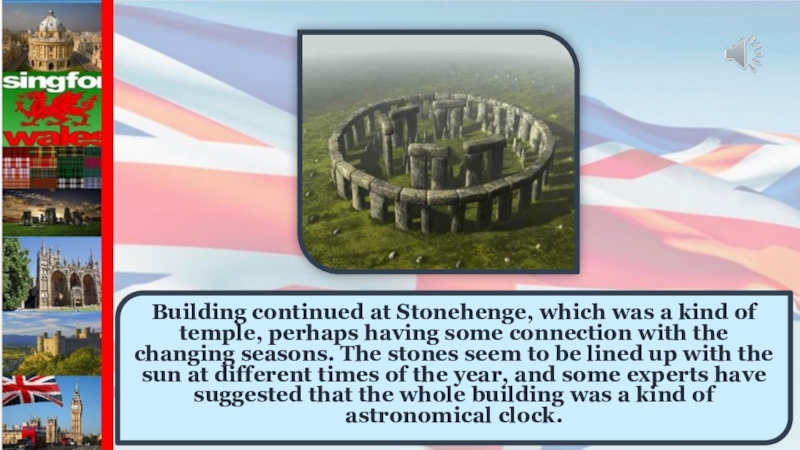
Слайд 15Building continued at Stonehenge, which was а kind of temple, perhaps
having some connection with the changing seasons. The stones seem to be lined up with the sun at different times of the year, and some experts have suggested that the whole building was а kind of astronomical clock.
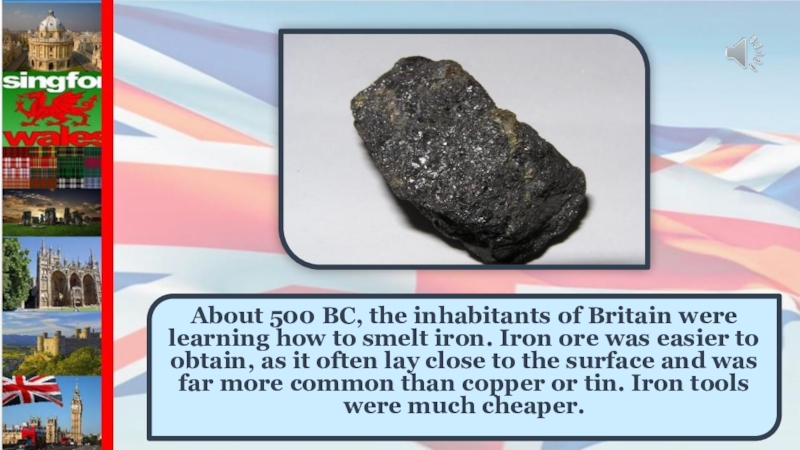
Слайд 16About 500 BC, the inhabitants of Britain were learning how to
smelt iron. Iron ore was easier to obtain, as it often lay close to the surface and was far more common than copper or tin. Iron tools were much cheaper.
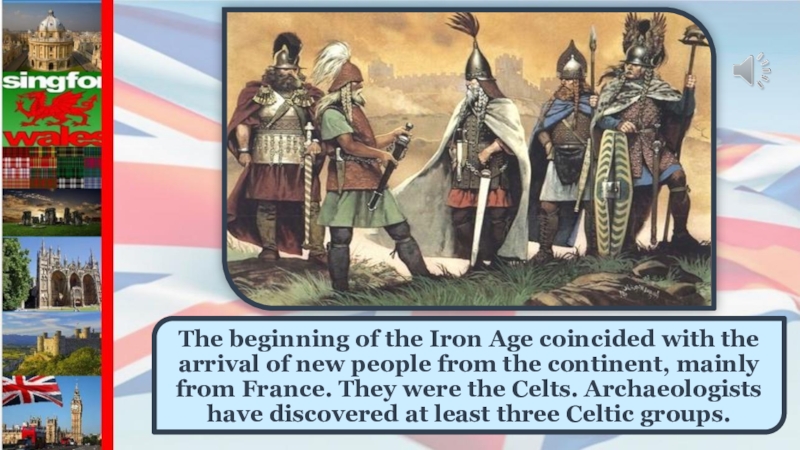
Слайд 17The beginning of the Iron Age coincided with the arrival of
new people from the continent, mainly from France. They were the Celts. Archaeologists have discovered at least three Celtic groups.
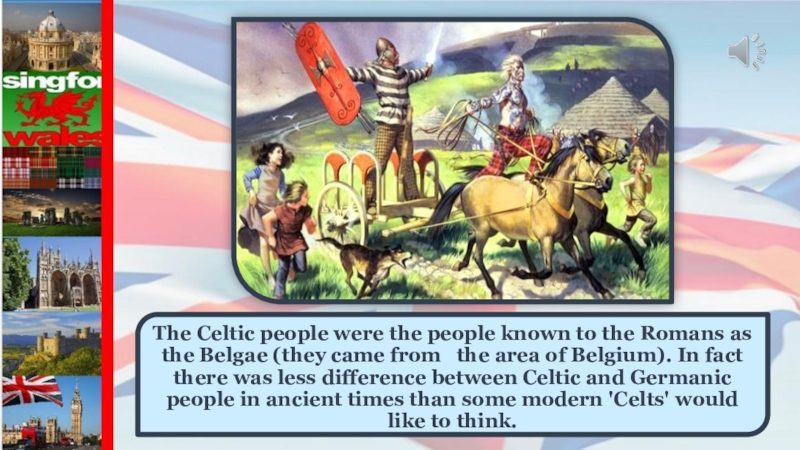
Слайд 18The Сeltic people were the people known to the Romans as
the Belgae (they came from the area of Belgium). In fact there was less difference between Celtic and Germanic people in ancient times than some modern 'Celts' would like to think.
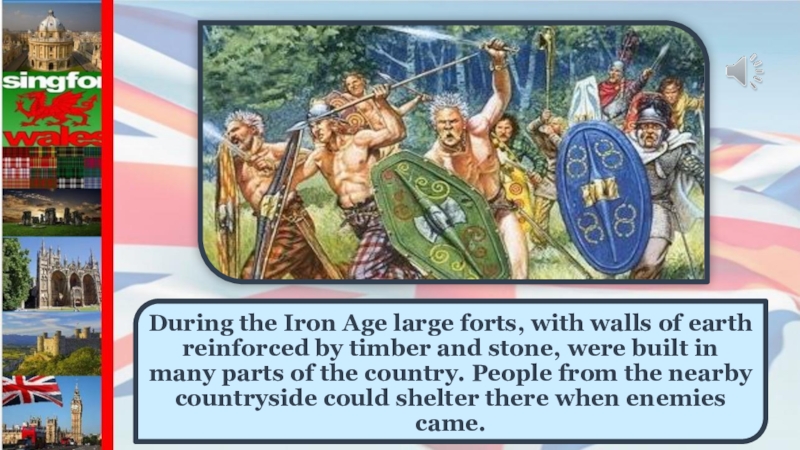
Слайд 19During the Iron Age large forts, with walls of earth reinforced
by timber and stone, were built in many parts of the country. People from the nearby countryside could shelter there when enemies came.
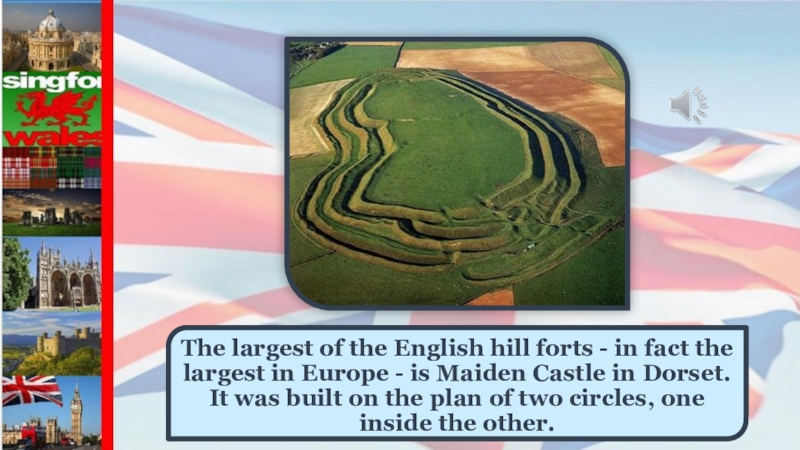
Слайд 20The largest of the English hill forts - in fact the
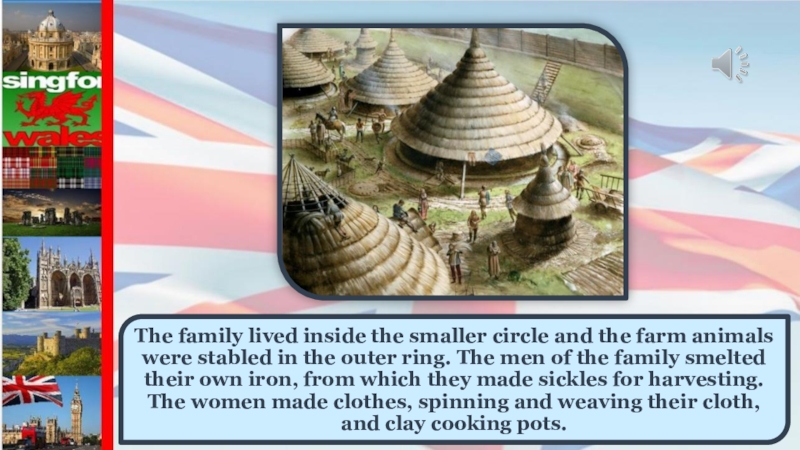
largest in Europe - is Maiden Castle in Dorset. It was built on the plan of two circles, one inside the other.
Слайд 21The family lived inside the smaller circle and the farm animals
were stabled in the outer ring. The men of the family smelted their own iron, from which they made sickles for harvesting. The women made clothes, spinning and weaving their cloth, and clay cooking pots.
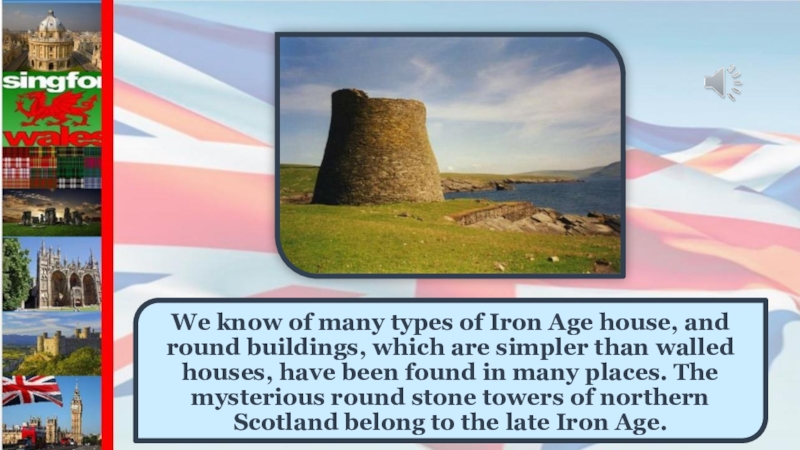
Слайд 22We know of many types of Iron Age house, and round
buildings, which are simpler than walled houses, have been found in many places. The mysterious round stone towers of northern Scotland belong to the late Iron Age.
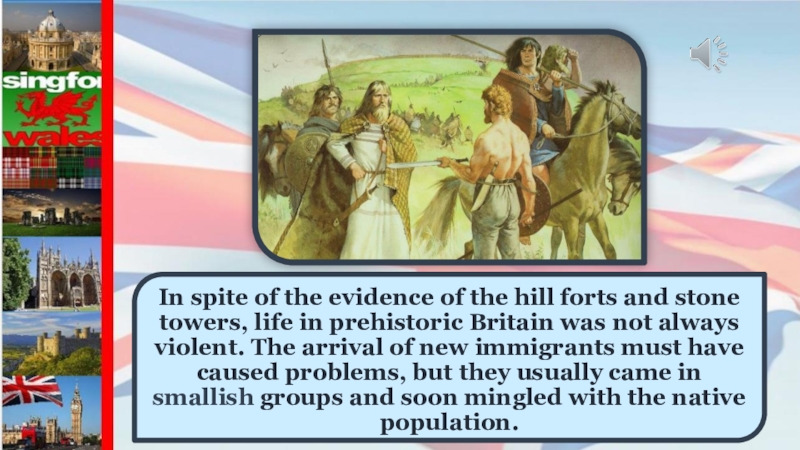
Слайд 23In spite of the evidence of the hill forts and stone
towers, life in prehistoric Britain was not always violent. The arrival of new immigrants must have caused problems, but they usually came in smallish groups and soon mingled with the native population.
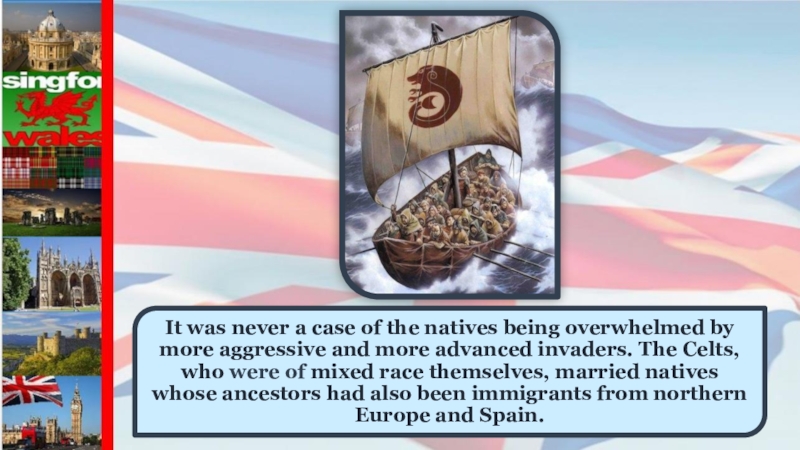
Слайд 24It was never а case of the natives being overwhelmed by
more aggressive and more advanced invaders. The Celts, who were of mixed race themselves, married natives whose ancestors had also been immigrants from northern Europe and Spain.
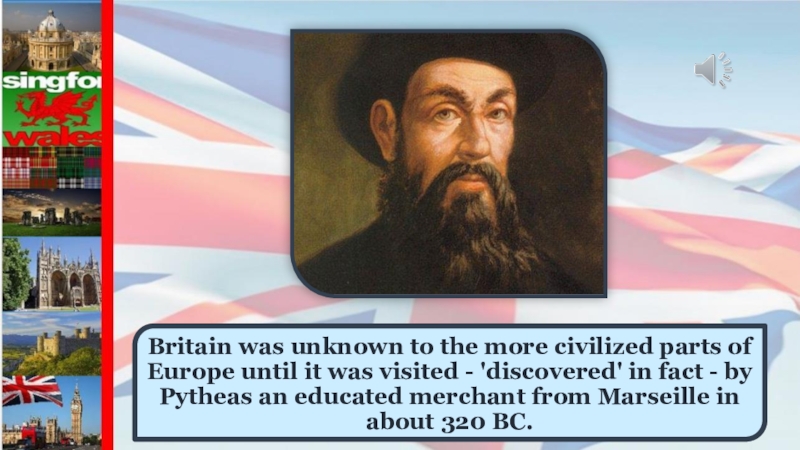
Слайд 25Britain was unknown to the more civilized parts of Europe until
it was visited - 'discovered' in fact - by Pytheas an educated merchant from Marseille in about 320 BC.
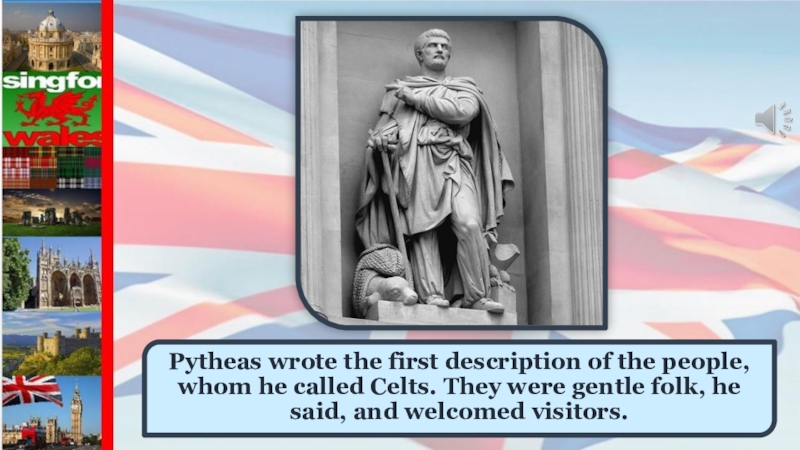
Слайд 26Pytheas wrote the first description of the people, whom he called
Celts. They were gentle folk, he said, and welcomed visitors.
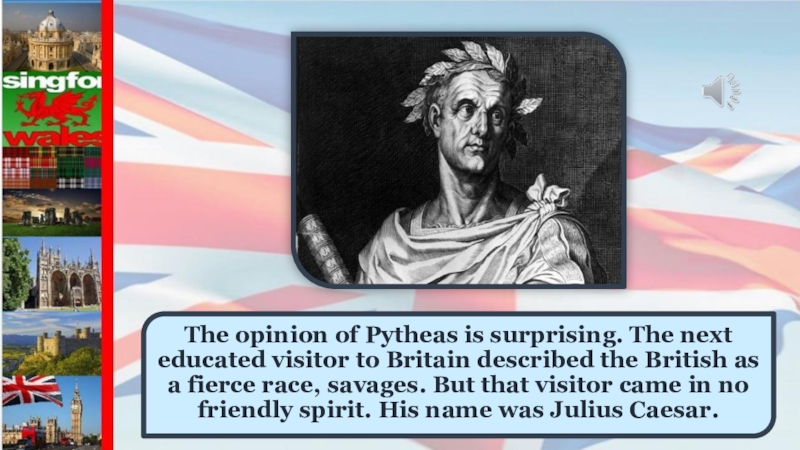
Слайд 27The opinion of Pytheas is surprising. The next educated visitor to
Britain described the British as а fierce race, savages. But that visitor came in no friendly spirit. His name was Julius Caesar.
Слайд 29http://4flaga.ru/hb/
https://vk.com/albums-11443280?z=photo-11443280_283692112%2Fphotos-11443280
https://vk.com/albums-11443280?z=photo-11443280_283692092%2Fphotos-11443280
https://vk.com/albums-11443280?z=photo-11443280_283692086%2Fphotos-11443280
https://vk.com/albums-11443280?z=phot-11443280_283690659%2Fphotos-11443280
https://vk.com/albums-11443280?z=photo-11443280_283690656%2Fphotos-11443280
https://vk.com/albums-11443280?z=photo-11443280_283690647%2Fphotos-11443280
https://vk.com/albums-11443280?z=photo-11443280_283690644%2Fphotos-11443280
http://bigpicture.ru/?p=71200
http://bshine.ru/forum/20-2185-1
http://www.e-reading.club/chapter.php/1003050/12/Kvennell_Mardzhori_-_Pervobytnye_lyudi._Byt_religiya_kultura.html
http://4flaga.ru/104-people-of-ancient-britain.html
https://ru.wikipedia.org/wiki/%D0%91%D1%80%D0%B8%D1%82%D0%B0%D0%BD%D0%B8%D1%8F_(%D0%BE%D1%81%D1%82%D1%80%D0%BE%D0%B2)
http://othereal.ru/magiya-i-mistika-druidov/
https://upload.wikimedia.org/wikipedia/commons/a/ae/Columba_at_Bridei%27s_fort.jpg
http://azenglish.ru/istoriya-velikobritanii-na-angliyskom/
http://vk.com/audios-154285
The list of sources
Слайд 30http://wildfiregames.com/~art/history/celts/images/brit_celtas14.jpg
http://www.tiron.gm-clan.ru/netcat_files/Sites/id149/fck/Image/90798_2.jpg
http://img.tourbina.ru/photos.3/2/1/210158/big.photo/Skara-Brey-Khobitaun.jpg
http://www.hadrianswallquest.co.uk/sites/default/files/Wallsend%20recon%20painting.jpg
http://www.iltempo.it/polopoly_fs/1.1132102.1366743164!/image/image.jpg
http://wildfiregames.com/users/art/history/celts/images/neuchatel_9celtas12.jpg
http://i.ucrazy.ru/files/pics/2014.09/1410840001_11.jpg
http://www.fourwinds10.net/resources/uploads/image/57264-4.jpg
http://wallpaper.metalship.org/walls/metalship-guerrier-celte.jpg
https://music.yandex.ru/genre/celtic
http://www.historie.ru/uploads/jmgallery/99/1016091773.jpg
http://www.galiciaunica.es/wp-content/uploads/2012/12/Maeloc-el-Obispo-Caudillo..jpg
http://www.saieditor.com/falco/images/londinium.jpg
http://img.4plebs.org/boards/tg/image/1420/54/1420541339341.jpg
http://www.prehistoryforkids.archeologia.ru/54/49.gif