- Главная
- Разное
- Образование
- Спорт
- Естествознание
- Природоведение
- Религиоведение
- Французский язык
- Черчение
- Английский язык
- Астрономия
- Алгебра
- Биология
- География
- Геометрия
- Детские презентации
- Информатика
- История
- Литература
- Математика
- Музыка
- МХК
- Немецкий язык
- ОБЖ
- Обществознание
- Окружающий мир
- Педагогика
- Русский язык
- Технология
- Физика
- Философия
- Химия
- Шаблоны, фоны, картинки для презентаций
- Экология
- Экономика
Презентация, доклад на тему Conditional sentences (6th grade)
Содержание
- 1. Conditional sentences (6th grade)
- 2. ZERO CONDITIONAL If you don’t water flowers,
- 3. FIRST CONDITIONALIf the weather is nice,
- 4. Jack wants to buy a house but
- 5. Susan wants to phone Paul but she
- 6. If I had a lot of money,
- 7. FIRST v. SECOND CONDITIONALTHE DIFFERENCE: FIRST and
- 8. THIRD CONDITIONALJack wanted to buy a house
- 9. THIRD CONDITIONALYesterday, Susan wanted to phone Paul
- 10. THIRD CONDITIONALIf I had had a lot
- 11. SECOND v. THIRD CONDITIONALTHE DIFFERENCE: SECOND and
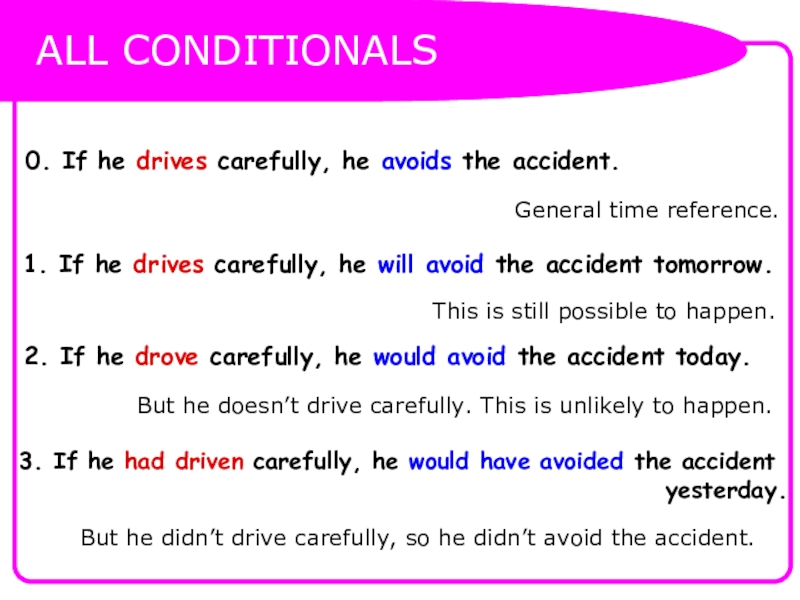
- 12. ALL CONDITIONALS0. If he drives carefully, he
- 13. THE END
Слайд 2ZERO CONDITIONAL
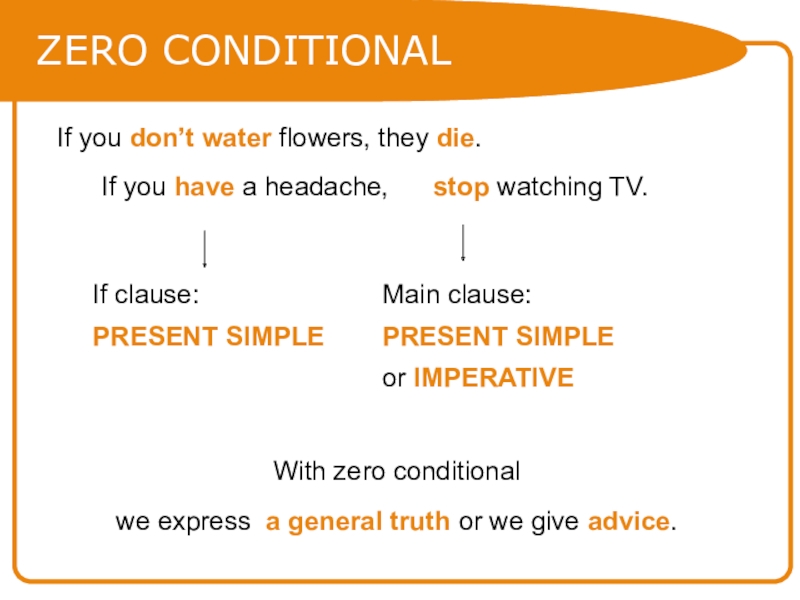
If you don’t water flowers, they die.
With zero conditional
we express a general truth or we give advice.
If clause: PRESENT SIMPLE
Main clause:
PRESENT SIMPLE or IMPERATIVE
Слайд 3
FIRST CONDITIONAL
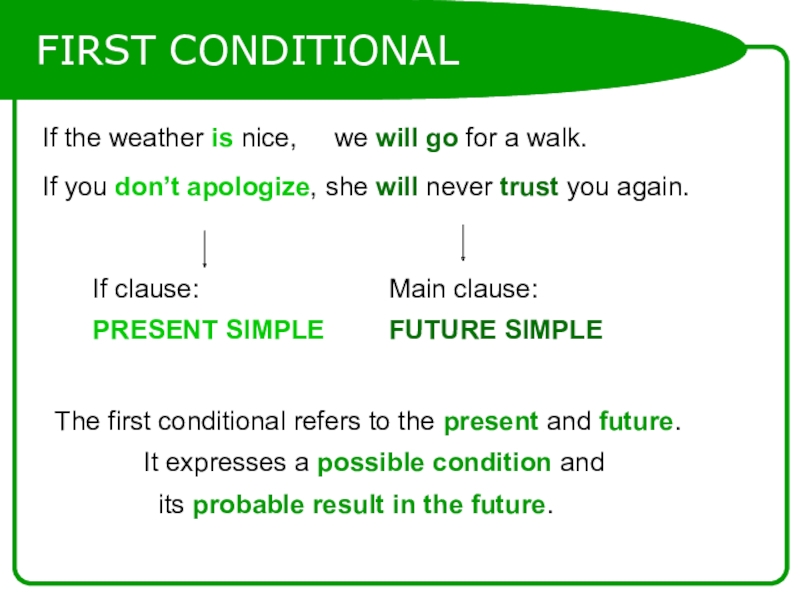
If the weather is nice, we will go
If you don’t apologize, she will never trust you again.
The first conditional refers to the present and future.
It expresses a possible condition and
its probable result in the future.
If clause: PRESENT SIMPLE
Main clause:
FUTURE SIMPLE
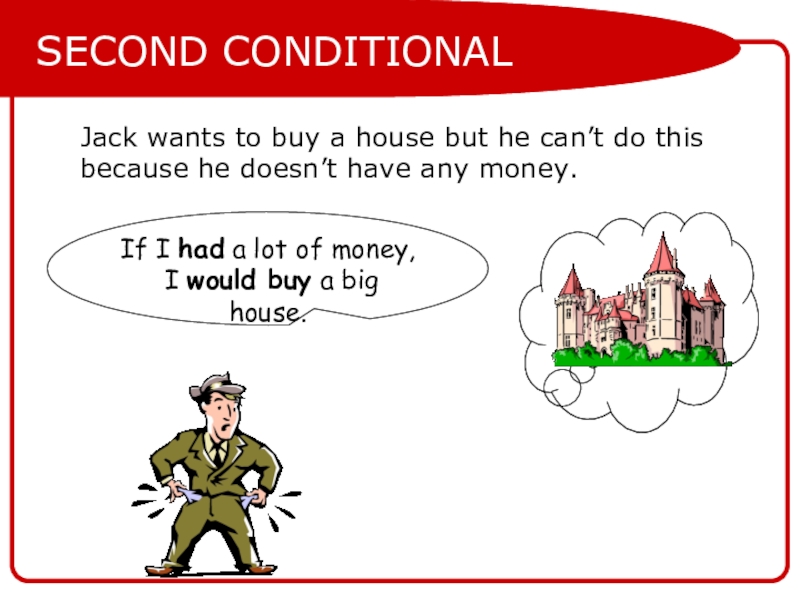
Слайд 4Jack wants to buy a house but he can’t do this
If I had a lot of money,
I would buy a big house.
SECOND CONDITIONAL
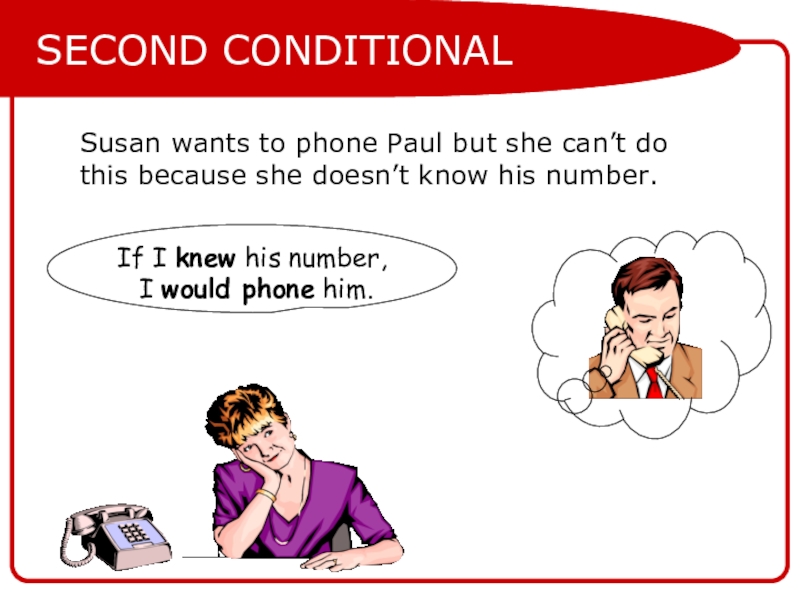
Слайд 5Susan wants to phone Paul but she can’t do this because
If I knew his number,
I would phone him.
SECOND CONDITIONAL
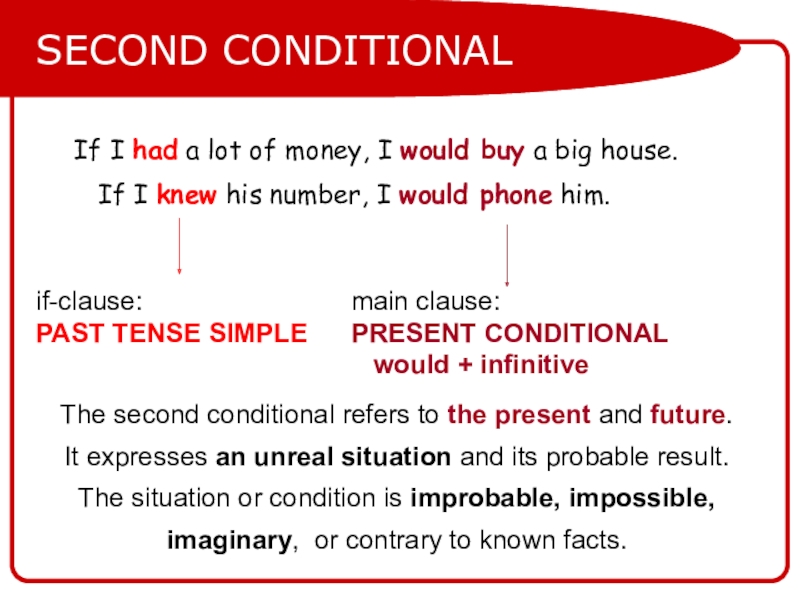
Слайд 6If I had a lot of money, I would buy a
If I knew his number, I would phone him.
if-clause:
PAST TENSE SIMPLE
main clause:
PRESENT CONDITIONAL
would + infinitive
SECOND CONDITIONAL
The second conditional refers to the present and future.
It expresses an unreal situation and its probable result.
The situation or condition is improbable, impossible,
imaginary, or contrary to known facts.
Слайд 7FIRST v. SECOND CONDITIONAL
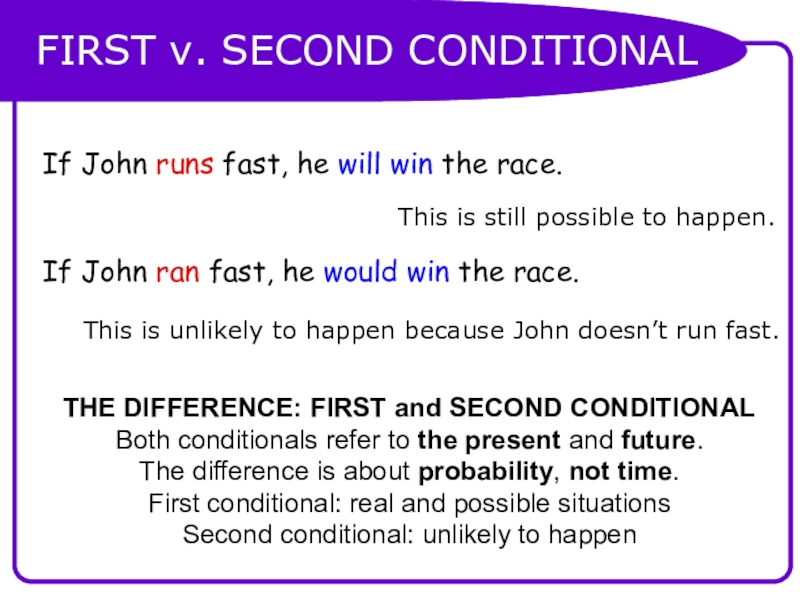
THE DIFFERENCE: FIRST and SECOND CONDITIONAL
Both conditionals refer
First conditional: real and possible situations
Second conditional: unlikely to happen
If John runs fast, he will win the race.
If John ran fast, he would win the race.
This is still possible to happen.
This is unlikely to happen because John doesn’t run fast.
Слайд 8
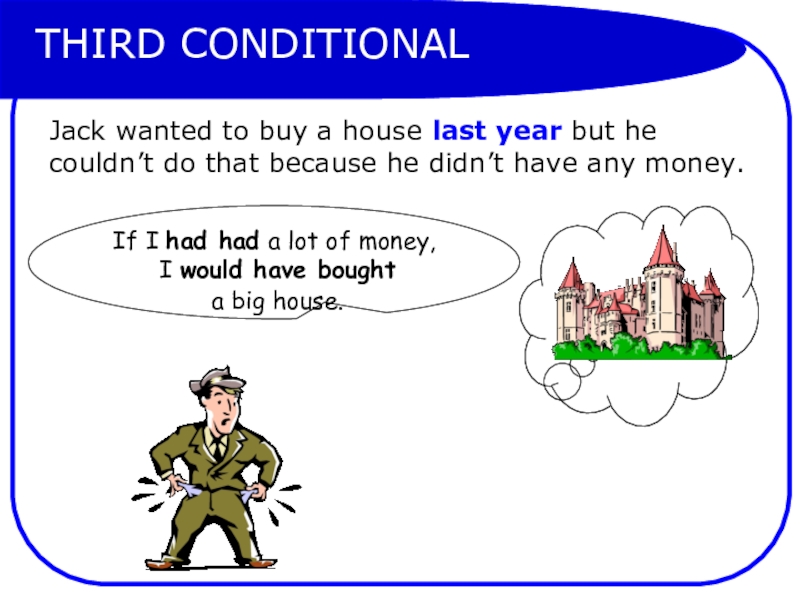
THIRD CONDITIONAL
Jack wanted to buy a house last year but he
If I had had a lot of money,
I would have bought
a big house.
Слайд 9
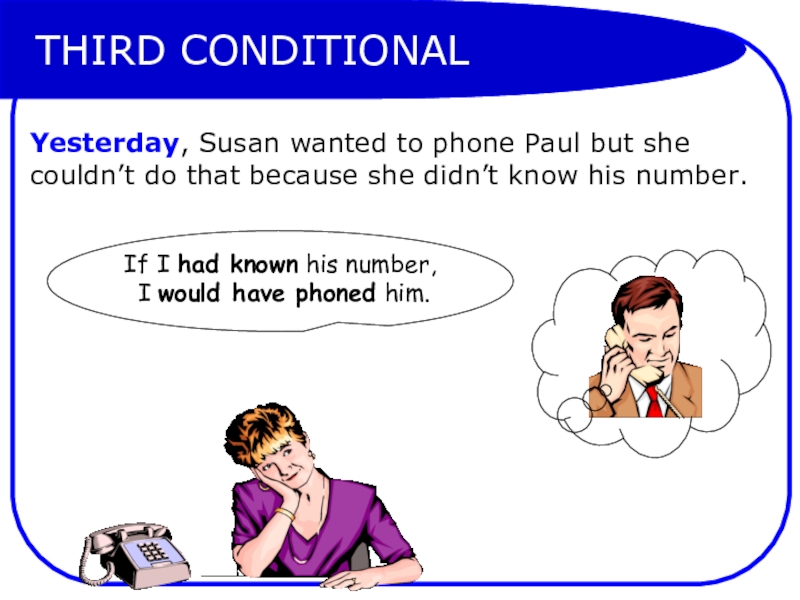
THIRD CONDITIONAL
Yesterday, Susan wanted to phone Paul but she couldn’t do
If I had known his number,
I would have phoned him.
Слайд 10
THIRD CONDITIONAL
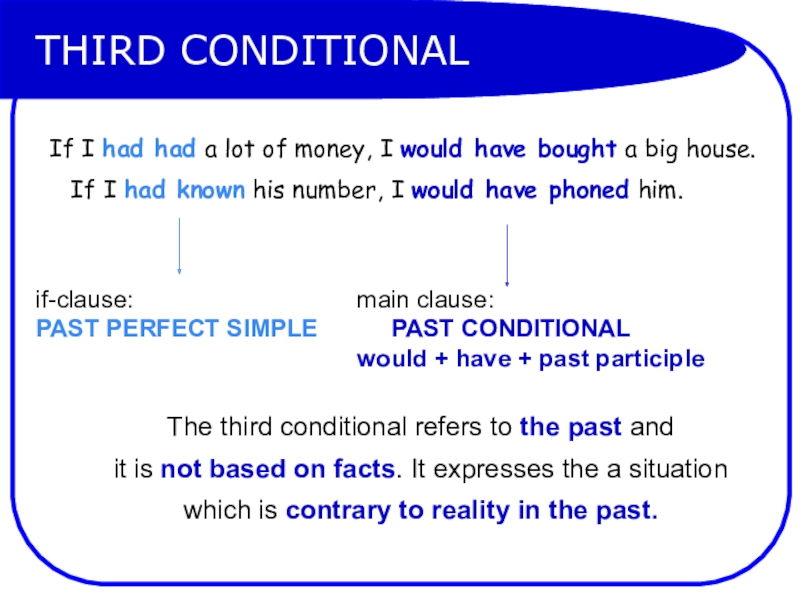
If I had had a lot of money, I would
If I had known his number, I would have phoned him.
if-clause:
PAST PERFECT SIMPLE
main clause:
PAST CONDITIONAL
would + have + past participle
The third conditional refers to the past and
it is not based on facts. It expresses the a situation
which is contrary to reality in the past.
Слайд 11SECOND v. THIRD CONDITIONAL
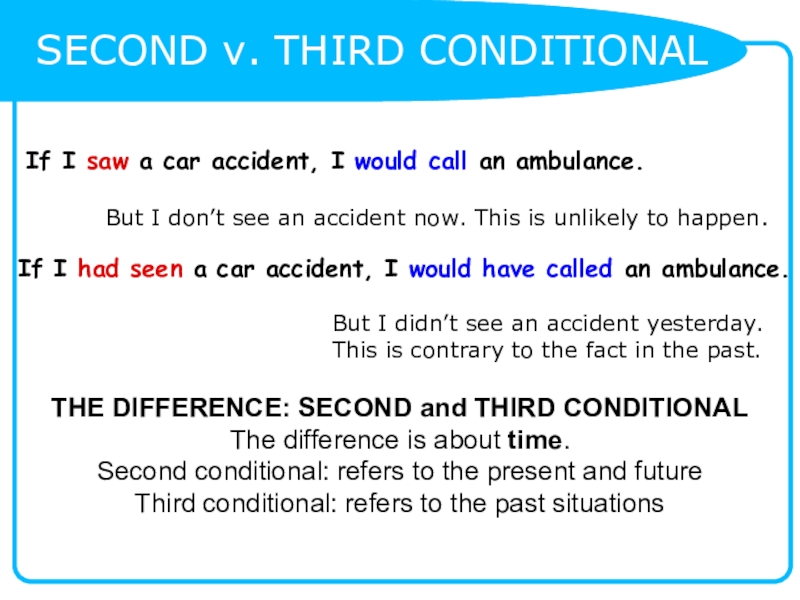
THE DIFFERENCE: SECOND and THIRD CONDITIONAL
The difference is
Second conditional: refers to the present and future Third conditional: refers to the past situations
If I saw a car accident, I would call an ambulance.
If I had seen a car accident, I would have called an ambulance.
But I don’t see an accident now. This is unlikely to happen.
But I didn’t see an accident yesterday.
This is contrary to the fact in the past.
Слайд 12ALL CONDITIONALS
0. If he drives carefully, he avoids the accident.
General
1. If he drives carefully, he will avoid the accident tomorrow.
This is still possible to happen.
2. If he drove carefully, he would avoid the accident today.
But he doesn’t drive carefully. This is unlikely to happen.
3. If he had driven carefully, he would have avoided the accident
yesterday.
But he didn’t drive carefully, so he didn’t avoid the accident.